Takachiho Shrine
Takachiho Shrine Movies


Basic Information
- Spot Name
- Takachiho Shrine
- Location
- 〒882-1101 1037 Mitai, Takachiho Town, Nishiusuki District, Miyazaki Prefecture
- Access
- From Nobeoka Station on the JR Nippo Line, take a Miyazaki Kotsu bus to Takachiho Bus Center for 1 hour and 20 minutes, then get off at the last stop and walk for 15 minutes. It takes about 2 hours from Kumamoto IC on the Kyushu Expressway.
- Parking
- About 100 cars.
- Business Hours
- Free access to the premises.
- Fees
- Kagura observation fee: 1,000 yen
- Contact Information
- Phone Number: 0982-72-2413
- Official Website
Map
Detailed Information
Takachiho Shrine is a venerable shrine located in Mitai, Takachiho Town, Nishiusuki District, Miyazaki Prefecture, and is one of the region’s most important ancient shrines. It is said to have been founded approximately 1,900 years ago during the reign of Emperor Suinin, and has long attracted worship as the head shrine of the 88 shrines of Takachiho. Great cedar trees tower over the grounds, and as you follow the approach surrounded by trees, the serene shrine buildings come into view. In addition to visitors praying for good relationships and protection from misfortune, the shrine is known as a place where people can experience historic architecture and kagura performances. When visiting Takachiho, known as the home of Japanese mythology, this is a shrine where you can gain a deeper understanding of the region’s faith and culture.
Although ancient traditions concerning the shrine’s foundation have been passed down through the generations, the exact date cannot be historically verified. Explanations provided by the Agency for Cultural Affairs state that the shrine was founded during the reign of Emperor Suinin, while also noting that many details of its history from ancient times through the medieval period remain unclear. Over its long history, the shrine buildings have experienced fires and reconstruction, and each time they were protected by local residents and feudal lords. When visiting the shrine today, your understanding will deepen if you consider both the traditions surrounding its foundation and the history that can be confirmed through the buildings and historical materials.
The deities enshrined here are the Takachiho Sume-gami and the Jūsha Daimyōjin. Takachiho Sume-gami is a collective name for six deities: the three generations of deities associated with Hyūga and their consorts. They are Ninigi-no-Mikoto and Konohanasakuya-hime-no-Mikoto, Hoori-no-Mikoto and Toyotama-hime-no-Mikoto, and Ugayafukiaezu-no-Mikoto and Tamayori-hime-no-Mikoto. These deities are connected to the descent of the heavenly grandson and the tales of Hoderi and Hoori, commonly known as the stories of the Sea Prince and the Mountain Prince, allowing visitors to sense the close connection between Takachiho and Japanese mythology. Jūsha Daimyōjin refers to ten deities, including Mikenuno-no-Mikoto.
Takachiho Shrine is believed to bestow blessings related to agriculture, protection from misfortune, good relationships, marital harmony, and traffic safety, and it is beloved by worshippers who come to pray for many aspects of daily life. Faith in a fruitful harvest, the safety of one’s family, and good relationships with others is deeply connected to life in this region. Even when visiting as a tourist, it is best to first quietly offer a prayer before the deities and then explore the grounds. Rather than simply admiring the ancient trees and shrine buildings, reflecting on how people have entrusted this place with their hopes and gratitude for so many years can make your visit more memorable.
One of the shrine’s most significant historical features is its main sanctuary, designated an Important Cultural Property of Japan. The present sanctuary is the building for which a formal transfer of the enshrined deities was carried out in 1778, the seventh year of the An’ei era during the Edo period. It is a plain timber structure made of zelkova wood. Built in the large-scale five-bay nagare-zukuri style, it is distinguished by its careful craftsmanship, which brings out the natural texture of the wood. The foundation date of the shrine and the construction date of the present main sanctuary are different. The building’s value lies in the fact that this Edo-period architecture has been preserved to the present day while carrying on the shrine’s long history of worship.
Be sure to pay attention to the carvings found throughout the main sanctuary. In addition to decorations such as dragons and phoenixes, there are carvings based on the legend of Mikenuno-no-Mikoto, as well as an unusual composition featuring a hunter and a wild boar. The three-dimensional, dynamic expressions convey the skill of the craftsmen of the time. The small Inari shrine built at one end of the sanctuary’s surrounding veranda is another feature characteristic of the region. These architectural details and carvings are connected to the stories and festivals handed down in Takachiho, making the shrine building itself a bearer of the area’s culture.
A pair of iron komainu guardian dogs, held as shrine treasures, are also designated Important Cultural Properties of Japan. Created during the Kamakura period, they are notable for being made not of stone or wood but of iron. Their raised heads, compact bodies, and carefully rendered muscles and joints give them a powerful appearance. Iron is a difficult material with which to cast complex forms and finish fine details, but these komainu are highly regarded as examples of advanced casting technology. Whereas the main sanctuary is an architectural cultural property, the iron komainu are sculptural cultural properties. Together, they convey the shrine’s historical value through two different artistic fields.
A popular feature on the grounds is the Meoto Sugi, or “Married Couple Cedars,” whose roots are joined together at the base. It is said that holding hands with someone special and walking around the trees three times will bring happiness, and many people visit to pray for good relationships and marital harmony. The giant trees standing close together evoke a lasting bond. The time spent walking around them with a wish in your heart can also be an opportunity to renew your appreciation for the person beside you. Please visit in a calm and respectful manner, taking care not to damage the trees or inconvenience other worshippers.
The Chichibu Cedar is another giant tree symbolic of the shrine grounds. It is said to have been planted as a memorial by Hatakeyama Shigetada, who visited as a representative of Minamoto no Yoritomo, and is commonly introduced as being approximately 800 years old. According to information provided by Takachiho Town, Yoritomo sent Shigetada to pray for peace throughout the realm. Looking up at the tree, visitors are overwhelmed by its height and the thickness of its trunk, while also sensing the passage of many centuries. The large cedars, including the Meoto Sugi and the Chichibu Cedar, shape the scenery of the shrine grounds and create a quiet atmosphere together with the shrine buildings.
The grounds also contain a stone called the Shizumeishi, or “Pacifying Stone.” It is said to have been placed on the orders of Emperor Suinin, and tradition holds that praying before it with a wish can calm disturbances in the world and ease people’s troubles. One distinctive feature of Takachiho Shrine is that faith is connected not only to prominent buildings and giant trees but also to stones such as this. The shrine’s collection also includes two wooden Buddhist-style deity sculptures from the Heian period—a seated male deity and a seated female deity—which are designated Important Cultural Properties of Japan. Through its architecture, sculpture, and traditions associated with nature, the shrine’s history can be explored from many different perspectives.
No visit to Takachiho Shrine would be complete without experiencing Takachiho Kagura, which is performed at the kagura hall on the shrine grounds. Performances are generally held every evening from 8:00 to 9:00 p.m. for one hour, presenting four representative dances selected from the 33 pieces of Yokagura, or night kagura. Dancers from different communities take turns making offerings, allowing visitors to see dances preserved and passed down throughout the region. Performances are not held on December 31 or January 1. In addition, regular performances are usually suspended on November 22 and 23 because of the annual festival, so be sure to check the latest schedule provided by the tourism association before visiting.
The four dances performed are the Tадjikarao Dance, the Uzume Dance, the Totori Dance, and the Goshintai Dance. Tajikarao, Uzume, and Totori are connected to the myth in which Amaterasu Ōmikami hides in the Heavenly Rock Cave. They depict the search for the goddess, the attempt to lure her out, and the opening of the rock door. Goshintai represents the creation of the land by two deities. Knowing the meaning behind each performance makes it easier to appreciate the differences in masks, costumes, and movements. One of the pleasures of watching kagura is seeing myths that were once encountered in written form appear before you as dance through powerful movements and gentle gestures.
It is useful to distinguish between the Takachiho Kagura performed here and Takachiho’s Yokagura, which is offered in individual communities. Takachiho’s Yokagura, designated an Important Intangible Folk Cultural Property of Japan, is performed mainly from mid-November through early February to express gratitude for the autumn harvest and pray for abundance in the coming year. It follows a tradition of presenting all 33 dances throughout the night, with the repertoire and order varying from one community to another. The one-hour performance at the shrine provides an opportunity to experience representative dances throughout the year. It also conveys how deeply kagura is rooted in the prayers of the local community.
Tickets for kagura performances can be obtained through online reservations or on the day of the performance. Because the number of advance reservations and same-day tickets is limited, visitors planning to attend are advised to consider making a reservation through the tourism association’s official website. At Takachiho Shrine, you can experience different atmospheres by exploring the main sanctuary and giant trees during the day and watching kagura at night. By encountering the enshrined deities associated with mythology, the shrine buildings marked by local stories, the Meoto Sugi to which people entrust their wishes, and the dances handed down through generations, visitors can feel more closely the faith and culture preserved by the people of Takachiho.
Miyazaki Tourist Attractions
View List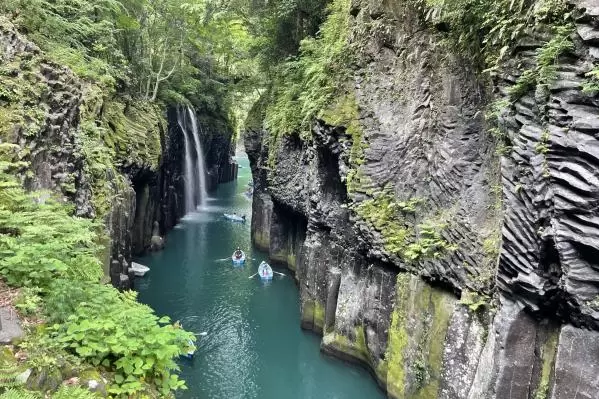
Takachiho Gorge
Takachiho Gorge is a stunning natural beauty created by the ancient volcanic activity of Mount Aso. This canyon features towering cliffs that stretch approximately 7...
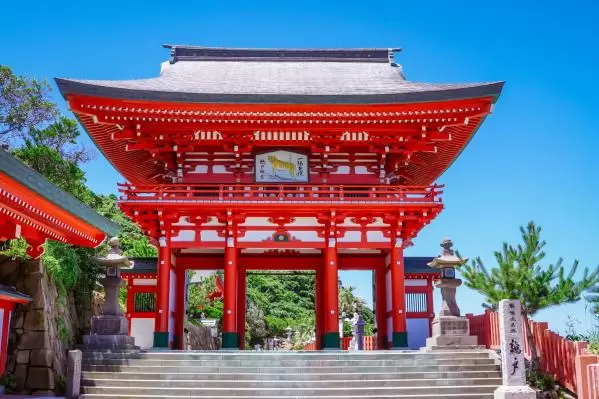
Udo Shrine
Udo Shrine, located in the southern part of Miyazaki Prefecture facing Hyuga-Nada, is a shrine that is affectionately known locally as “Udo-san.” The main shrine, pa...
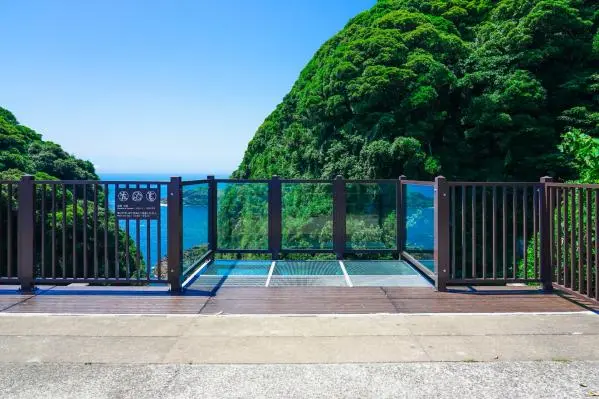
Hyugamisaki Umagase
Hyuga Cape and Umagasaki is a scenic spot located within the Nichinan Coast Quasi-National Park in Miyazaki Prefecture, characterized by its ria coastline and column...
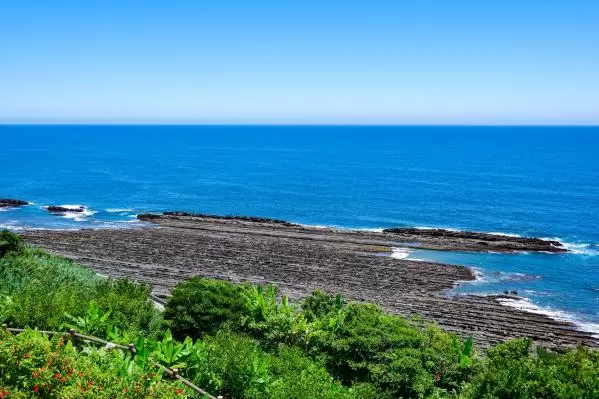
Nichinan Coast
The Nichinankai Coast is a scenic coastline that stretches approximately 100 km, representing Miyazaki Prefecture. It extends from Miyazaki City to Nichinan City and...
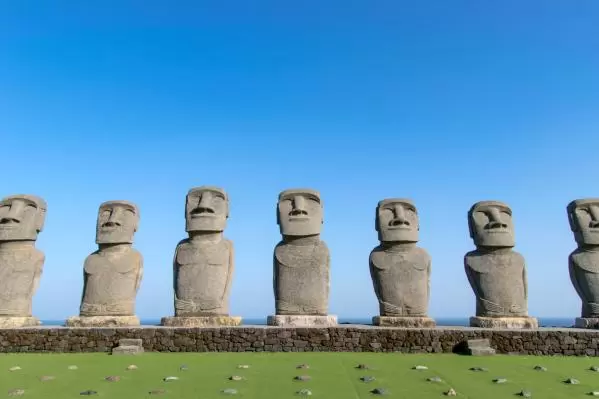
Sun Messe Nichinan
Sun Messe Nichinan is a special tourist spot that has completely recreated the Moai statues from Easter Island (Rapa Nui) in Japan. The Japanese Moai restoration tea...
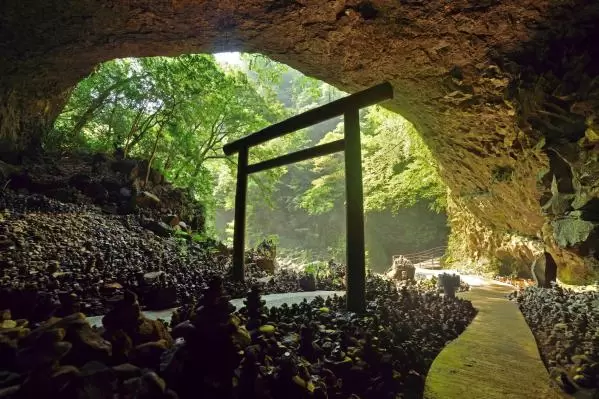
Amanoyasukawara
Tenshankawara is a mystical power spot located in Takachiho, Miyazaki Prefecture. It is a large cave that unfolds about a 10-minute walk along the Iwadogawa River fr...
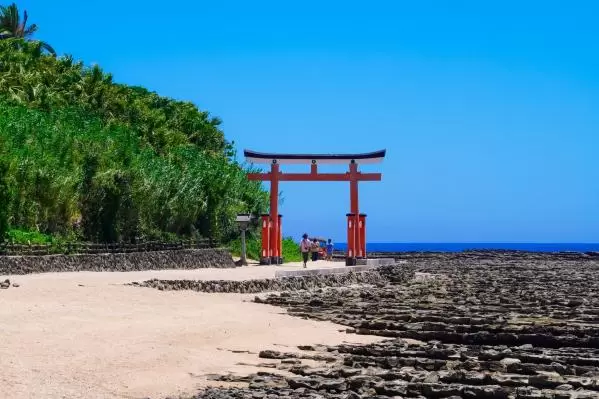
Aoshima Shrine
Aoshima Shrine is located on Aoshima in Miyazaki City, where the entire island serves as the shrine grounds. It enshrines Hikohodemi no Mikoto and Toyotama-hime no M...