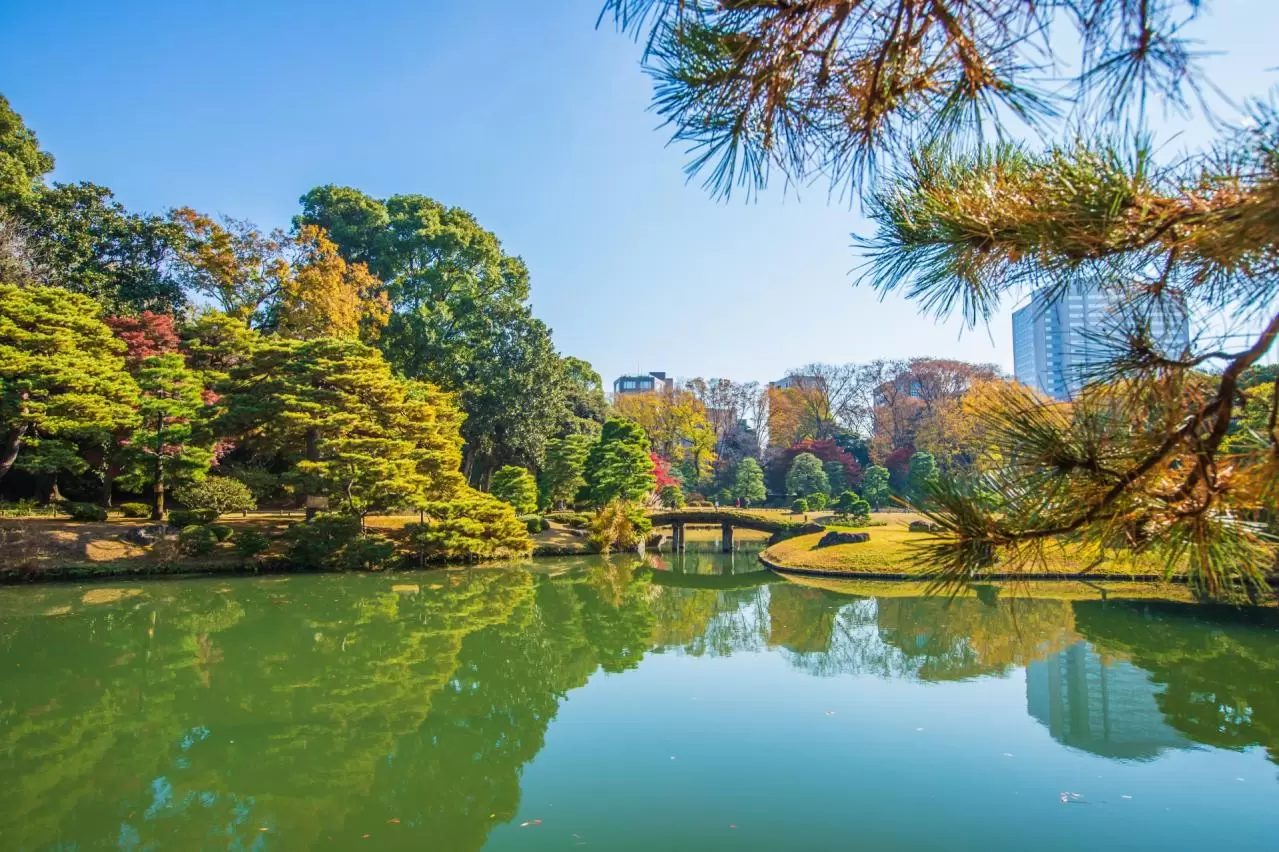
A scenic strolling garden
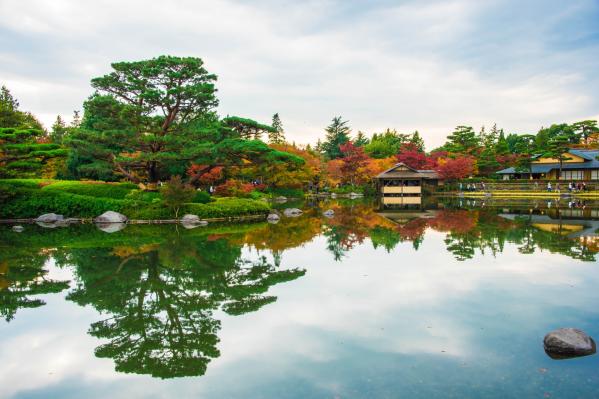
Walk around ponds and landscaped hills for changing views along the way.
AI Summary
This is an AI-generated summary. Please check the official information for opening hours, fees, and closed days.
A peaceful Japanese garden with an Edo-period atmosphere, best known for its weeping cherry blossoms in spring and autumn foliage.
Rikugien is a traditional strolling garden created by Yanagisawa Yoshiyasu. Follow paths around ponds and landscaped hills to enjoy its calm atmosphere and scenery inspired by classical Japanese poetry. The weeping cherry blossoms in spring and autumn colors are especially popular, offering a chance to enjoy the changing seasons in central Tokyo.
Walk around ponds and landscaped hills for changing views along the way.
The weeping cherry blossoms and autumn foliage are particularly impressive.
Reachable on foot from a station, the garden offers a calm break from the city.
Enter from Komagome Station, walk around the pond, then take in the area around the teahouses to get a feel for Rikugien in a short visit.
Rikugien is a Japanese garden in the Edo-period style, located in Honkomagome, Bunkyo Ward, Tokyo. It was built under the direction of Yanagisawa Yoshiyasu, a senior retainer of the fifth shogun, Tokugawa Tsunayoshi, after he was granted this land as a secondary residence in 1695 (Genroku 8). Construction took seven years to complete, and the garden is said to have been finished in 1702 (Genroku 15).
Strolling Pond Garden with Artificial Hills
Rikugien was designed in the style known as a strolling pond garden with artificial hills, in which visitors enjoy the scenery while walking around a central pond and man-made hills. Within the garden, a large pond called Oizumi, hills, streams, an artificial island, and Nakajima Island are skillfully arranged.
The garden reflects Yanagisawa Yoshiyasu’s deep literary interests and was created with the intention of expressing the world of waka poetry. He named it “Rikugien” after applying the concept of the six categories of poetry—“wind, elegance, praise, ballad, lyric, and hymn” as described in the Chinese classic Mao Shi—to the world of waka.
Historical Background
During the Edo period, it was renowned, along with Koishikawa Korakuen, as one of “Edo’s two great gardens.” In the Meiji period, Rikugien came into the possession of Iwasaki Yataro, the founder of the Mitsubishi conglomerate. Although it fell into disrepair for a time, it was later restored by the Iwasaki family. In 1938, it was donated to the Tokyo City government and opened to the public.
Later, on March 31, 1953, it was designated a Special Place of Scenic Beauty by the Japanese government. This is a title granted under the Cultural Properties Protection Law to cultural assets of exceptional value, and it remains one of the few designated gardens in Tokyo.
Highlights Within the Garden
Oizumi and Nakajima
Oizumi, located at the center of the garden, was modeled after the scenic views of Wakanoura in Kii Province (present-day Wakayama Prefecture). Nakajima Island lies within the pond, surrounded by trees. Throughout the garden, scenic spots inspired by the so-called “88 scenic views” are scattered about, offering the pleasure of strolling through the world of waka poetry.
Tsutsuji Teahouse
The Tsutsuji Teahouse, built by the Iwasaki family in the Meiji period, is a small pavilion made from old azalea wood. It is a precious structure that survived wartime bombing, and in autumn it is surrounded by brilliant red foliage, creating a graceful scene.
Weeping Cherry Blossoms
Passing through the Uchiniwa Omon gate, visitors are greeted in spring by weeping cherry trees covered in pale pink blossoms, their cascading branches resembling a waterfall and enchanting all who see them. The best viewing period is from late March to early April.
Satsuki Azaleas by Oizumi
Around late May, satsuki azaleas bloom profusely around Oizumi, vividly coloring the waterside scenery.
Dreamlike Autumn Illuminations
In autumn, the garden’s foliage reaches its peak beauty, and illumination events are held. During special nighttime openings, the garden stays open until 9 p.m., and the teahouse and shop remain open as well. The autumn leaves reflected on the water’s surface create a truly magical atmosphere.
Spring Azaleas
During the Genroku era, the Komagome and Somei area was a center of azalea cultivation, and Rikugien still has many old azalea varieties planted as a legacy of that time. During the peak season, an event called “Enjoying the Azaleas” is also held.
Nature and Wildlife
Approximately 400 coniferous trees, 3,500 evergreen trees, and 2,500 deciduous trees are planted within the garden, allowing visitors to enjoy the changing beauty of nature throughout the seasons. Many wild birds also visit the grounds, making it an attractive place for nature observation.
Toyosu Market, which opened in October 2018 after relocating from Tsukiji, is part of the Tokyo Central Wholesale Market and is one of the largest public markets not...
The Futako Tamagawa Rise Shopping Center, directly connected to Futako Tamagawa Station, is a trendy spot featuring sophisticated shops, popular restaurants, and fir...
The Kanda Matsuri is one of the three great festivals of Edo, held at Kanda Myojin Shrine, and is a grand celebration that conveys the traditions of Tokyo to the pre...
The National Art Center, Tokyo is located in Roppongi, known as the art hub of Japan's capital city, Tokyo. This museum opened in 2007, and its architectural design ...
The Nezu Museum was established in 1941 (Showa 16) to preserve and display ancient Japanese and East Asian art collected by businessman Kaichiro Nezu (1860-1940). Th...
Tokyo Solamachi is a large commercial facility located at the base of Tokyo Skytree®, boasting over 300 shops. It features a variety of fashion items, miscellaneous ...
Ginza Mitsukoshi is a long-established department store that opened in 1930 and is located at the Ginza 4-chome intersection. With a total of 15 floors, including 3 ...
Roppongi Hills, which was established in Roppongi, Tokyo, in 2003, is not just a cluster of buildings and commercial facilities; it is a city where diverse functions...


![[Travel vlog] 六義園🎍 東京スポット Rikugien Gardens for New Year's walks](https://i.ytimg.com/vi/4WCk5WgaUds/mqdefault.jpg)