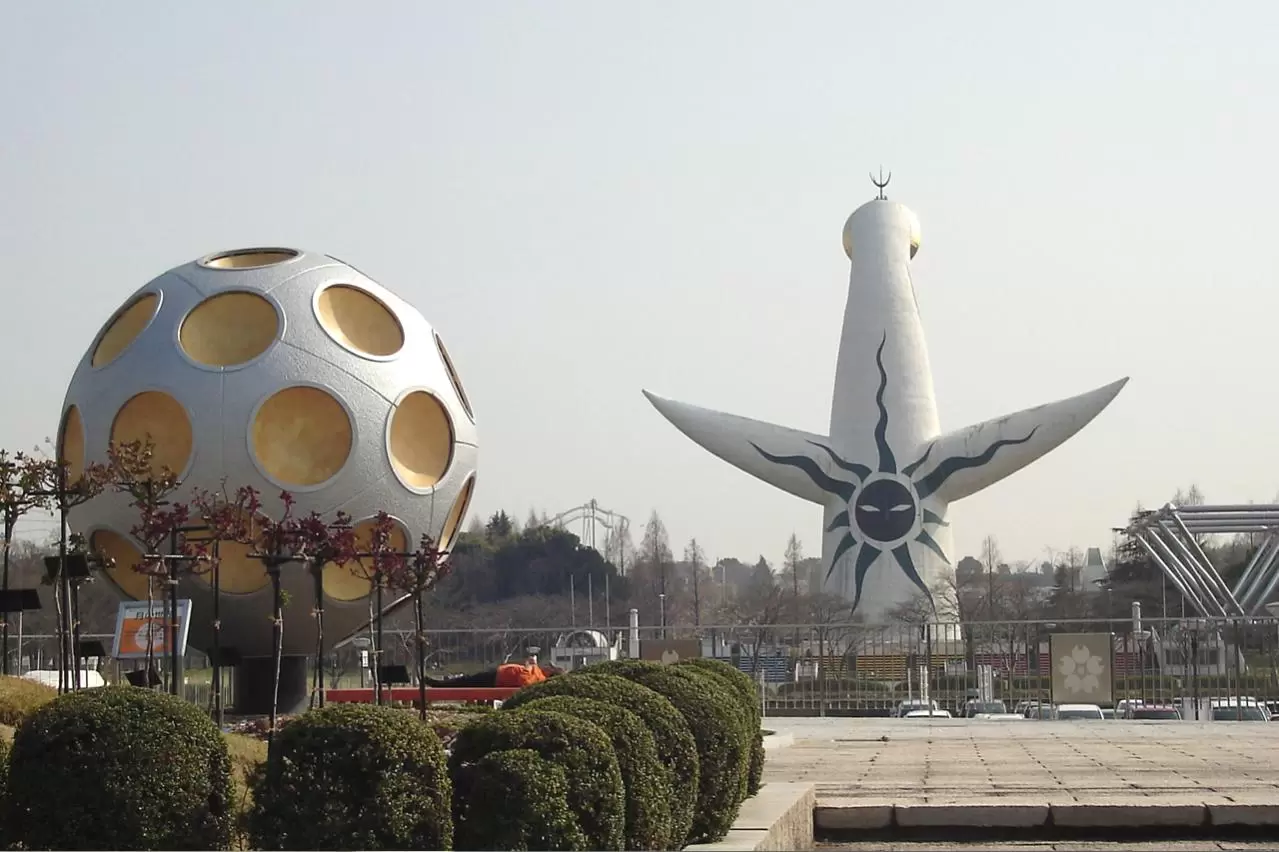
Expo '70 Commemorative Park
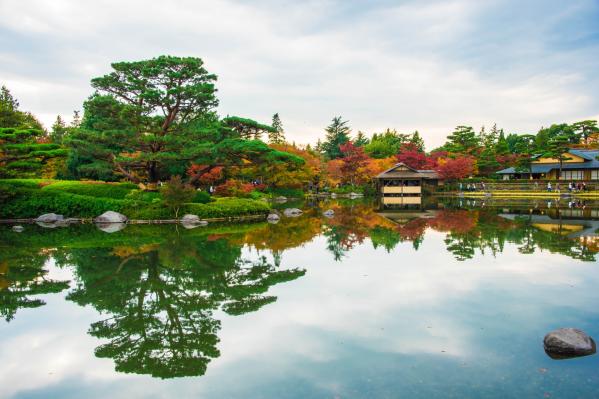
Within the park, there are the "Natural Culture Garden" and the "Japanese Garden," where visitors can experience diverse nature and the essence of Japan. In particular, the festival plaza and green space, where the chirping of small birds, vibrant flowers, and various events and festivals can be enjoyed, create a space that blends culture and recreation.
Since 2018, the interior of the Tower of the Sun has been open to the public, featuring exhibits that allow visitors to re-experience the excitement of the Osaka Expo, including the Tree of Life and the Underground Sun (admission is by reservation priority). Access is convenient via the Osaka Monorail at "Expo '70 Commemorative Park Station" or "Park East Entrance Station."
Expo '70 Commemorative Park is a beloved destination for a wide range of people, from nature lovers to those interested in history and culture.
Basic Information
- Spot Name
- Expo '70 Commemorative Park
- Location
- 〒565-0826 Suita City, Osaka Prefecture, Senri Banpaku Park
- Access
- By car: Approximately 10 minutes from Suita IC on the Hanshin Expressway No. 12 Moriguchi Line via Route 2.
By train: Just a short walk from Osaka Monorail "Expo Commemoration Park Station." - Parking
- Parking available
- Business Hours
- 9:30 AM to 5:00 PM
Entrance is allowed until 30 minutes before closing. - Regular Holiday
- Every Wednesday (if Wednesday is a holiday, the following weekday) / New Year's holidays. *No holiday from April 1 to May 2 and in October and November.
- Fees
- Admission fee for the Nature Culture Garden and Japanese Garden: Adults 260 yen, Elementary and Middle School Students 80 yen.
- Contact Information
- Phone Number:0120-1970-89
- Official Website
Map
Detailed Information
Expo ’70 Commemorative Park is a vast cultural park located in Suita City, Osaka Prefecture, developed on the site of the Japan World Exposition, Osaka, held in 1970. Its grounds, covering approximately 260 hectares, offer a space where nature through the seasons and culture harmonize, providing visitors with relaxation and opportunities to learn.
Sun Tower – The Park’s Iconic Landmark
The park’s symbol, the “Sun Tower,” is a giant tower approximately 70 meters tall designed by artist Taro Okamoto and built as part of the theme pavilions for the Osaka Expo. It was originally scheduled to be dismantled after the exposition, but was preserved thanks to many voices calling for its conservation and remains widely loved today as a symbol of Osaka.
The interior of the tower was closed to the public for many years, but after seismic reinforcement work and restoration of the interior exhibits, it opened to the public in 2018. Inside, visitors can enjoy displays such as the “Tree of Life” and the “Underground Sun,” which convey the excitement and artistry of the Osaka Expo era. Admission is by reservation priority. In 2020, it was also designated as an Important Cultural Property of Japan, further enhancing its historical value.
Nature and Culture Gardens – A Walking Spot to Feel the Seasons
The “Nature and Culture Gardens,” centered around the Sun Tower, allow visitors to stroll through a forest recreated from the natural woodland that existed before the Expo. In spring, cherry blossoms, poppies, and camellias bloom in abundance, while in autumn, colorful foliage adorns the park. Surrounded by birdsong and the scent of flowers and plants, visitors can forget the bustle of the city and fully enjoy close contact with nature.
Japanese Garden – A Culmination of Japanese Aesthetics and Landscape Design
The “Japanese Garden,” developed as a government exhibition facility for the 1970 Osaka Expo, is a large traditional garden covering about 26 hectares and stretching approximately 1.3 kilometers east to west. With features such as karesansui dry landscape gardens, pond-strolling gardens, bamboo groves, and the Komorebi no Taki waterfall, it is a space where the essence of Japanese aesthetics and landscaping can be felt. In a landscape harmonized with nature, visitors can spend a peaceful and tranquil moment.
EXPO’70 Pavilion – Carrying the Memories of the Expo into the Future
The “EXPO’70 Pavilion,” created by renovating the former Steel Pavilion, introduces the excitement and cutting-edge technology of the Osaka Expo through valuable materials, videos, and exhibits from that time. Around 3,000 pamphlets and photographs are permanently displayed, and the show space “Space Theater” can also be viewed through glass. In the annex, the first “Golden Face” from the Sun Tower is also on display, making it a must-see spot for fans.
Osaka Japanese Folk Crafts Museum – Rediscovering the Beauty in Everyday Life
The “Osaka Japanese Folk Crafts Museum” focuses on the theme of “beauty in daily life,” showcasing craftworks as everyday items. Centering on works by artists who led the Mingei movement, such as Shoji Hamada, Kanjiro Kawai, Keisuke Serizawa, and Shiko Munakata, the museum presents ceramics, textiles, wood and lacquerware, and more from Japan and abroad. The building itself also has a distinctive design that blends tradition and modernity, making it well worth seeing as architecture.
National Museum of Ethnology – A Journey Through the Cultures of the World
The “National Museum of Ethnology” is known as a comprehensive research institution for cultural anthropology and ethnology, housing approximately 345,000 materials collected from around the world. About 10,000 of these are on permanent display. The exhibition is arranged as a journey around the world, starting from Oceania and moving eastward through the Americas, Europe, Africa, West Asia, South Asia, Southeast Asia, Central and North Asia, and East Asia, allowing visitors to experience diverse cultures as if traveling the globe.
EXPOCITY – A Multi-Complex Where Play and Learning Meet
Located on the east side of Expo ’70 Commemorative Park, in front of Expo Park Station, “EXPOCITY” is one of Japan’s largest multi-complex facilities. Centered around the shopping mall LaLaport EXPOCITY, it also features an aquarium, Ferris wheel, amusement facilities, and more, making it a place that can be enjoyed by both children and adults.
NIFREL: An interactive museum produced by Kaiyukan with the theme of “touching sensibility.” It is a unique space that combines elements of an aquarium, zoo, and art museum.
OSAKA WHEEL: One of Japan’s largest Ferris wheels, standing 123 meters tall. All gondolas are equipped with heating and air conditioning, and some have transparent floors, allowing visitors to enjoy both thrills and spectacular views.
ANIPO: A family-friendly attraction facility based on the concept of an amusement park created by animals.
Other Highlights and Facilities
The park also offers a wide variety of play facilities, including an athletic tower for children, a giant maze, and cycle boats, making it possible for families to enjoy a full day here. Barbecue facilities are also available, allowing visitors to casually enjoy an outdoor atmosphere without bringing anything, which is another of its attractions.
Expo '70 Commemorative Park Movies


Osaka Tourist Attractions
View List
Osaka Central Wholesale Market
The Osaka City Central Public Hall, completed in 1918 based on a donation from stockbroker Einosuke Iwamoto, is a beautiful iron-framed brick building in the Neo-Ren...


Sumiyoshi Taisha Shrine
Sumiyoshi Taisha, affectionately known as "Sumiyossan," is the head shrine of over 2,300 Sumiyoshi shrines across the country, located in Osaka City, Osaka Prefectur...

Imamiya Ebisu Shrine
Imamiya Ebisu Shrine is a beloved temple in Osaka, known as the "god of prosperous business." It is said to have been established during the reign of Empress Suiko w...

Hanahaku Memorial Park, Tsurumi Power Spot
The Flower Expo Memorial Park Tsurumi Ryokuchi is a vast urban park spanning approximately 123 hectares, located in the Tsurumi Ward of Osaka City and the city of Mo...

Mino Otaki
Minoo Waterfall is a famous waterfall with a height of 33 meters located in Minoo City, Osaka Prefecture, and is selected as one of Japan's Top 100 Waterfalls. The n...


Osaka Aquarium Kaiyukan
Kaiyukan is an aquarium that faithfully recreates the natural environment of the Pacific Ocean and its surrounding waters, the largest ocean in the world. It feature...