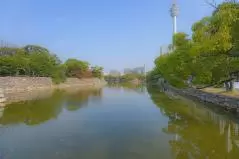
Hiroshima Castle
Hiroshima Castle Movies


Basic Information
- Spot Name
- Hiroshima Castle
- Location
- 〒730-0011 21-1 Motomachi, Naka-ku, Hiroshima City, Hiroshima Prefecture
- Access
- Take the Hiroshima Electric Railway to Miyajimaguchi from JR Hiroshima Station for 13 minutes, get off at Kamiyacho-higashi, and walk for 15 minutes.
- Parking
- Please use the paid parking lots available in the vicinity.
- Business Hours
- 9:00 AM - 5:30 PM (Last admission at 6:00 PM, varies by season)
- Regular Holiday
- Year-end and New Year (December 29 to December 31) *Other temporary closing days may apply.
- Fees
- Adults 370 yen (280 yen)
High school students and seniors 180 yen (100 yen)
Free for junior high school students and younger - Contact Information
- Phone Number:082-221-7512
- Official Website
Map
Detailed Information
Hiroshima Castle is a historic castle located in Naka Ward, Hiroshima City, Hiroshima Prefecture. Construction began in 1589, during the Azuchi–Momoyama period, under the direction of Mori Terumoto, the feudal lord who ruled the Chūgoku region. As one of Hiroshima’s most representative historic buildings, it is beloved by local residents and visitors alike. The castle is also known by its alternate name, “Rijō,” meaning “Carp Castle.” One theory holds that this name was derived from the nearby place name “Koi.” The name of the current professional baseball team, the Hiroshima Toyo Carp, was also inspired by this nickname.
### Construction by Mori Terumoto
Before Hiroshima Castle was built, the Mori clan’s main stronghold was Koriyama Castle in Yoshida, Akitakata City, Hiroshima Prefecture. However, maritime transport was the center of logistics at the time, and Koriyama Castle’s location in the mountains limited the development of the castle town. Mori Terumoto therefore decided to build a new castle in the delta area at the mouth of the Ōta River, a location well suited to transportation and economic growth.
The area around present-day Hiroshima was once a shallow sea dotted with numerous islands, including Enoshima, Yashima, Noshima, Hijima, and Hakushima. Hiroshima Castle was built on the largest of these islands. The construction of the castle led to the formation of a castle town and gave rise to the city of Hiroshima.
It is also said that Mori Terumoto was inspired to build Hiroshima Castle after visiting Osaka Castle and Jurakudai to meet Toyotomi Hideyoshi. He was deeply impressed by their grandeur and the prosperity of the surrounding cities. One theory also suggests that Kuroda Kanbei provided advice during the castle’s construction.
### One of Japan’s Representative Flatland Castles
Hiroshima Castle is a hirajiro, or flatland castle, built on the plains at the mouth of the Ōta River. It is recognized as one of Japan’s most representative flatland castles and is sometimes counted among the “Three Great Flatland Castles of Japan,” along with Nagoya Castle and Okayama Castle.
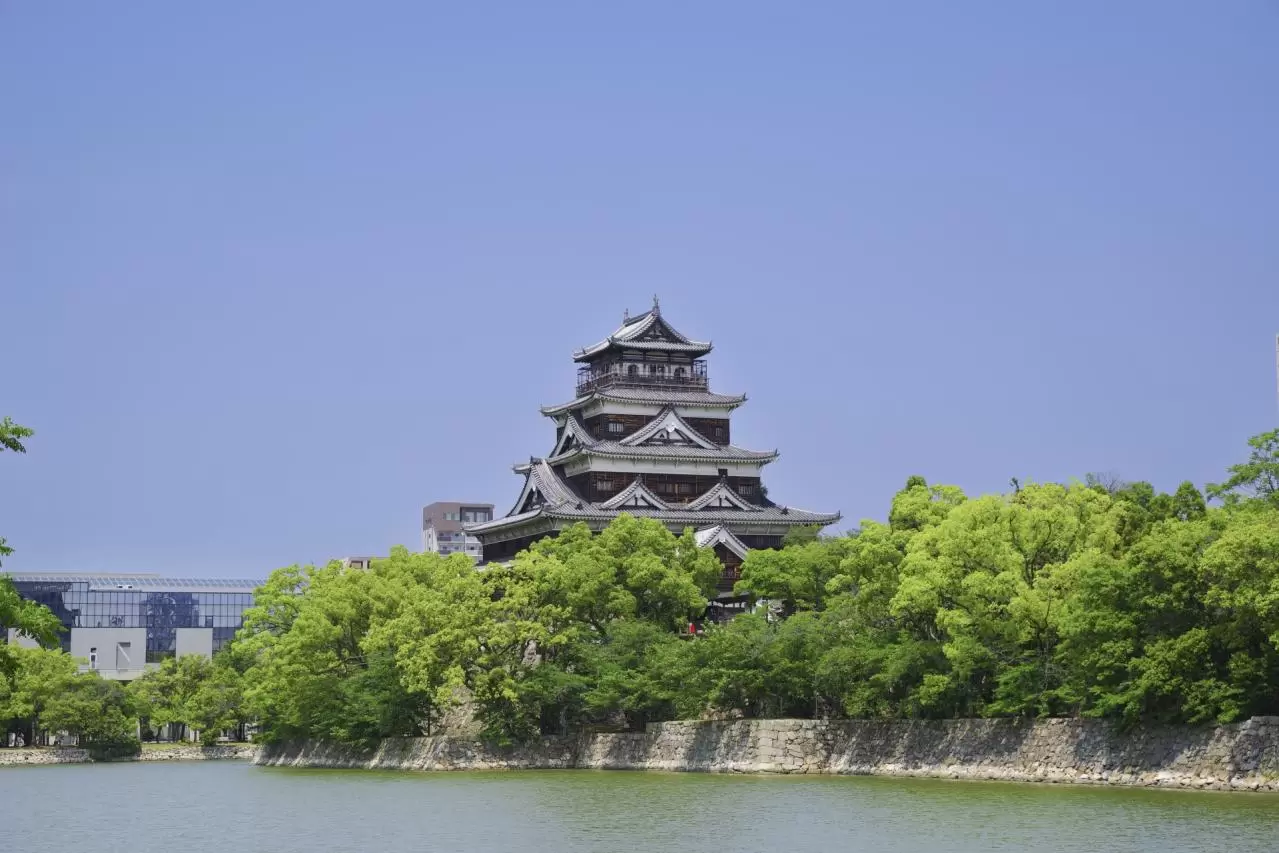
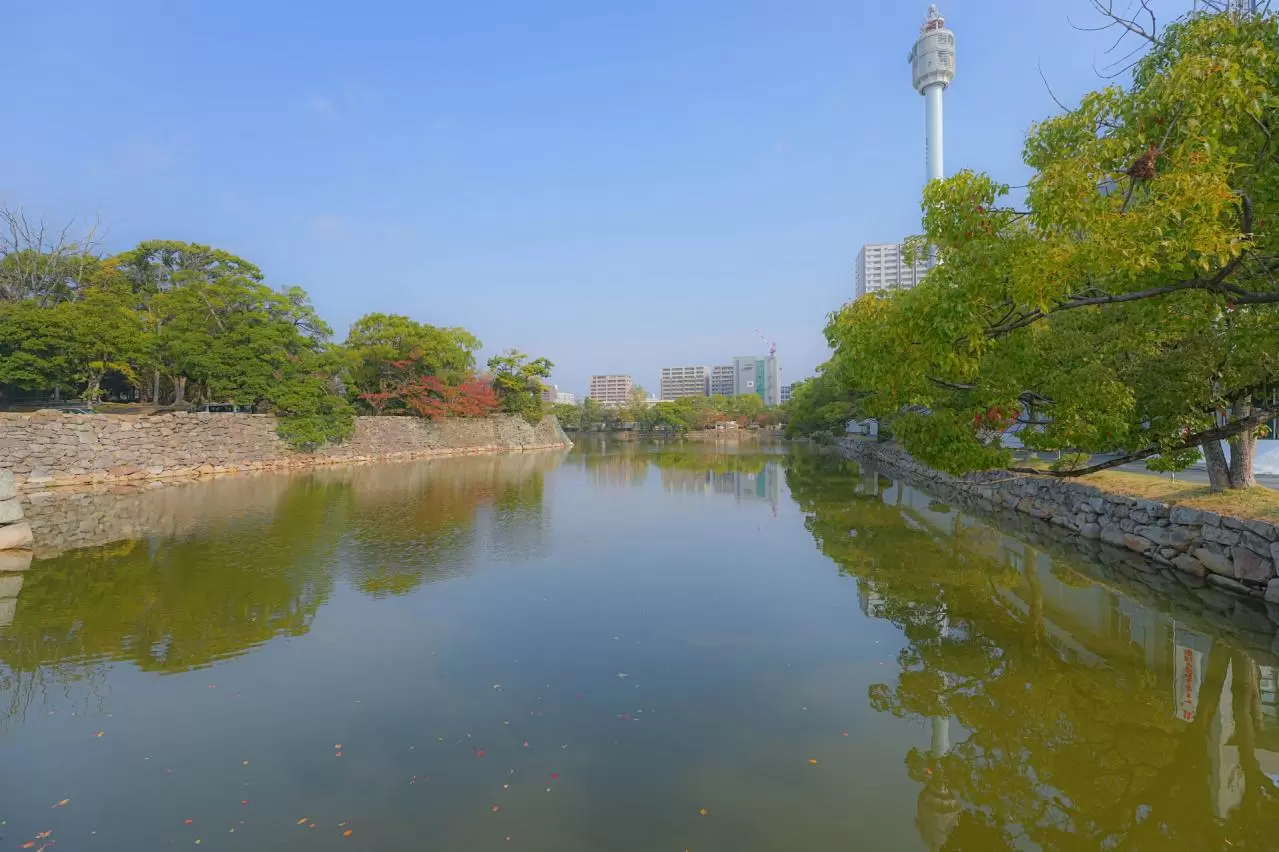
Rivers and the sea surrounded the castle, providing natural defenses. The Honkawa River, formerly the Ōta River, flowed to the west, the Kyōbashi River to the east, and the Seto Inland Sea stretched to the south. This water-surrounded location was one of the castle’s most distinctive features. Moats and stone walls were also skillfully constructed, allowing the site to develop into a vast castle city.
When originally completed, Hiroshima Castle was reportedly comparable in scale to Osaka Castle of the time. It is highly regarded as a magnificent example of an early modern Japanese castle.
### Hiroshima Castle during the Edo Period
Following the Battle of Sekigahara, the Mori clan was transferred to Chōshū, and Fukushima Masanori entered Hiroshima Castle. Later, Asano Nagaakira became its lord, and the castle served as the residence of twelve generations of the Asano clan for approximately 250 years.
During the Asano period, the castle town developed further, and Hiroshima grew into one of the leading cities in the Chūgoku region. Hiroshima Castle played an important role as a center of politics, economics, and culture.
### From the Meiji Period to Destruction by the Atomic Bomb
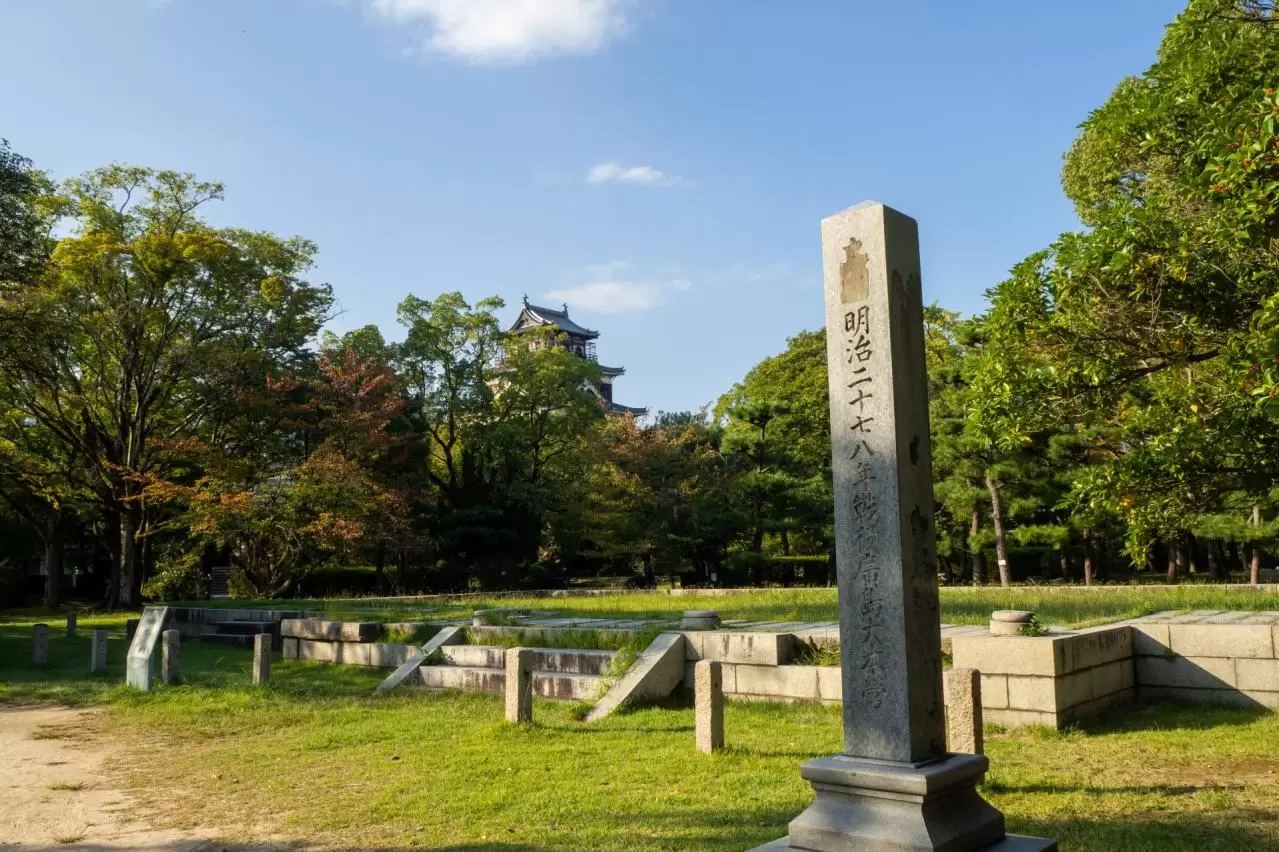
During the Meiji Period, the abolition of feudal domains and the establishment of prefectures led to the demolition of many castles. At Hiroshima Castle, however, some structures, including the keep, survived. Military facilities were later established within the castle grounds.
In 1931, the keep was designated a National Treasure, reflecting the high value placed on its historical significance.
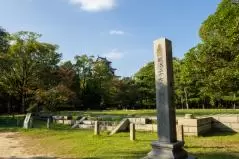
However, on August 6, 1945, Hiroshima Castle suffered catastrophic damage when an atomic bomb was dropped on Hiroshima. Because it was located only about 980 meters from the hypocenter, every building except the stone walls was destroyed.
### Postwar Reconstruction and the Present Keep
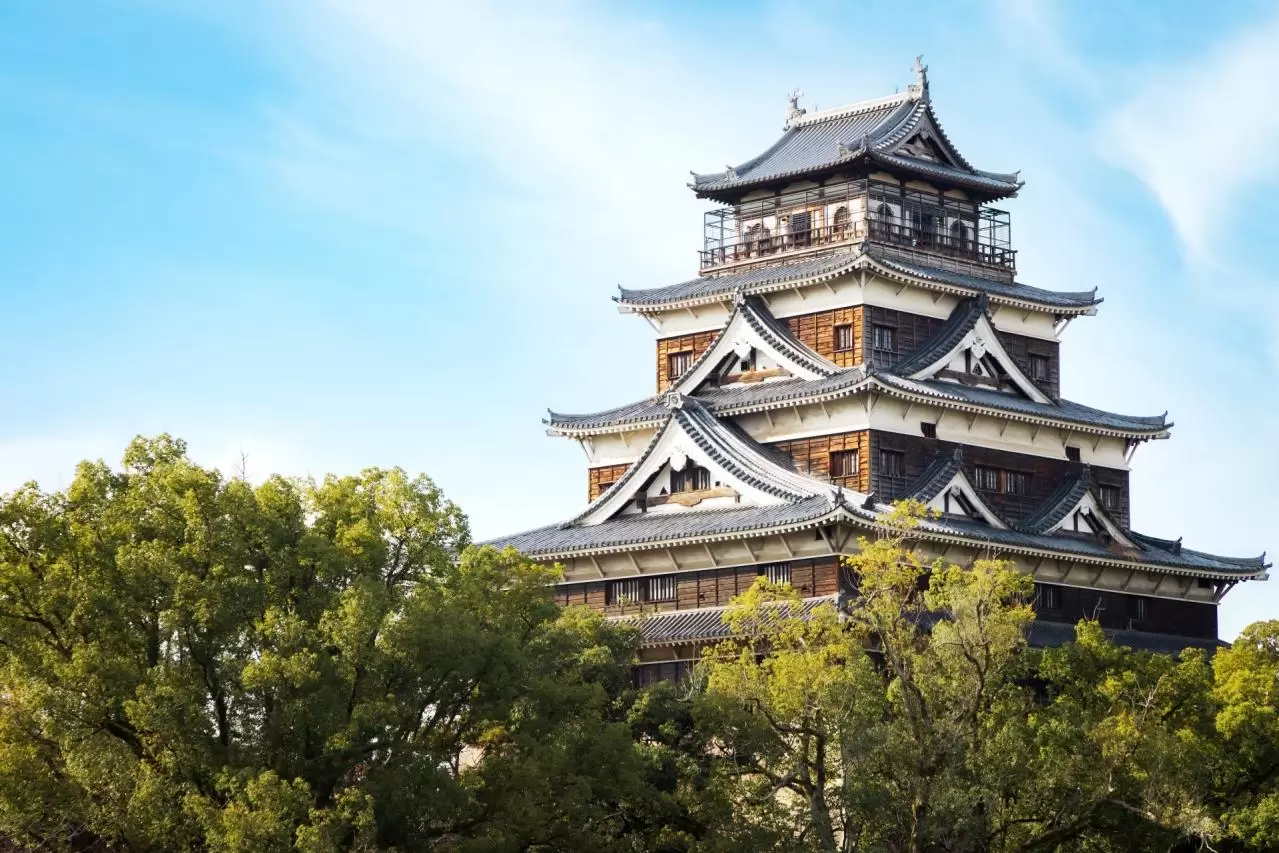
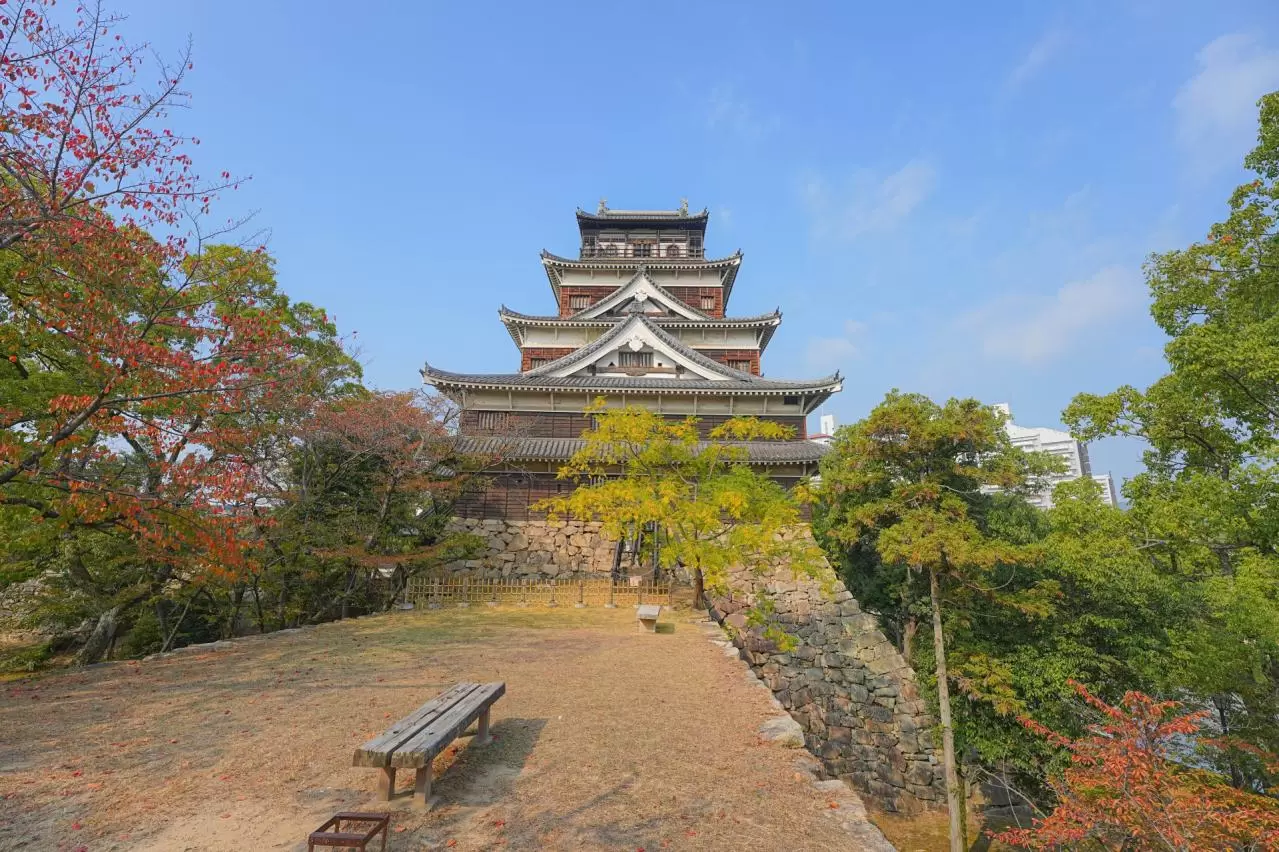
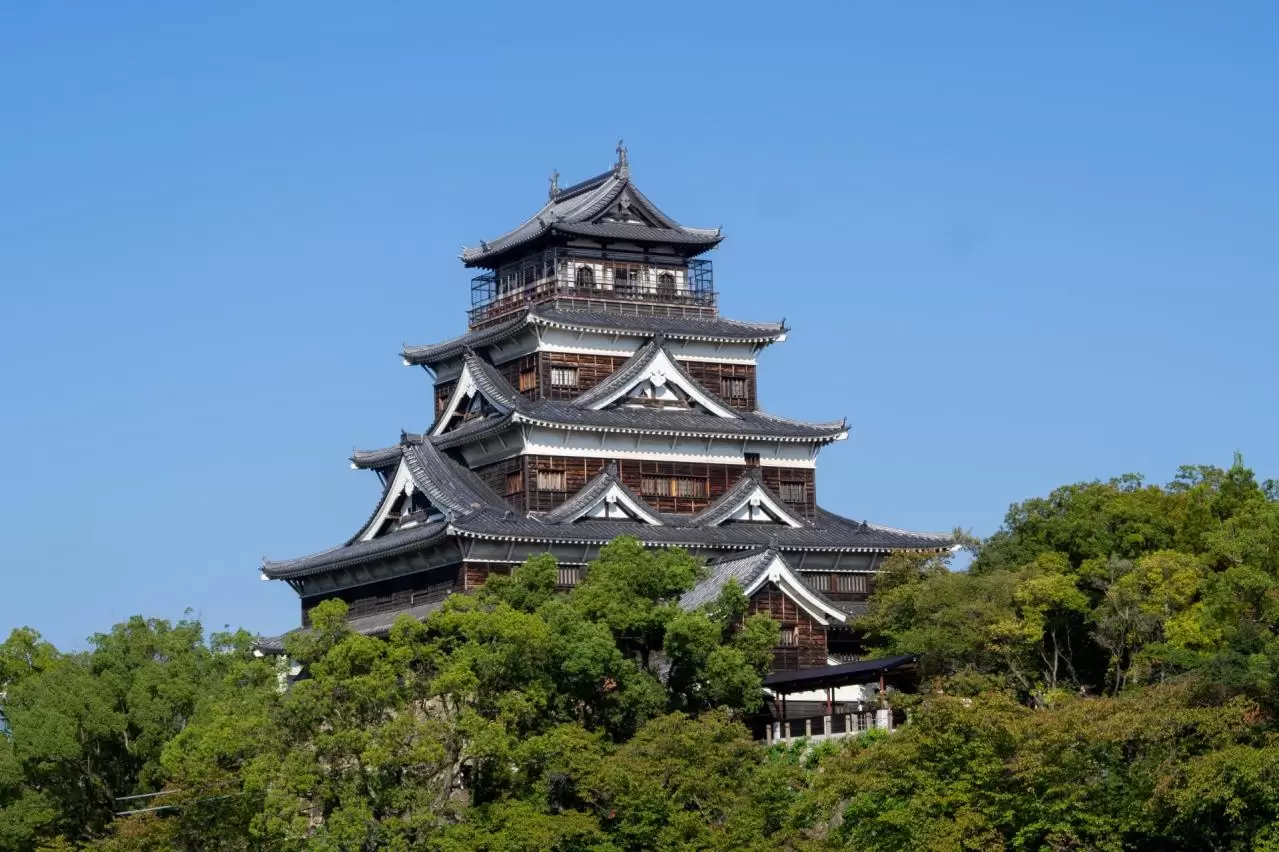
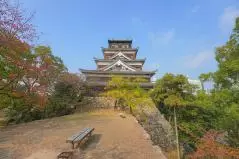
After the war, Hiroshima began its path toward reconstruction. In 1958, the present keep was rebuilt in reinforced concrete to coincide with the Hiroshima Reconstruction Grand Exposition. Completed in just five months, the keep became an important symbol of Hiroshima’s postwar recovery.
Following its reconstruction, the keep served as a museum displaying exhibits on Hiroshima Castle, Hiroshima’s samurai culture and history, as well as armor and swords. It was enjoyed by many local residents and tourists.
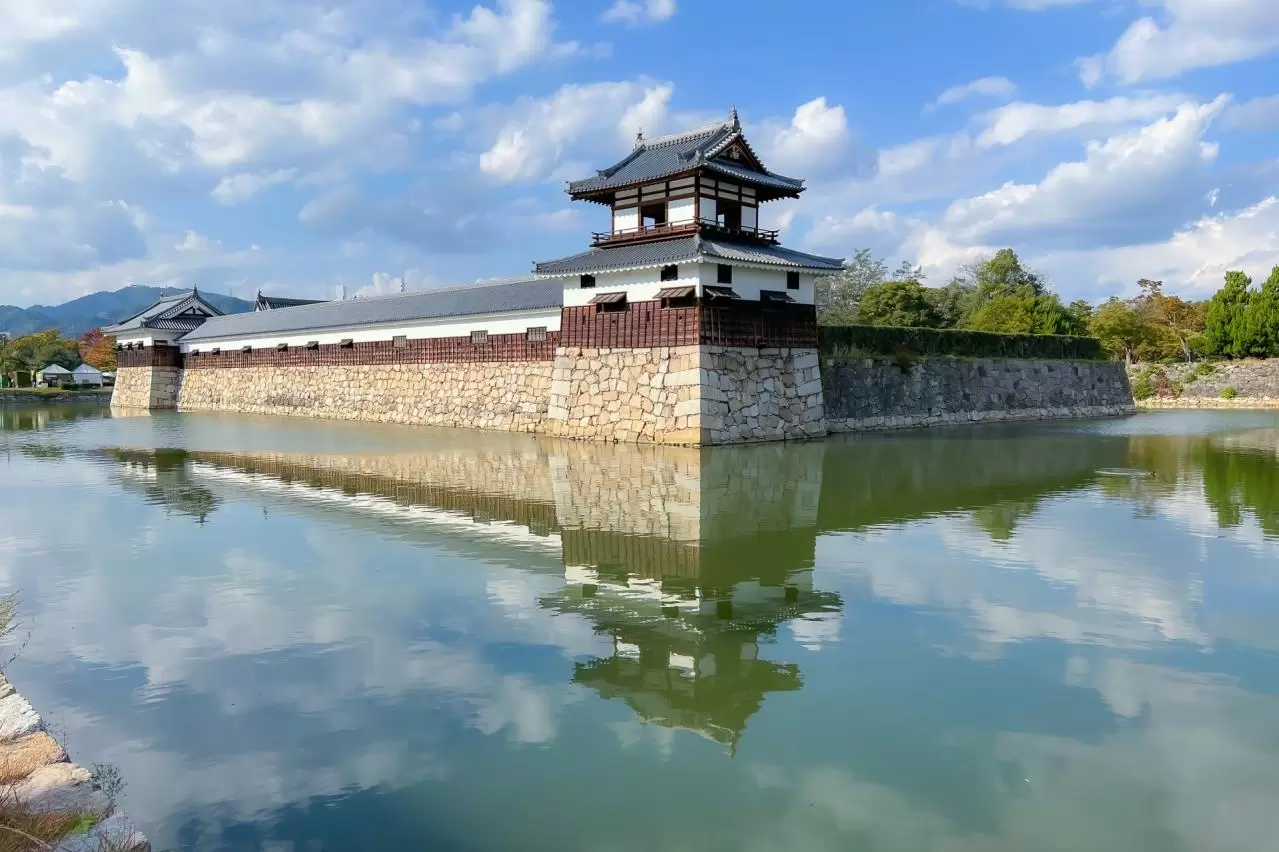
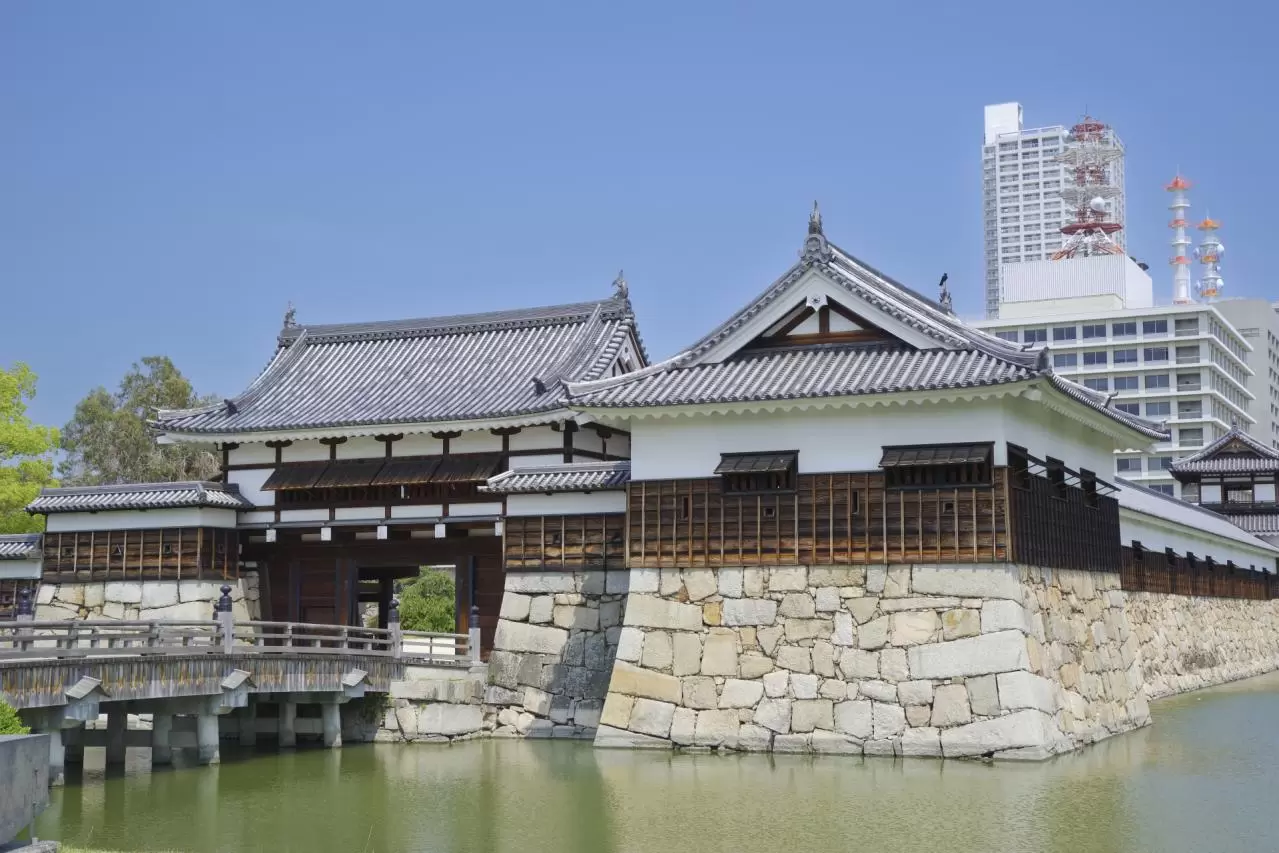
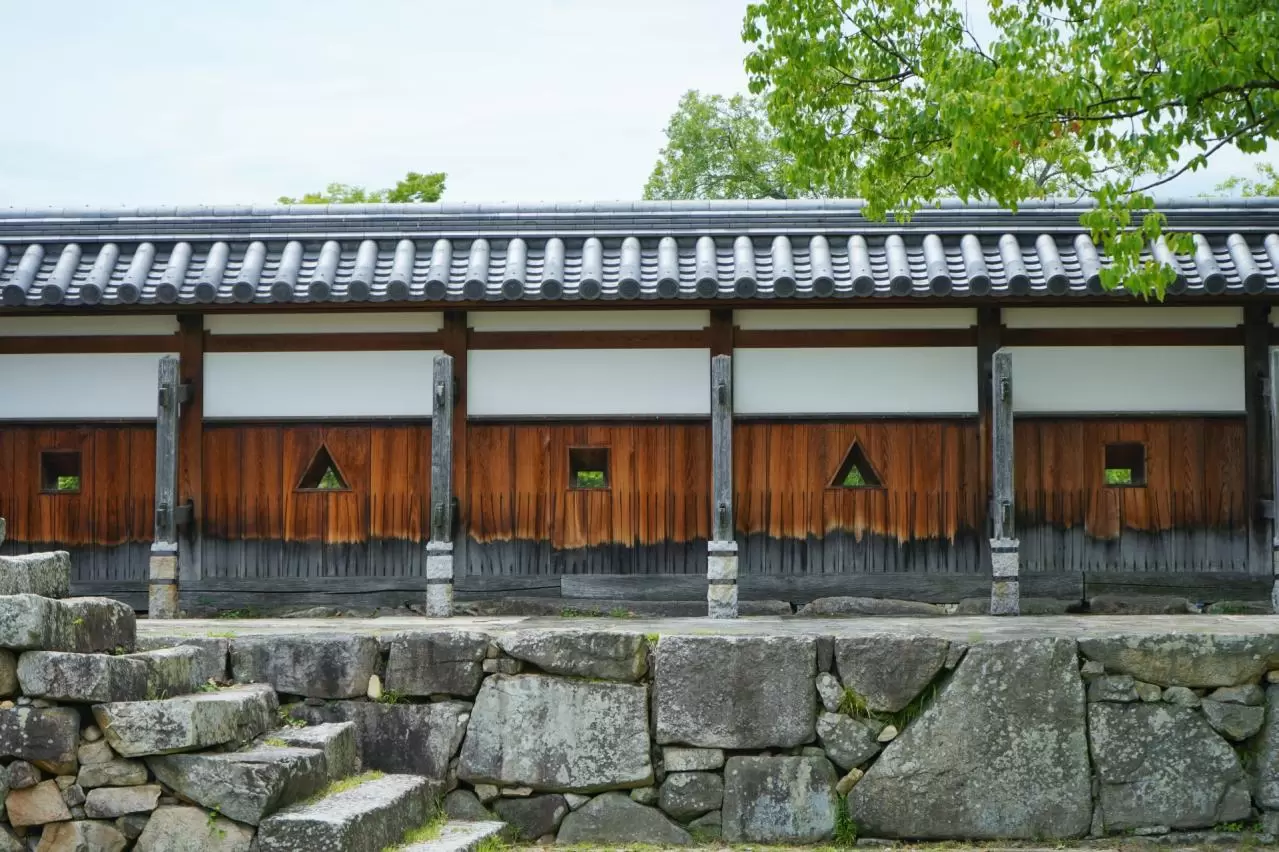
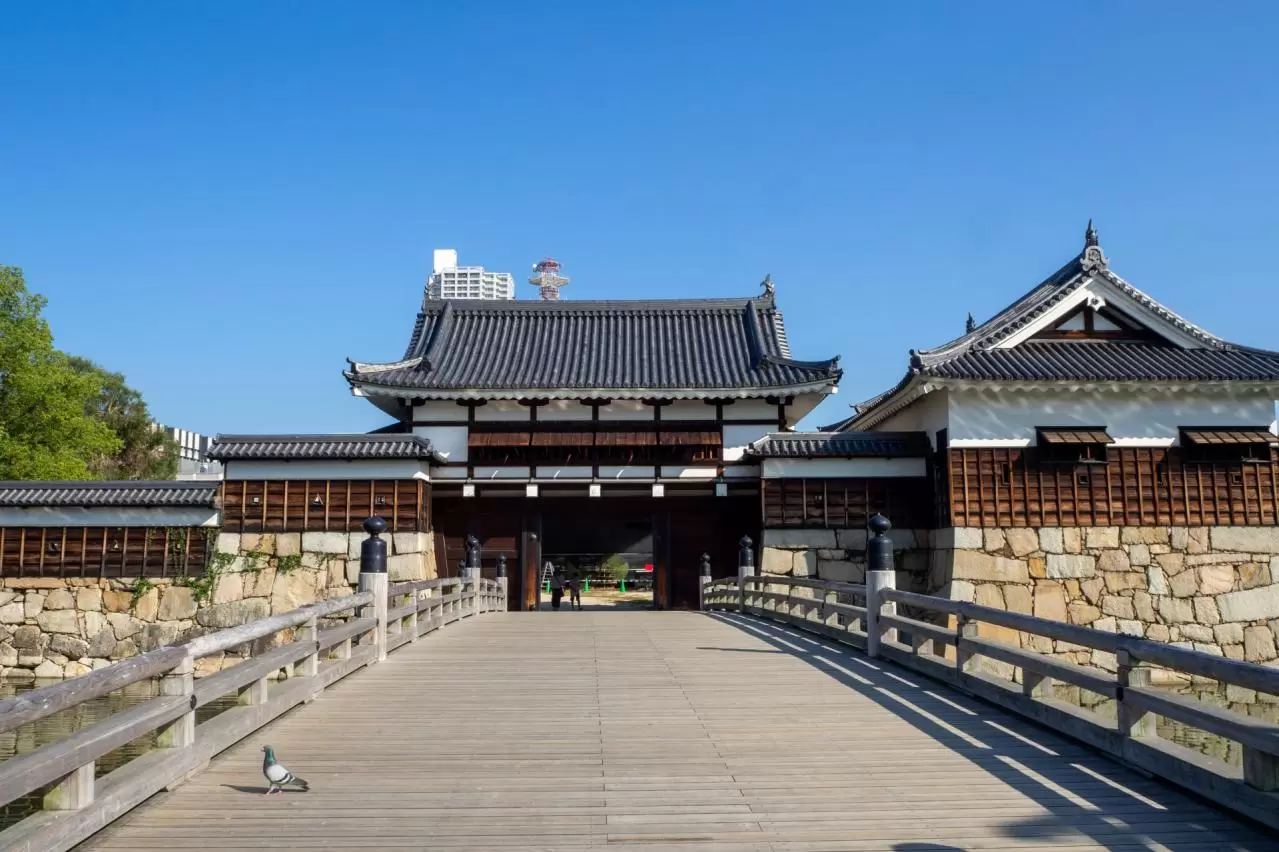
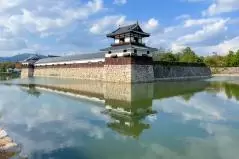
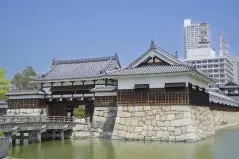
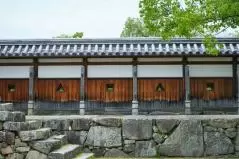
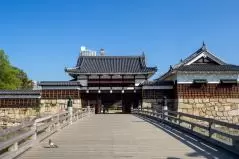
Furthermore, between 1989 and 1994, the Hirayagura, Tamon Yagura, Taiko Yagura, Omote Gate, and other structures in the second bailey were reconstructed in wood. These efforts brought the appearance of Hiroshima Castle during the Edo Period back to life with greater historical accuracy, making it a popular destination where visitors can experience the castle’s history.
### Closure of the Keep
Hiroshima Castle’s keep had been cherished for many years, but due to deterioration of the concrete and aging facilities, it was closed to visitors on March 22, 2026, in consideration of safety. After conveying Hiroshima’s history for approximately 68 years, the keep had completed its role.
Even after the closure, however, visitors can still admire the exterior of the keep. It remains beloved by many as a symbol of Hiroshima.
### Highlights of Hiroshima Castle
#### The Keep and the Second Bailey
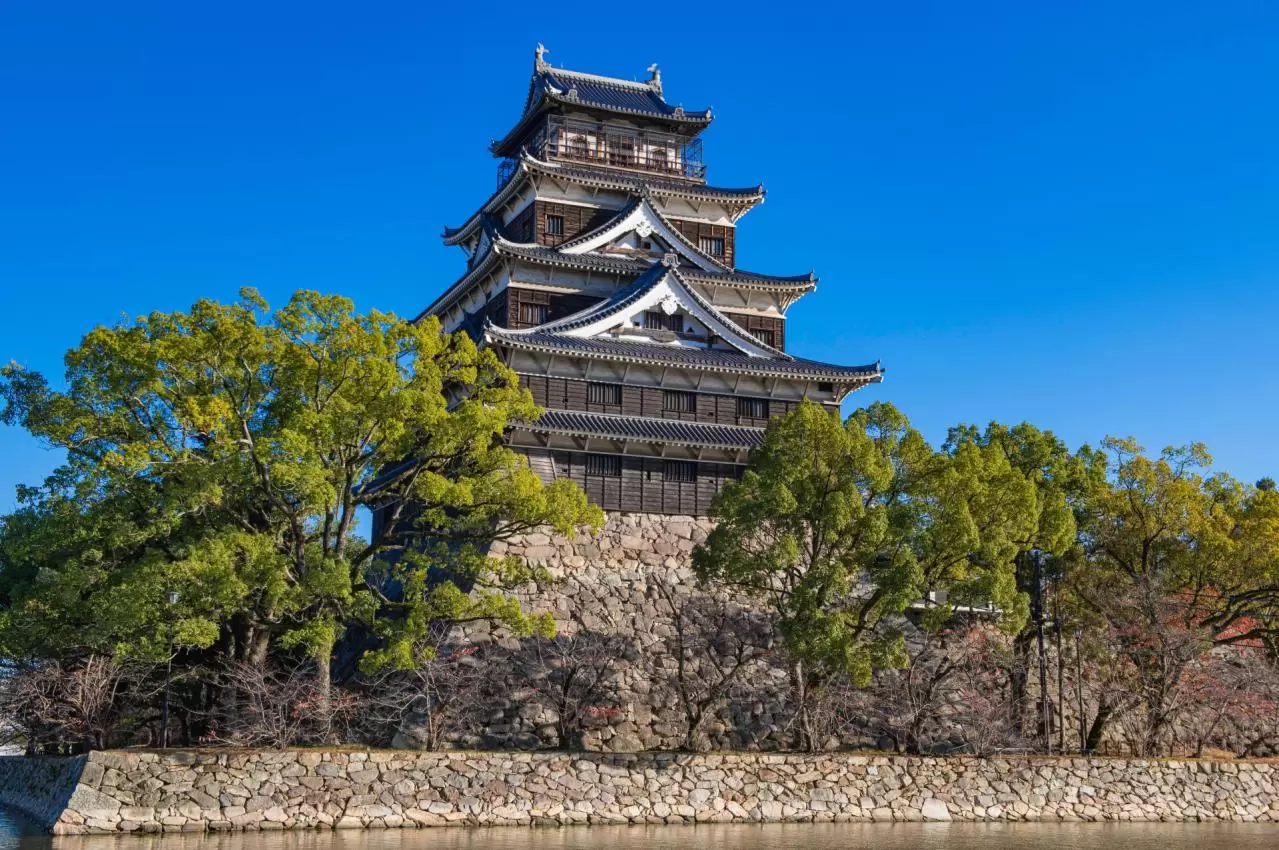
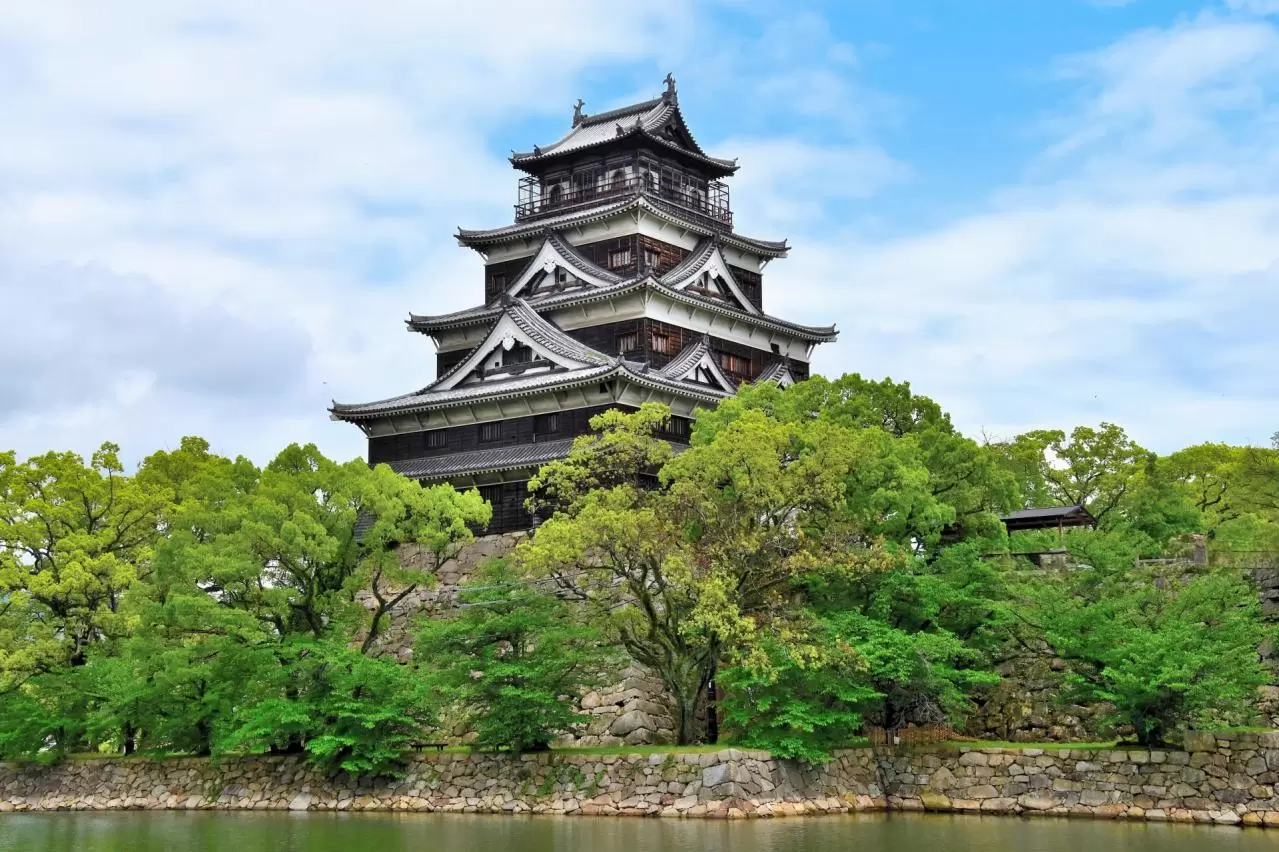
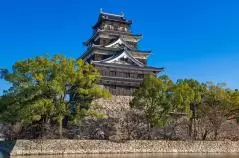
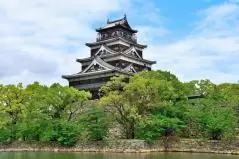
The greatest attraction of Hiroshima Castle is its five-story keep rising above the main bailey. The beautiful scenery, harmonizing with the surrounding trees and water-filled moats, takes on a different appearance in each season. The reconstructed towers and Omote Gate in the second bailey are also well worth seeing.
#### Sightseeing Boats on the Moat
Sightseeing boats operate on the moats around Hiroshima Castle. During the approximately 20-minute boat ride, visitors can learn about the castle’s history and highlights through audio commentary. The view of the keep from the water is particularly impressive, offering a perspective and a way of experiencing the castle that differs from viewing it on land.
#### Hiroshima Gokoku Shrine
Hiroshima Gokoku Shrine stands to the south of Hiroshima Castle. The shrine grounds feature two large carp statues: the “Pair of Carp Statue” and the “Ascending Carp Statue.” The Pair of Carp Statue is believed to bring blessings for household safety, marital harmony, and success in love. The Ascending Carp Statue is said to bring blessings for overcoming difficult challenges, achieving goals, good fortune, and success in one’s career.
### Hiroshima Castle Today
Today, Hiroshima Castle is one of Hiroshima’s most representative tourist destinations, attracting visitors from throughout Japan and around the world. Although it was once destroyed by the atomic bomb, its reconstruction symbolizes Hiroshima’s history and its enduring hope for peace.
In 2006, Hiroshima Castle was selected by the Japan Castle Foundation as one of the “100 Famous Japanese Castles,” reaffirming its historical value.
With its beautiful scenery and long history, Hiroshima Castle is one of Hiroshima’s most celebrated castles.
Hiroshima Tourist Attractions
View List
Shukkei-en Garden
Shukkeien Garden is a daimyo garden built in 1620 as a retreat for the Hiroshima feudal lord, Asano Nagamasa, by his tea-master retainer, Ueda Soko. It is known to h...

Hiroshima Peace Memorial (Genbaku Dome)
The Atomic Bomb Dome is a UNESCO World Heritage Site located in Hiroshima City, and it is a building that was damaged by the first nuclear weapon used in human histo...

Miyajima Aquarium
Miyajima Aquarium is one of the leading aquariums in the Chugoku region, featuring about 350 species and over 13,000 specimens primarily from the Seto Inland Sea. It...


Yamato Museum (Kure Maritime Museum)
The Yamato Museum (Kure Maritime History and Science Museum) is a museum that introduces the history of Kure City, which thrived as a military port where the battles...

Kaijouji Eitaikurashiryoukan (Tetsu no Kujirakan)
Kure Maritime Museum (commonly known as the "Museum of Iron Whale") is the only museum in Japan where you can enter an actual submarine. Here, the submarine "Akishio...

Hiroshima Peace Memorial Museum
The Hiroshima Peace Memorial Museum was opened in 1955 with the aim of conveying the realities of the damage caused by the atomic bomb in Hiroshima to the world, and...

Itsukushima Shrine
Itsukushima Shrine is a sacred place deeply rooted in Japan's history and culture. Constructed in the year 593, the year of Emperor Suiko's ascension, it is known as...