Nagasaki Atomic Bomb Museum
Nagasaki Atomic Bomb Museum Movies


Basic Information
- Spot Name
- Nagasaki Atomic Bomb Museum
- Location
- 〒852-8117 7-8 Hiranomachi, Nagasaki City, Nagasaki Prefecture, Japan
- Access
- From JR Nagasaki Station, take the Nagasaki Electric Tram Line 1 or 3 bound for Akasako, and travel for 12 minutes. Get off at the Atomic Bomb Museum, and it’s a 5-minute walk from there.
- Parking
- 64 regular cars
- Business Hours
- 8:30 AM to 5:00 PM (last entry at 5:30 PM), from May to August until 6:00 PM (last entry at 6:30 PM), and from August 7 to 9 until 7:30 PM (last entry at 8:00 PM).
- Regular Holiday
- Closed from December 29 to December 31. *The library and hall are closed from December 29 to January 3.
- Fees
- Adults: 200 yen
Children (elementary, middle, and high school students): 100 yen - Contact Information
- Phone Number: 095-844-1231
- Official Website
Map
Detailed Information
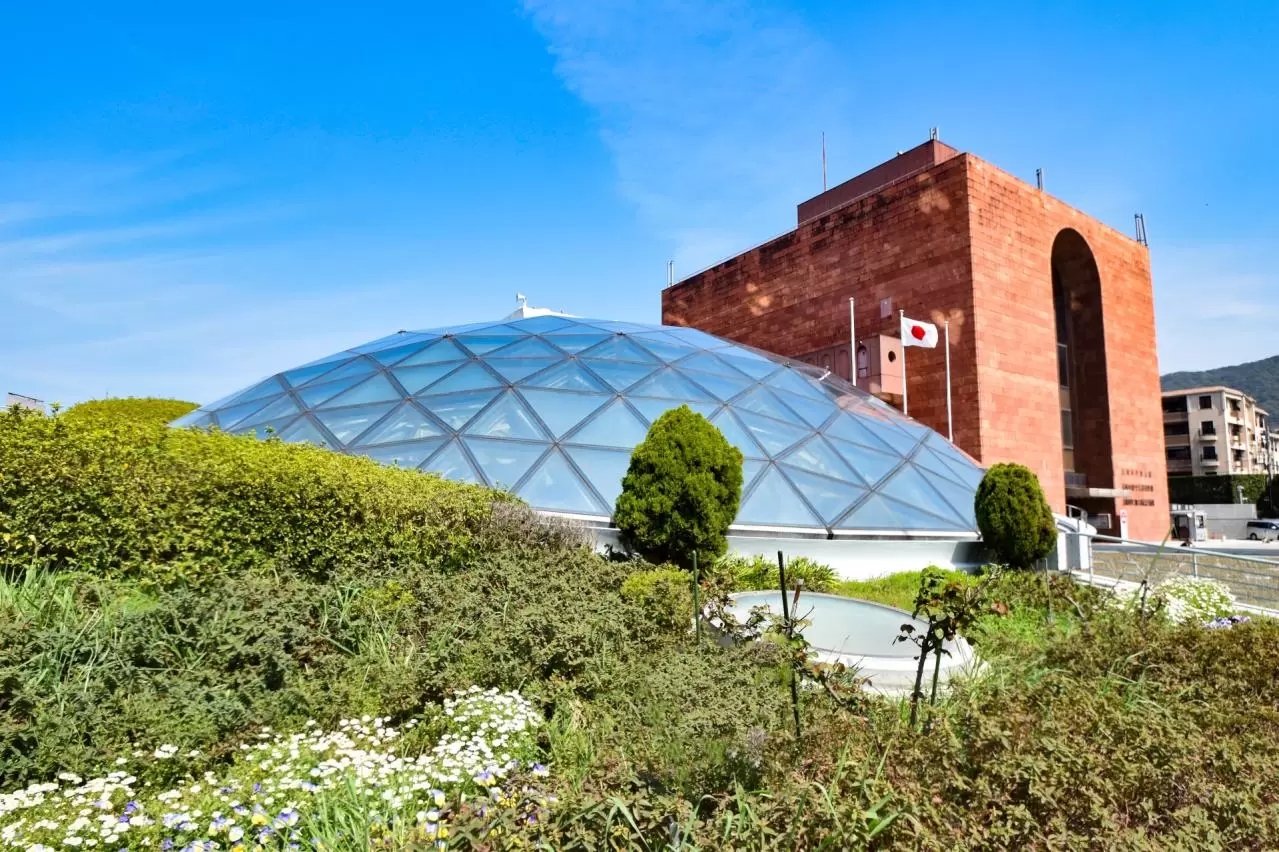
The Nagasaki Atomic Bomb Museum, located in Hirano-machi, Nagasaki City, is a facility that conveys the damage caused by the atomic bombing on August 9, 1945, the threat of nuclear weapons, and the preciousness of peace. In addition to preserving and displaying atomic-bomb-related artifacts, photographs, videos, and survivors’ testimonies, the museum presents the historical circumstances leading to the bombing, the development and proliferation of nuclear weapons, Nagasaki’s post-bombing reconstruction, and efforts toward the abolition of nuclear weapons.
The museum stands on a small hill near the hypocenter of the atomic bombing. The surrounding area includes the Hypocenter Park, Peace Park, and the National Nagasaki Peace Memorial Hall for the Atomic Bomb Victims, making it a central district for peace education in Nagasaki.
Inside the museum are large artifacts damaged by the bombing, everyday objects, victims’ personal belongings, photographs, videos, and testimonies. A reproduction of part of a side wall of Urakami Cathedral, which was destroyed by the atomic bomb, is also on display. Among the exhibits, a pillar clock that stopped at 11:02 a.m.—the exact time the atomic bomb exploded—is particularly well known as a symbol of how Nagasaki and the daily lives of its people were destroyed in an instant.
A major feature of the Nagasaki Atomic Bomb Museum is that it does not simply convey the devastation of the past. It encourages visitors to consider, step by step, why the atomic bomb was dropped on Nagasaki, how the bomb caused such extensive damage, and what the current global situation surrounding nuclear weapons looks like.
## Nagasaki on August 9, 1945
At the end of World War II, on August 6, 1945, the United States military used an atomic bomb against the city of Hiroshima for the first time in human history. Three days later, on August 9, a second atomic bomb was dropped on Nagasaki.
The atomic bomb dropped on Nagasaki was a plutonium-type bomb known as “Fat Man.” The U.S. B-29 bomber carrying the bomb, the *Bockscar*, initially headed toward Kokura, its primary target. However, the skies over Kokura were covered by clouds, smoke, and other obstructions, preventing the visual confirmation required for the bombing. The aircraft therefore headed toward Nagasaki, the secondary target.
Although much of Nagasaki’s urban area was also covered by clouds, part of the city became visible through a break in the clouds, and the atomic bomb was released. At 11:02 a.m., the bomb exploded approximately 500 meters above 171 Matsuyama-machi, Nagasaki City.
The hypocenter was in the Urakami district, which at the time contained many homes, schools, factories, medical facilities, and churches. When the bomb exploded, intense heat rays, blast winds, and radiation struck the people and the city almost simultaneously. Near the hypocenter, many buildings were destroyed instantly, and fires broke out in numerous locations. Urakami Cathedral, Nagasaki Medical University, Shiroyama National School, and the Mitsubishi Arms Factory were among the facilities that suffered catastrophic damage.
According to estimates of the damage announced by the Nagasaki City Atomic Bomb Damage Materials Preservation Committee in 1950, the number of people who had died by the end of December 1945 was 73,884, while 74,909 people had suffered serious or minor injuries. Together, these figures total approximately 149,000 people, which is why the damage is commonly described as “approximately 150,000 people killed or injured.”
It is also estimated that 11,574 homes were completely destroyed by fire, 1,326 were totally destroyed, and 5,509 were partially destroyed. However, the atomic bombing destroyed administrative functions and the local community itself, and many people went missing, making it difficult to determine the full extent of the damage accurately. These figures should therefore be understood as estimates based on surveys conducted at the time.
## The Damage Caused by the Atomic Bomb
Unlike conventional bombs, atomic bombs cause catastrophic damage over a wide area through several effects, including heat rays, blast winds, and radiation.
The fireball produced at the moment of the explosion reached an extremely high temperature and emitted intense heat rays. Near the hypocenter, people suffered severe burns, while clothing and wooden buildings caught fire. Discoloration, melting, and shadow-like marks caused by the heat rays were also left on the surfaces of roof tiles, stone, metal, glass, and other materials.
A powerful blast wind then swept through the city, crushing houses and sending window glass and building materials flying. Many people were injured after being trapped beneath collapsed buildings or struck by flying shards of glass and other debris. Fires that broke out in various areas further expanded the damage.
Radiation was a form of damage unique to the atomic bomb. In addition to the initial radiation released at the time of the explosion, residual radiation caused by radioactive fallout and induced radioactivity also became a serious problem. In some areas, “black rain,” containing dust and soot swept up into the mushroom cloud, also fell.
Even people who appeared to have few external injuries sometimes developed symptoms such as fever, bleeding, hair loss, and diarrhea as time passed, and some later died. Survivors of the bombing were also forced to endure long-term suffering, including anxiety about health problems such as leukemia and cancer, grief over the loss of family members, the loss of their livelihoods, and prejudice and discrimination against atomic bomb survivors.
The damage caused by the atomic bombing did not end on August 9, 1945. It continued to affect the lives of survivors for many years. Children and grandchildren of survivors have also faced psychological and social effects, including anxiety about their health and the challenge of inheriting and preserving their families’ experiences of the bombing.
To date, research has found no clear evidence that the children of atomic bomb survivors experienced genetic health effects caused by radiation. Genetic effects must be distinguished from the psychological and social effects that the experience of the bombing brought to families and subsequent generations.
## The Origins of the Nagasaki Atomic Bomb Museum
In Nagasaki, efforts to collect and preserve photographs, documents, and objects damaged by the atomic bombing began soon after the bombing.
In 1949, a small, single-story, hexagonal facility for displaying atomic-bomb-related materials was established near what is now Hypocenter Park. Although modest in scale, it became an important facility for making damaged artifacts available to the public and conveying the devastation caused by the atomic bomb.
On August 9 of the same year, the Nagasaki International Cultural City Construction Law came into effect. The law reflected the desire to rebuild Nagasaki, which had suffered enormous damage from the atomic bombing, as an international cultural city symbolizing peace and culture.
As part of this initiative, the Nagasaki International Cultural Hall was completed in February 1955, with an atomic bomb materials room established inside. For approximately 40 years, the hall served not only as a place to preserve and display atomic-bomb-related materials, but also as a symbol of Nagasaki citizens’ determination to rebuild and their hope for lasting world peace.
However, as the facility aged and it became necessary to further enhance its exhibition and storage functions, it was rebuilt as one of the projects commemorating the 50th anniversary of the atomic bombing. Demolition of the old building and construction of the new one began in 1993, and temporary exhibitions of the materials were held at the Nagasaki City Peace Hall during the construction period.
The current Nagasaki Atomic Bomb Museum was completed in March 1996 and opened the following month. In fiscal year 2015, the exhibition rooms were renovated as part of a project commemorating the 70th anniversary of the bombing, improving both the exhibition environment and the content on display.
## Permanent Exhibitions Following a Narrative
The permanent exhibition at the Nagasaki Atomic Bomb Museum follows a narrative that begins with Nagasaki before the bombing, proceeds to the moment the bomb exploded and the damage it caused, and then examines the historical circumstances leading to the bombing, the history of nuclear weapons development, reconstruction after the bombing, and activities seeking peace.
As visitors follow the exhibits, they can gradually consider what happened on August 9, 1945, and how that event is connected to the world today.
## Nagasaki Before the Atomic Bombing
The introductory section presents the city of Nagasaki and the daily lives of its people before the atomic bombing.
Photographs from before the bombing show that the Urakami district contained homes, schools, factories, hospitals, shops, and churches, and that people were living ordinary lives with their families. This is an important part of the exhibition because it helps visitors understand that the damage was not merely the destruction of buildings or a number of casualties: every individual had a life, a family, and hopes for the future.
By first showing the peaceful routines of everyday life, the exhibition enables visitors to feel more concretely the magnitude of the destruction and the weight of what was lost in the exhibits that follow.
## The Pillar Clock Stopped at 11:02 a.m.
One of the museum’s most representative exhibits is a pillar clock whose hands remain fixed at 11:02 a.m.
The clock was located in a private home in Sakamoto-machi, approximately 800 meters southeast of the hypocenter. It is believed to have been damaged by the blast and stopped at the moment the atomic bomb exploded. Scorched and deformed, the clock quietly conveys how Nagasaki’s everyday life disappeared in an instant.
For Nagasaki, 11:02 is not merely a time recorded in history. At the Nagasaki Atomic Bomb Victims Memorial Ceremony for the Commemoration of Peace held every year on August 9, a moment of silence is observed at this time.
## Reproduction of Urakami Cathedral
The exhibition room contains a large reproduction of part of a side wall of Urakami Cathedral, which was destroyed by the atomic bomb.
Urakami Cathedral was built by Catholic believers in Urakami who had maintained their faith through a long period of religious persecution. However, because it stood only about 500 meters from the hypocenter, it was almost completely destroyed by the atomic bomb. Priests and worshippers were inside the cathedral when the bomb was dropped, and many people were killed.
Exhibits featuring collapsed bricks, heat-discolored religious statues, and other objects visually convey the destructive power of the atomic bomb while also telling the story of the deep wounds suffered by the history, faith, and community of the Urakami district.
The side wall of Urakami Cathedral displayed inside the museum is not the original structure itself but a reproduction of its post-bombing appearance. By contrast, part of the actual bomb-damaged side wall has been relocated and preserved in Hypocenter Park.
## Large Artifacts Damaged by the Bombing
The museum also displays large artifacts that were actually damaged by the atomic bombing. Structures severely deformed by the blast allow visitors to experience the physical force that the explosion exerted on the city. Through these actual objects, visitors can understand the scale of the atomic bombing in a way that is difficult to imagine from photographs and written descriptions alone.
Glass, roof tiles, tableware, coins, and other objects melted by the heat rays and fires have also been preserved. Some artifacts show several objects fused together by the intense heat, while others have surfaces deformed into a foamy texture, demonstrating how extreme conditions were near the hypocenter.
Large artifacts displayed over the years have included a bomb-damaged water tank and a fire lookout tower. However, the materials on public display may change as exhibitions are updated, so visitors are advised to check the official website for the latest information.
## Victims’ Personal Belongings
The museum displays clothing, lunch boxes, canteens, school supplies, rosaries, and other belongings carried or worn by victims and survivors of the bombing.
These objects are not only physical evidence of the atomic bomb’s destructive power; they also convey the lives of the individuals affected. Learning the owner’s name, family relationships, and circumstances at the time of the bombing reveals that behind the enormous number of victims were people with their own lives and personal stories.
Burned clothing and children’s belongings strongly remind visitors that the atomic bomb harmed not only military facilities but also civilians and children who were living their everyday lives.
## Photographs and Survivors’ Testimonies
Photographs taken in Nagasaki immediately after the bombing record the burned-out urban landscape, collapsed buildings, injured people, and relief activities.
Through survivors’ testimonies and video materials, visitors can learn what people who were there saw, what they experienced, and how they continued to live with those memories. Survivors’ words convey to the present the fear, pain, sense of loss, and anxiety about lasting health effects that cannot be fully communicated by objects alone.
Some photographs and exhibits contain extremely distressing material. When visiting with children, adults should provide additional explanations and help them engage with the exhibits according to their age and level of understanding.
## The History Leading to the Atomic Bombing
The museum presents not only the damage caused on August 9, 1945, but also the historical circumstances leading to the bombing, including the Second Sino-Japanese War, the Pacific War, the development of the atomic bomb, the bombing of Hiroshima, the Soviet Union’s entry into the war against Japan, and the bombing of Nagasaki.
During World War II, the United States pursued the top-secret Manhattan Project, partly against the background of concerns that Germany might develop an atomic bomb first. Many scientists, engineers, and military personnel took part, and enormous sums of money were invested in producing atomic bombs.
In July 1945, the Trinity Test—the world’s first nuclear test—was conducted in New Mexico in the United States. Subsequently, a uranium-type atomic bomb was dropped on Hiroshima, and a plutonium-type atomic bomb was dropped on Nagasaki.
The exhibits show the background to the expansion of the war, the process of developing atomic bombs, the selection of targets, and the decisions surrounding the bombings. This allows visitors to consider the atomic bombings not merely as events that took place on particular days, but within the broader historical course of war and nuclear weapons development.
## How the Atomic Bomb Worked and the Effects of Radiation
Through models, diagrams, and other displays, visitors can learn how atomic bombs differ from conventional bombs.
Atomic bombs utilize the enormous energy released when the nuclei of uranium or plutonium atoms split and the resulting reaction proceeds as a chain reaction. The “Fat Man” bomb dropped on Nagasaki used an implosion design: explosives rapidly compressed plutonium to create a supercritical state, triggering a chain reaction of nuclear fission.
The damage caused by an atomic bomb is not limited to the visible destruction produced by blast winds and heat rays. Radiation capable of injuring the human body was also released, affecting people’s health from immediately after the bombing and for many years thereafter. The existence of this invisible radiation demonstrates the complexity and seriousness of the harm caused by nuclear weapons.
## Reconstruction After the Bombing
The Nagasaki Atomic Bomb Museum presents not only the destroyed city but also relief efforts and the process of reconstruction after the bombing.
Immediately after the bombing, hospitals and relief facilities themselves had been damaged, and many doctors and nurses had been killed or injured. Amid shortages of medicine, food, water, and means of transportation, surviving medical workers, firefighters, rescue teams, and local residents worked to care for the injured and collect the bodies of the dead.
Afterward, the people of Nagasaki rebuilt homes, roads, schools, hospitals, factories, and other facilities while carrying immense grief and facing great hardship. Comparisons between photographs taken immediately after the bombing and photographs of the same locations today show how the ruined city was gradually reconstructed.
However, the rebuilding of the city did not mean that the suffering caused by the bombing had ended. Survivors faced long-term health problems, psychological distress, and social prejudice. The museum’s reconstruction exhibits provide an opportunity to consider not only the renewal of the city, but also the lives of the people who endured and survived amid tremendous difficulties.
## Toward a World Without Nuclear Weapons
The latter part of the permanent exhibition introduces the postwar nuclear arms race, nuclear tests conducted by various countries, the status of nuclear arsenals, and international developments concerning nuclear disarmament.
The atomic bombings occurred in 1945, but nuclear weapons still exist today. Weapons capable of causing catastrophic damage to humanity and the global environment remain in the world, and tensions surrounding nuclear weapons continue.
At the same time, atomic bomb survivors have shared their painful experiences and appealed to the world, saying, “No one should ever have to suffer the same way.” Nagasaki City has also continued its efforts to achieve the abolition of nuclear weapons and lasting peace, expressing the hope that “Nagasaki will be the last place on Earth to suffer an atomic bombing” and working with Hiroshima, cities around the world, and civic organizations.
The museum is not merely a place that conveys the horror of nuclear weapons. Through its exhibits, it is also a place where visitors can consider war and nuclear weapons as issues connected to their own lives and think about what they can do for peace.
## The Library and Peace Education
The museum has a library where visitors can access materials related to the atomic bombing and peace. Its collection includes books, documentary records, photo books, and personal accounts, enabling visitors to study the atomic bombing, nuclear weapons, war, and peace in greater depth.
Facilities for viewing video materials are also available, and the library is used for school peace-education programs, school trips, and individual research. Encountering books and videos after viewing the permanent exhibition allows visitors to explore themes they may not have fully understood from the exhibits alone.
The museum also holds special exhibitions. These focus on particular artifacts, bombed areas, relief activities, the lives of survivors, or issues surrounding nuclear weapons and peace, presenting the realities of the atomic bombing from perspectives different from those of the permanent exhibition.
## Facilities Inside and Around the Museum
The area around the Nagasaki Atomic Bomb Museum contains a number of facilities where visitors can learn about peace from various perspectives.
Adjacent to the museum, the National Nagasaki Peace Memorial Hall for the Atomic Bomb Victims commemorates those who died in the atomic bombing and passes their experiences on to future generations. In its quiet surroundings, visitors can pay their respects to the victims and view written accounts and video testimonies by survivors.
Hypocenter Park, located near the museum, contains the Atomic Bomb Hypocenter Monument, which marks the point directly beneath the location in the air where the bomb exploded. The geological strata from the time of the bombing and part of the bomb-damaged side wall of Urakami Cathedral are also preserved there. Further north, Peace Park contains the Peace Statue, the Fountain of Peace, and other monuments.
For this reason, rather than ending a visit at the Nagasaki Atomic Bomb Museum alone, visitors can gain a more complete understanding of the atomic bombing’s damage, the remembrance of its victims, and the hope for peace in the future by also visiting the National Nagasaki Peace Memorial Hall for the Atomic Bomb Victims, Hypocenter Park, and Peace Park.
The museum also has a gift shop and facilities for resting and eating. However, the café’s services and menu, library procedures, and special exhibitions may change.
Some exhibits may also be unavailable due to exhibition renovations or other circumstances. Visitors are advised to check the official website before visiting for opening hours, closing days, admission fees, and the current availability of exhibits.
## The Significance of Visiting the Nagasaki Atomic Bomb Museum
What visitors see at the Nagasaki Atomic Bomb Museum is not limited to burned buildings and broken objects. The exhibits also reveal the presence of people who lived with their families, went to school, worked, and imagined their own futures.
The clock stopped at 11:02 a.m., glass melted by heat, burned clothing, children’s belongings, the destroyed Urakami Cathedral, and survivors’ testimonies each convey the damage caused by the atomic bombing as a specific human experience.
At the same time, the reconstruction of Nagasaki from a city of ruins demonstrates the strength of the citizens who rebuilt their community despite immense hardship. However, seeing the cityscape as it exists today does not mean that all the wounds of the atomic bombing belong entirely to the past. Survivors’ suffering continued for many years, and nuclear weapons still exist in the world today.
The Nagasaki Atomic Bomb Museum is not merely a place to learn about a tragic history. It is a place to connect that history with our own future. Facing the exhibits directly, mourning the lives that were lost, and considering what war and nuclear weapons do to humanity can provide an important opportunity to reaffirm the preciousness of peace.
Nagasaki Tourist Attractions
View List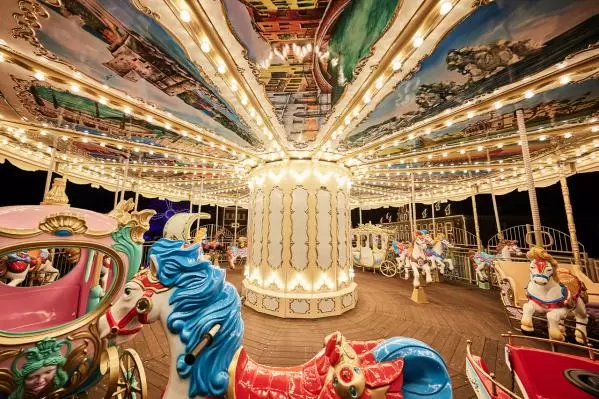
Huis Ten Bosch
Huis Ten Bosch is located in Sasebo City, Nagasaki Prefecture, and is one of the largest theme parks in Japan. Overlooking the beautiful Omura Bay, this resort recre...
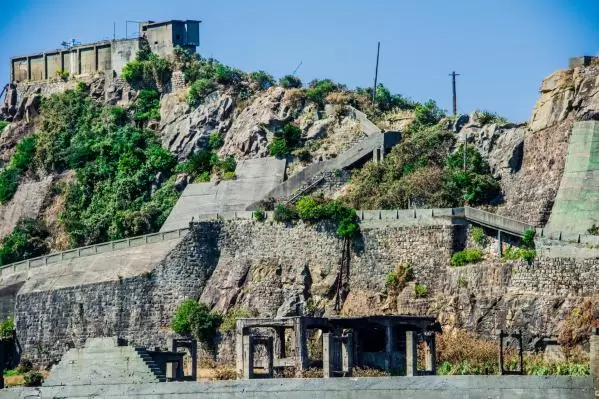
Hashima Island
Hashima Island, also known as Gunkanjima (Battleship Island), is an uninhabited island located approximately 40 minutes by boat from Nagasaki Port, which once thrive...

Glover Garden
Glover Garden is an exotic tourist destination located on the Minami-Yamate Hill, which offers a magnificent panoramic view of Nagasaki Port. This site is one of Nag...
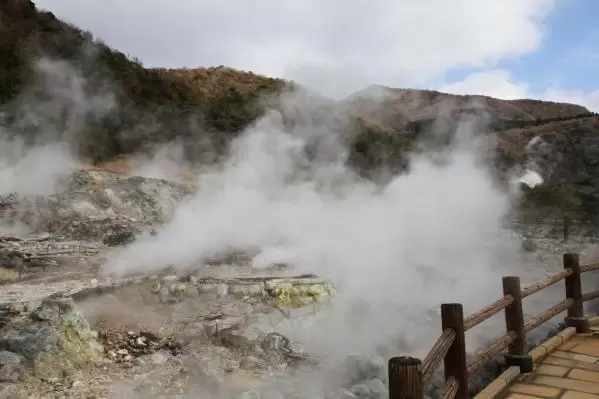
Unzen Jigoku
Unzen Jigoku, a representative tourist spot of Unzen Onsen, presents a hellish landscape filled with the smell of sulfur and billowing steam. It is also known as a s...
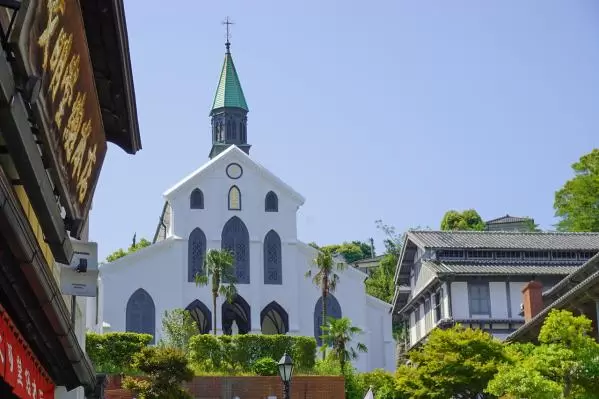
Oura Cathedral
Oura Cathedral is a Gothic-style church built in the foreign settlement of Nagasaki during the late Edo period, and it is the oldest existing church architecture in ...
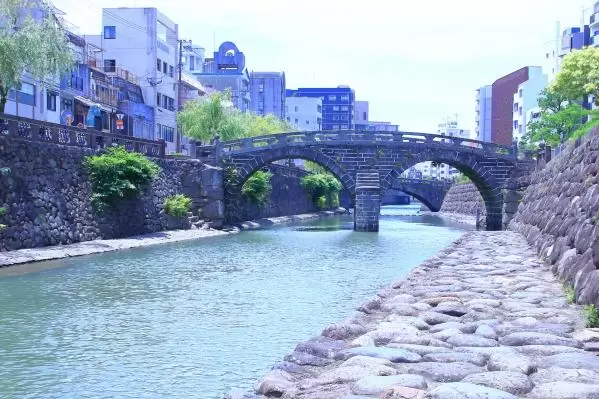
Meghanebashi
Nagasaki's Meganebashi, built in 1634 by the monk Mokushi Nyojo of Kofukuji Temple, is the oldest stone arch bridge in Japan. It got its name because its reflection ...
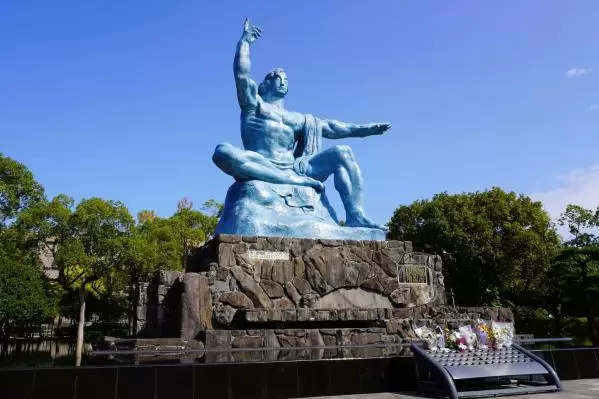
Heiwa Park (Heiwa Memorial Statue, Heiwa Spring)
Nagasaki's Peace Park was created to commemorate the tragic history of the atomic bombing on August 9, 1945, and to pray for peace. The Peace Statue, created by the ...