Heiwa Park (Heiwa Memorial Statue, Heiwa Spring)
Heiwa Park (Heiwa Memorial Statue, Heiwa Spring) Movies


Basic Information
- Spot Name
- Heiwa Park (Heiwa Memorial Statue, Heiwa Spring)
- Location
- 〒852-8118 Matsuyama-machi, Nagasaki City, Nagasaki Prefecture
- Access
- From JR Nagasaki Station, take Nagasaki Electric Tram Route 1 or 3 towards Akasako for 13 minutes, and get off at Heiwa Park station, which is right there.
- Parking
- Parking available
- Business Hours
- Admission is free.
- Contact Information
- Phone Number: 095-829-1162
- Official Website
Map
Detailed Information
Peace Park is a peace memorial facility located in Matsuyama-machi, Nagasaki City. It was developed as a place to pray for the repose of the souls of the victims of the atomic bomb dropped on Nagasaki on August 9, 1945, to pledge never to repeat the tragedy of war, and to call for lasting world peace and the abolition of nuclear weapons.
Peace Park consists of several areas. The “Zone of Wishes,” home to the Peace Statue and the Fountain of Peace, extends across a slightly elevated hill to the north of the “Zone of Prayer,” centered on the Atomic Bomb Hypocenter. In tourist guides and other materials, the Zone of Prayer is sometimes referred to as the Atomic Bomb Hypocenter Park, distinguishing it from the area containing the Peace Statue.
At the center of the Zone of Wishes stands the Peace Statue, a symbol of the citizens of Nagasaki’s desire for peace. The area also contains the Ceremonial Square, the Fountain of Peace, the Tower of Folded Cranes, the Bell of Nagasaki, and peace monuments donated by countries and cities around the world. In addition to conveying the history of the atomic bombing to future generations, it serves as a space for prayer and reflection on peace beyond national, ethnic, and religious boundaries.
## The Atomic Bombing of Nagasaki
At 11:02 a.m. on August 9, 1945, an atomic bomb exploded approximately 500 meters above Matsuyama-machi, Nagasaki City.
Near the hypocenter, buildings were destroyed by intense heat rays, blast waves, and radiation, and fires broke out. Many people lost their lives, while survivors continued to suffer for a long time from severe burns, injuries, and radiation-related health effects.
Today, the monument marking the atomic bomb’s hypocenter stands not in the Zone of Wishes, where the Peace Statue is located, but in the Zone of Prayer to the south. The atomic bomb is believed to have exploded approximately 500 meters above the point indicated by the Atomic Bomb Hypocenter Monument.
The area containing the Peace Statue and the area containing the Atomic Bomb Hypocenter are adjacent, allowing visitors to explore them together as a place for peace education. The Peace Statue and the Fountain of Peace are located in the Zone of Wishes, while the Atomic Bomb Hypocenter Monument and the remains of the former Urakami Cathedral wall are located in the Zone of Prayer.
## The Peace Statue
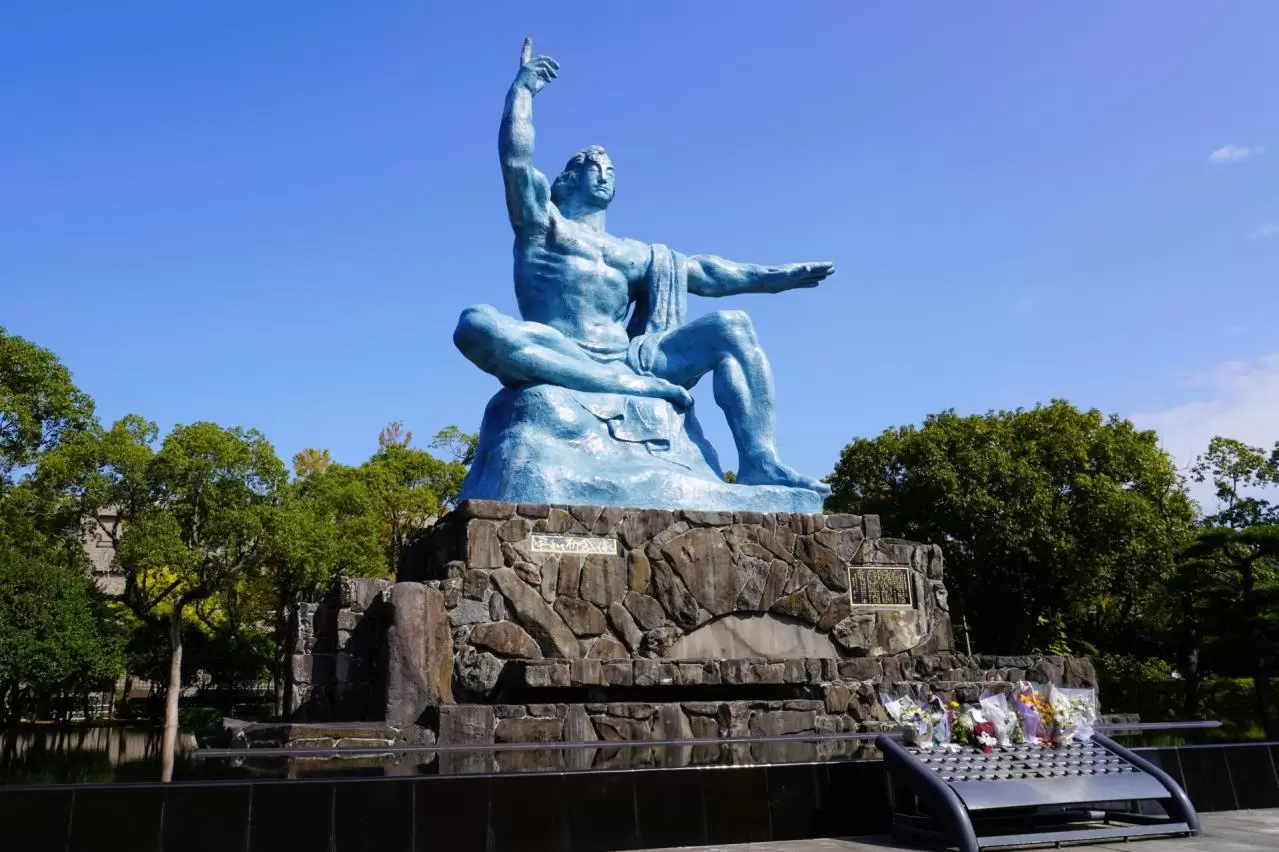
The Peace Statue is the central monument of Peace Park and symbolizes the citizens of Nagasaki’s desire for peace. It was created by Seibo Kitamura, a sculptor from Arima Village in Minamitakaki District—now part of Minamishimabara City, Nagasaki Prefecture—and was completed in 1955.
The bronze statue is approximately 9.7 meters tall and weighs around 30 tons. Since it stands on a pedestal approximately 3.9 meters high, it gives an especially large and powerful impression when viewed up close.
The muscular, robust male figure expresses not only strength but also quiet prayer and deep compassion. The artist intended the statue to symbolize the love of God and the compassion of Buddha, portraying it as a universal human figure transcending race and religion.
The Peace Statue not only serves as a memorial to the victims of the atomic bombing; it is also a work expressing humanity’s determination not to repeat the tragedies of the past and to build a peaceful future.
## The Meaning Embodied in the Peace Statue
Each aspect of the Peace Statue’s distinctive pose carries an important meaning.
The right hand pointing toward the sky represents “the threat of the atomic bomb,” while the left arm extended horizontally symbolizes “peace.” The slightly lowered eyelids express a prayer for the repose of those who died because of the atomic bombing and war.
The quietly seated posture conveys deep prayer, while the raised leg suggests a strong determination to rise up in order to protect peace. However, the basic meanings explicitly explained by the artist are that the right hand represents the atomic bomb, the left hand represents peace, and the face represents prayer for the victims of war.
Words by the artist, Seibo Kitamura, are engraved on the back of the statue’s pedestal. They also make clear that the Peace Statue does not represent any particular ethnic group or religion, but symbolizes the universal human desire for peace.
## The Construction of the Peace Statue
The Peace Statue was planned as a symbol to honor the victims of the atomic bombing and to express the hope for lasting world peace. Seibo Kitamura, who was responsible for its creation, was one of Japan’s leading sculptors. He devoted many years to conceiving and producing the statue, and its unveiling ceremony was held on August 8, 1955.
After its completion, the Peace Statue became a symbol conveying a message of peace from Nagasaki to Japan and the rest of the world. It has watched over the annual Peace Memorial Ceremony held on August 9.
Because it has stood outdoors for many years, the statue requires regular conservation and restoration. Major restoration work was carried out in fiscal 1999.
In 2019, ahead of the 75th anniversary of the atomic bombing, additional restoration work, including repainting, was undertaken to address deterioration over time. The work was completed on March 28 of the same year. Through these conservation efforts, the Peace Statue continues to be carefully preserved as one of Nagasaki’s leading symbols of peace.
## Nagasaki Atomic Bomb Victims Memorial Peace Prayer Ceremony
Every year on August 9, the Nagasaki Atomic Bomb Victims Memorial Peace Prayer Ceremony is held at the Ceremonial Square in front of the Peace Statue. Nagasaki City has designated August 9 as “Nagasaki Peace Day.”
The ceremony is attended by bereaved family members of atomic bomb victims, atomic bomb survivors, citizens, government officials, and representatives from countries around the world. At 11:02 a.m., the time the atomic bomb exploded, all participants observe a moment of silence to mourn the victims.
The ceremony generally includes the enshrinement of the registry of atomic bomb victims, the offering of water, floral offerings, a moment of silence, the Nagasaki Peace Declaration, and a pledge for peace.
In the Nagasaki Peace Declaration, read by the mayor of Nagasaki, the city appeals both domestically and internationally for the abolition of nuclear weapons and the realization of lasting world peace. Atomic bomb survivors and younger generations also deliver pledges for peace, expressing their determination to pass on the devastation that occurred in Nagasaki to future generations.
The Peace Statue quietly watches over the ceremony and symbolizes Nagasaki’s appeal for peace to the world. The details of the ceremony and procedures for attending may change from year to year.
## The Fountain of Peace
The Fountain of Peace is a circular fountain approximately 18 meters in diameter located in front of the Peace Statue. It was built to offer water and pray for the repose of the victims who, their bodies burned by the atomic bomb’s heat rays and fires, died while pleading for water.
Funds were collected from the public for its construction, and the fountain was completed in 1969 with prayers for lasting world peace and the abolition of nuclear weapons. The water-filled fountain symbolizes the “water” so desperately sought by atomic bomb survivors and conveys to visitors the terrible reality of the atomic bombing.
The fountain was designed so that water rises in forms inspired by the wings of doves and cranes, both symbols of peace. The flow of water spreading inward from both sides toward the center resembles birds with outstretched wings, creating a serene and pure landscape in this quiet space of prayer.
To address deterioration over time, renovation work on the tiles and waterproofing work inside the fountain were carried out from October 2018. The work was completed on March 27, 2019.
## A Monument Engraved with a Young Girl’s Account
In front of the Fountain of Peace stands a monument engraved with the account of Sachiko Yamaguchi, who was nine years old at the time of the atomic bombing.
It describes how, after the bombing, she suffered from intense thirst and was forced to drink water with an oily substance floating on its surface. Her account conveys in concrete terms how desperately injured people in Nagasaki sought water immediately after the bombing.
Reading the inscription while facing the water of the Fountain of Peace allows visitors to understand the damage caused by the atomic bombing not merely as figures from the past, but as the suffering and experiences of individual people.
## The Meaning of Offering Water
Water has an extremely important significance in commemorating the victims of the atomic bombing of Nagasaki.
Immediately after the bombing, it was difficult to obtain water in the city because water facilities had been damaged and fires had broken out. Many people suffering from burns and injuries desperately sought water. However, many died without being able to obtain enough.
For this reason, water is offered to the victims every year during the Peace Memorial Ceremony on August 9. The Fountain of Peace is also a permanent memorial to those who died while pleading for water.
Rather than simply admiring the beautiful fountain, it is important when visiting Peace Park to reflect on why water is held in this particular place.
## Peace Monuments Donated from Around the World
The Zone of Wishes contains sculptures and memorials symbolizing peace, donated by countries and cities around the world.
Each work expresses a different theme through a unique artistic form, including life, friendship, family, the future, and liberation from war. Visitors can see a wide variety of works, such as the Statue of Friendship among Nations, Joy of Life, Peace, Statue of a Maiden, Mantle of Peace, Sun and Cranes, Infinity, Celestial Globe, and Statue to Protect Future Generations.
These monuments show that the desire for peace is not limited to the citizens of Nagasaki but is shared by people throughout the world, transcending national borders.
By checking the title, donor country, and artistic intention of each work as they walk through the park, visitors can encounter the ways in which different countries and artists envision peace. Exploring the various works throughout the park, rather than visiting only the Peace Statue, is an important way to experience the Zone of Wishes.
## The Tower of Folded Cranes and Senbazuru
The park contains a “Tower of Folded Cranes” where origami cranes expressing prayers for peace are offered. Countless folded cranes carrying wishes for peace have been dedicated there.
Cranes are widely regarded as symbols of longevity and happiness, and folded cranes have come to represent remembrance of the victims of the atomic bombing and prayers for peace.
The colorful senbazuru—strings of a thousand folded paper cranes—carry the thoughts of individuals who wish to pass on the memory of the atomic bombing and hope for a future without nuclear weapons. When offering folded cranes, visitors should check the guidance provided by Nagasaki City and local facilities and follow the designated locations and procedures.
## The Bell of Nagasaki
The “Bell of Nagasaki” in the Zone of Wishes was created to pray for the repose of those who worked at munitions factories and other facilities in the area at the time of the atomic bombing and who lost their lives as a result.
At that time, munitions factories producing torpedoes, weapons, and other materials stood around the atomic-bombed area. In addition to ordinary workers, mobilized students and women known as the Women’s Volunteer Corps worked there.
The Bell of Nagasaki was erected in 1977, on the 33rd anniversary of the victims’ deaths. On August 9, the bell is rung, carrying prayers for the victims of the atomic bombing and wishes for peace.
During the Peace Memorial Ceremony, a moment of silence is observed at 11:02 a.m., when the atomic bomb exploded. Since the time the bell is rung and its role in the program may change from year to year, official details for that year should be confirmed when introducing the ceremony.
## Former Urakami Prison Branch Site
At the time of the atomic bombing, the Urakami Prison Branch of Nagasaki Prison stood in the area where the Peace Statue is now located.
Because it was close to the hypocenter, the building suffered catastrophic damage, and many people, including staff and inmates, were killed.
Part of the wall that once surrounded the prison branch remains at ground level in the park. Although it can be difficult to notice when focusing only on the Peace Statue and fountain, it is an important reminder that this site itself contains remains of the atomic bombing.
The remains of the former Urakami Cathedral wall and the Atomic Bomb Hypocenter Monument are not in the Zone of Wishes, where the Peace Statue stands, but in the southern Zone of Prayer, generally known as the Atomic Bomb Hypocenter Park. By exploring the park while understanding the location and role of each facility, visitors can gain a deeper understanding of the reality of the atomic bombing.
## Candlelight Memorial Events
On the evening before the Peace Memorial Ceremony and on similar occasions, events may be held around the Fountain of Peace in which numerous candles are lit to mourn the victims of the atomic bombing.
The gentle candlelight arranged throughout Peace Park at night provides an opportunity to reflect on the life of each victim and renew one’s desire for peace.
However, the name, location, content, and hours of such events may change from year to year. Those wishing to participate should check the official information released for that year by Nagasaki City and other relevant organizations before visiting.
## How to Spend Time at Peace Park
Unlike an ordinary tourist attraction, Peace Park is a place to mourn the victims of the atomic bombing and reflect on war and peace.
Rather than simply viewing the Peace Statue, visitors can deepen their understanding of the park’s significance by visiting the inscription at the Fountain of Peace, the former Urakami Prison Branch site, the Bell of Nagasaki, the Tower of Folded Cranes, and the monuments donated by countries around the world in sequence.
It is also recommended to visit the Atomic Bomb Hypocenter Monument and the remains of the former Urakami Cathedral wall in the southern Zone of Prayer, along with the nearby Nagasaki Atomic Bomb Museum and the National Nagasaki Peace Memorial Hall for the Atomic Bomb Victims.
Visiting these facilities together allows visitors to learn broadly about the historical background leading to the atomic bombing, the reality of the damage, the testimonies of atomic bomb survivors, the process of reconstruction, and current issues surrounding nuclear weapons.
When visiting, remember that this is a place for memorialization and prayer, and be considerate of people offering flowers or observing a moment of silence. If taking photographs, it is important to respect the atmosphere and avoid disturbing the prayers of other visitors.
## Access
The Zone of Wishes, where the Peace Statue and Fountain of Peace are located, is in Matsuyama-machi, Nagasaki City, Nagasaki Prefecture.
From Nagasaki Station, take a streetcar bound for Akasako and get off at Heiwa Koen Station. The park entrance is approximately a three-minute walk from the station. By bus, visitors can use the Heiwa Koen bus stop and other nearby stops.
The park has paid parking, but traffic restrictions and congestion may occur during the Peace Memorial Ceremony on August 9 and during the tourist season. Check the latest traffic information before visiting, and use public transportation whenever possible.
There are stairs and slopes from the entrance to the area containing the Peace Statue. An escalator is also available near the entrance, but it may be out of service due to inspections or construction. Visitors concerned about mobility should check the available routes and facilities in advance.
## The Appeal and Significance of Peace Park
The greatest significance of Peace Park lies in conveying the damage caused by the atomic bombing of Nagasaki to future generations and connecting that memory to peace throughout the world.
The right hand of the Peace Statue warns of the threat of the atomic bomb, while the left hand points toward a peaceful future. The slightly lowered eyelids pray for the repose of the victims of war, and the water flowing through the Fountain of Peace commemorates those who died while seeking water after the bombing.
The bell, folded cranes, remains of the prison branch, and monuments donated by countries around the world each convey the preciousness of life and the desire for peace in their own ways.
Today, trees and flowers grow throughout the park, creating a tranquil landscape. Yet this is also a place where many lives were lost to the atomic bomb. By facing both the beauty of the present landscape and the memory of the atomic bombing engraved in the land, visitors can realize that peace in everyday life should never be taken for granted.
Peace Park is not merely a place to mourn a tragedy from the past. From Nagasaki, a city that experienced an atomic bombing, it continues to call for the abolition of nuclear weapons and lasting world peace while asking future generations, “What can we do to protect peace?”
When visiting Nagasaki, it is important to take time to quietly explore not only the Peace Statue and Fountain of Peace but also the various facilities in both the Zone of Wishes and the Zone of Prayer, and to reflect on the value of life and peace.
Nagasaki Tourist Attractions
View List
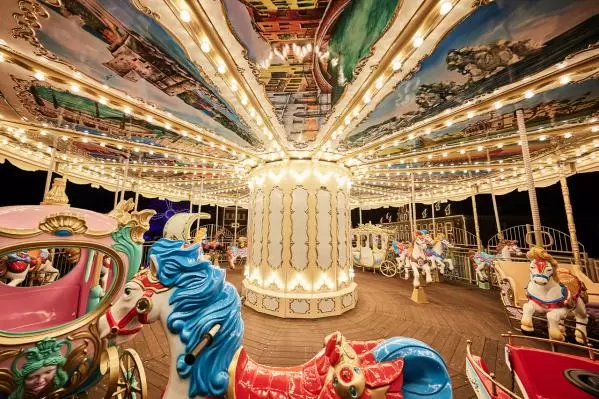
Huis Ten Bosch
Huis Ten Bosch is located in Sasebo City, Nagasaki Prefecture, and is one of the largest theme parks in Japan. Overlooking the beautiful Omura Bay, this resort recre...
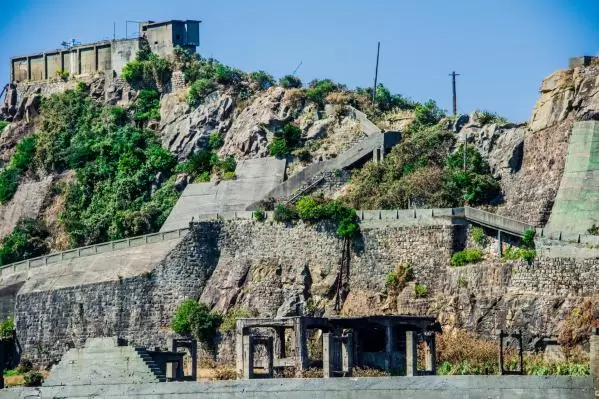
Hashima Island
Hashima Island, also known as Gunkanjima (Battleship Island), is an uninhabited island located approximately 40 minutes by boat from Nagasaki Port, which once thrive...
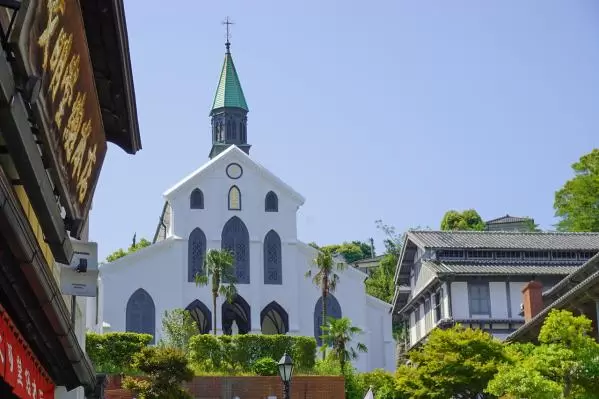
Oura Cathedral
Oura Cathedral is a Gothic-style church built in the foreign settlement of Nagasaki during the late Edo period, and it is the oldest existing church architecture in ...
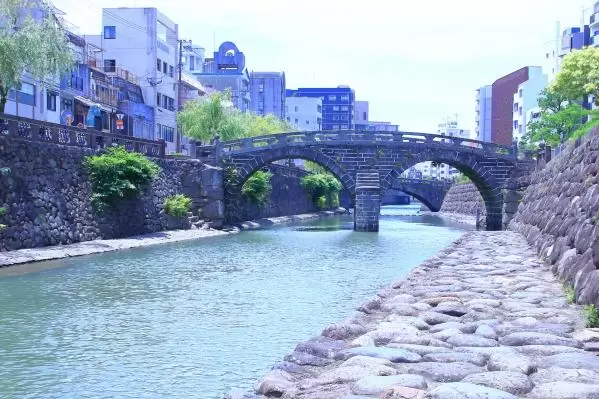
Meghanebashi
Nagasaki's Meganebashi, built in 1634 by the monk Mokushi Nyojo of Kofukuji Temple, is the oldest stone arch bridge in Japan. It got its name because its reflection ...
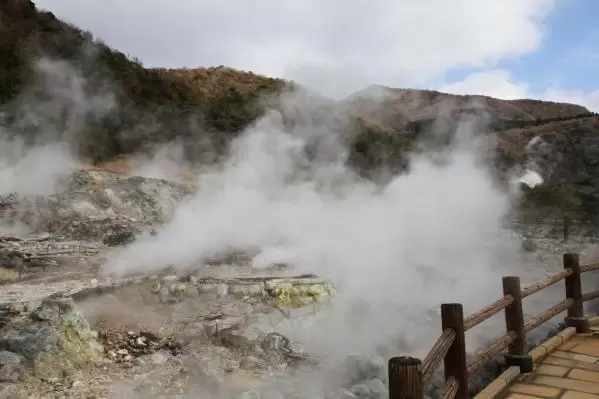
Unzen Jigoku
Unzen Jigoku, a representative tourist spot of Unzen Onsen, presents a hellish landscape filled with the smell of sulfur and billowing steam. It is also known as a s...
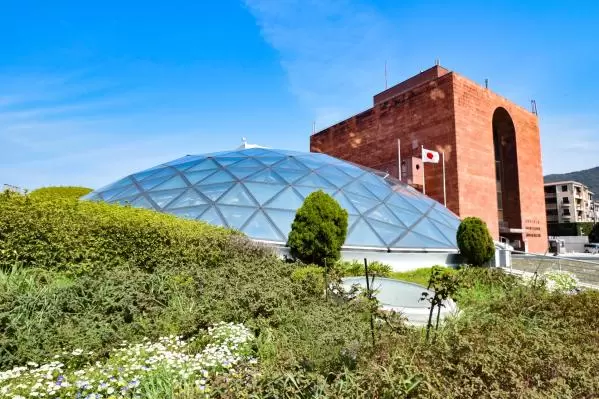
Nagasaki Atomic Bomb Museum
The Nagasaki Atomic Bomb Museum is a facility that conveys the devastation caused by the atomic bombing of Nagasaki on August 9, 1945, and the history of recovery th...
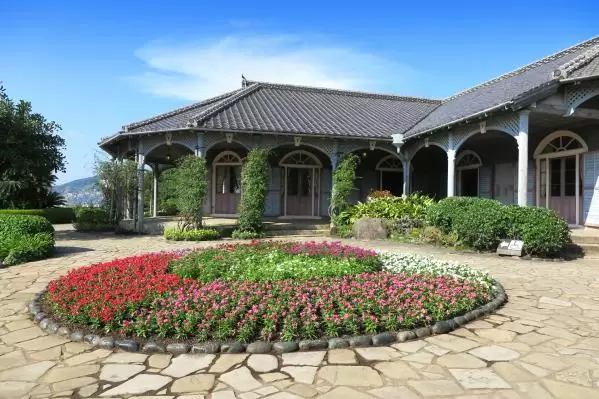
Glover Garden
Glover Garden is an exotic tourist destination located on the Minami-Yamate Hill, which offers a magnificent panoramic view of Nagasaki Port. This site is one of Nag...