Meghanebashi
Meghanebashi Movies


Basic Information
- Spot Name
- Meghanebashi
- Location
- Uo-no-machi, Nagasaki City, Nagasaki Prefecture
- Access
- Take the prefectural bus to the city hall direction from Isahaya Station on the JR Nagasaki Main Line for 5 minutes, and get off at Isahaya Park. It's just a short walk from there.
- Parking
- Please use the nearby paid parking facilities.
- Business Hours
- Open for visits freely.
- Contact Information
- Phone Number:095-829-1193
- Official Website
Map
Detailed Information
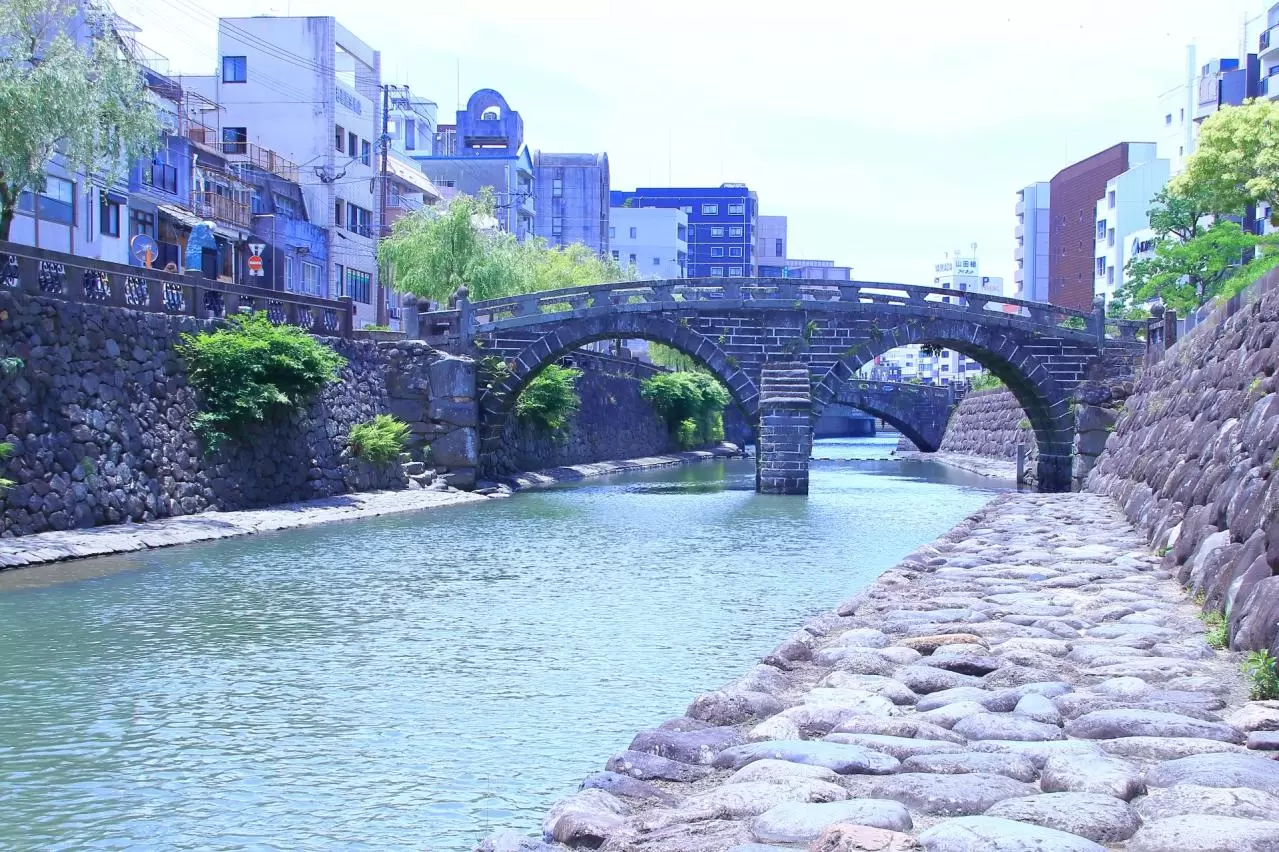
Meganebashi, or Spectacles Bridge, is a stone double-arch bridge spanning the Nakashima River in central Nagasaki. It is one of Nagasaki’s most representative historic structures. It is said to have come to be called “Spectacles Bridge” because the two arches, together with their reflection on the surface of the river, look like a pair of eyeglasses.
The bridge connects Uonomachi and Suwamachi in Nagasaki City. The surrounding area is home to historic stone bridges, temples, shopping arcades, and other attractions. At the same time, the bridge is still used as a local route for pedestrians, making it a place where Nagasaki’s history naturally blends with the everyday lives of its residents.
## History of Meganebashi
Meganebashi is said to have been built in 1634, during the early Edo period, by Mokusun Nyojo, a Chinese monk who was the second chief priest of Kofukuji Temple, one of Nagasaki’s Chinese temples.
At the time, Nagasaki was a thriving port town that developed through overseas exchange with China, the Netherlands, and other countries. Chinese temples such as Kofukuji served as important centers of religious faith and social interaction for the Chinese community living in Nagasaki. The construction of Meganebashi is believed to have been influenced both by stone arch bridge technology introduced from China and by Nagasaki’s international cultural environment.
However, much of the documentation from Kofukuji and the city was lost in the Great Fire of Nagasaki in 1663. As a result, the details of the bridge’s construction remain unclear, including whether Mokusun Nyojo personally designed it and supervised the technical work, or raised funds and commissioned another engineer to build it. For this reason, Nagasaki City’s cultural property descriptions use the cautious wording that “it has long been passed down that the bridge was built by Mokusun Nyojo.”
Meganebashi was one of the earliest stone arch bridges built in Japan and is generally introduced as the oldest stone arch bridge in the country. It was a pioneering example of stone arch bridge construction in Japan. After its completion, stone arch technology spread throughout Nagasaki City and various parts of Kyushu, leading to the construction of many other stone bridges.
## One of Japan’s Representative Historic Bridges
Meganebashi is sometimes counted as one of the “Three Great Bridges of Japan,” along with Nihonbashi in Tokyo and Kintai Bridge in Iwakuni, Yamaguchi Prefecture.
Several different combinations of bridges have been described as Japan’s three great bridges. Nevertheless, there is no doubt that Meganebashi has long been highly regarded as one of the country’s representative historic bridges. The official Nagasaki tourism website also introduces it as a model for the Nijubashi bridges at the Imperial Palace.
On February 9, 1960, the bridge was designated an Important Cultural Property of Japan in recognition of its historical and technical value as a stone double-arch bridge.
## The Structure of the Stone Double-Arch Bridge
Meganebashi’s most distinctive feature is its double-arch structure, consisting of two stone arches placed side by side. As a cultural property, it is classified as a “stone double-arch bridge with balustrades.”
A stone arch bridge supports itself by using the compressive strength acting on the stones to transfer the load placed on the arches to the bridge abutments on either side and to the central pier. Because stone is highly resistant to compression, arches built so that the individual stones press against one another demonstrate remarkable strength.
At Meganebashi, carefully shaped stones have been skillfully assembled to form two beautiful arches. The bridge is also admired for combining the solid strength characteristic of stone architecture with balanced, harmonious beauty.
Measurements and figures vary slightly depending on the method used in different reference materials, but the bridge is approximately 22 meters long. Although it is not particularly large, it is an extremely valuable stone arch bridge with nearly 400 years of history.
## The Origin of the Name
The name “Meganebashi,” or “Spectacles Bridge,” is said to come from the way the two stone arches and their reflection in the water appear as two circular shapes resembling a pair of eyeglasses.
When the water is calm, the bridge is beautifully reflected on the river, creating a distinctive view reminiscent of spectacles. The appearance of the reflection changes depending on the water level and the direction of the light, allowing visitors to enjoy different expressions of the bridge according to the time of day and weather.
Representative viewing spots for seeing the entire bridge include the area around Fukurobashi downstream and the riverside promenade. When the river level is low and conditions are safe, visitors can also look up at the bridge from the water’s edge. From this angle, it is possible to observe the stonework and the shape of the arches in a way that differs from the view from the bridge itself.
## A History of Flooding and Restoration
Although the Nakashima River flows through central Nagasaki, it has caused flooding on numerous occasions in the past. Meganebashi has also suffered damage from floods since its completion.
Old records state that the bridge was washed away in a major flood in 1647 and extensively repaired the following year, in 1648. However, opinions differ as to whether the work involved repairing part of the original bridge or rebuilding it entirely.
The bridge suffered particularly severe damage in modern times during the Great Nagasaki Flood of July 23, 1982. Record-breaking torrential rain caused the Nakashima River to overflow, inflicting extensive damage on the urban areas along its banks. Several stone bridges over the river were washed away, and part of Meganebashi also collapsed.
Restoration work was carried out after the disaster, and the bridge was repaired in 1983. Meganebashi had been designated an Important Cultural Property of Japan in 1960; it was not designated after the Great Nagasaki Flood of 1982. Rather, the restoration was carried out on a bridge that had already been designated an Important Cultural Property.
## The Stone Bridges of the Nakashima River
The area around the Nakashima River, where Meganebashi stands, preserves one of Nagasaki’s most characteristic historic stone bridge landscapes.
During the Edo period, numerous bridges were built in Nagasaki by temples, townspeople, and Chinese merchants. After Meganebashi was completed, Chinese-style stone arch bridge technology spread, and more and more stone bridges were built along the Nakashima River.
Walking along the river, visitors can see not only Meganebashi but also bridges such as Momotanibashi and Fukurobashi, each with its own history.
Rather than visiting Meganebashi alone, taking a walk along the riverside promenade and exploring the group of stone bridges offers a deeper sense of how stone arch bridge technology spread and became established in Nagasaki.
## Riverside Walks
A promenade has been developed along the Nakashima River around Meganebashi, allowing visitors to enjoy a peaceful waterside landscape despite being in the center of Nagasaki City.
When the water level is low and conditions are safe, visitors can descend from the stone steps to the riverbank and take a walk. Some sections of the river have stepping stones, and people can often be seen taking commemorative photographs with the bridge in the background.
The surface of the water, the stone bridges, the trees along the river, and the surrounding cityscape blend harmoniously, making the area ideal for walking and photography. The appearance of the scenery changes with the season and time of day.
However, during rainy weather or after heavy rain, the water level may rise, and the promenade and stepping stones may become slippery. Before going down to the riverbank, check the surrounding conditions and follow local guidance and safety barriers.
## Heart Stones
One of the popular attractions around Meganebashi is the heart-shaped stones embedded in the riverbank masonry, commonly known as “heart stones.”
Some heart-shaped stones are difficult to find unless visitors search carefully. It is said that finding one will bring success in love or happiness, and the stones are enjoyed as a spot associated with good fortune in romance.
There are several stones along the riverbank that appear heart-shaped, but no officially fixed number has been announced. Rather than competing to find an exact number, searching for heart-shaped stones while strolling along the river is itself one of the pleasures of visiting Meganebashi.
When looking for them, visitors should take care not to damage the bridge or riverbank, climb into dangerous areas, or otherwise endanger themselves, and should respect both the protection of the cultural property and their own safety.
## Nighttime Illumination
After sunset, the stone bridges along the Nakashima River, including Meganebashi, are illuminated, creating an enchanting view that differs from the daytime scenery.
During the day, visitors can closely observe the texture of the stone and the way it has been laid. At night, the two arches are softly lit and reflected in the water, making the outline of the bridge appear even more striking.
The nearby Hamanomachi shopping district and restaurants also make it possible to enjoy an evening stroll together with dinner or shopping. Because the lighting schedule and operating details may change depending on the season or special events, it is recommended to check the latest information before visiting.
## Nagasaki Lantern Festival
The area around Meganebashi becomes especially festive during the Nagasaki Lantern Festival.
The festival originated from the Chinese New Year celebration, known as the Spring Festival, traditionally held by the people of Nagasaki Shinchi Chinatown. Today, it has grown into one of Nagasaki’s largest winter events, with colorful lanterns and large illuminated objects displayed throughout the city.
Every year, the area around Nakashima River Park is decorated with predominantly yellow lanterns, creating a beautiful nighttime scene of lights reflected on the water alongside the stone bridges. The combination of historic Meganebashi, Nagasaki’s long history of embracing Chinese culture, and the lanterns celebrating the Spring Festival forms one of the landscapes that best symbolizes Nagasaki’s distinctive “Wa-Ka-Ran” culture—a blend of Japanese, Chinese, and Western influences.
The festival dates, venue decorations, and lighting hours may vary from year to year, so visitors should check the official information for that year before visiting.
## Nearby Attractions
Many historical and cultural attractions are within walking distance of Meganebashi.
Kofukuji Temple, which is associated with Mokusun Nyojo, the monk traditionally said to have built the bridge, is known as the oldest Chinese temple in Japan. Visitors can see its vermilion gate and architecture influenced by Chinese culture. The temple is also important for understanding the historical background in which Meganebashi was created.
The Temple Town district contains many temples in addition to Kofukuji. With a little more time, visitors can also walk to the Nagasaki Museum of History and Culture, Hamanomachi Arcade, Shianbashi, and Nagasaki Shinchi Chinatown.
Combining Meganebashi and the stone bridges of the Nakashima River with the Temple Town district and Nagasaki Shinchi Chinatown creates a walking route where visitors can experience Nagasaki’s distinctive history as a meeting place of Japanese, Chinese, and Western cultures.
## Access and Visitor Guidelines
Meganebashi is an outdoor bridge that is generally open for visitors to view freely. From the direction of Nagasaki Station, it can be reached by tram or bus. The bridge is approximately a two-minute walk from Meganebashi Tram Stop, making it easy to visit while sightseeing in central Nagasaki.
The bridge is still used as a local road. When taking photographs or viewing the bridge, please be considerate of pedestrians and local residents and avoid obstructing their passage.
The riverside promenade and stepping stones can also become slippery and dangerous during rain or when the river is swollen. Follow safety barriers and local instructions, and do not attempt to descend to the riverbank if conditions appear unsafe.
## The Appeal of Meganebashi
The appeal of Meganebashi lies in more than its beautiful appearance. The bridge embodies Nagasaki’s history as a city that flourished through overseas exchange, stone arch bridge technology introduced from China, the efforts to preserve a cultural property through repeated floods, and the everyday lives of residents who continue to use the bridge today.
The fact that a nearly 400-year-old stone double-arch bridge still remains in the heart of Nagasaki and continues to form part of the city’s daily life is itself one of Meganebashi’s greatest values.
During the day, visitors can observe the stonework and arch structure and admire the bridge’s reflection in the water, which resembles a pair of spectacles. At night, they can enjoy the mystical scenery created by the illumination, while during the Nagasaki Lantern Festival they can see the bridge surrounded by colorful lights.
Meganebashi offers many ways to enjoy a visit, from learning about history and civil engineering to walking through the city, taking photographs, and searching for heart stones. It is one of Nagasaki’s most representative attractions and a place well worth visiting.
#Townscape/Bikan Historical Quarter #Cultural assets/historic sites
Nagasaki Tourist Attractions
View List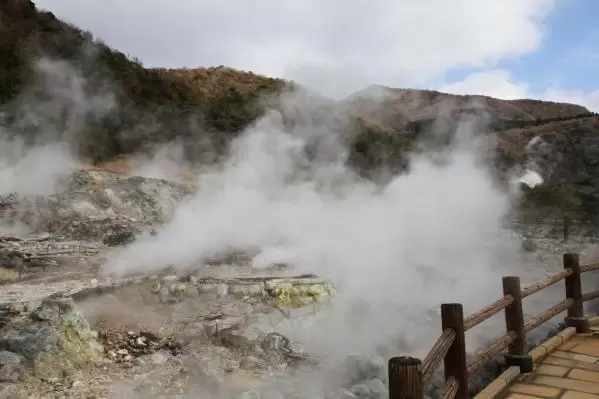
Unzen Jigoku
Unzen Jigoku, a representative tourist spot of Unzen Onsen, presents a hellish landscape filled with the smell of sulfur and billowing steam. It is also known as a s...
Hashima Island
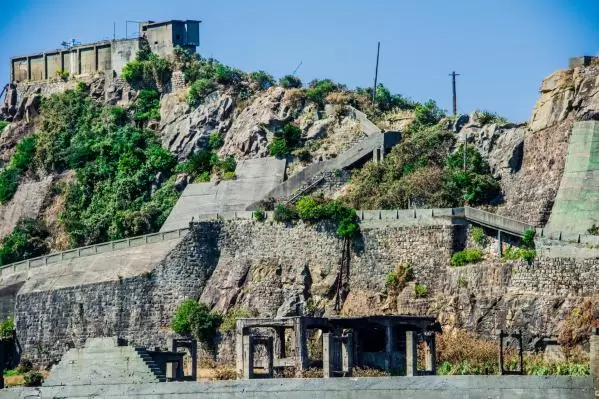
Hashima Island, also known as Gunkanjima (Battleship Island), is an uninhabited island located approximately 40 minutes by boat from Nagasaki Port, which once thrive...
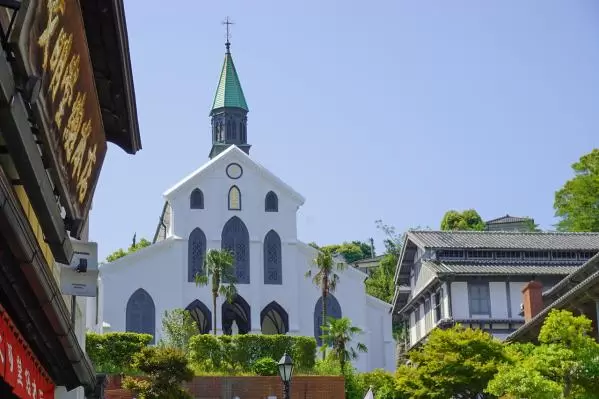
Oura Cathedral
Oura Cathedral is a Gothic-style church built in the foreign settlement of Nagasaki during the late Edo period, and it is the oldest existing church architecture in ...
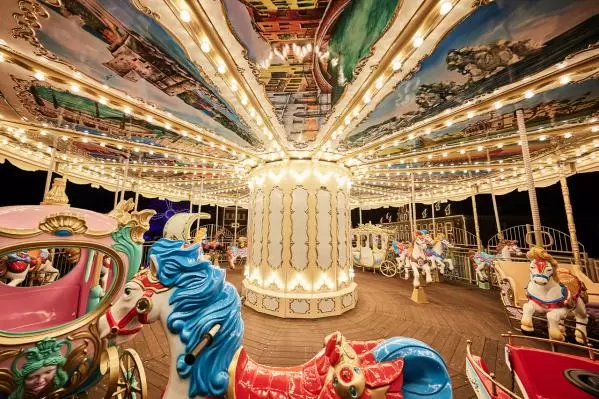
Huis Ten Bosch
Huis Ten Bosch is located in Sasebo City, Nagasaki Prefecture, and is one of the largest theme parks in Japan. Overlooking the beautiful Omura Bay, this resort recre...
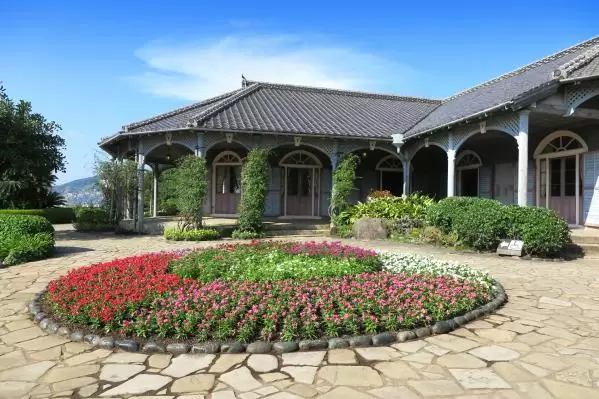
Glover Garden
Glover Garden is an exotic tourist destination located on the Minami-Yamate Hill, which offers a magnificent panoramic view of Nagasaki Port. This site is one of Nag...
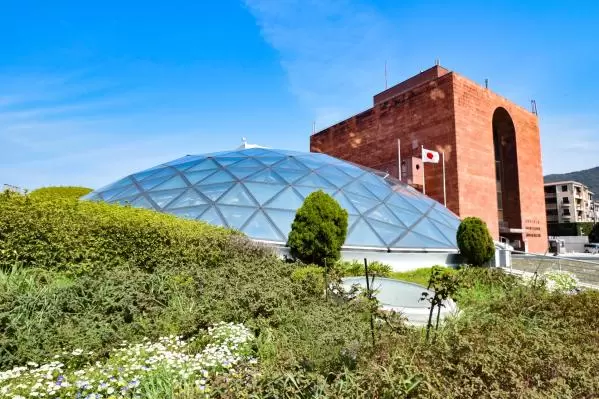
Nagasaki Atomic Bomb Museum
The Nagasaki Atomic Bomb Museum is a facility that conveys the devastation caused by the atomic bombing of Nagasaki on August 9, 1945, and the history of recovery th...
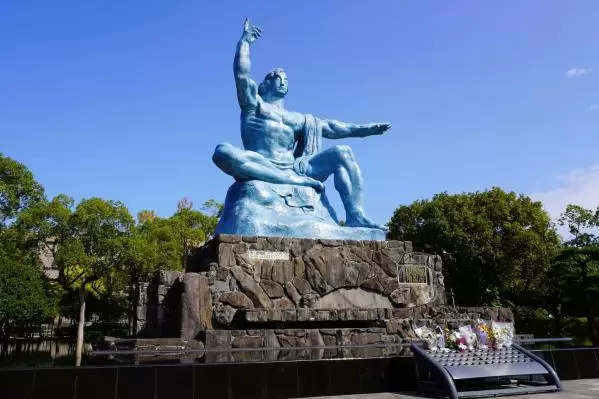
Heiwa Park (Heiwa Memorial Statue, Heiwa Spring)
Nagasaki's Peace Park was created to commemorate the tragic history of the atomic bombing on August 9, 1945, and to pray for peace. The Peace Statue, created by the ...