

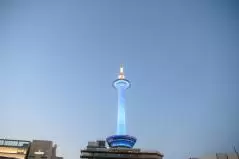
Kyoto Tower
The tower also serves as a starting point for tourists, featuring touchscreen information monitors and QR code-based information provision in the observation deck. Additionally, within the observation deck, there is a "Tawawa-chan Shrine," where the official mascot character "Tawawa-chan" of Kyoto Tower is enshrined. It is said that this shrine grants benefits for matchmaking, and cute ema (votive tablets) and omikuji (fortune slips) are available.
Notably, this tower is built using a monocoque structure without steel framing. Inside the tower, there are 285 steps, allowing visitors to enjoy breathtaking views from a height of 131 meters above ground. Since its opening on December 28, 1964, it has attracted 400,000 to 500,000 visitors every year, becoming a renowned landmark for tourism in Kyoto. Moreover, the tower features various fun spots, and it is loved not only by tourists but also by local residents. It is expected to continue contributing to the revitalization of Kyoto with diverse developments.
Kyoto Tower Movies


Basic Information
- Spot Name
- Kyoto Tower
- Location
- 〒600-8216 721-1 Higashishio Koji-cho, Shichijo-dori Karasuma, Shimogyo-ku, Kyoto City, Kyoto Prefecture, Japan
- Access
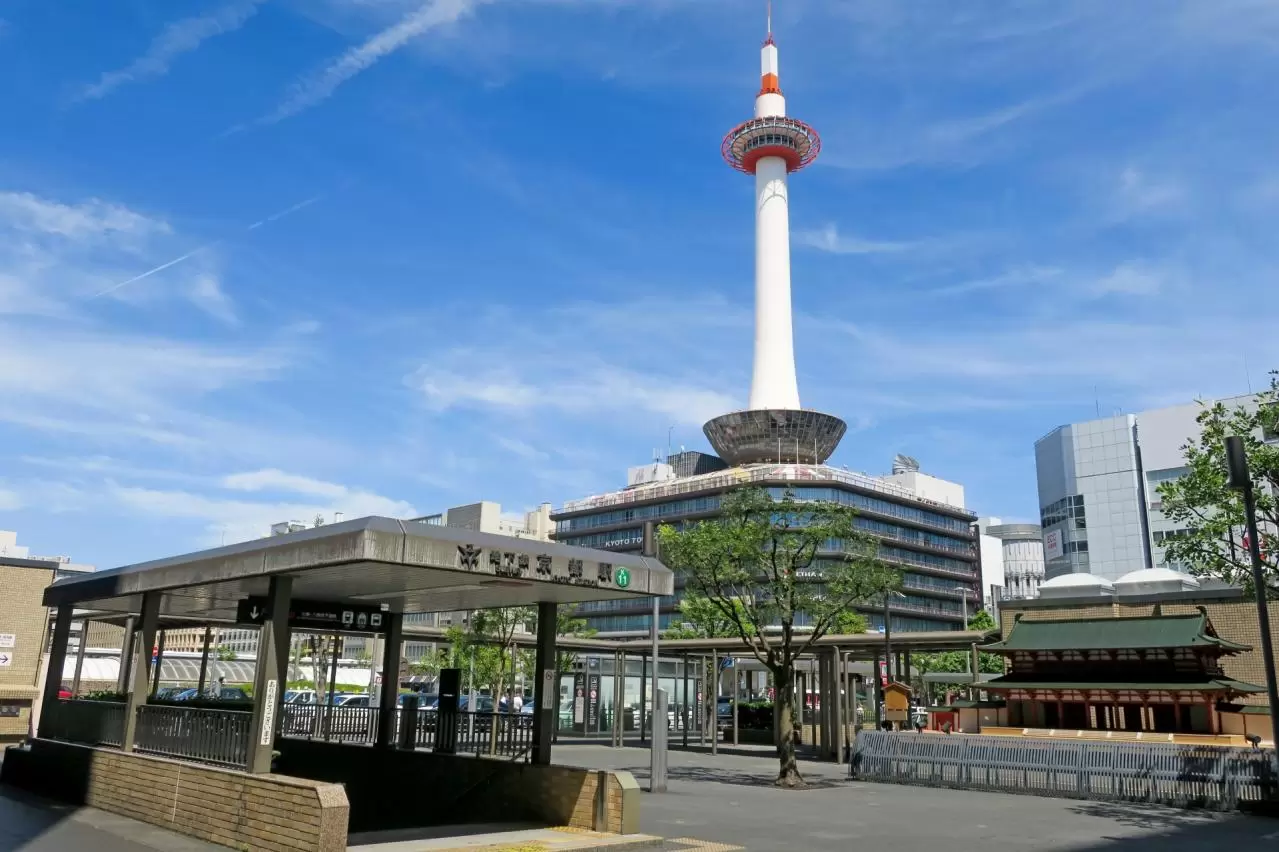
- Immediately from JR Kyoto Station, a 2-minute walk from the "Kyoto Station Front" bus stop.
- Parking
- No dedicated parking available. Please use the nearby coin parking.
- Business Hours
- 10:00 AM - 9:00 PM (Last admission at 8:30 PM)
- Regular Holiday
- Open year-round.
- Fees
- Adults: 900 yen
High school students: 700 yen
Elementary and middle school students: 600 yen
Children (3 years and older): 200 yen - Contact Information
- Phone Number:075-361-3215
- Official Website
Map
Detailed Information
Kyoto Tower was built with the goal of serving as a “major center for industry, culture, and tourism,” contributing to the development and revitalization of Kyoto City. Its observation deck opened on December 28, 1964, the same year the Tokyo Olympics were held, and for more than 60 years since then, it has been loved by residents and visitors alike as a symbol of Kyoto.
An elegant form inspired by a lighthouse
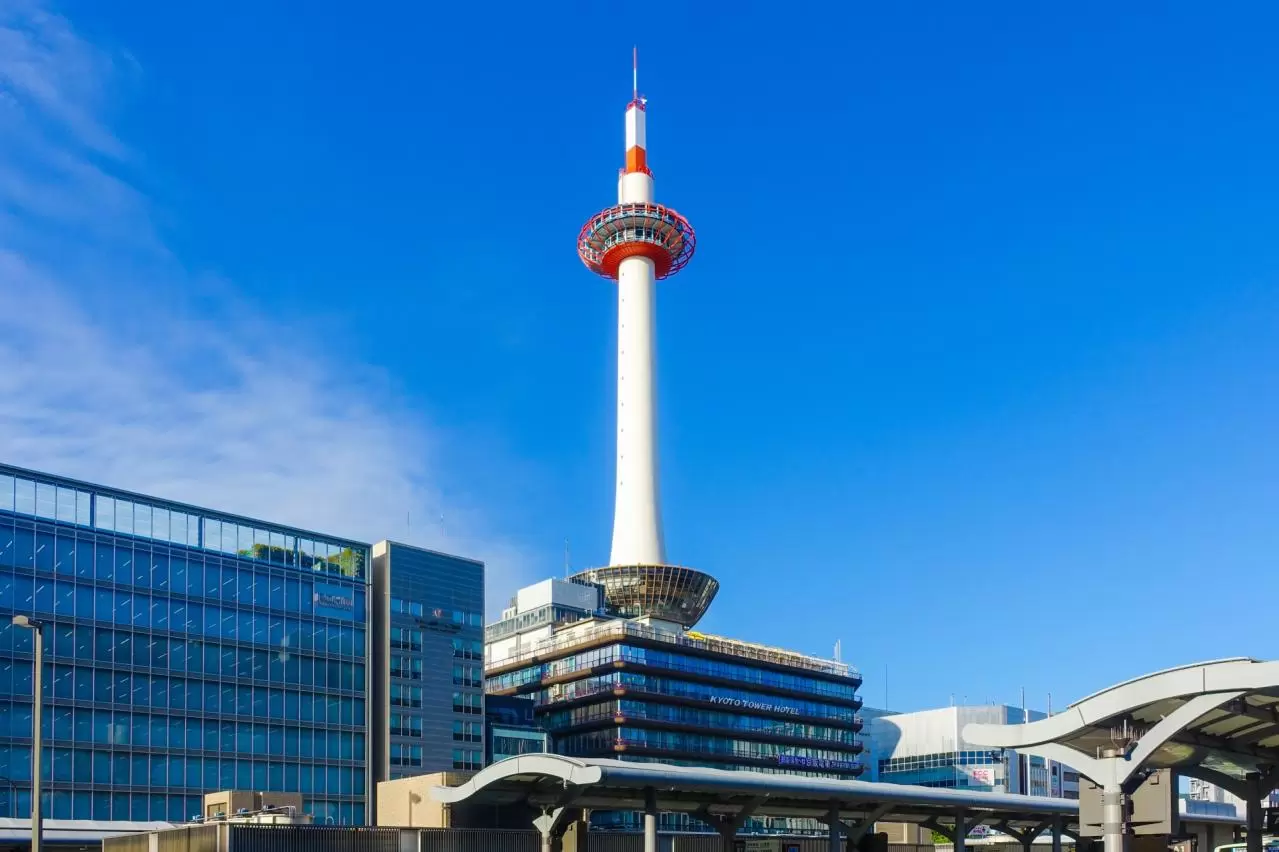
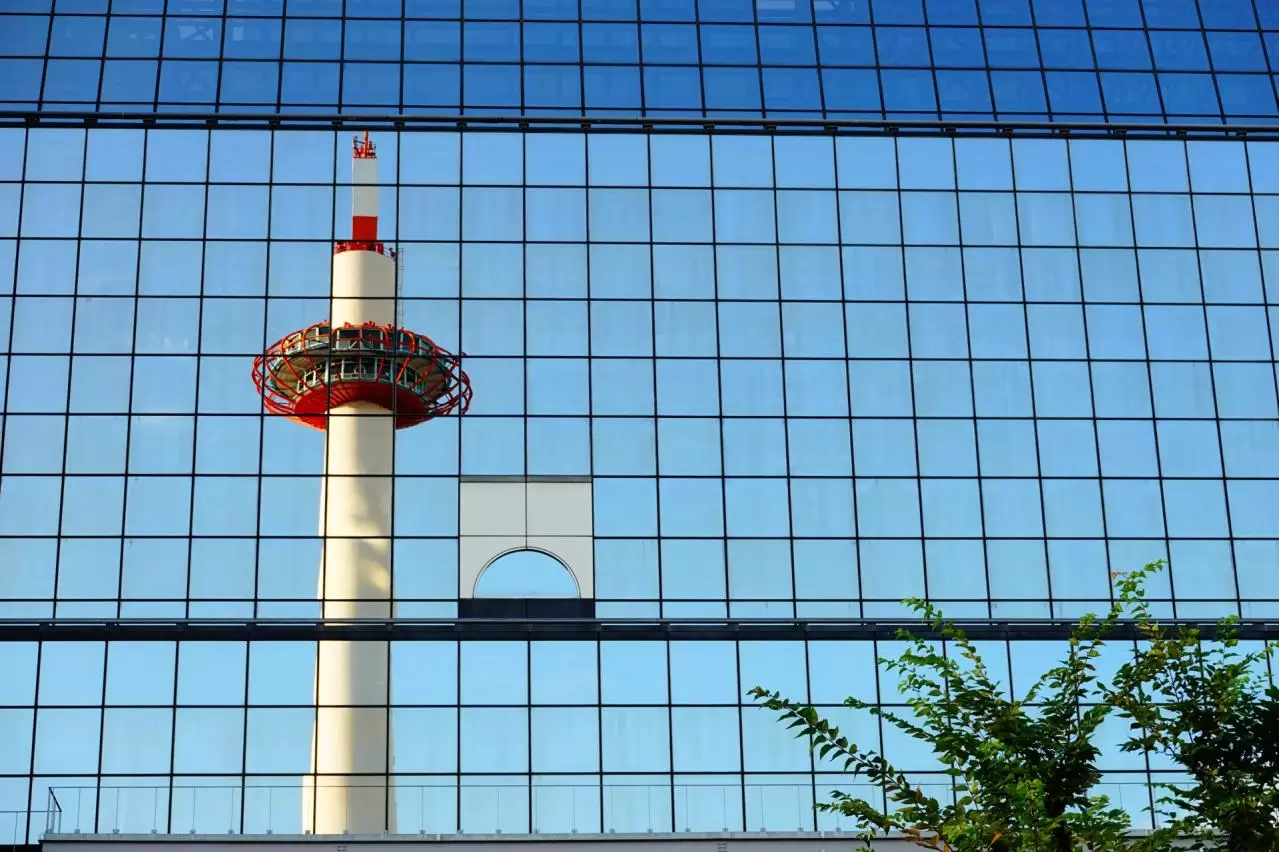
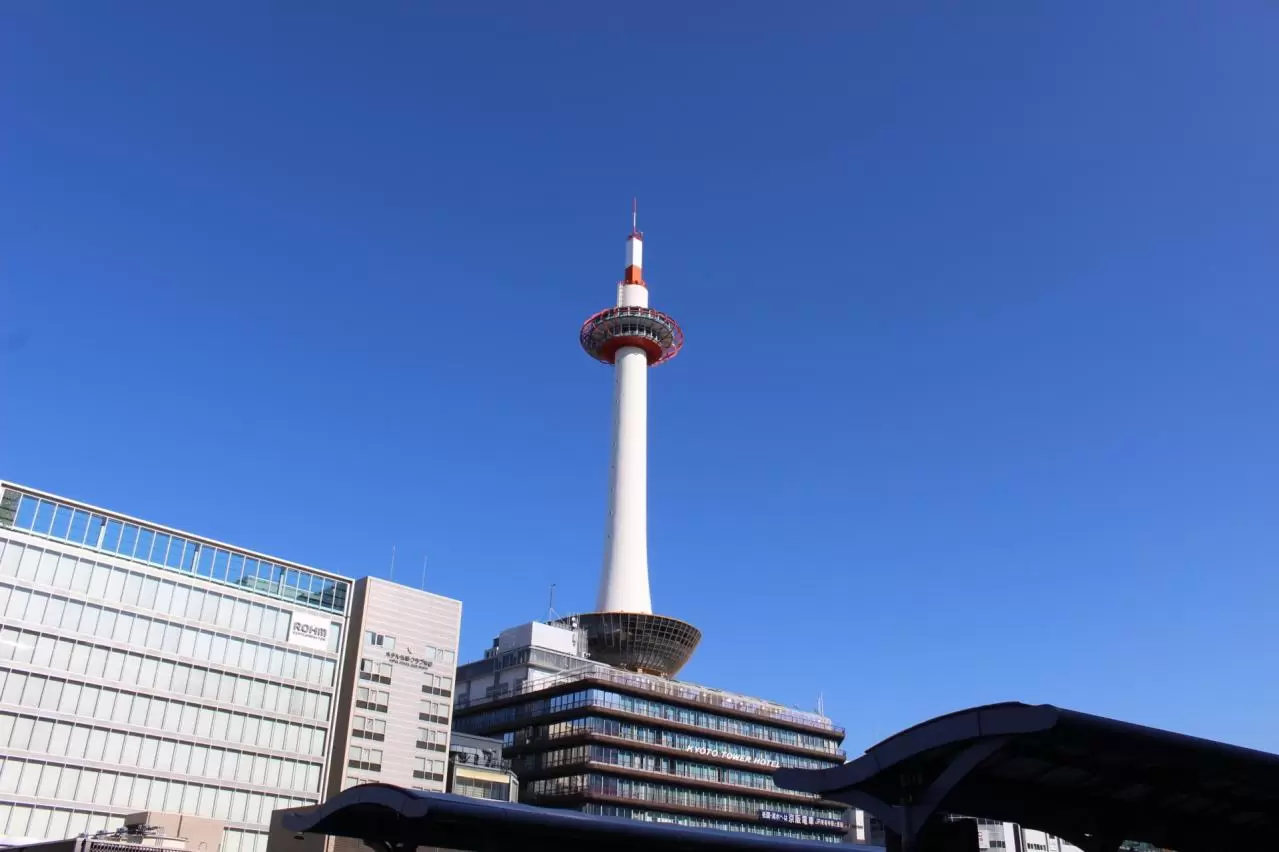
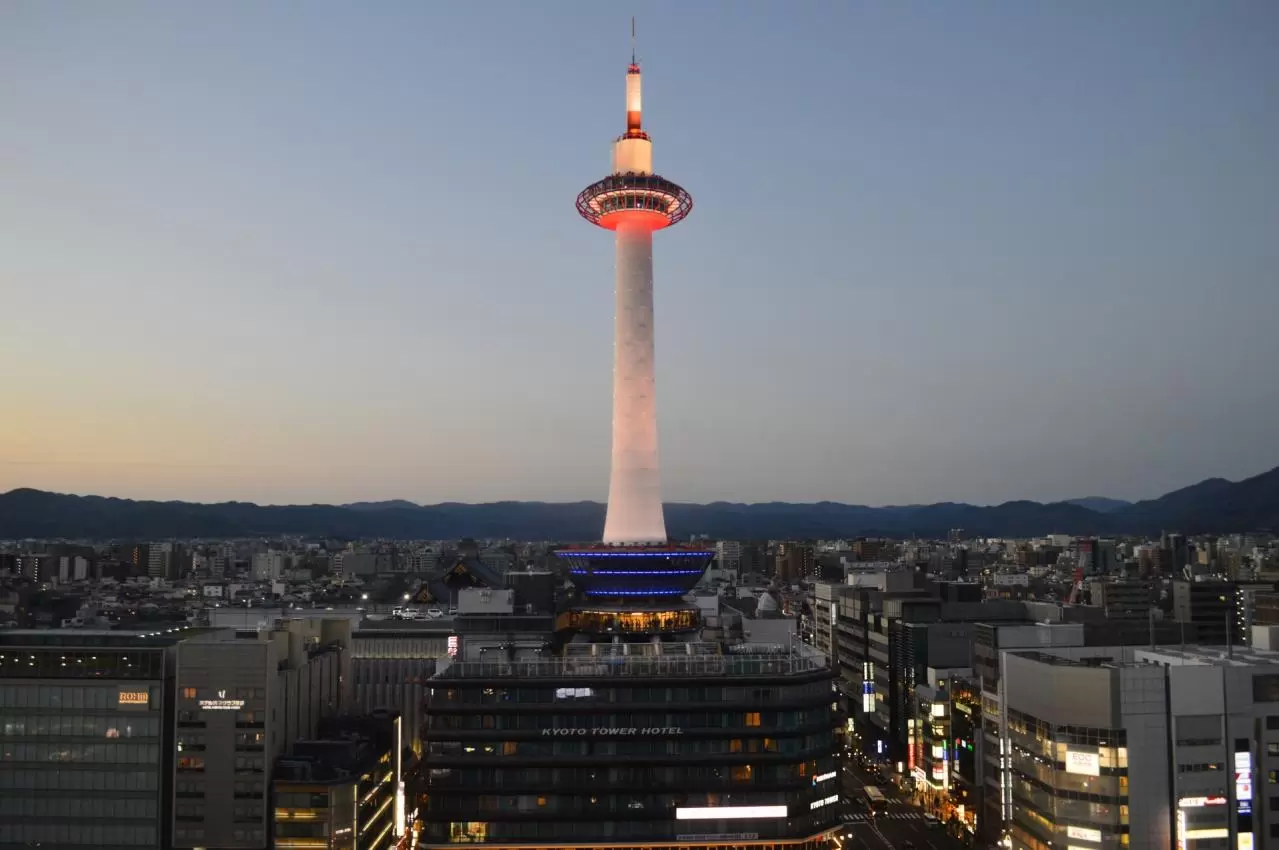
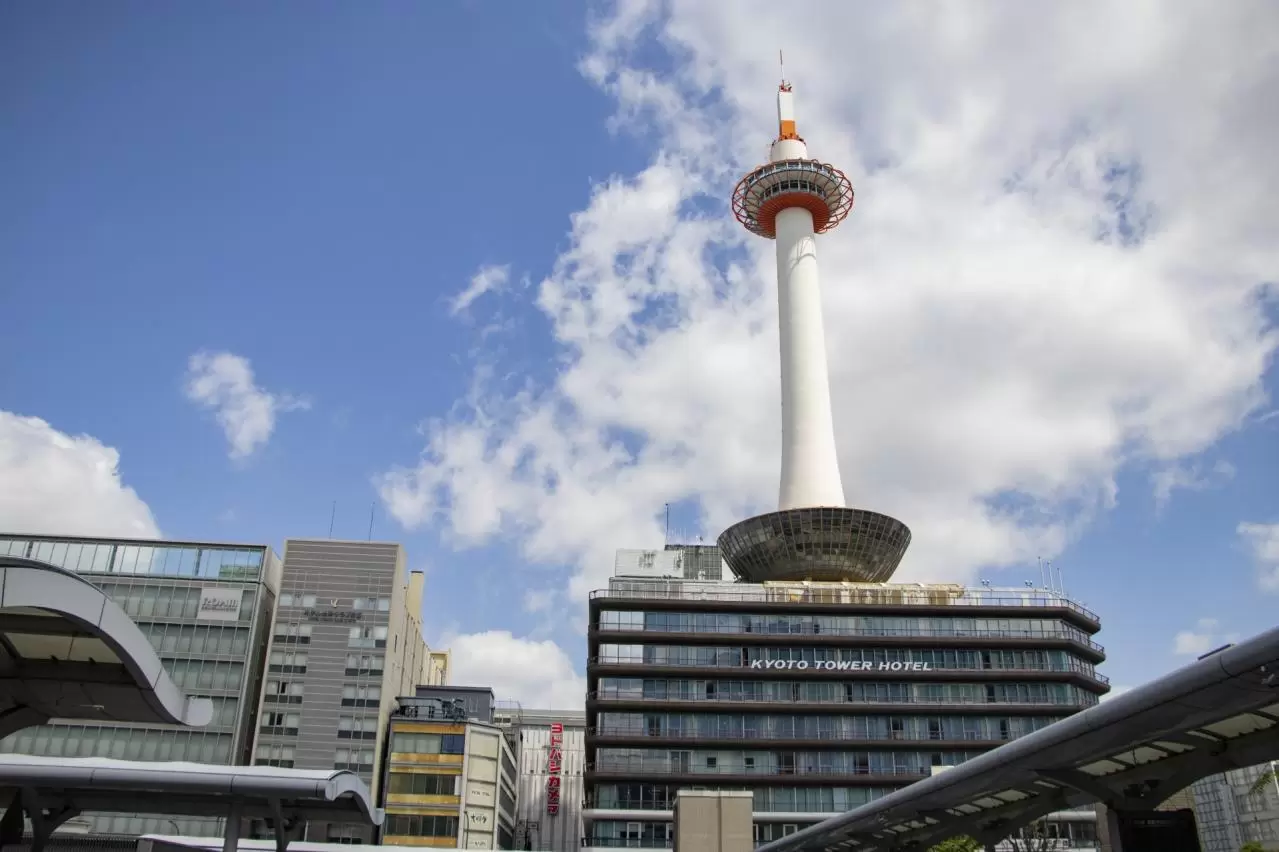
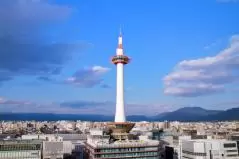
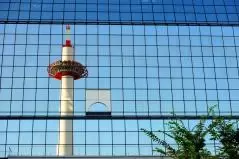
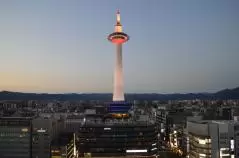
Kyoto Tower was designed with the concept of a “lighthouse in the city,” illuminating Kyoto, a city without an ocean. Its slender white form blends gently with the scenic old capital, like a lighthouse standing amid streets lined with undulating tiled rooftops.
Reaching a height of 131 meters, it is the tallest structure in Kyoto City. For example, it stands at more than twice the height of the Five-Story Pagoda of To-ji Temple, which is about 55 meters tall.
Japan’s first monocoque structure
One of its major architectural features is that it was the first building in Japan to adopt a monocoque structure (stress-skin structure) without using any steel framework. This technology, also used in aircraft and ships, forms the tower by layering cylindrical steel plates.
Thanks to this structure, the tower has a safety factor more than twice that of ordinary buildings, making it extremely sturdy and highly resistant to natural disasters such as earthquakes and typhoons. The tower is built on the rooftop of the Kyoto Tower Building, which has three basement floors and nine above-ground floors, and special structural measures were also taken to support the tower’s approximate 800-ton weight.
A sweeping panorama from the observation deck
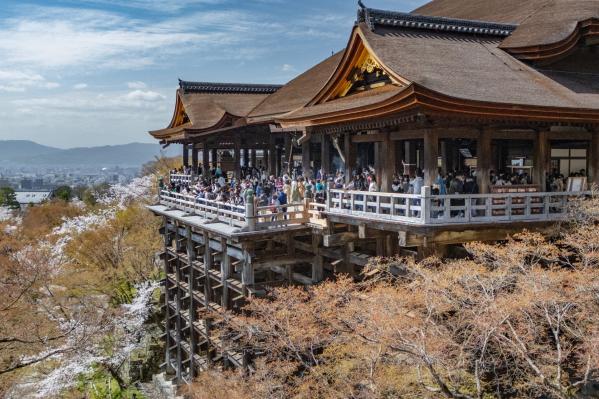
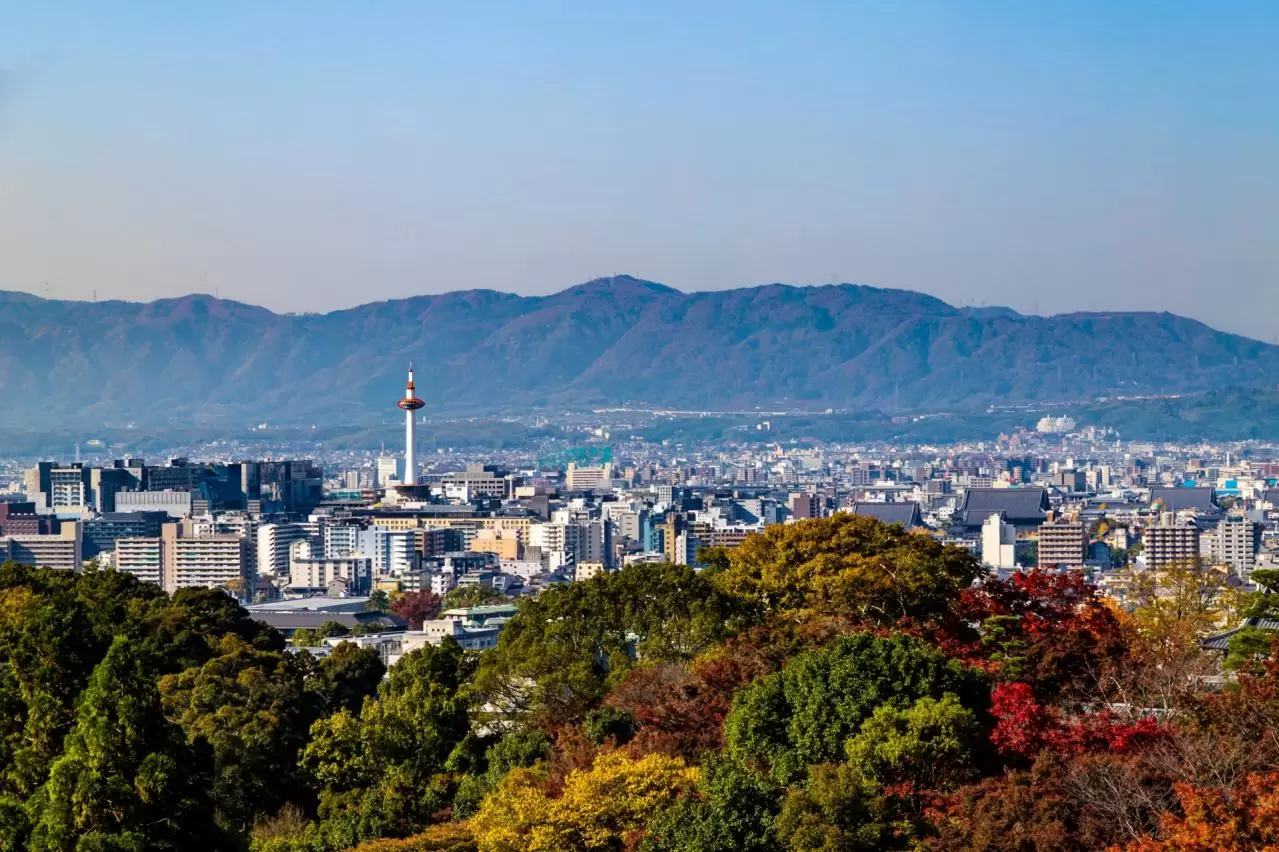
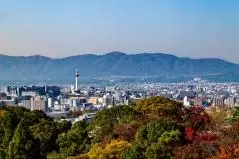
From the observation deck located about 100 meters above ground, visitors can enjoy a 360-degree view of Kyoto’s cityscape. In every season, sights such as the UNESCO World Heritage sites of Kiyomizu-dera and To-ji, the Great Torii gate of Heian Shrine, and the lush Mt. Hiei spread out before them, delighting all who visit.
The observation deck is also equipped with free-to-use telescopes, touch-panel sightseeing information monitors, and QR code-based tourist information services, making it a convenient starting point for sightseeing.
Inside the observation deck is also “Tawawa-chan Shrine,” dedicated to Kyoto Tower’s official character, Tawawa-chan. Said to bring good fortune in matchmaking, it features adorable ema plaques and omikuji fortune slips, making it especially popular among young couples and women.
Kyoto Tower Sando
From the basement level 1 to the 2nd floor of the Kyoto Tower Building is Kyoto Tower Sando, a commercial facility divided into three areas: food, shopping, and experiences. It is popular not only with tourists but also with local residents.
Basement 1: Food Hall
A gathering place for long-established local favorites and trendy popular shops, where visitors can enjoy a wide variety of gourmet options from lunch and café fare to dinner. With a style that lets you choose dishes from multiple stores and enjoy them at your preferred seat, plus a stylish interior, it is ideal for a casual date.
1st floor: Kyoto Souvenir Market
Shelves are lined with products full of Kyoto character, including Japanese and Western sweets, pickles, cosmetics, and miscellaneous goods. Many items are exclusive to this location, making them perfect souvenirs or gifts.
2nd floor: Experience Zone
Visitors can take part in programs that let them experience Kyoto’s traditional culture, such as making Japanese sweets, painting Kiyomizu ware, sushi-making, and kimono rentals. Some facilities can be used without a reservation, but booking in advance is recommended, as it can get crowded during the tourist season.
Night views and illumination
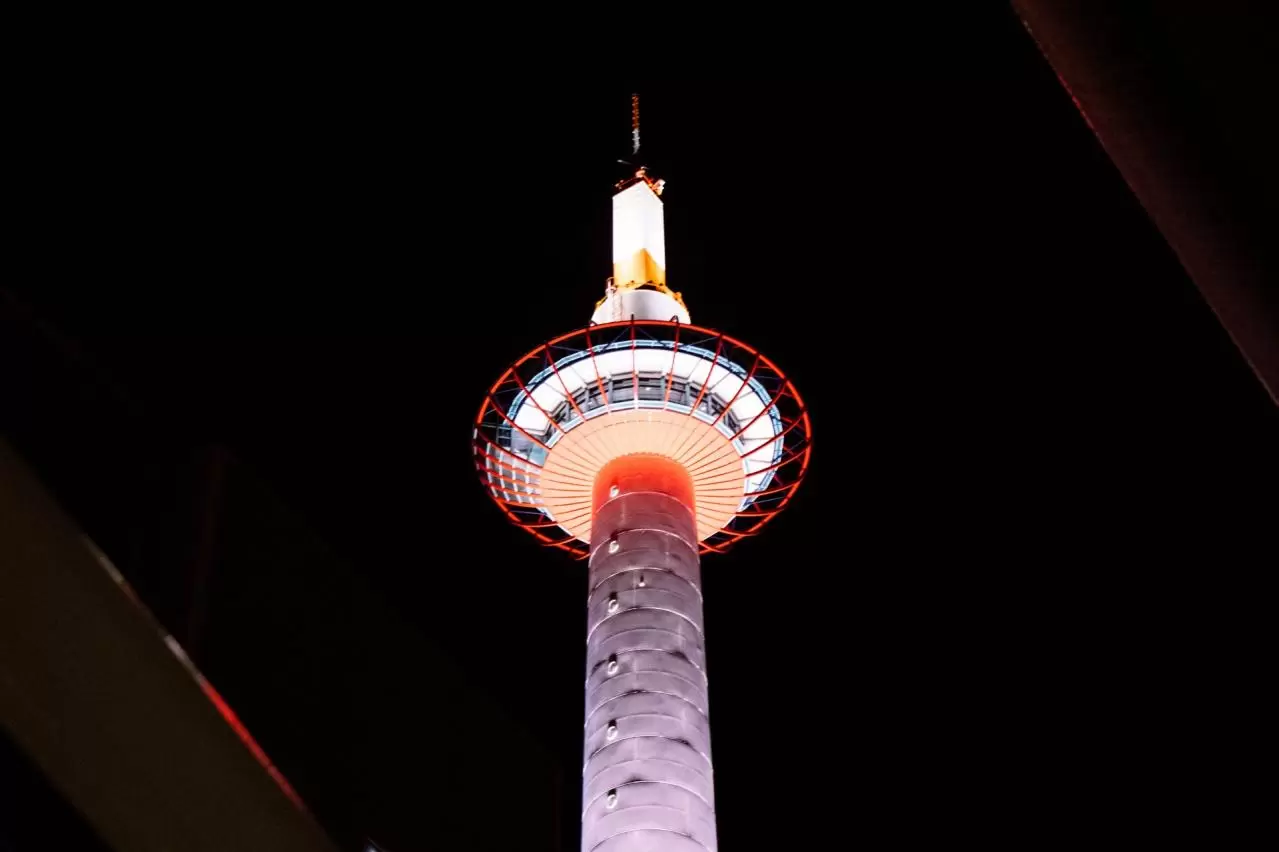
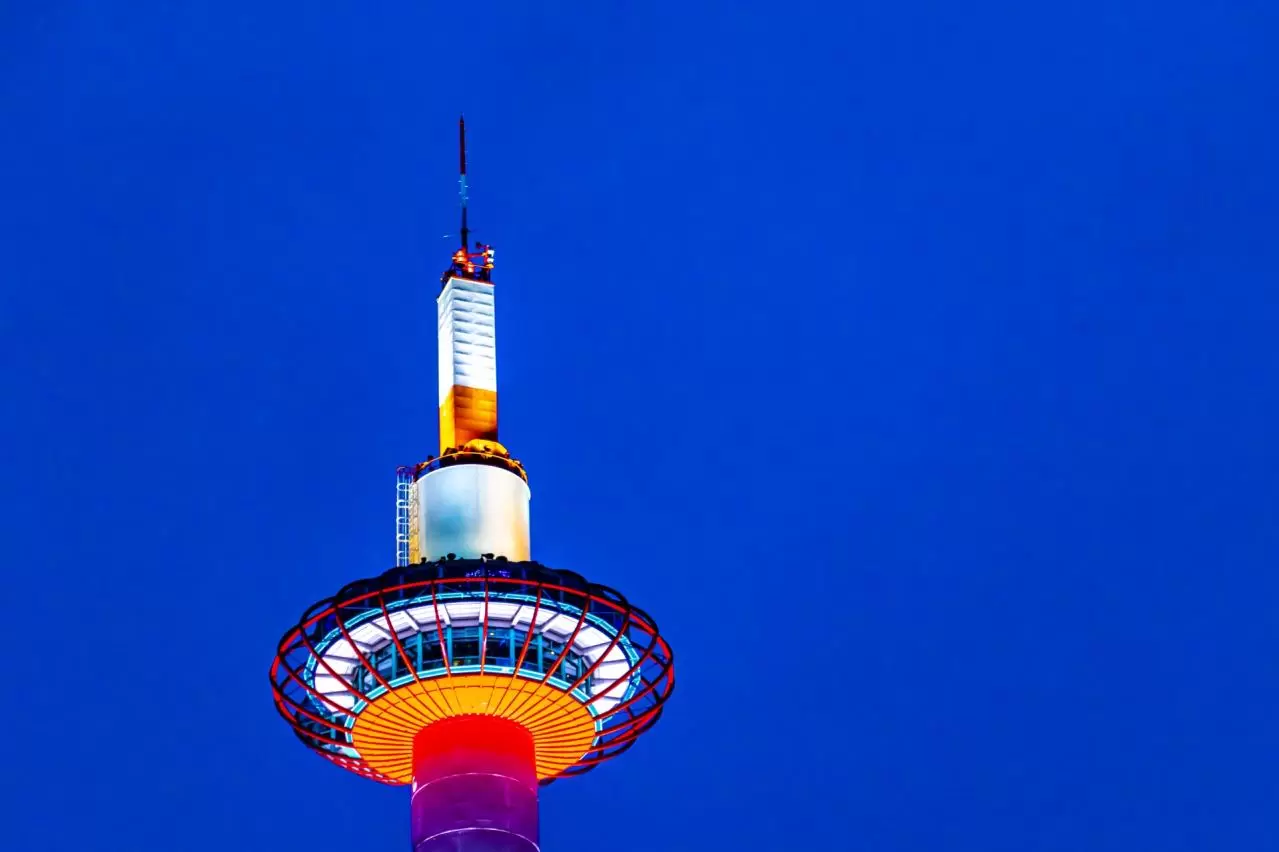
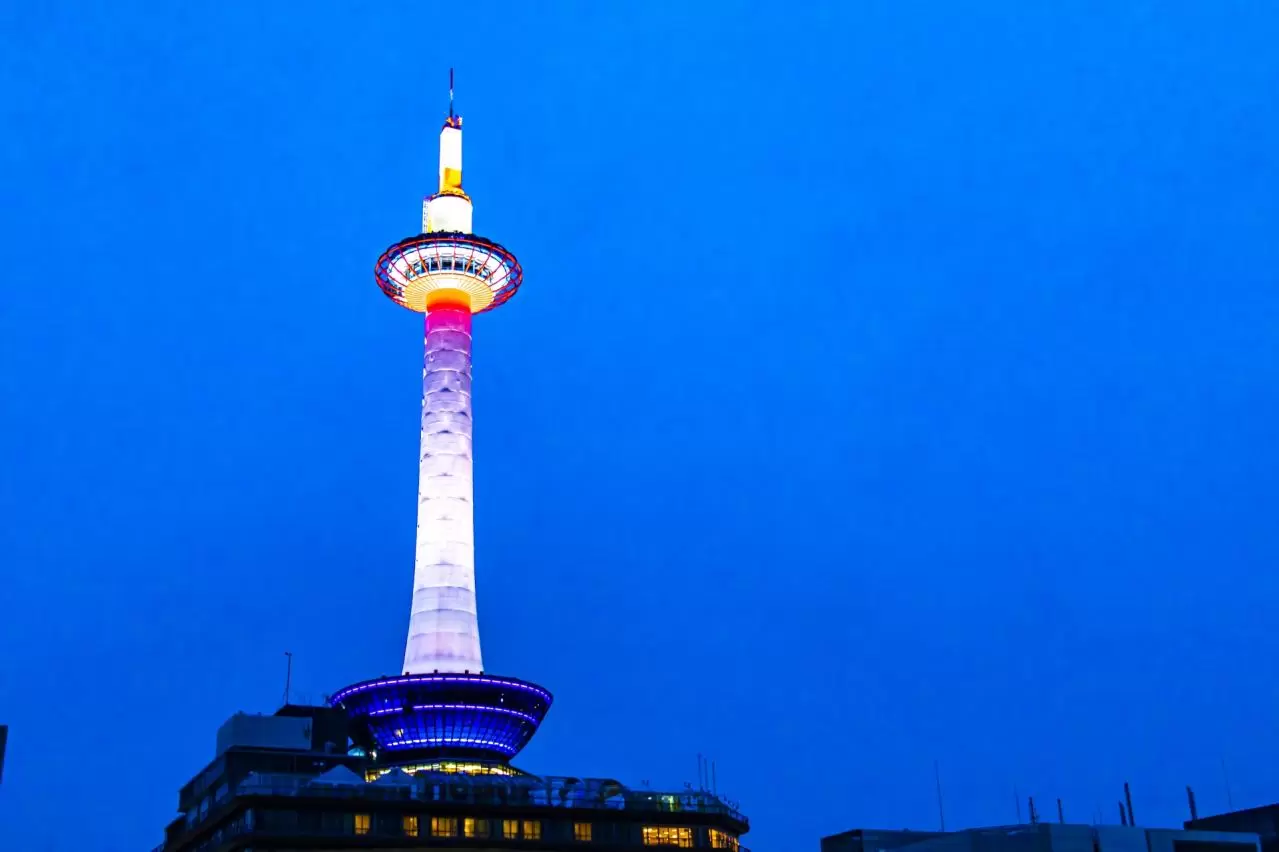
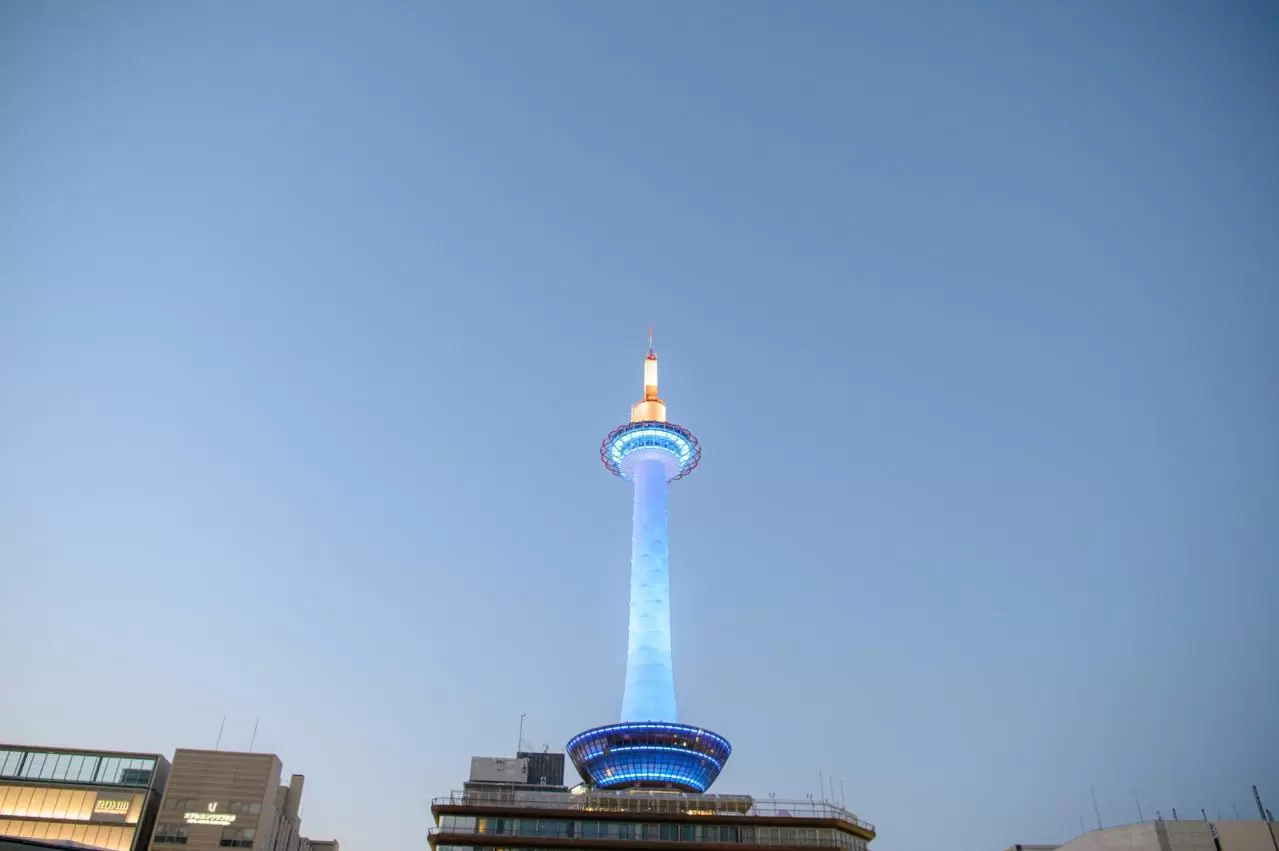
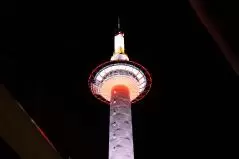
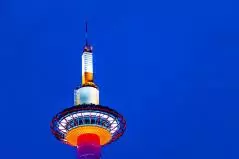
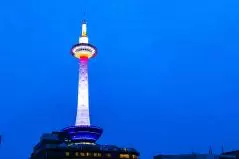
At night, Kyoto Tower is beautifully illuminated by LED lights, revealing a fantastical appearance different from its daytime look. In addition to seasonal and event-based color illumination, it also accommodates private surprise lighting for proposals, birthdays, and other special occasions, making it a memorable part of celebrations.
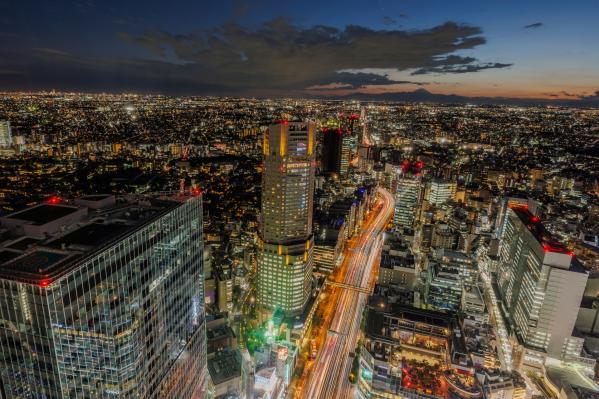
The night view from the observation deck is exceptional, allowing visitors to enjoy the contrast between Kyoto’s historic streetscape and the lights of the modern city spread out in an unobstructed panorama.
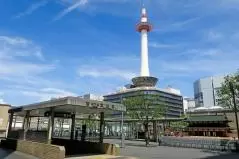
With its outstanding location right in front of JR Kyoto Station, Kyoto Tower is an extremely convenient starting point for sightseeing in Kyoto. Since its opening in 1964, it has attracted 400,000 to 500,000 visitors annually and has long been cherished by both tourists and local residents.
With its innovative design based on Japan’s first monocoque structure, its graceful lighthouse-like appearance, and its diverse attractions including observation, gourmet dining, and cultural experiences, Kyoto Tower will surely continue to shine as “the city lighthouse that illuminates Kyoto.”
#Townscape/Bikan Historical Quarter #Commercial facilities/Complex facilities
Kyoto Tourist Attractions
View List
Tenryu-ji Temple
Tenryu-ji Temple is a Zen temple located in the Arashiyama district of Kyoto, registered as a UNESCO World Heritage Site. Originally, this site was the location of D...

The National Museum of Modern Art, Kyoto
The National Museum of Modern Art, Kyoto, was opened in 1963 in Okazaki Park, Kyoto. This museum covers a wide range of art genres, including Japanese painting, oil ...

Amanohashidate
Amanohashidate is a special scenic spot located in Miyazu Bay, facing the Sea of Japan in the northern part of Kyoto Prefecture. It is one of the "Three Views of Jap...

Kifune Shrine
Kifune Shrine is an ancient shrine located in Kibune, Sakyo Ward, Kyoto City, and it is the head shrine of about 500 Kifune Shrines nationwide, dedicated to Takao Ka...

Ginkaku-ji (Silver Pavilion)
Ginkaku-ji, officially known as Jishō-ji, is located in the Sakyo Ward of Kyoto City and is affiliated with the Rinzai school of the Shokoku-ji sect. Originally buil...

Kitano Tenmangu Shrine
Kitano Tenmangu is a historic site in Kyoto that is widely revered as the deity of learning and the arts. This shrine enshrines Sugawara no Michizane, a scholar and ...

Kyoto Imperial Palace
Kyoto Imperial Palace is a place of great importance in Japanese history and culture. This vast area is located within the Kyoto Gyoen in the city center of Kyoto, c...

To-ji Temple
Toji Temple (official name: Kyo-o Gokokuj), is the only existing structure from the Heian-kyo period and is registered as a UNESCO World Heritage Site. Founded two y...