The graceful view of Phoenix Hall
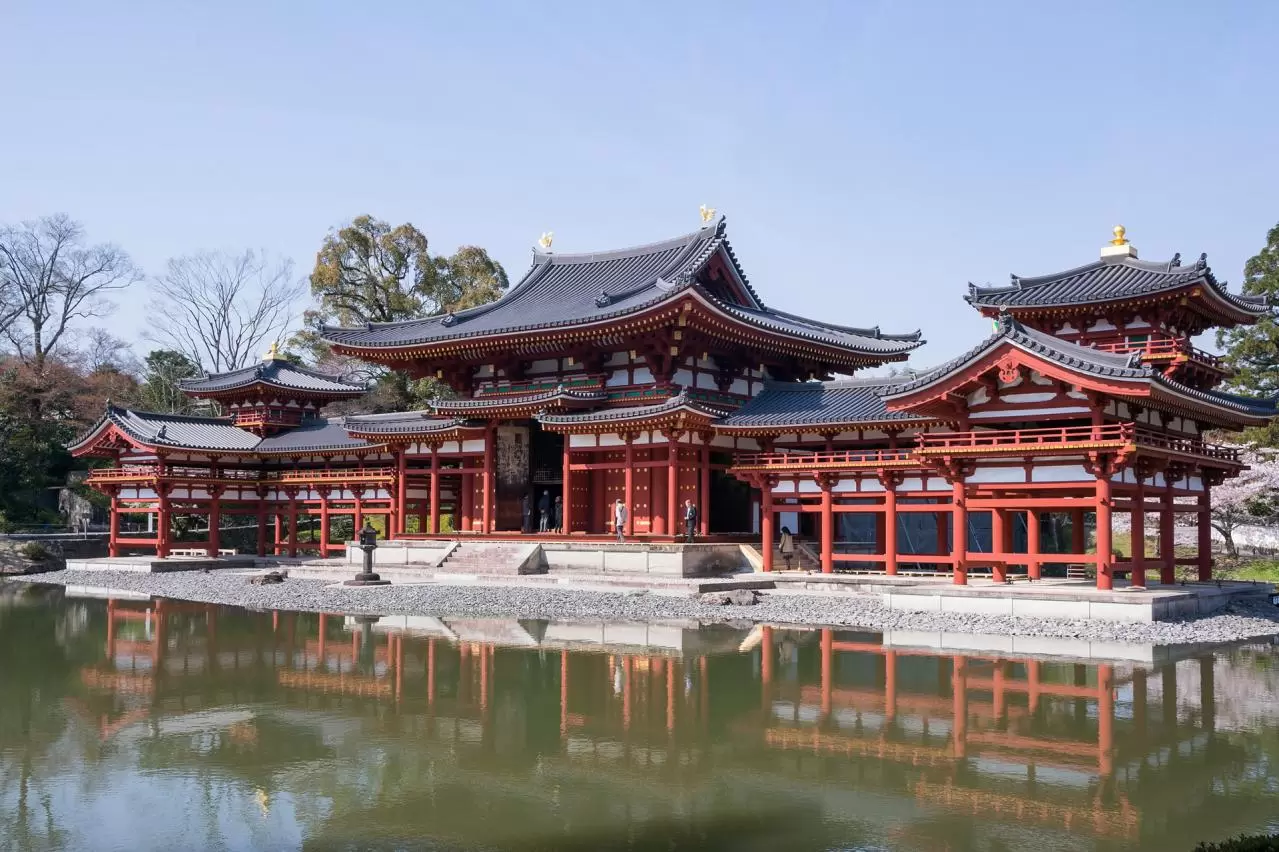
Its striking composition, which makes the hall appear to float on the pond, is Byodoin’s signature sight.
AI Summary
This is an AI-generated summary. Please check the official information for opening hours, fees, and closed days.
A World Heritage site in Uji, known for its Phoenix Hall and garden, ideal for exploring Japanese history and Buddhist art at a relaxed pace.
Byodoin Temple is a historic temple best known for Phoenix Hall, depicted on Japan’s 10-yen coin. The graceful view across Aji Pond, national-treasure Buddhist statues, and museum exhibits are among its highlights. Enjoy architecture, art, and gardens in Uji’s peaceful atmosphere.
Its striking composition, which makes the hall appear to float on the pond, is Byodoin’s signature sight.
The Hoshokan Museum displays cultural treasures and reconstructions that help explain their history.
Cherry blossoms, wisteria, and autumn leaves give the grounds a different look throughout the year.
Start with the garden and views of Phoenix Hall, then explore the Hoshokan Museum before continuing into Uji.
Byodoin is a historic temple located in Uji City, Kyoto Prefecture. It was founded in 1052 during the mid-Heian period by Fujiwara no Yorimichi, who served as regent and chief adviser to the Emperor. The temple began when Yorimichi converted what had originally been his father Fujiwara no Michinaga’s villa into a Buddhist temple. That year was regarded as the beginning of the “Age of the Final Dharma,” a time when people strongly wished to attain rebirth in the Pure Land. Against this historical backdrop, Byodoin was built with the aim of recreating the Western Pure Land in this world.
The following year, in 1053, the Amida Hall, now known as the Phoenix Hall, was built to enshrine the principal image of Amida Nyorai. The seated Amida Buddha enshrined inside was created by Jōchō, one of the great Buddhist sculptors of the Heian period, and it is the only surviving Buddha statue definitively confirmed as his work. Designated a National Treasure, it is considered an extremely important masterpiece in the history of Japanese Buddhist art.
Viewed from the front, the Phoenix Hall has an elegant symmetrical structure resembling a bird with outstretched wings, with the central main hall flanked by left and right wing corridors and a rear tail corridor. Golden phoenix statues adorn both ends of the roof, and by the early Edo period it had come to be called the Phoenix Hall. The building is widely beloved and has even been featured in the design of Japan’s 10-yen coin and postage stamps.
Inside the hall, lavish decorations embody the world of the Pure Land. A pair of canopies hangs from the ceiling, and the walls and doors are painted with scenes of Amida’s welcome descent. In addition, 52 statues of celestial Bodhisattvas known as the Cloud-Borne Bodhisattvas, depicted riding on clouds and playing musical instruments, are arranged throughout the hall. Of these, 26 original statues from the period survive, while the rest have been restored and displayed.
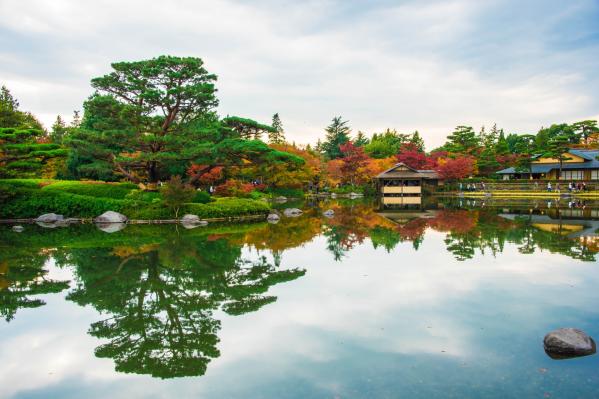
Byodoin’s garden is a Japanese garden known as a “Pure Land garden,” centered around Aji Pond, and is deeply connected with Pure Land Buddhism. The arrangement of the pond in the foreground with the Phoenix Hall behind it visually expresses the belief that Amida Buddha comes to welcome believers from the Western Pure Land. It became the prototype for later temple gardens centered on an Amida hall.
Later, many of the temple buildings were lost in the warfare of the Nanboku-cho period in 1336, but the Phoenix Hall and structures such as the Kannondo and bell tower, both rebuilt in the Kamakura period, remain today. These buildings, along with the statues and treasures, are all designated as National Treasures or Important Cultural Properties, and conservation and public viewing continue.
In 1994, Byodoin was registered as one of the component properties of UNESCO World Heritage site “Historic Monuments of Ancient Kyoto.” In 2014, the Phoenix Hall underwent extensive restoration, returning it to a state close to its original appearance.
The temple grounds also include the Byodoin Museum Hoshokan, where many valuable cultural properties related to the Phoenix Hall are on display. In addition to the actual phoenix statues, the temple bell, some of the Cloud-Borne Bodhisattva statues, and materials related to Jōchō’s Amida Buddha, visitors can gain a deeper understanding of the architectural beauty and religious worldview of the Phoenix Hall through vivid interiors recreated with the latest CG and digital technology.
Uji, where Byodoin is located, is also known as one of Japan’s leading tea-producing regions. The grounds include the Japanese tea specialty shop Chabo To-ka, where matcha and sencha made from Uji-grown tea leaves can be enjoyed with seasonal wagashi. There is also an original Byodoin-exclusive blend available only here, offering visitors a moment of relaxation.
The changing beauty of the seasons is another major attraction of Byodoin. In spring, cherry blossoms bloom in abundance, and in early summer, the grounds are colored by about 10,000 clusters of wisteria flowers. Wisteria is a symbolic presence at Byodoin, and the temple becomes crowded with many visitors during the blooming season. In autumn, the maple leaves richly color the garden and enchant all who visit.
In this way, Byodoin is not merely a religious site, but a representative cultural heritage of Japan where architecture, art, gardens, nature, and spirituality come together. Its solemn beauty and the depth of faith handed down across the centuries continue to captivate the hearts of many.
Tenryu-ji Temple is a Zen temple located in the Arashiyama district of Kyoto, registered as a UNESCO World Heritage Site. Originally, this site was the location of D...
Nijo Castle, originally built as a retreat for the Shogun, can be described as a place condensed with Japan’s history and culture. Constructed in 1603 by the first S...
The National Museum of Modern Art, Kyoto, was opened in 1963 in Okazaki Park, Kyoto. This museum covers a wide range of art genres, including Japanese painting, oil ...
Kamigamo Shrine (Kamo-wake-ikazuchi Shrine) is one of the oldest shrines in Kyoto, dedicated to the god of thunder, Kamo-wake-ikazuchi no Ōkami. The shrine grounds h...
Kyoto Tower was built as a "major center for industry, culture, and tourism," with the purpose of "contributing to the development of Kyoto City." Completed in the s...
Kitano Tenmangu is a historic site in Kyoto that is widely revered as the deity of learning and the arts. This shrine enshrines Sugawara no Michizane, a scholar and ...
Nishiki Market is a historic marketplace located in the heart of Kyoto, which began as a fish wholesaler known as "Nishino-ten" during the Tensho period (about 400 y...
Kinkaku-ji, officially known as Rokuon-ji, is a temple located in the northwest of Kyoto City, famous for its distinctive pavilion called the "Golden Pavilion" cover...


![[4K] 【京都 宇治観光】平等院鳳凰堂/宇治上⛩/宇治⛩/ご朱印/通圓/十割蕎麦しゅばくで癒し旅](https://i.ytimg.com/vi/nVCQbfdFh0k/mqdefault.jpg)