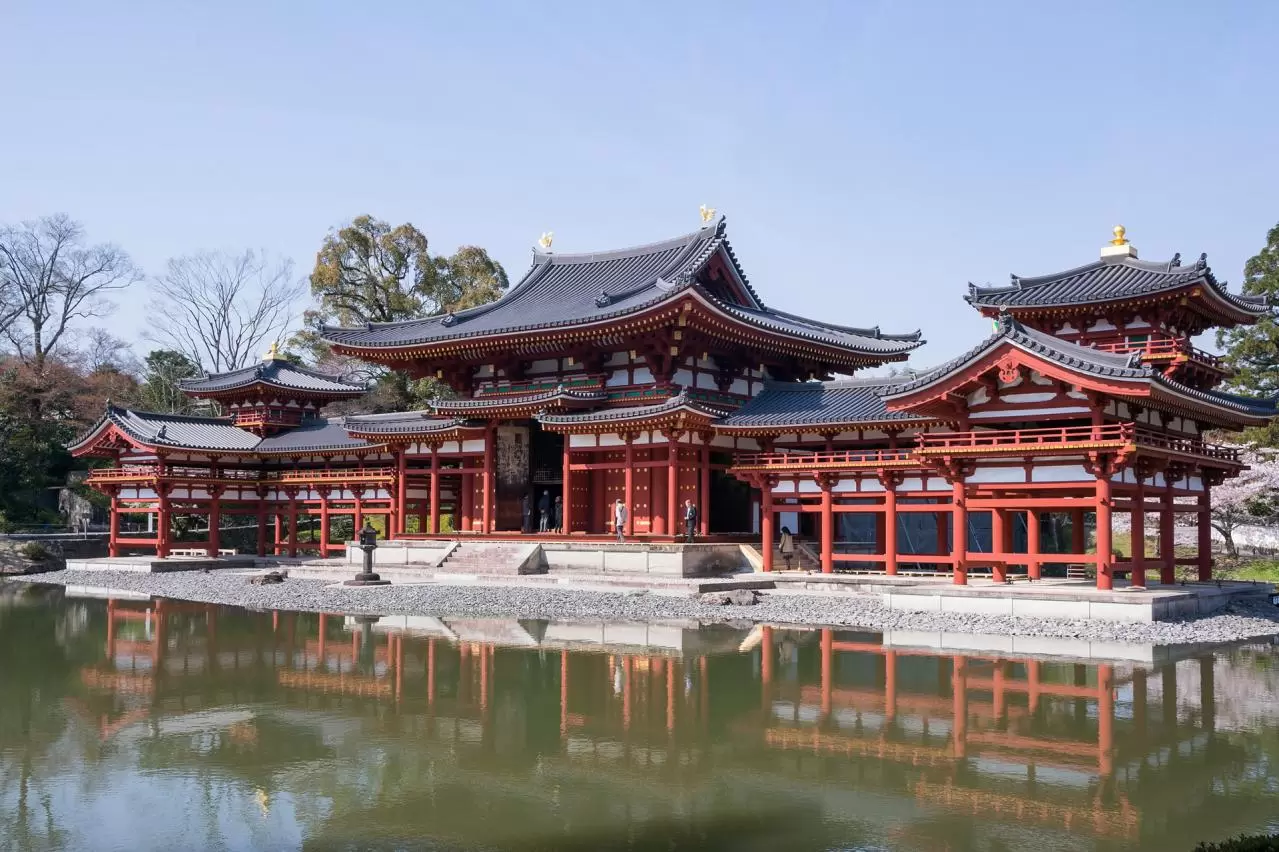
Byodo-in Temple
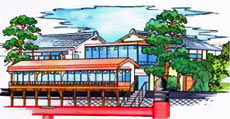
The most striking feature of Byodoin is the Hall of Phoenix, which appears to float on the central Aji Pond. A golden statue of a phoenix adorns the roof of the hall, and its beauty has not diminished over the passage of a thousand years. Following restoration in 2014, its luster has only increased. Inside the hall, there is a statue of Amida Nyorai, crafted by the renowned Buddhist sculptor Jocho during the Heian period.
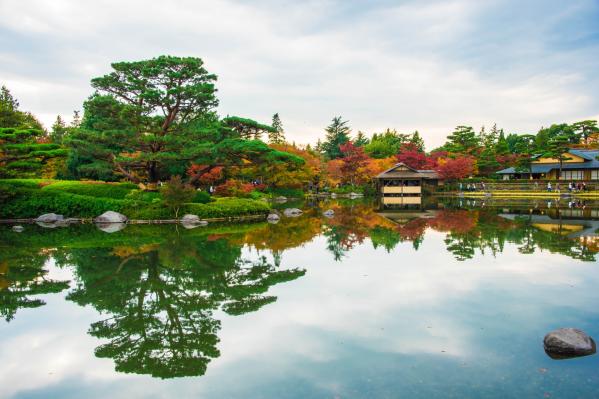
Visitors can also enjoy leisurely time at the nearby souvenir shops and cafes, with convenient access by train or car. Within the temple grounds, there is the Byodoin Garden, considered the oldest Pure Land garden in Japan, where guests can admire the seasonal beauty of cherry blossoms in spring, lotus flowers in summer, and autumn leaves.
Thus, Byodoin is more than just a temple; its beauty, history, and cultural significance attract many people. The Byodoin Museum, Hoshokan, features related national treasures and CG recreations, making it not only a site for tourism but also a place for learning.
Basic Information
- Spot Name
- Byodo-in Temple
- Location
- 〒611-0021 116 Uji Hange, Uji City, Kyoto Prefecture
- Access
- Get off at JR Nara Line "Uji" Station and walk for 10 minutes.
Get off at Keihan Uji Line "Uji" Station and walk for 10 minutes. - Parking
- Parking available nearby.
- Business Hours
- Garden: 8:30 AM - 5:30 PM (Last admission at 5:15 PM)
Museum Hoshokan: 9:00 AM - 5:00 PM (Last admission at 4:45 PM)
Phoenix Hall Interior Viewing: Admission from 9:00 AM - 4:10 PM (Viewing starts at 9:30 AM, with a capacity of 50 people every 20 minutes)
The estimated time for the visit is about 50 minutes for both the garden and the Hoshokan. - Regular Holiday
- none
- Fees
- Garden (including Museum Hoshokan) admission: Adults 600 yen, Junior high and high school students 400 yen, Elementary school students 300 yen.
Hoo-do interior viewing: Additional 300 yen. - Contact Information
- Phone Number:0774-21-2861
- Official Website
Map
Byodo-in Temple Movies


![[4K] 【京都 宇治観光】平等院鳳凰堂/宇治上⛩/宇治⛩/ご朱印/通圓/十割蕎麦しゅばくで癒し旅](https://i.ytimg.com/vi/nVCQbfdFh0k/mqdefault.jpg)
Kyoto Tourist Attractions
View List
Kyoto National Museum
The Kyoto National Museum was opened in 1897 as the Imperial Kyoto Museum. Located in Kyoto, this museum houses approximately 14,600 artworks and cultural properties...

To-ji Temple
Toji Temple (official name: Kyo-o Gokokuj), is the only existing structure from the Heian-kyo period and is registered as a UNESCO World Heritage Site. Founded two y...

Tofuku-ji Temple
Tōfuku-ji is the head temple of the Rinzai sect of Zen Buddhism, founded in 1236 by Kujō Tadayoshi, with its main hall completed in 1255. It is counted among the fiv...

Kinkaku-ji (Golden Pavilion)
Kinkaku-ji, officially known as Rokuon-ji, is a temple located in the northwest of Kyoto City, famous for its distinctive pavilion called the "Golden Pavilion" cover...

Sanjusangen-do Temple
Sanjusangendo, officially known as Rengeoin, is a Tendai Buddhist temple located in Kyoto. Rebuilt during the Kamakura period, this temple boasts a main hall that is...

Togetsukyo Bridge
The Togetsukyo Bridge, which connects Arashiyama and Sagano, is a bridge rich in history and charm, spanning the Katsura River. The first bridge was built by the mon...

Kenninji Temple
Kennin-ji Temple, founded in 1202 by the Zen master Eisai, is the oldest Zen temple in Kyoto and serves as the head temple of the Kennin-ji branch of the Rinzai sect...

Fushimi Inari Taisha Shrine
Fushimi Inari Taisha is the head shrine of approximately 30,000 Inari shrines located in Kyoto. It is believed that the deity Inari was enshrined here in the 4th yea...