Head shrine dedicated to the deity of learning
A popular place to pray for success in exams and studies.
AI Summary
This is an AI-generated summary. Please check the official information for opening hours, fees, and closed days.
A major shrine dedicated to academic success, with plenty to enjoy beyond worship, including plum blossoms and historic grounds.
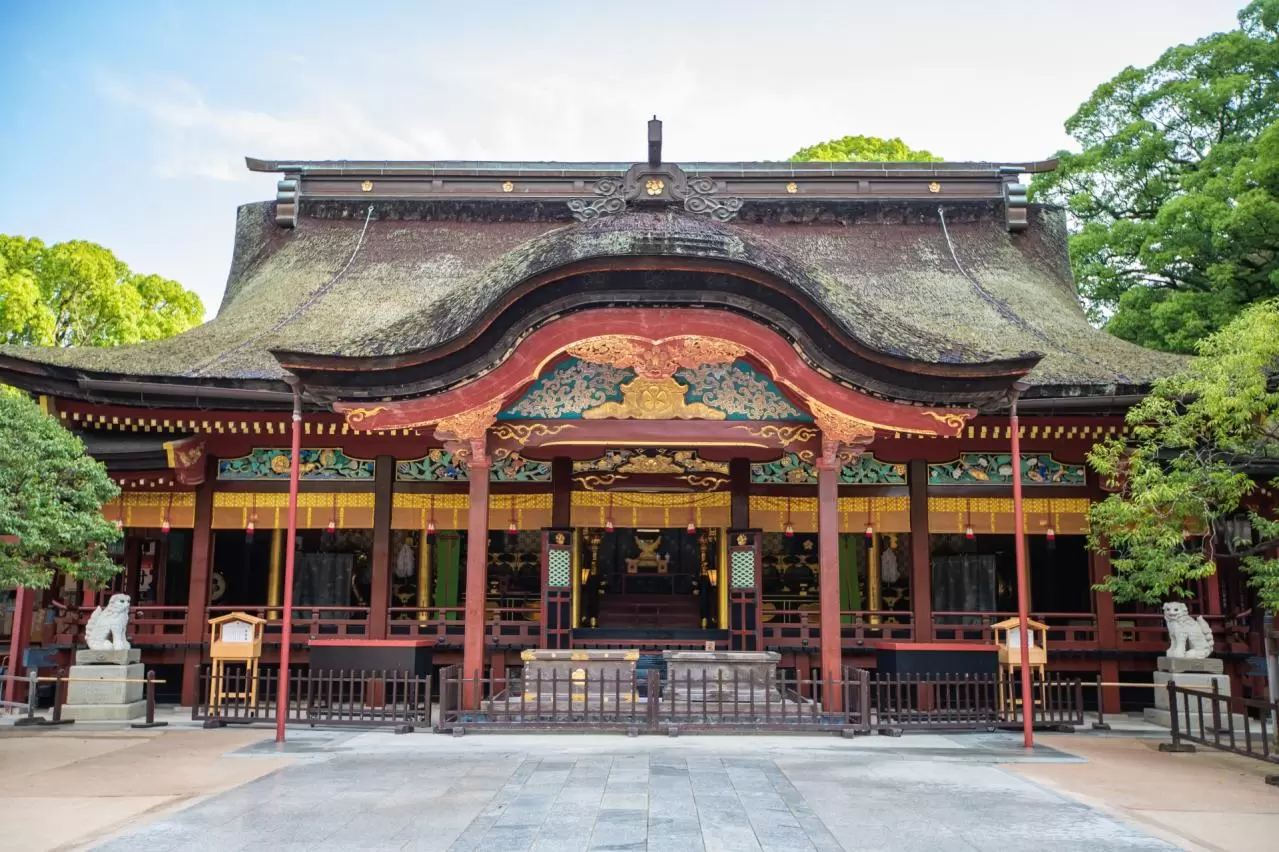
Dazaifu Tenmangu Shrine is the head shrine of Tenmangu shrines dedicated to Sugawara no Michizane. It is popular with visitors praying for academic success or protection from misfortune, and features a vermilion shrine hall, the Shinji Pond, and celebrated plum trees. You can also sample local treats along the approach, though the area is often busy.
A popular place to pray for success in exams and studies.
The grounds’ flowers and trees, including the famed Tobiume plum tree, bring seasonal color.
Enjoy local snacks such as umegae-mochi after your visit.
Start with a visit to the main shrine hall, then see Shinji Pond and the Romon Gate before enjoying umegae-mochi along the approach.
Dazaifu Tenmangu is a Shinto shrine located in Dazaifu City, Fukuoka Prefecture. It enshrines Sugawara no Michizane, who is widely worshipped as the deity of learning, culture and the arts, and protection from misfortune. As the head shrine of approximately 12,000 Tenmangu shrines throughout Japan, it is known as “Kanseibyo,” a unique sacred site where the shrine buildings stand above Michizane’s grave. Having attracted the faith of people for more than 1,100 years, it is one of Kyushu’s most prominent shrines and welcomes numerous worshippers from Japan and around the world.
Sugawara no Michizane was born into a family of scholars in 845 and demonstrated exceptional talent from an early age. He composed a waka poem at the age of five and, at eleven, wrote the Chinese poem “Gekiya Kenbaika,” showing remarkable gifts in scholarship and literature from childhood. At the age of 26, he passed the Horyakushi, considered the most difficult examination of its time, and at 33 became a Monjo Hakase, the highest-ranking scholar. He later distinguished himself as a politician as well, proposing tax reforms and the suspension of missions to Tang China, and greatly influencing the development of Japan’s distinctive national culture. However, through the machinations of Fujiwara no Tokihira, he was demoted and exiled to Dazaifu in 901. Despite living in difficult circumstances, he continued to pray for the peace of the nation, and passed away at the age of 59 on February 25, 903.
When Michizane’s remains were being transported in an ox-drawn carriage, the ox lay down at the site of the present-day Main Shrine and refused to move. This was interpreted as Michizane’s will, and he was buried there. A small shrine was later built over his grave, eventually developing into the present-day Dazaifu Tenmangu. Because of this origin, the grounds contain eleven statues of sacred oxen, known as *go-shin-gyu*. It is said that stroking the head of one grants wisdom.
The expansive shrine grounds form a sacred space where beautiful nature harmonizes with historic buildings. Shinji Pond, which welcomes visitors to the shrine, is crossed by three bridges—a drum bridge, a flat bridge, and another drum bridge—representing the past, present, and future, respectively. Crossing these bridges is believed to purify the mind and body, while the steep slopes of the drum bridges are also said to symbolize the mountains and valleys of life. Beyond the bridges stands a striking vermilion two-story gate. Its unusual structure is another highlight: viewed from the drum-bridge side, it appears to have two roof levels, while from the Main Shrine side, it appears to have only one.
Numerous attractions are scattered around the Main Shrine, including beautiful gardens, the Treasure Hall, the Sugawara Historical Museum, and Tenkai Inari Shrine. The Treasure Hall displays valuable cultural properties, including the National Treasure *Kanen*, swords designated as Important Cultural Properties, ancient documents, and ritual implements. Known as an “open-air museum of art” within the shrine grounds, it also offers visitors an opportunity to experience Japan’s artistic and cultural heritage. Along the route from the approach to the Kyushu National Museum is Jōsui’s Well, which is said to have been used by Kuroda Kanbei, also known as Jōsui, for the tea ceremony. It is a popular spot among history enthusiasts.
Dazaifu Tenmangu is also renowned for its seasonal natural beauty. Approximately 6,000 plum trees representing around 200 varieties grow throughout the grounds, filling the shrine with brilliant blossoms in spring. Particularly famous is Tobiume, a sacred tree associated with the legend that it flew overnight from Kyoto to be reunited with the beloved Michizane. It is widely regarded as one of the shrine’s most celebrated trees. The grounds are also adorned with beautiful Japanese irises and camphor trees. Among the trees are several designated as natural monuments, including a magnificent giant camphor tree standing approximately 39 meters tall with a trunk circumference of about 20 meters, commanding an overwhelming presence.
The approach to the shrine is lined with restaurants and souvenir shops, including establishments selling the local specialty *Umegae Mochi*, allowing visitors to enjoy strolling, snacking, and shopping alongside their pilgrimage. Numerous festivals and traditional events are held throughout the year, including the *Shikinen Taisai*, a grand commemorative festival held once every 25 years. The “1,125th Anniversary Grand Festival of Sugawara no Michizane” is scheduled to take place in 2027. In preparation, extensive renovations to the Main Shrine were carried out over approximately three years beginning in 2023. During the renovation period, worship has taken place at a beautiful temporary shrine designed by architect Sou Fujimoto to harmonize with nature. The temporary structure attracted considerable attention as a new landscape blending traditional heritage with contemporary architecture.
Today, Dazaifu Tenmangu remains one of Japan’s foremost shrines, welcoming countless visitors who pray for success in entrance examinations and academic achievement, as well as for advancement in culture and the arts, protection from misfortune, family safety, and good fortune. Its grounds bring together more than 1,100 years of history and tradition, beautiful nature, and numerous cultural treasures. In addition to being one of Fukuoka Prefecture’s leading tourist attractions, it is a special place where visitors can experience Japan’s history and culture on a profound level.
Nokonoshima is a small, eggplant-shaped island just 10 minutes by ferry from Meihama Ferry Terminal in Fukuoka City. It is rich in nature, offering activities such a...
Yanagawa is known as a castle town and the hometown of the poet Hakushu Kitahara, and its "river cruising" has become a local specialty. The city is crisscrossed by ...
The Senbutsu Cave is a magnificent cave located in Hiraodai, Kitakyushu, and it has been designated as a national natural monument. This cave was formed by the erosi...
Ohori Park is an oasis in Fukuoka City, utilizing the outer moat of Fukuoka Castle, covering an expansive area of approximately 40 hectares. It can be accessed in ju...
Kushida Shrine is known as the guardian shrine of Hakata and is affectionately referred to by locals as "O-Kushida-san." It has a long history and the current shrine...
Sakurai Futamigaura is located in Itoshima City, Fukuoka Prefecture, and is a beautiful scenic spot within the Genkai Quasi-National Park. Known as "Futamigaura of t...
In July 2020, "BOSS E・ZO FUKUOKA" opened next to the Fukuoka PayPay Dome. This seven-story facility is known for its breathtaking attractions and state-of-the-art e...
"Marine World Uminonakamichi," which reopened in 2017, is an aquarium themed around the seas of Kyushu. It features over 30,000 marine organisms from 350 species, re...