Aoshima Shrine
Aoshima Shrine Movies


Basic Information
- Spot Name
- Aoshima Shrine
- Location
- 〒889-2162 2-13-1 Aoshima, Miyazaki City, Miyazaki Prefecture, Japan
- Access
- 15-minute walk from Aoshima Station on the JR Nippō Line. About 15 minutes from Miyazaki Airport and Miyazaki Expressway "Miyazaki IC."
- Parking
- Please use the nearby paid parking facilities.
- Business Hours
- 5:30 AM to sunset (closing time), from November to February is 6:00 AM, Hiyu Mythology Museum is open from 8:00 AM to 5:30 PM, and during summer the hours are until 6:00 PM.
- Regular Holiday
- None
- Fees
- Free
- Contact Information
- Phone Number: 0985-65-1262
- Official Website
Map
Detailed Information
Aoshima Shrine stands on Aoshima, a small island floating off the coast of Miyazaki City in Miyazaki Prefecture. The entire island, which measures approximately 1.5 kilometers in circumference, is part of the shrine grounds, creating a unique landscape surrounded by the sea and lush vegetation. After crossing Yayoi Bridge from the mainland, the island gradually comes into view, encircled by wave-shaped rock formations. Beyond the approach, vermilion torii gates and shrine buildings appear. One of the shrine’s greatest attractions is the opportunity to pray while feeling the sea breeze and listening to the sound of the waves. Although Aoshima Shrine is widely known as a place for prayers for good relationships, it also offers visitors a chance to encounter Japanese mythology, ancient religious traditions, and valuable natural environments.
The shrine enshrines three deities: Hikohohodemi-no-Mikoto, Toyotama-hime-no-Mikoto, and Shiotsutsu-no-Okami. Hikohohodemi-no-Mikoto is identified with Yamasachi-hiko, the mountain hunter who appears in the myth of Umisachi-hiko and Yamasachi-hiko, while Toyotama-hime-no-Mikoto is known as his wife. Shiotsutsu-no-Okami is the deity who guided the troubled Yamasachi-hiko to the palace of the sea god. Aoshima Shrine is said to stand on the site of the palace where Yamasachi-hiko resided after returning from the sea god’s palace. Once you learn the background behind the enshrinement of these three deities, the sea surrounding the island can also be viewed as a landscape connected to Japanese mythology.
In the story of Umisachi-hiko and Yamasachi-hiko, Yamasachi-hiko loses a fishing hook that he borrowed from his elder brother, Umisachi-hiko, and becomes distressed when asked to return it. With the help of Shiotsutsu-no-Okami, he travels to the sea god’s palace to search for the hook. There, Yamasachi-hiko falls in love with Toyotama-hime and lives with her for a time. He is eventually given the recovered fishing hook and two jewels with the power to control the ebb and flow of the tides, and then returns to the land. When visiting the shrine, try recalling this story. You may sense the mythology underlying Aoshima Shrine’s traditions: crossing the sea, forming a bond, and returning once again.
Aoshima Shrine attracts worshippers who pray for good relationships, safe childbirth, safe voyages, and traffic safety. Because Yamasachi-hiko and Toyotama-hime are enshrined here, many visitors entrust the shrine with wishes related to love and marriage. The deities are also revered as bringers of harmony in all aspects of life. In addition to romantic fulfillment, visitors can pray for family happiness, good relationships with others, safety in daily life, and many other blessings. When you quietly put your hands together in prayer, even as a sightseeing visitor, you can feel that this has long been a place of sincere devotion.
The exact date of the shrine’s founding is unknown. According to the shrine’s history, the text *Hyuga Miyage* contains a description indicating that the shrine was revered during the reign of Emperor Saga. Thus, a tradition of worship dating back approximately 1,200 years has been passed down, although the year of its founding cannot be determined. From the Bunki era onward, the shrine received the devotion and patronage of the Ito family, who supported the rebuilding of the shrine buildings and the preservation of the grounds. In the past, Aoshima was also a sacred island where access by ordinary people was restricted. It has taken a long history for the island to become the popular destination visited by so many people today.
One of the traditional offerings associated with Aoshima Shrine is the *kami-hina*, a small sacred hina doll. Also called *meoto-bina* or *negai-kake-bina*, it is said to appear in records dating from the Anei era. Visitors have traditionally entrusted their wishes to these dolls and offered them before the deity. The practice is associated with prayers for good relationships, safe childbirth, recovery from illness, household safety, and safety at sea, among many other wishes. In addition to their charming appearance, the dolls are distinctive because of the long history of receiving people’s hopes and prayers. When visiting, follow the instructions at the shrine’s amulet office and consider offering a wish for your own happiness or that of someone dear to you.
Heart-shaped votive tablets and love fortunes are also popular on the shrine grounds. The architectural decorations known as *inome* feature shapes resembling hearts. As you explore the grounds after praying, searching for these details naturally draws your attention to the finer features of the shrine buildings. The combination of blue sea, vermilion buildings, and green trees creates a particularly photogenic scene, but changing your viewpoint allows you to enjoy the landscape’s different expressions. Combining time spent with votive tablets and protective amulets bearing your wishes with time spent slowly appreciating the shrine grounds can make your visit even more memorable.
Farther inside the grounds lies the “Ancient Path of Prayer,” where votive tablets are hung. Beyond this path, filled with visitors’ wishes and words of gratitude, stands the Motomiya, or original sanctuary, surrounded by tall Chinese fan palm trees. Yayoi-style pottery and animal bones have been excavated from the site of the Motomiya, leading researchers to believe that rituals were performed there from ancient times. Unlike the approach that opens toward the sea, this area offers a tranquil space enveloped by vegetation. By venturing deeper into the island, visitors can appreciate how Aoshima has been cherished as a sacred place of worship since long ago.
One of the prayers that can be performed near the Motomiya is called *musubi koyori*. Visitors choose a colored twisted paper cord according to their wish and tie it to a pair of Chinese fan palms known as the “Married Fan Palms,” which stand close together. The word *musubi* refers to the power to create and bring things together. Tying the cord expresses the wish to carefully connect and preserve one’s relationships and hopes. The shrine advises visitors to tie the cord firmly so that their wishes do not come undone. Rather than simply putting a wish into words, tying the cord with your own hands offers a moment to reflect on that wish anew.
Another well-known prayer at the Motomiya is *Ame no Hiraka-nage*. A *hiraka* is a shallow plate made of unglazed pottery, which visitors throw toward a sacred rock enclosure after making a wish. It is said that if the plate enters the rock enclosure, the wish will be fulfilled, while if it breaks, it will bring good fortune and ward off misfortune. This practice is connected with the fragments of pottery excavated from the Motomiya and offers a tangible sense of the island’s ancient ritual history. Although it is natural to look forward to the result, what matters most is performing the act with a sincere wish. Check the instructions on site and take care not to inconvenience other visitors when carrying out the ritual.
The subtropical vegetation covering the island is one of the defining features of Aoshima’s natural environment. Chinese fan palms with their broad leaves grow alongside species such as *Mokutachibana*, *hamabiwa*, and elephant ear plants, creating a landscape unlike the ordinary sacred groves found on the mainland. This plant community has been designated a Special Natural Monument of Japan under the name “Aoshima Subtropical Plant Community.” According to information provided by the shrine, more than 200 species of plants have been identified on the island, including 27 tropical and subtropical species. As you walk along the approach, pay attention not only to the scenery but also to the shapes of the leaves and the layers of vegetation to appreciate the richness of Aoshima’s natural environment.
The “Devil’s Washboard,” which surrounds the island, is another sight not to be missed. Layers of hard sandstone and soft mudstone alternate with one another. After being uplifted and eroded by the waves, they formed ridges and grooves resembling a washboard. Known as the “Uplifted Seabed and Odd Wave-Erosion Features of Aoshima,” the formation has been designated a Natural Monument of Japan. When the tide goes out, a broad expanse of rocky ground emerges, revealing patterns that continue in layer after layer. The contrast between the regular lines visible from a distance and the intricate shapes seen up close is particularly fascinating, allowing visitors to sense the forms created by the sea over countless years.
When enjoying the shrine and exploring the island, comfortable walking shoes are recommended. Cars cannot drive directly onto Aoshima, so visitors walk from nearby parking areas. By public transportation, the island can be reached on foot from Aoshima Station on the JR Nichinan Line. On the mainland, places such as the Miyakoh Botanic Garden Aoshima offer opportunities to stop and explore, while the surrounding beaches are suitable for activities such as sea kayaking and stand-up paddleboarding. These experiences can easily be combined with a visit to the shrine. If you have enough time, exploring not only the island but also the wider Aoshima area at a leisurely pace will allow you to enjoy even more of the coastal scenery.
The appeal of Aoshima Shrine lies in the way mythology, prayer, and nature come together on a small island. As you look out over the sea from Yayoi Bridge, pray at the main sanctuary, and follow the Ancient Path of Prayer to the Motomiya, you can experience a different atmosphere in each place. On your way back, take another look at the green Chinese fan palms and the Devil’s Washboard. By experiencing both the history of the wishes entrusted to this shrine and the landscapes created by the sea and vegetation, you can make your time at Aoshima Shrine even more meaningful.
Miyazaki Tourist Attractions
View List
Takachiho Shrine
Takachiho Shrine is believed to have been founded around 1900 years ago during the reign of Emperor Suinin and is revered as the head shrine of the Takachiho 88 Shri...
Hyugamisaki Umagase
Hyuga Cape and Umagasaki is a scenic spot located within the Nichinan Coast Quasi-National Park in Miyazaki Prefecture, characterized by its ria coastline and column...
Sun Messe Nichinan
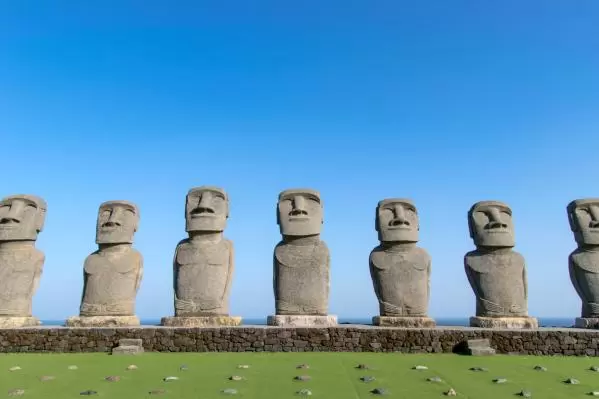
Sun Messe Nichinan is a special tourist spot that has completely recreated the Moai statues from Easter Island (Rapa Nui) in Japan. The Japanese Moai restoration tea...
Amanoyasukawara
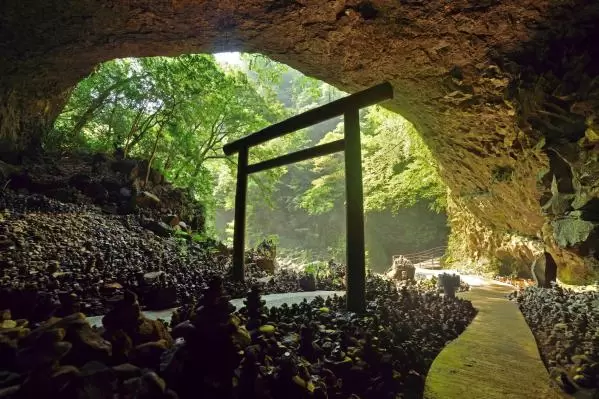
Tenshankawara is a mystical power spot located in Takachiho, Miyazaki Prefecture. It is a large cave that unfolds about a 10-minute walk along the Iwadogawa River fr...
Udo Shrine
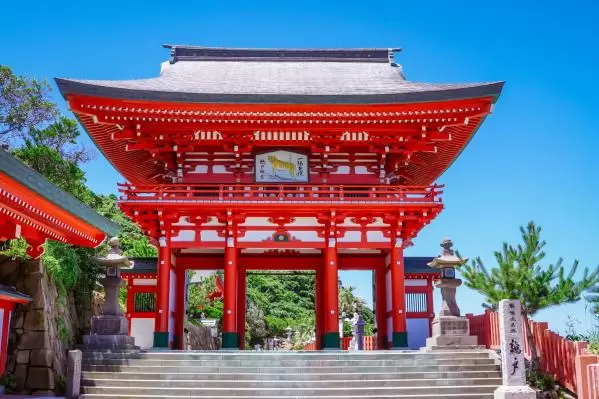
Udo Shrine, located in the southern part of Miyazaki Prefecture facing Hyuga-Nada, is a shrine that is affectionately known locally as “Udo-san.” The main shrine, pa...
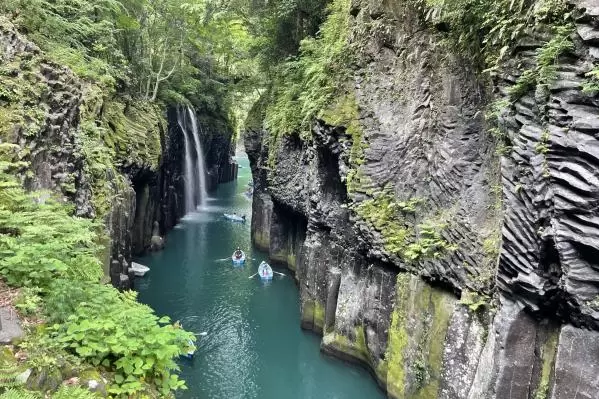
Takachiho Gorge
Takachiho Gorge is a stunning natural beauty created by the ancient volcanic activity of Mount Aso. This canyon features towering cliffs that stretch approximately 7...
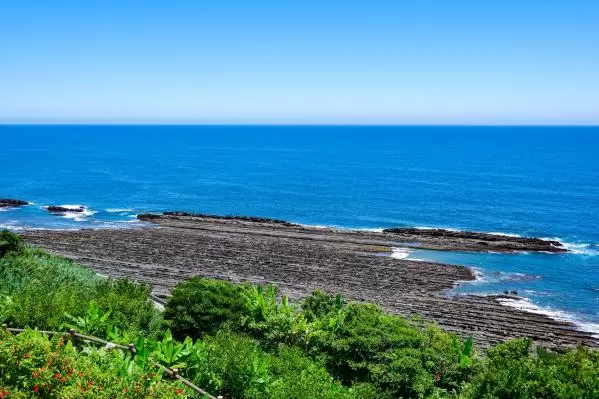
Nichinan Coast
The Nichinankai Coast is a scenic coastline that stretches approximately 100 km, representing Miyazaki Prefecture. It extends from Miyazaki City to Nichinan City and...