Nishiki Market
This place holds more significance than just a shopping street, with a history that has thrived for over 400 years. Every step you take is a journey through Kyoto's long culinary culture and history. The market is also associated with the renowned artist Ito Jakuchu, where you can encounter his works on shop shutters and artworks.
It is bustling with a variety of people, from local residents and ryokans to tourists. There are about 126 stores that belong to the shopping district promotion association, and many of them are run by specialists, providing deep knowledge about ingredients.
The arcade format allows for a comfortable experience even on rainy days. It is conveniently located just a 3-minute walk from Shijo Subway Station. Many shops are multilingual-friendly, catering to a diverse range of international visitors, creating a welcoming environment.
With its unchanged vibrancy even in modern times, Nishiki Market attracts both locals and tourists alike. Why not indulge in the culinary delights of Kyoto at this intersection of history and culture?
Nishiki Market Movies



Basic Information
- Spot Name
- Nishiki Market
- Location
- 〒604-8054 609 Nishidaimonji-cho, Kamigoru Shijo-dori, Nakagyo-ku, Kyoto City, Kyoto Prefecture
- Access
- Get off at Shijo Station on the Karasuma Subway Line and walk for about 3 minutes.
Get off at Karasuma Station on the Hankyu Kyoto Line and walk for about 3 minutes.
Get off at Kyoto Kawaramachi Station on the Hankyu Kyoto Line and walk for about 4 minutes.
Get off at Shijo Station on the Keihan Main Line and walk for about 10 minutes.
Get off the city bus line 5 at Shijo Takakura (in front of Daimaru Department Store) and walk for about 2 minutes. - Parking
- Parking available
- Business Hours
- Opening hours: 24 hours
- Regular Holiday
- Varies by store (Note: Many stores are closed on Wednesdays).
- Contact Information
- Phone Number: 075-211-3882
- Official Website
Map
Detailed Information
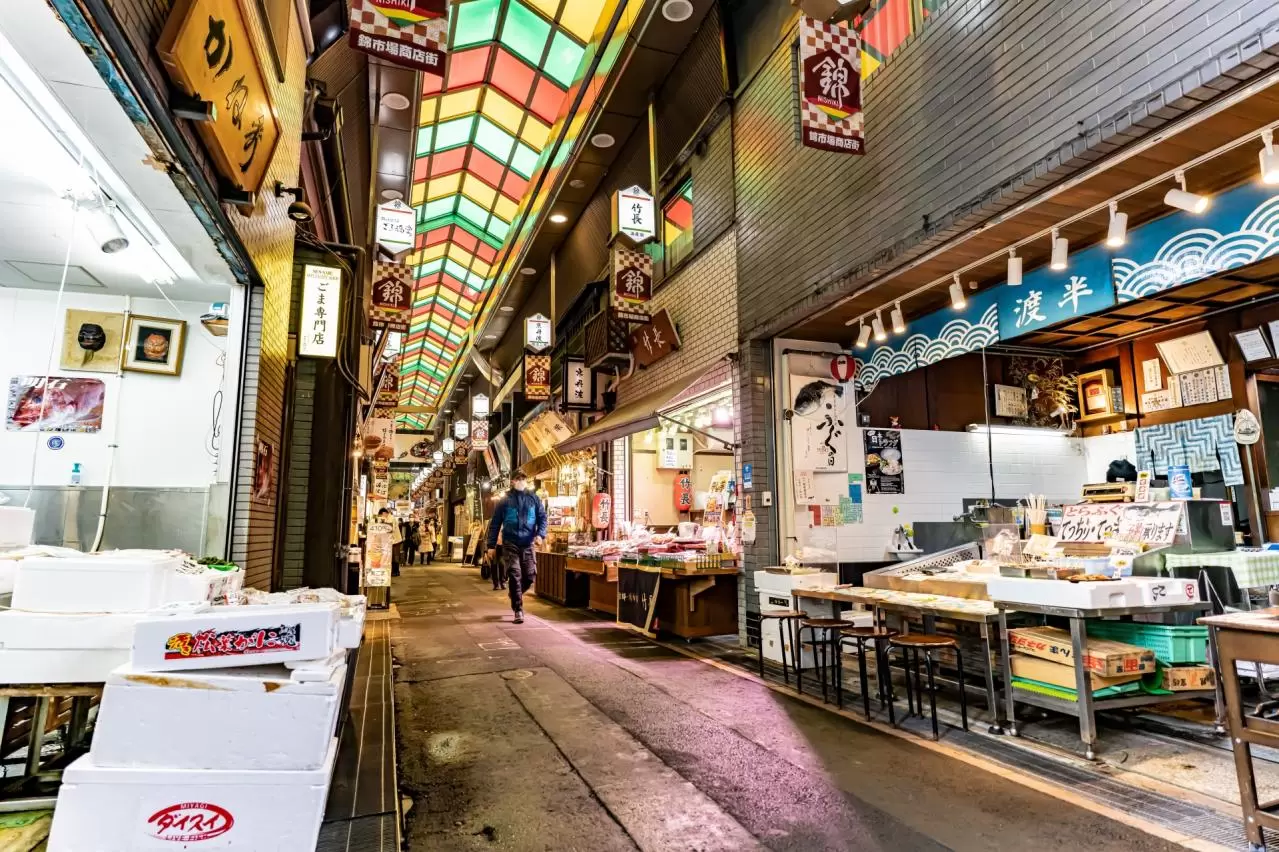
Nishiki Market is a covered shopping street about 390 meters long, located in the center of Nakagyo Ward, Kyoto City, and is widely known as “Kyoto’s Kitchen.” Extending east to west along Nishikikoji-dori from Teramachi-dori to Takakura-dori, the street is lined with more than 130 shops offering a wide range of Kyoto specialties and traditional foods, including Kyoto vegetables, river fish, yuba, namafu, pickles, dried foods, and prepared dishes.
Because it is an arcade-style market, visitors can enjoy shopping and casual eating regardless of the weather. It is also conveniently located about a 3-minute walk from Shijo Station on the subway and Karasuma Station on the Hankyu Line, attracting many visitors from Japan and abroad.
History
The origins of Nishiki Market are very old, and it is believed that a market already existed in this area during the Heian period. The area was blessed with high-quality cold groundwater, making it suitable for preserving fish and fresh vegetables, and its proximity to the Imperial Palace helped it develop as a distribution center for fresh fish and produce.
In 1615, at the beginning of the Edo period, it was officially recognized by the Tokugawa shogunate as one of the three major fish wholesalers, along with “Uwano Mise,” “Nishiki no Mise,” and “Rokujō no Mise.” From then on, Nishiki Market began its full history as a fish market. It is also said that fish were already being sold here under the name “Nishiki no Mise” during the Tenshō era (1573–1592), making it a venerable market with a history of more than 400 years.
Food Culture and Commerce
About 126 shops in Nishiki Market are members of the shopping street association, and many of them are long-established specialty stores passed down through generations. In addition to ingredients for Kyoto-style restaurants, kappo, and inns, the market also offers seasonal vegetables and fish used in “obanzai,” home-style Kyoto dishes. It is rich in ingredients that support Kyoto’s food culture, such as Kyoto vegetables, fish from Lake Biwa, hamo (pike conger), guchi (tilefish), and sasa karei (dried flounder).
In recent years, more shops have begun offering street-food-style snacks for tourists and providing multilingual service, further enhancing the market’s appeal as an open and welcoming place. Especially during the New Year period, the market becomes so crowded that walking through it can be difficult, making it one of Kyoto’s seasonal traditions.
Ito Jakuchu and Nishiki Market
Nishiki Market also has a deep connection with the mid-Edo period painter Ito Jakuchu. In 1716, Jakuchu was born as the eldest son of a wholesaler of fresh vegetables near the current west entrance of Nishiki Market. While inheriting the market business, he devoted himself to painting and produced many distinctive works featuring vegetables and fruits, such as “Vegetable Nirvana.”
From 1771 to 1774, during a dispute over the continued operation of Nishiki Market, Jakuchu actively served as a town elder and played a major role in mediating the issue, greatly contributing to the market’s survival. For this achievement, he is also known as “the restorer of Nishiki Market.” Today, artwork inspired by Jakuchu’s works can be seen on shutters and decorations within the market, drawing attention as a space where art and food come together.
The Origin of Nishikikoji-dori
Nishikikoji-dori, where Nishiki Market is located, was called “Gusoku Koji” during the Heian period, a name said to derive from the custom of samurai removing their armor when entering the Imperial Palace. Through later name changes, it became “Nishikikoji” and remains so today.
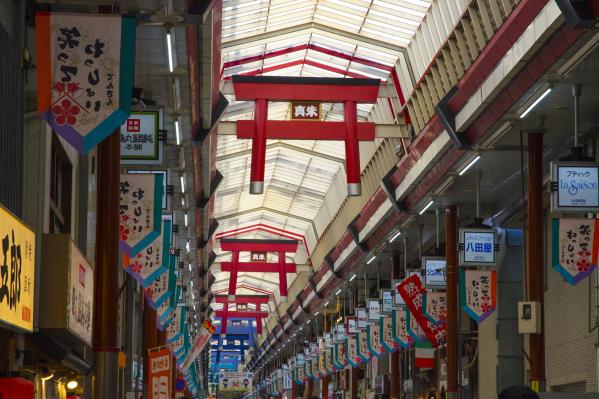
The street is narrow and long, measuring about 3.3 to 5 meters in width, and the many diverse shops packed closely along both sides create a lively atmosphere that makes even walking there enjoyable. The colorful red, green, and yellow arcade roof is a symbol of Nishiki Market and is also popular as an Instagram-worthy spot.
Gion Festival and Nishiki Market
Nishiki Market also plays an important role in Kyoto’s iconic traditional event, the Gion Festival. During the Procession of the Gods and the Return of the Gods held on July 17 and 24, three portable shrines carrying the deities of Yasaka Shrine parade through the parishioners’ neighborhoods. One of them, Nishigoza, was once carried by residents of Sanyodaimura, but since 1947, its role has been taken over by the Nishikigumi, now the Nishiki Mikoshi Association.
In this way, the merchants of Nishiki Market are deeply involved in local traditional events and continue to contribute to the preservation of Kyoto’s festival culture.
Nishiki Market is more than just a place to shop; it is a special space where visitors can experience Kyoto’s food culture, history, art, and traditions. Having inherited the role of “Kyoto’s Kitchen” over more than 400 years, it continues to serve that role with enduring vitality.
Kyoto Tourist Attractions
View List
Byodo-in Temple
Byodoin Temple is a historic temple located in Uji City, Kyoto Prefecture, renowned for its Hall of Phoenix. Established in 1052 by the regent Fujiwara no Yorimichi,...

Fushimi Inari Taisha Shrine
Fushimi Inari Taisha is the head shrine of approximately 30,000 Inari shrines located in Kyoto. It is believed that the deity Inari was enshrined here in the 4th yea...

Heian Shrine
Heian Shrine was established in 1895 to commemorate the 1100th anniversary of the relocation of the capital to Heian-kyo, with Emperor Kanmu as its deity. Located in...

Kyoto Railway Museum
The Kyoto Railway Museum, opened in 2016, is one of the largest railway museums in Japan, designed to be a fun and educational facility with the theme of "see, touch...

Tofuku-ji Temple
Tōfuku-ji is the head temple of the Rinzai sect of Zen Buddhism, founded in 1236 by Kujō Tadayoshi, with its main hall completed in 1255. It is counted among the fiv...

Ginkaku-ji (Silver Pavilion)
Ginkaku-ji, officially known as Jishō-ji, is located in the Sakyo Ward of Kyoto City and is affiliated with the Rinzai school of the Shokoku-ji sect. Originally buil...

Kamikamo Shrine
Kamigamo Shrine (Kamo-wake-ikazuchi Shrine) is one of the oldest shrines in Kyoto, dedicated to the god of thunder, Kamo-wake-ikazuchi no Ōkami. The shrine grounds h...

Kyoto Imperial Palace
Kyoto Imperial Palace is a place of great importance in Japanese history and culture. This vast area is located within the Kyoto Gyoen in the city center of Kyoto, c...