Tenryu-ji Temple
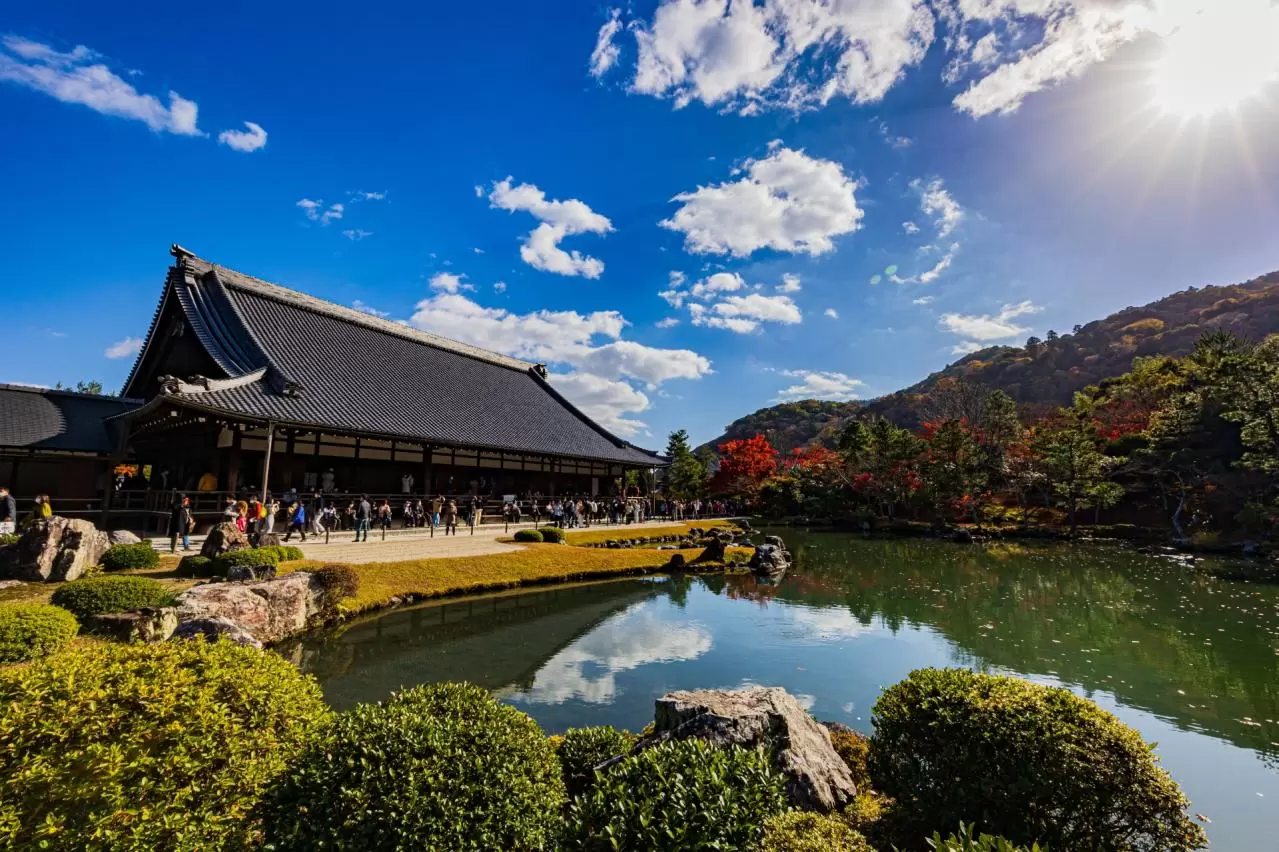
The costs of constructing Tenryu-ji Temple were reportedly obtained through trade with the Yuan Dynasty (China at the time), and the trade ships were referred to as "Tenryu-ji ships." Despite suffering numerous fires throughout its history, the temple has been rebuilt each time. While many of the buildings were constructed after the Meiji period, the garden of the Coigen Pond, designed by Muso Soseki, remains intact and has been designated as a national historic site and special scenic spot.
The garden showcases beauty in every season, particularly during spring when a wide variety of cherry blossoms bloom. It is said that cherry trees were transplanted from Yoshino at the time of its founding because Emperor Go-Daigo loved the Yoshino cherry blossoms.
The ceiling of the Hatto (Dharma Hall) features a painting of "Cloud Dragon," known for its "eight-direction gazing dragon" that appears to look at you from different angles. The North Gate leads to a path through a bamboo grove, making it a recommended stop on your return from exploring Arashiyama.
Tenryu-ji Temple is a place where history, culture, and natural beauty converge, providing visitors with tranquility and inspiration.
Tenryu-ji Temple Movies

![天龍寺 〜 世界文化遺産。方丈から眺める曹源池庭園。嵐山を借景に美しい眺めをご覧ください[No.351]](https://i.ytimg.com/vi/-0_ftYfJ1aU/mqdefault.jpg)

![[京都|Kyoto]"天龍寺"を観光|世界遺産の美しい庭園を散策|"Tenryu-ji Temple" Walking Tour(Vlog)](https://i.ytimg.com/vi/Q9joYiT6XiM/mqdefault.jpg)


Basic Information
- Spot Name
- Tenryu-ji Temple
- Location
- 〒616-8385 68 Bōnomabachō, Tenkūji, Sagakuyō, Ukyo-ku, Kyoto City, Kyoto Prefecture, Japan
- Access
- Get off at "Arashiyama" Station on the Keifuku Electric Railroad Arashiyama Line.
Get off at "Saga-Arashiyama" Station on the JR Saga Line and walk for 13 minutes.
Get off at "Arashiyama" Station on the Hankyu Railway and walk for 15 minutes.
For those coming by bus:
Take City Bus No. 11, 28, or 93 and get off at "Arashiyama Tenryuji-mae."
Take Kyoto Bus No. 61, 72, or 83 and get off at "Keifuku Arashiyama Ekimae." - Parking
- Available, 100 cars.
- Business Hours
- 8:30 AM to 5:00 PM (Last admission at 4:50 PM) (Garden entrance and North gate entrance)
- Regular Holiday
- None. *Special viewing of the Hondo "Unryu-tzu" is only on Saturdays, Sundays, and holidays [there is a daily viewing period in spring, summer, and fall].
- Fees
- Garden (Sōgen Pond & Hyakka-en)
- High school students and above: 500 yen
- Elementary and middle school students: 300 yen
- Preschool children: Free
A discount of 100 yen is applied to the individual presenting a disability certificate, as well as one caregiver.
Halls (Daihōjō, Shoin, Tahōden)
- An additional fee of 300 yen to the garden admission fee.
Hōdō "Unryūzu" Special Opening
- 500 yen per person (separate from the regular admission fee mentioned above). - Contact Information
- Phone Number:075-881-1235
- Official Website
Map
Detailed Information
Tenryu-ji is the head temple of the Tenryu-ji school of the Rinzai Zen sect, located in Saga-Arashiyama, Ukyo Ward, Kyoto City, and is a renowned temple registered as one of the Cultural Properties of the Ancient Kyoto World Heritage Site. Enveloped in beautiful nature and profound history, its grounds embody the essence of Zen teachings and Japanese culture, offering visitors a sense of tranquility and inspiration.
### The Founding and History of Tenryu-ji
Tenryu-ji was founded in 1339, during the second year of the Kenmu era, by Ashikaga Takauji, the first shogun of the Muromachi shogunate, to pray for the repose of Emperor Go-Daigo. Emperor Go-Daigo is also known for establishing the Southern Court during the period of the Northern and Southern Courts. The esteemed Zen monk Muso Soseki was invited to serve as the founding abbot.
This site originally stood on the grounds of Danrin-ji, a Zen temple founded by Tachibana no Kachiko, the consort of Emperor Saga. It was later used as the detached palace of Emperor Gosaga and the temporary residence of Emperor Kameyama, making it a place of deep historical significance.
The temple’s construction funds were raised by Ashikaga Takauji’s younger brother, Naoyoshi, who, in consultation with Muso Soseki, reopened trade with Yuan China, which had been suspended at the time. This trade vessel became known as the “Tenryu-ji Ship” and remains a notable name in Japan’s trade history.
Completed in 1345, Tenryu-ji held a high status from the time of its founding and long served as a central institution of Zen Buddhism in Japan as the top-ranked temple among the Kyoto Gozan.
### Repeated Disasters and Reconstruction
Although Tenryu-ji once possessed magnificent temple buildings and extensive precincts, it has suffered eight major fires and repeated turmoil since its founding. In particular, the fires of 1447 and 1468, as well as the damage caused by the Onin War, were devastating, and reconstruction required many years.
Restoration finally began in 1585 with the support of Toyotomi Hideyoshi, but the temple continued to be struck by fires and wartime destruction. In particular, during the Hamaguri Gate Incident of 1864, the entire complex was burned down again after being used as a stronghold by the Choshu domain.
With the Meiji era, reconstruction progressed in earnest, and the Dharma Hall, Hojo, and kitchen quarters were completed in 1899. The small Hojo (study hall), Tahoden, and tea pavilions such as Shounkaku and Kanu-tei were also rebuilt in succession, and by the early Showa period the present appearance of the temple was largely complete.
### Sogenchi Garden
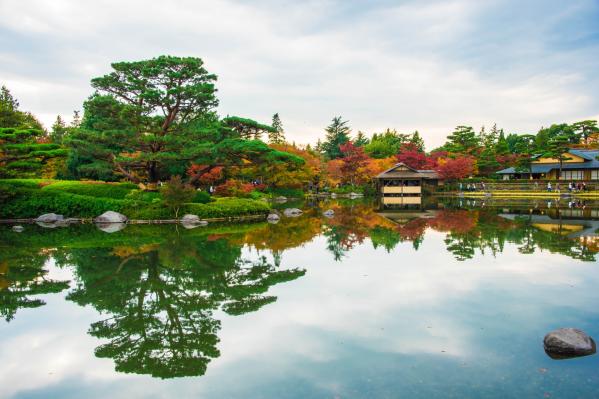
One of Tenryu-ji’s highlights is Sogenchi Garden, designed by its founding abbot, Muso Soseki. This garden is one of the first in Japan to be designated simultaneously as a Historic Site and a Special Place of Scenic Beauty, preserving the appearance of some 700 years ago to the present day.
This strolling pond garden incorporates borrowed scenery from Arashiyama and Mt. Kameyama, and expresses the Zen spirit and aesthetic sensibility in every detail, including stone arrangements made with natural rocks, the Buddhist triad stone, floating islands, and the “Koi Fish Stone” based on the legend of the Dragon Gate.
The garden changes with the seasons, delighting visitors throughout the year with weeping cherry blossoms in spring, fresh greenery in summer, autumn leaves in fall, and snowy landscapes in winter. The spring cherry blossoms are said to have been transplanted from Yoshino at the time of the temple’s founding, in reference to Emperor Go-Daigo’s love for Yoshino’s cherry blossoms.
### The Dharma Hall and the Cloud Dragon Painting
The Dharma Hall (Hatto) of Tenryu-ji is the central building where sermons and memorial services are held. Its ceiling features a massive “Cloud Dragon” painting by Japanese artist Matazo Kayama. Created to commemorate the 650th memorial of the founding abbot, it is a powerful and dynamic work of art.
This dragon is known as the “dragon that gazes in all directions,” and it is said that its eyes seem to meet yours from any angle. When visiting, be sure to view it from different positions.
### Other Highlights
The Hojo enshrines a seated Shaka Nyorai statue from the Fujiwara period.
Tahoden was rebuilt in the image of the Shishinden of the Southern Court, and in spring, weeping cherry blossoms bloom beautifully around it.
At the main entrance of the kitchen quarters (kuri), there is a folding screen featuring an image of Daruma Daishi, painted by former chief abbot Hirata Seiko. Its distinctive expression draws the eye of every visitor.
Exiting through the north gate leads to the charming Bamboo Grove Path, making Tenryu-ji an ideal stop during a stroll through Arashiyama.
Although the present-day Tenryu-ji occupies only about one-tenth of its former vast grounds—approximately 30,000 tsubo—it still retains many halls and subtemples, preserving the dignified presence of one of Kyoto’s foremost Zen temples.
As a place where Zen teachings, the weight of history, and the beauty of nature are harmoniously unified, Tenryu-ji welcomes many worshippers and tourists from Japan and abroad. When visiting Kyoto, be sure to quiet your mind and experience the solemn beauty of this remarkable place.
Kyoto Tourist Attractions
View List
Kyoto Aquarium
Kyoto Aquarium is a large inland aquarium located in Umekoji Park in the Shimogyo Ward of Kyoto City. It is conveniently accessible, being about a 15-minute walk fro...


Fushimi Inari Taisha Shrine
Fushimi Inari Taisha is the head shrine of approximately 30,000 Inari shrines located in Kyoto. It is believed that the deity Inari was enshrined here in the 4th yea...

Ginkaku-ji (Silver Pavilion)
Ginkaku-ji, officially known as Jishō-ji, is located in the Sakyo Ward of Kyoto City and is affiliated with the Rinzai school of the Shokoku-ji sect. Originally buil...

Tofuku-ji Temple
Tōfuku-ji is the head temple of the Rinzai sect of Zen Buddhism, founded in 1236 by Kujō Tadayoshi, with its main hall completed in 1255. It is counted among the fiv...

Yasaka Shrine
Yasaka Shrine, commonly known as "Gion-san," is widely cherished. This shrine is particularly significant as the head shrine of the approximately 2,300 Yasaka Shrine...

Kiyomizu-dera Temple
Kiyomizu-dera is a prestigious temple located in the Higashiyama district of Kyoto, boasting a history of over 1,200 years. This temple attracts many tourists from b...