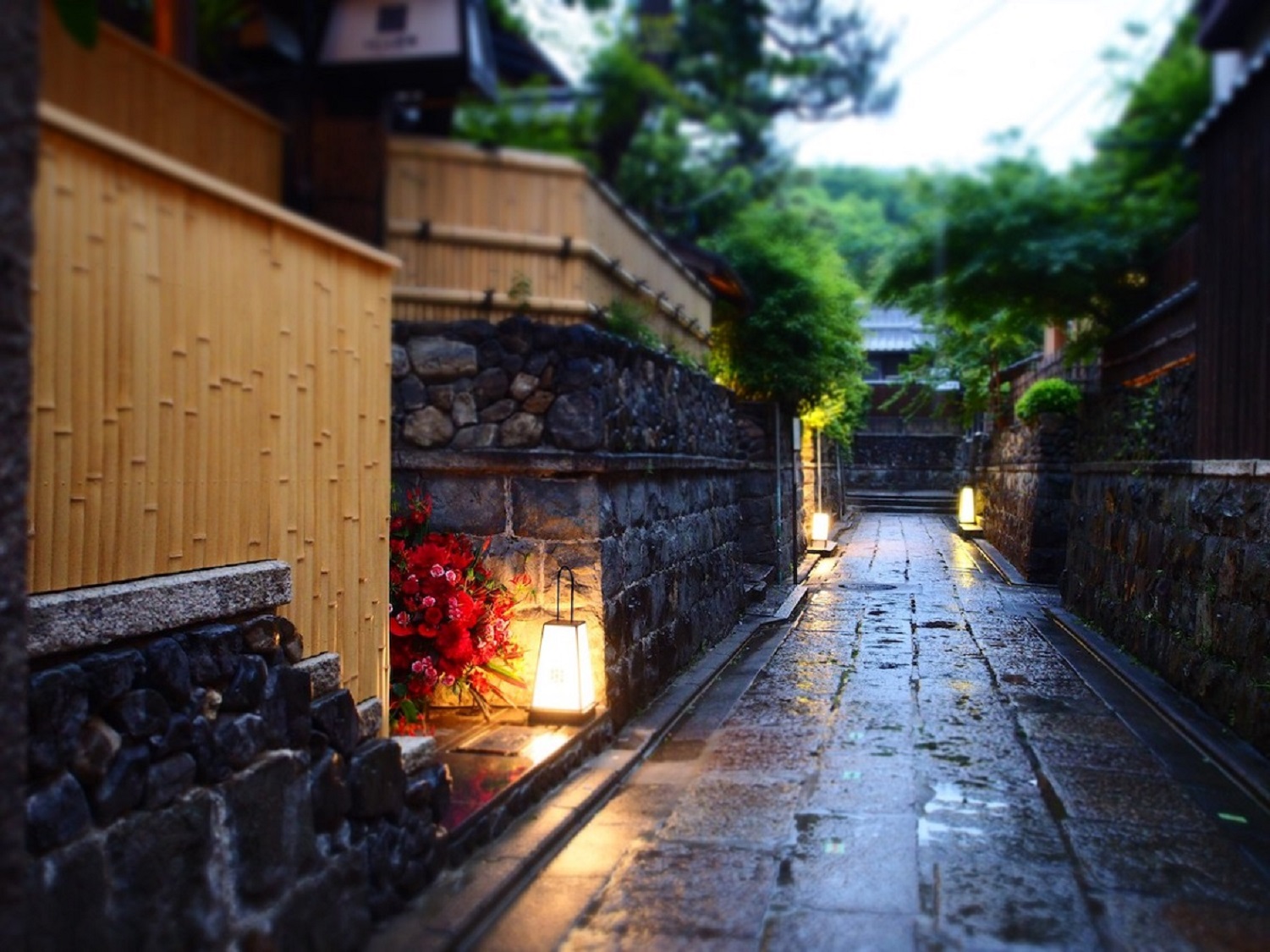
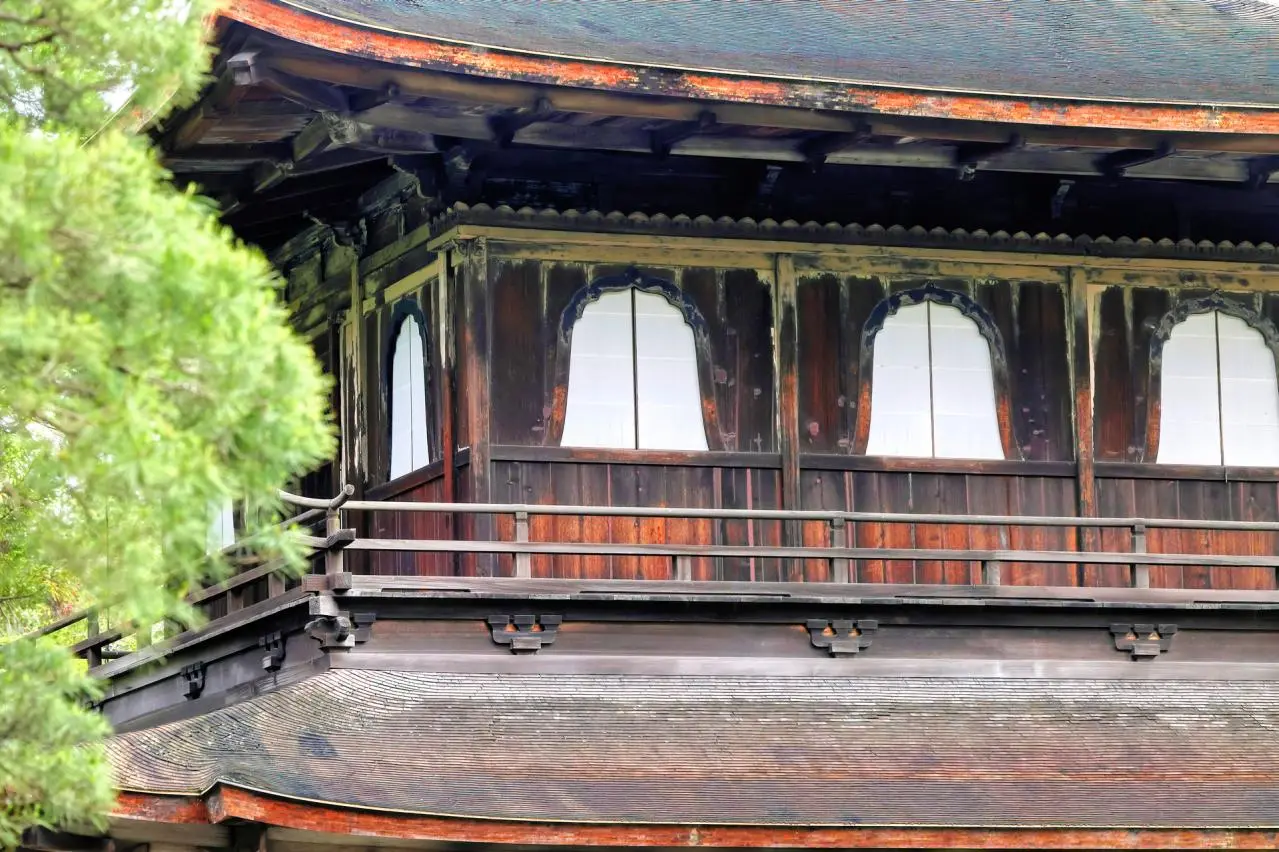
An expression of wabi-sabi
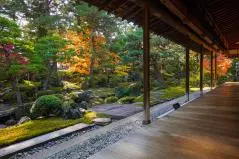
Its understated design gives Ginkaku-ji a distinctive sense of quiet beauty.

AI Summary
This is an AI-generated summary. Please check the official information for opening hours, fees, and closed days.
This historic Kyoto temple is known for its quiet beauty and understated wabi-sabi aesthetic.
Ginkaku-ji began as a mountain retreat associated with shogun Ashikaga Yoshimasa and is now a Zen temple. Highlights include the Kannon Hall, known as the Silver Pavilion, and its gardens of white sand. It’s a good choice for travelers who prefer peaceful scenery to grand displays, and offers a taste of Kyoto’s history in a relatively short visit. Special openings in spring and autumn are appealing, though these periods can be busy.
Its understated design gives Ginkaku-ji a distinctive sense of quiet beauty.
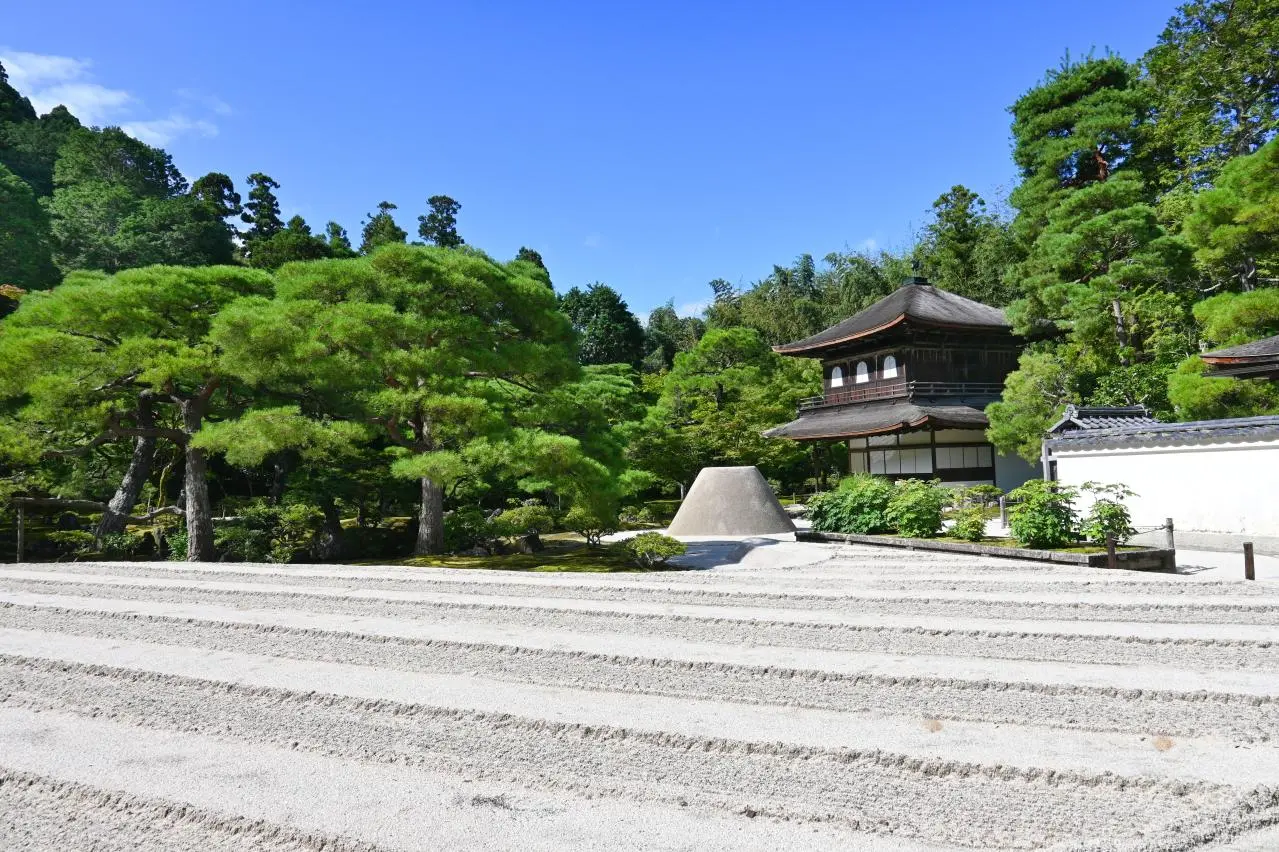
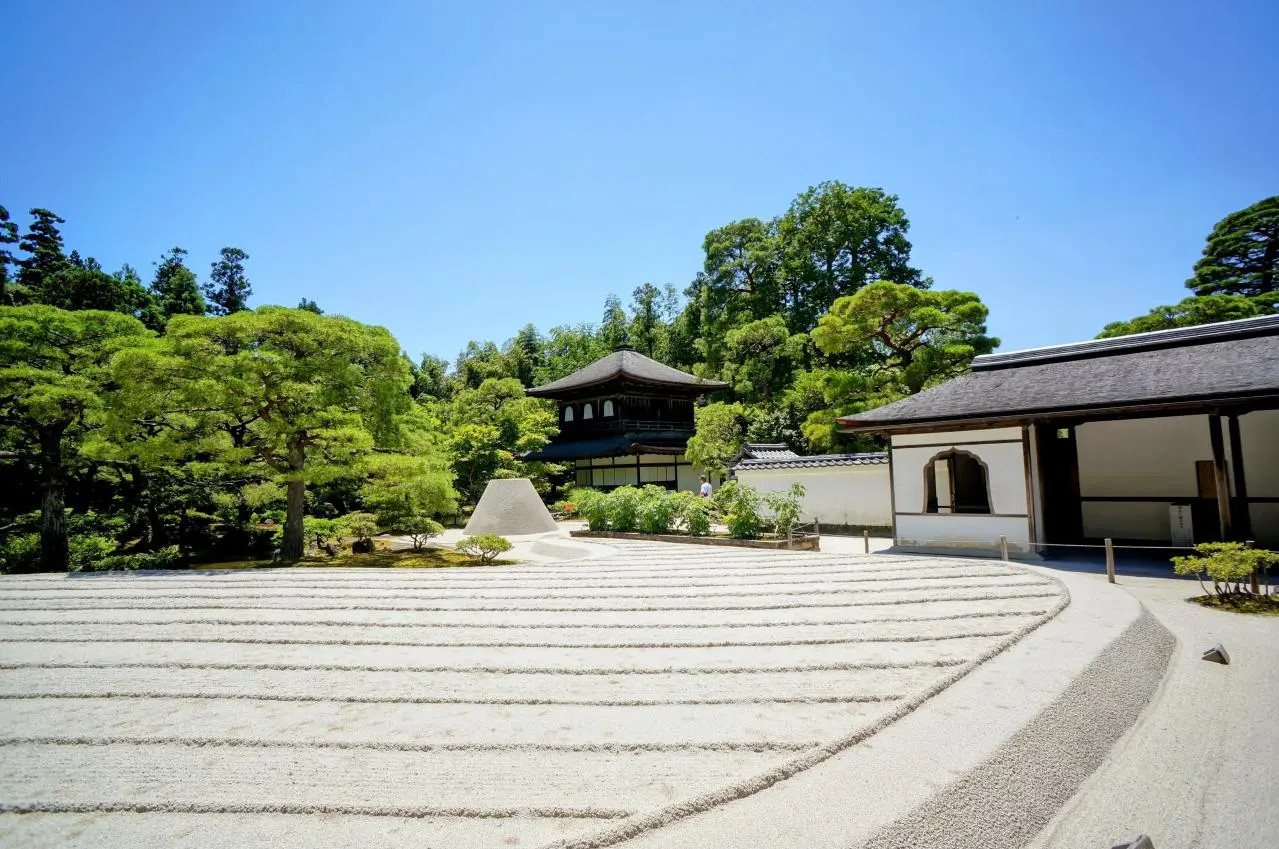
The Ginshadan sand garden and Kogetsudai mound create striking, Zen-inspired views.
A memorable place to experience Kyoto’s history and architectural beauty.
After visiting Ginkaku-ji, walk along the Philosopher’s Path to enjoy some of Kyoto’s quieter scenery.
Ginkaku-ji, formally known as Higashiyama Jishō-ji, is a Zen temple of the Rinzai sect’s Shokoku-ji school located in Higashiyama, Sakyo Ward, Kyoto City. It originated as Higashiyama-dono, a mountain villa built in 1482 by Ashikaga Yoshimasa, the eighth shogun of the Muromachi shogunate. After Yoshimasa’s death, it was converted into a Zen temple in accordance with his wishes and named Jishō-ji. The temple name comes from Yoshimasa’s posthumous Buddhist name, Jishōin-dono.
The common name “Ginkaku-ji” became established from the Edo period onward, and the temple came to be called in contrast to Kinkaku-ji (Rokuon-ji), which is also associated with the Ashikaga shogunate. It was not originally covered in silver leaf; rather, its beauty of incompleteness embodies the spirit of wabi-sabi, and today it is beloved by people around the world.
History and Background
Ashikaga Yoshimasa inherited the family headship at an early age and became shogun at 15, but he lacked political skill and experienced turmoil such as the Ōnin War. In his later years, he withdrew from politics and developed a strong interest in culture and the arts.
The mountain villa Higashiyama-dono that Yoshimasa built vividly reflected the spirit of Higashiyama culture, which prized simple and austere beauty, and this aesthetic continues to exert a major influence on Japanese culture today. After Yoshimasa’s death, the villa was converted into a Zen temple, and according to his will, the already-deceased high priest Musō Soseki was ceremonially invited as its symbolic founding abbot.
In 1994, it was registered as a UNESCO World Cultural Heritage site as part of the “Historic Monuments of Ancient Kyoto.”
Architecture and Main Buildings
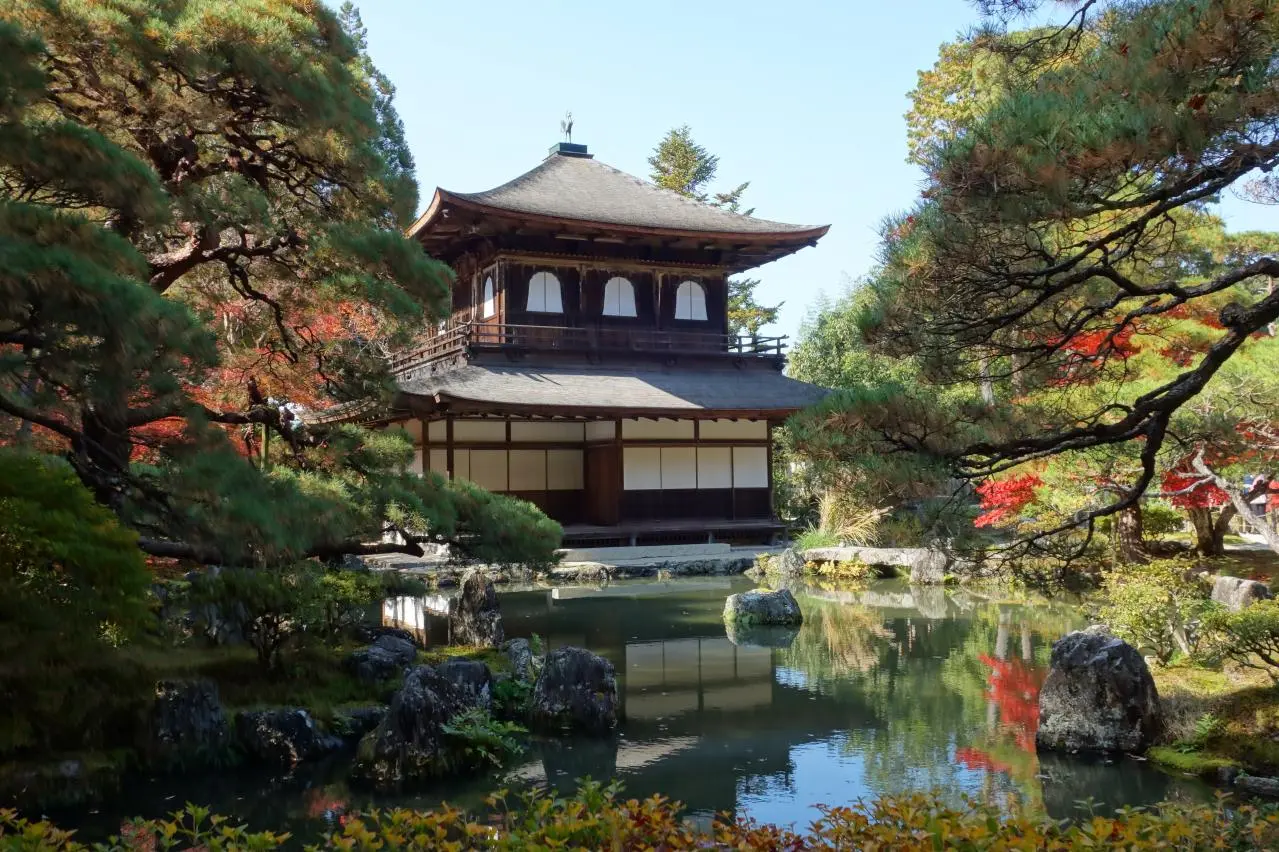
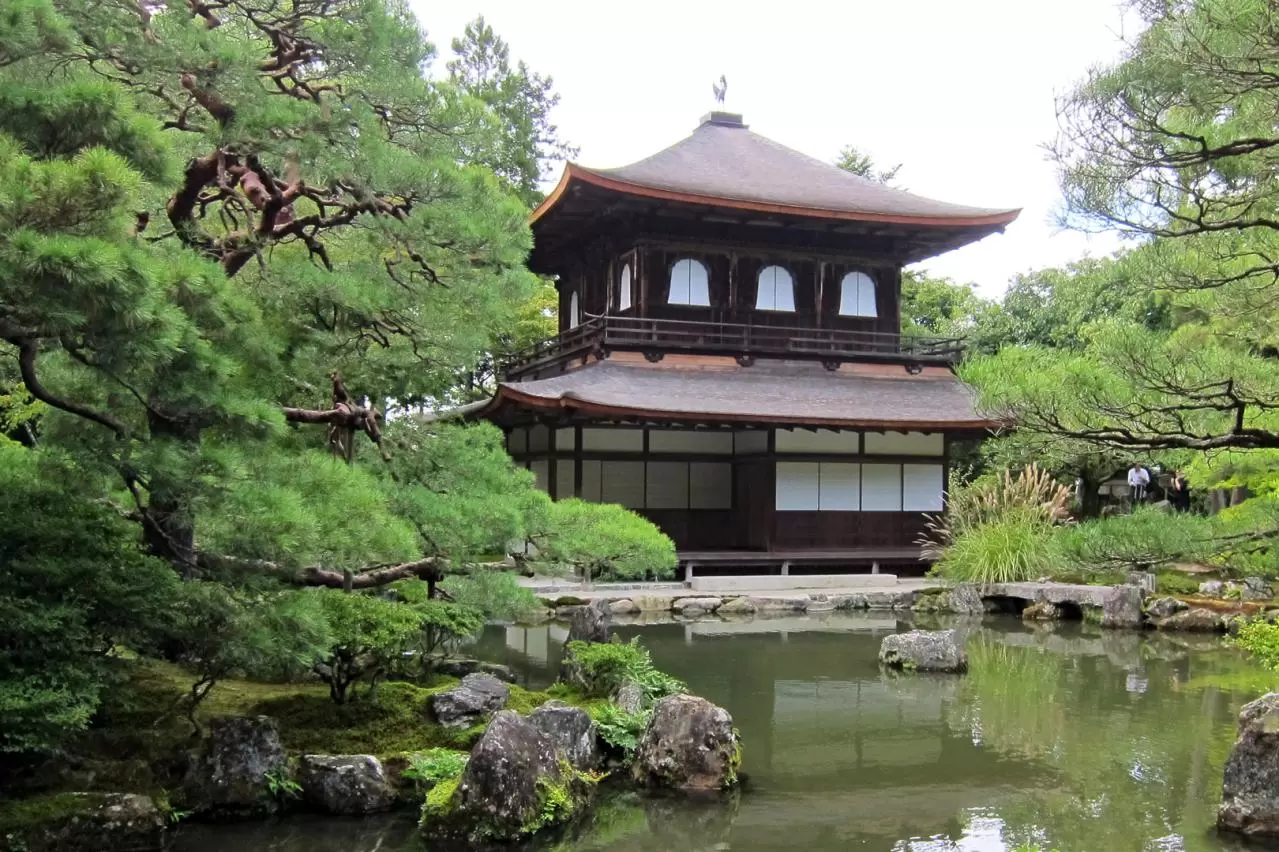
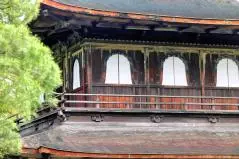
The structure that symbolizes Ginkaku-ji is the Kannon-den, commonly known as the “Silver Pavilion.” Built in 1489, this two-story pavilion has an upper level called Chōonkaku and a lower level called Shinkūden. A statue of Kannon Bosatsu is enshrined on the upper floor, and the building is characterized by a fusion of Zen Buddhist temple design and residential architectural style. It has been designated a National Treasure and is currently not open to the public year-round, but its serene presence continues to fascinate many visitors.
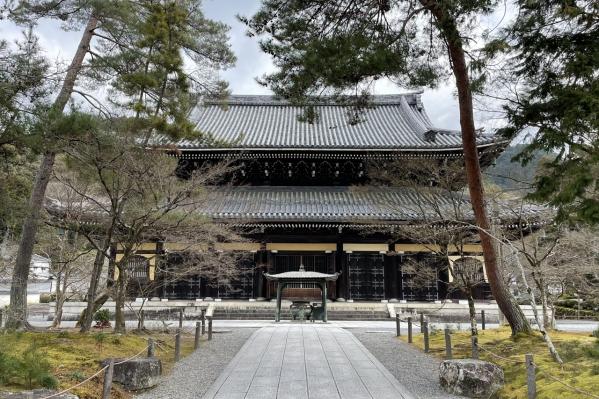
Another important building is Tōgudō. Built by Yoshimasa in 1486 as his private Buddhist hall, it is designated a National Treasure as one of the oldest surviving examples of shoin-zukuri architecture. Its interior includes a four-and-a-half tatami room called Dōjinsai, which is said to be a prototype of tea room architecture and is an extremely valuable structure in the history of Japanese architecture. The name “Tōgudō” is said to derive from a Buddhist phrase meaning “people of the east seeking rebirth in the west.”
The Hōjō (main hall) houses an image of Amida Nyorai and a wooden statue of Ashikaga Yoshimasa, and special public viewing is sometimes held in spring and autumn.
Garden and Scenery
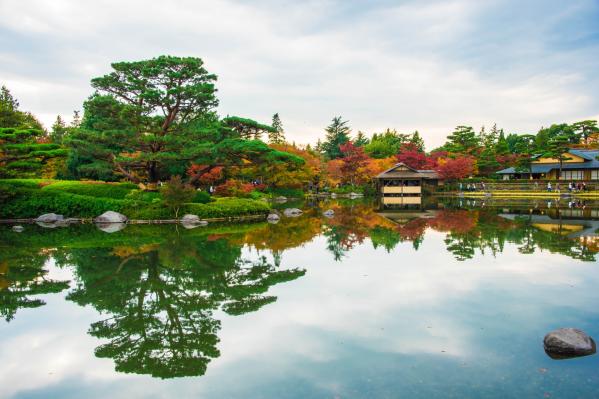
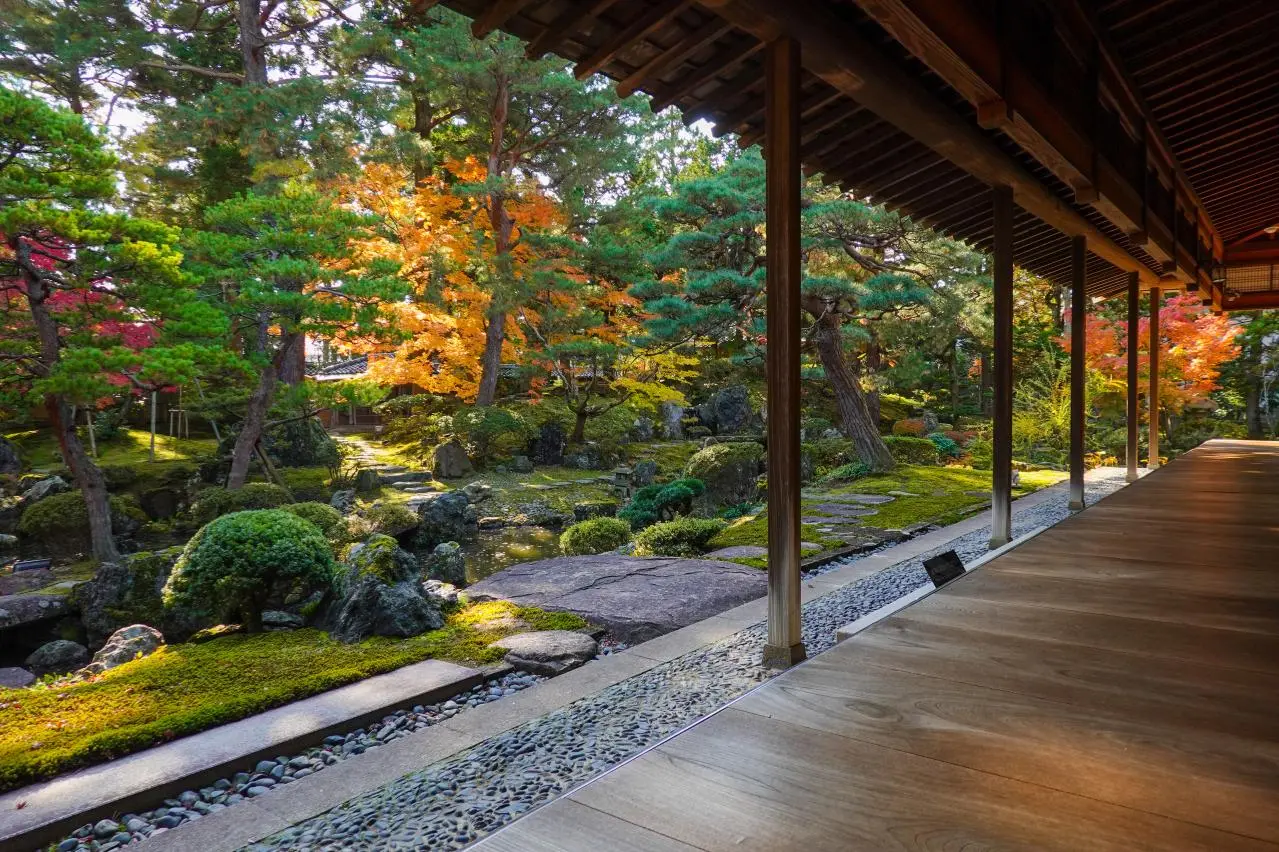
Ginkaku-ji’s garden is a pond-strolling garden designated as both a Special Place of Scenic Beauty and a Special Historic Site. At its center is Kinkyōchi Pond, around which the Silver Pavilion, Tōgudō, and Hōjō are arranged. Islands, bridges, and carefully placed stones are artfully incorporated into the pond, creating a beautiful landscape in which architecture, garden, and nature are in perfect harmony.
Especially famous are the white-sand compositions in front of the Hōjō, known as Ginsadan and Kōgetsudai. These white-sand features, which are said to have been developed in the early Edo period, are believed to symbolize the Zen worldview and cosmology, leaving viewers with a quiet sense of awe and a deep lingering impression. Kōgetsudai is a cone-shaped mound of white sand, also said to be a platform for viewing the full moon; although there are various theories about its purpose, it stimulates the imagination of all who see it.
In the upper area of the garden is a dry landscape garden known as the Ochanoi Garden. During archaeological excavations in 1931, a group of rocks was discovered there, conveying to the present Yoshimasa’s deep interest in the culture of tea.
Ginkaku-ji Hedge and Zazen Stone
Along the approach path runs a hedge called Tsubakigaki. This is a distinctive landscaping technique unique to Ginkaku-ji, using camellias that are long-lived and bud well, and it is highly regarded as part of the overall scenery. In addition, near the temple gate you can see a unique bamboo design called Ginkaku-ji-gaki, which also attracts attention from the perspective of garden aesthetics.
Within the precincts there is also a stone known as the Musō Soseki Zazen Stone. It is said that Musō Soseki once practiced zazen there, and it stands quietly on the west side of Kinkyōchi Pond. As a symbol of Yoshimasa’s devotion to Zen, it leaves a deep impression on visitors.
Appeal and Cultural Value
The greatest appeal of Ginkaku-ji lies in the aesthetic of wabi-sabi, which rejects extravagance and finds value in serenity and inner richness. In contrast to Kinkaku-ji, which shines with gold leaf, Ginkaku-ji houses profound spirituality within its modest and tranquil presence. The ideals of beauty in incompleteness, the weathering that comes with age, and the notion that simplicity itself is beautiful provide an important key to understanding the essence of Japanese culture.
Moreover, a wide range of cultural elements—architecture, gardens, tea ceremony, shoin-zukuri, and more—are integrated here at a high level, making this an extremely valuable cultural property that conveys the aesthetic sensibilities of the Muromachi period to the present day. In spring and autumn, special interior viewings are held, offering a rare opportunity to experience spaces that are normally inaccessible.
Ginkaku-ji is located in Ginkakuji-chō, Sakyo Ward, Kyoto City, and is about a 10-minute walk from the Kyoto City Bus stop “Ginkaku-ji-michi.” It is also within walking distance of Demachiyanagi Station on the Eizan Electric Railway, and the surrounding area includes the Philosopher’s Path, a promenade where visitors can enjoy walks amid the changing seasons.
There are also shops and tea houses within the temple grounds, creating an environment where tourists can easily stop by. Surrounded by quiet nature and history, it offers a place to spend a peaceful and restorative moment.
Ginkaku-ji is one of Kyoto’s most representative cultural heritage sites, embodying the deep aesthetic sense of Ashikaga Yoshimasa and the spirit of Zen. Its understated yet refined beauty gives viewers a quiet sense of awe and conveys the depth of Japanese culture. It is one of the places you should definitely visit when sightseeing in Kyoto, and it offers a precious opportunity to experience the spirit of wabi-sabi.
Kyoto Aquarium is a large inland aquarium located in Umekoji Park in the Shimogyo Ward of Kyoto City. It is conveniently accessible, being about a 15-minute walk fro...
Fushimi Inari Taisha is the head shrine of approximately 30,000 Inari shrines located in Kyoto. It is believed that the deity Inari was enshrined here in the 4th yea...
Amanohashidate is a special scenic spot located in Miyazu Bay, facing the Sea of Japan in the northern part of Kyoto Prefecture. It is one of the "Three Views of Jap...
Kifune Shrine is an ancient shrine located in Kibune, Sakyo Ward, Kyoto City, and it is the head shrine of about 500 Kifune Shrines nationwide, dedicated to Takao Ka...
Kyoto Imperial Palace is a place of great importance in Japanese history and culture. This vast area is located within the Kyoto Gyoen in the city center of Kyoto, c...
Kitano Tenmangu is a historic site in Kyoto that is widely revered as the deity of learning and the arts. This shrine enshrines Sugawara no Michizane, a scholar and ...
Shimogamo Shrine (officially known as Kamo Mioya Shrine) is located in the Sakyo Ward of Kyoto City and is registered as a World Heritage site as part of the "Cultur...