Juniko (Aoike Pond)
In addition, there is the "Japan Canyon" with its striking white rock faces and four therapeutic trails. Trekking is popular during the seasons of fresh green leaves and autumn colors. However, access to Juuni Lake is limited from December to March, so caution is advised, although guided walks are still possible during this period. The Shirakami Mountains are registered as a UNESCO World Heritage Site, making it a perfect place to fully appreciate the beauty of nature.
Basic Information
- Spot Name
- Juniko (Aoike Pond)
- Location
- Matsukamiyama National Forest, Fukaura Town, Nishitsugaru District, Aomori Prefecture
- Access
- About 2 hours and 45 minutes by car from the Owani-Hirosaki IC on the Tohoku Expressway.
Approximately 15 minutes by bus from JR Juunikko Station to the "Oku Juunikko Parking Lot" bus stop. - Parking
- Available
- Business Hours
- From April to November.
- Contact Information
- Phone Number: 0173-74-4412
- Official Website
Map
Detailed Information
Jūniko is the collective name for a nature-rich group of lakes and ponds spread across the southwestern part of Aomori Prefecture, on the western side of the Shirakami Mountains, a UNESCO World Natural Heritage site. Although the name includes the number “twelve,” there are actually 33 lakes and ponds of various sizes scattered throughout the area. It is said that they were formed by a landslide triggered by the 1704 Noshiro Earthquake, which altered the terrain. The area came to be called “Jūniko” because, when viewed from the summit of Mount Kuzure, 12 lakes could be seen.
Aoike — A Mysterious Cobalt Blue
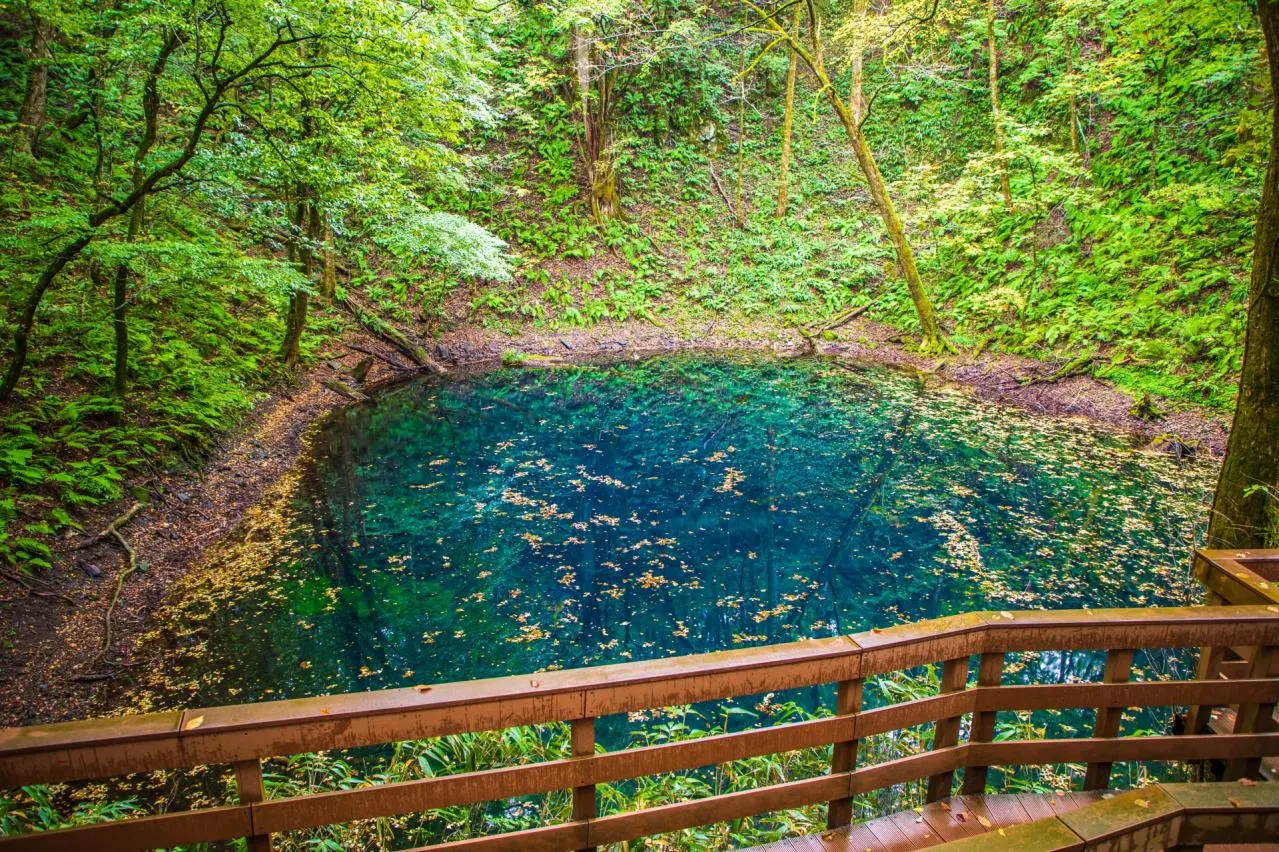
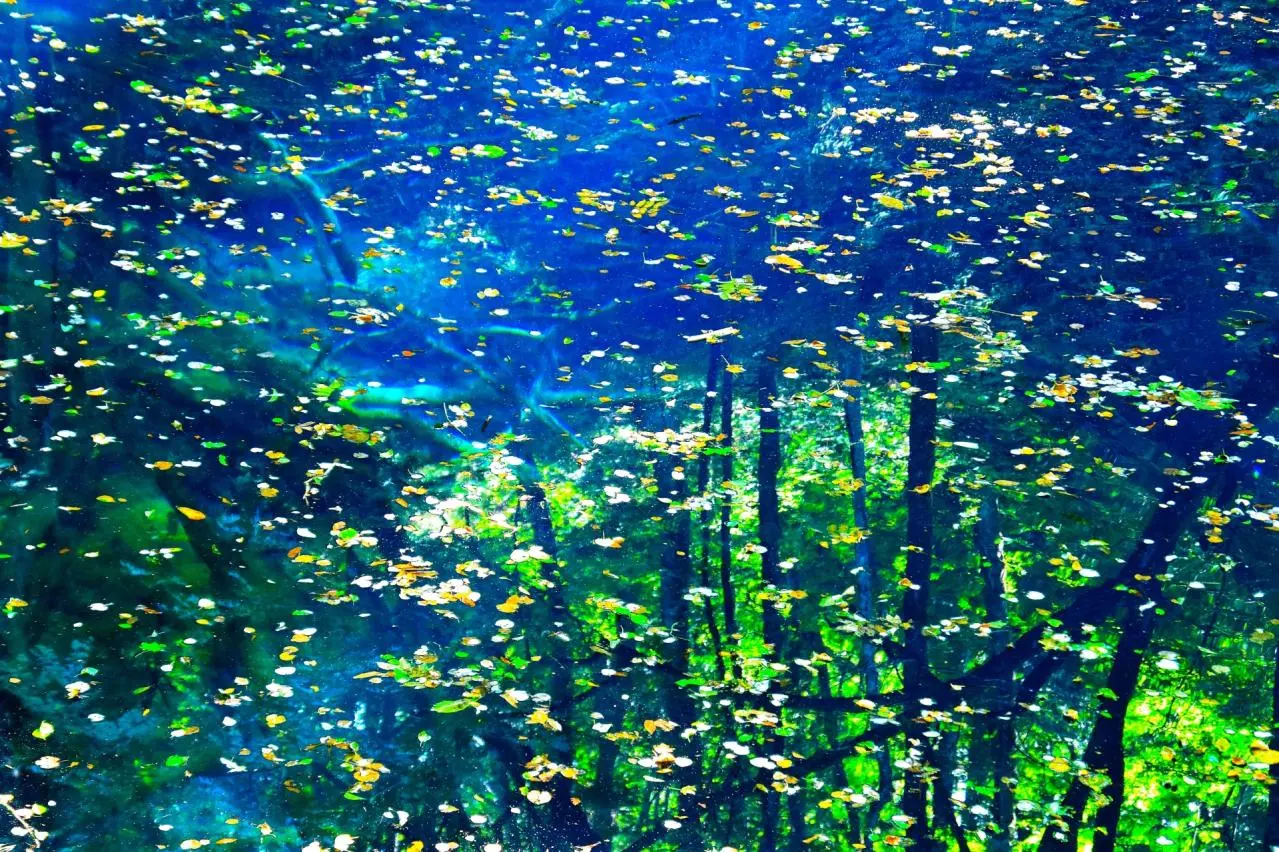
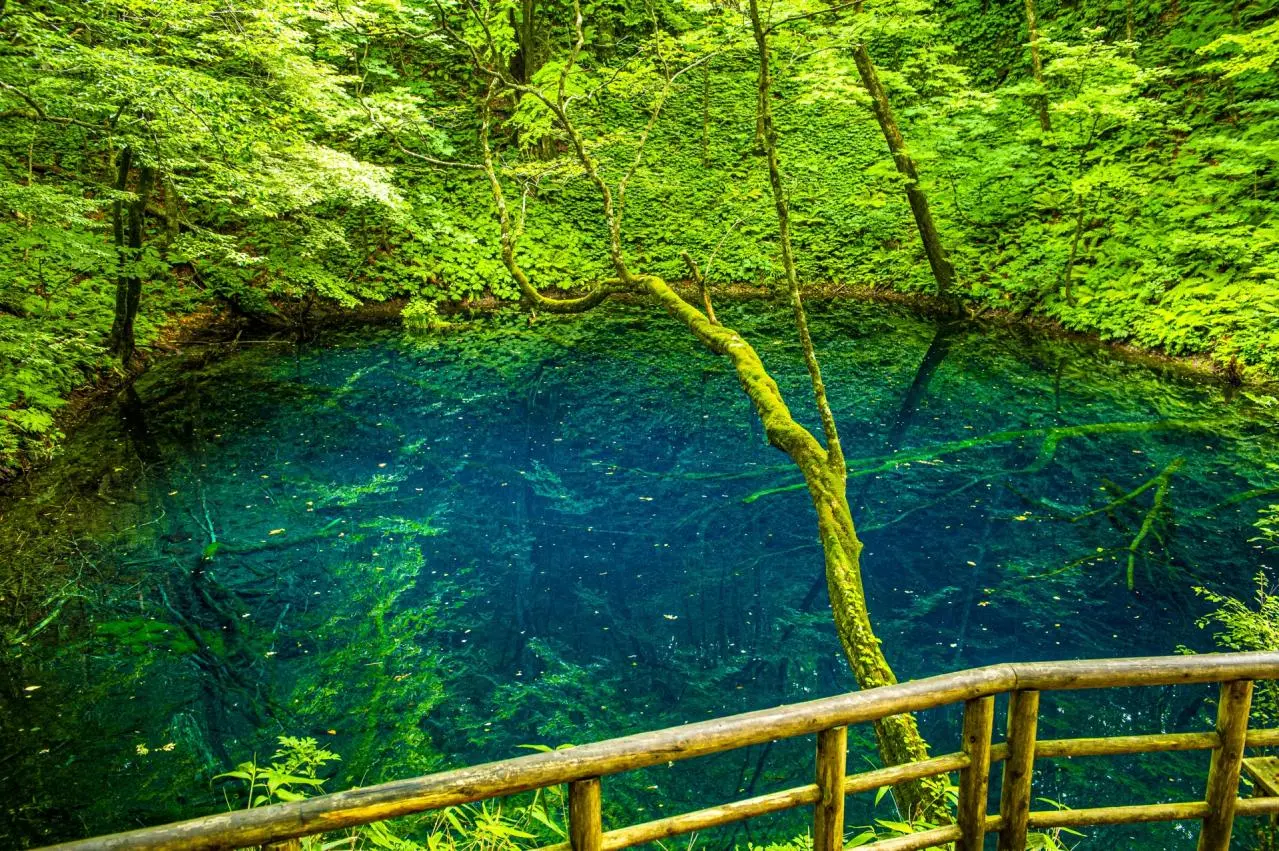
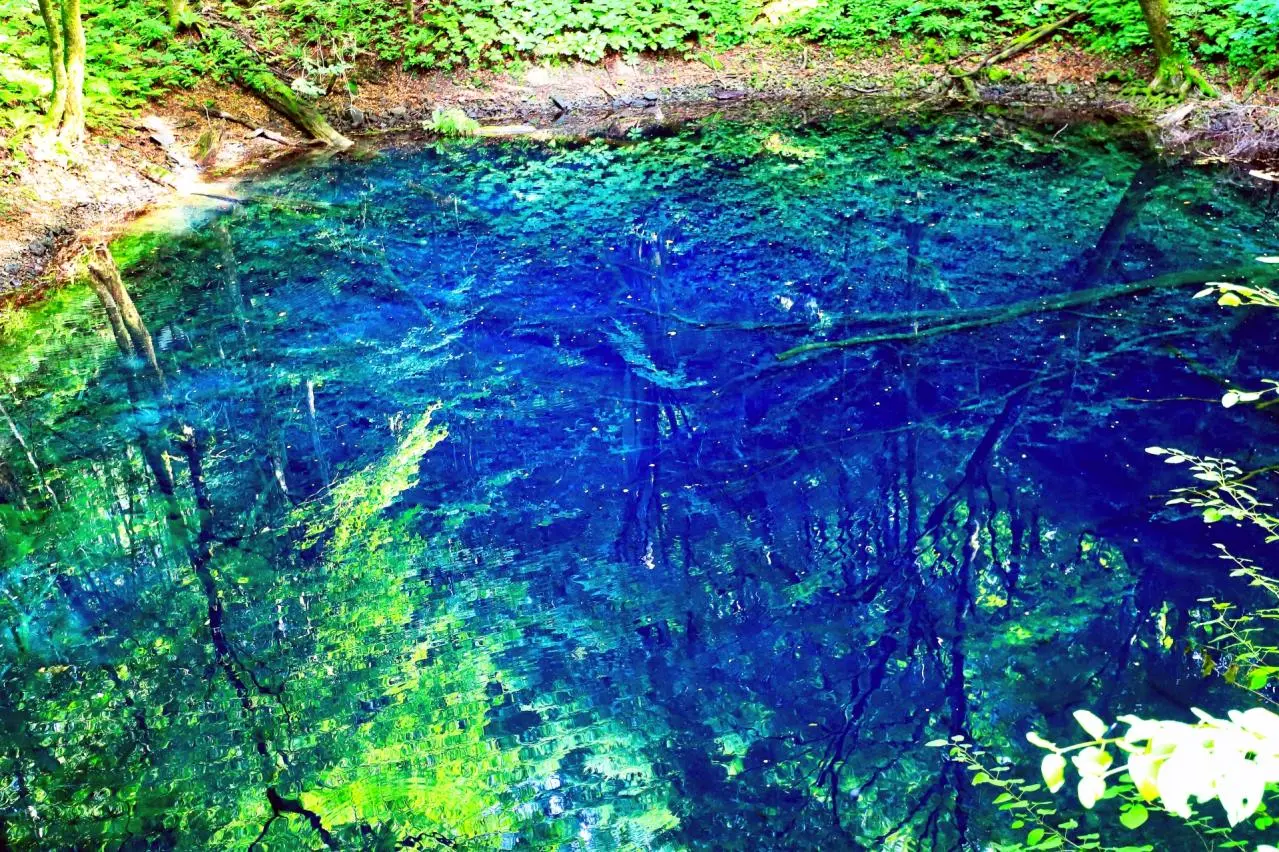
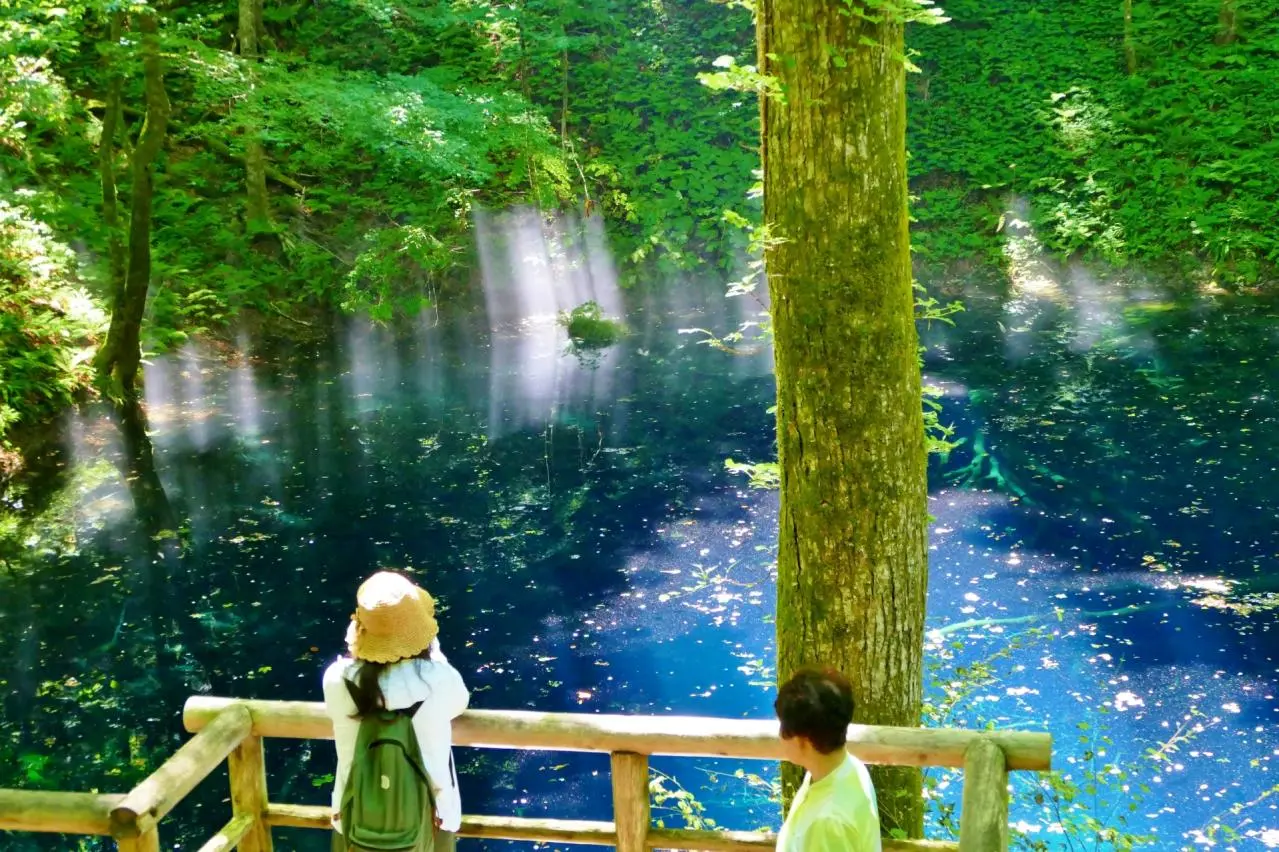
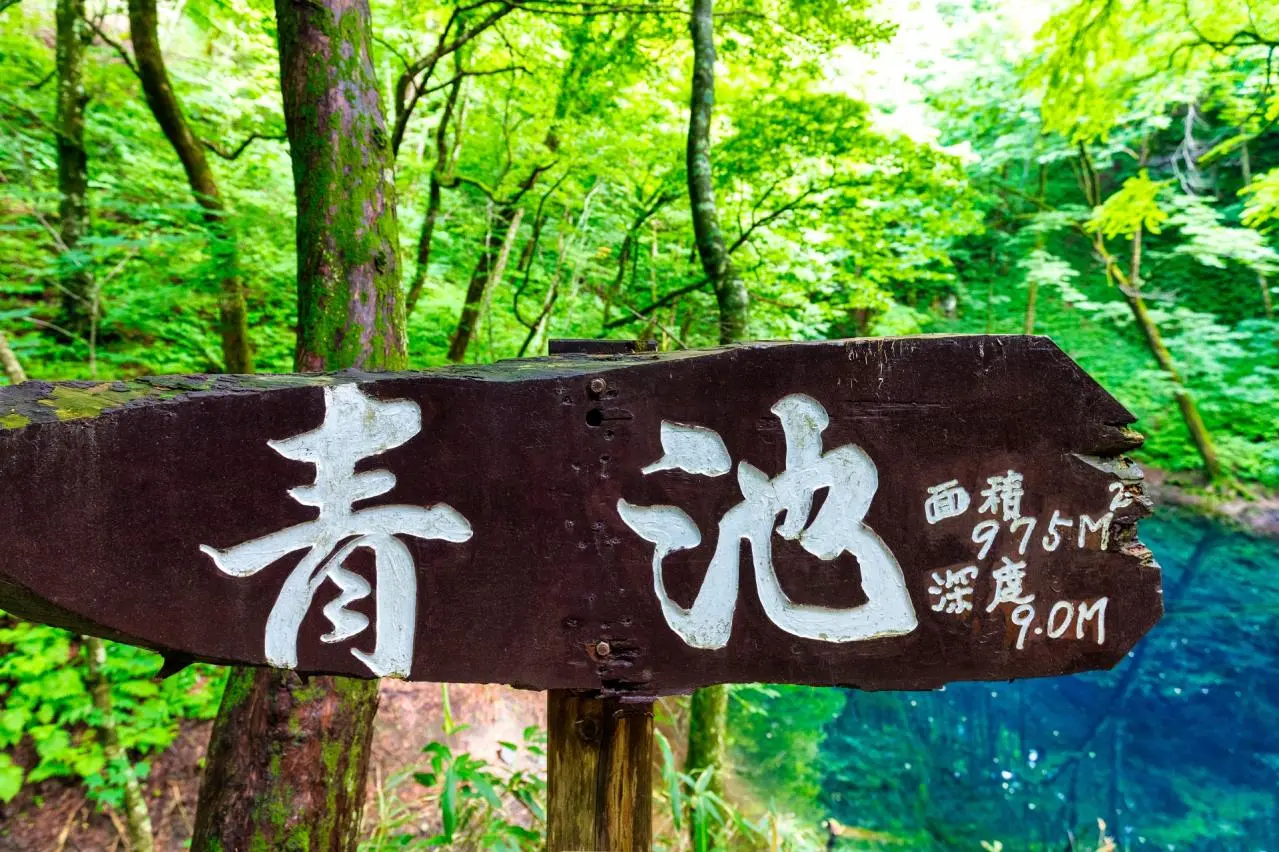
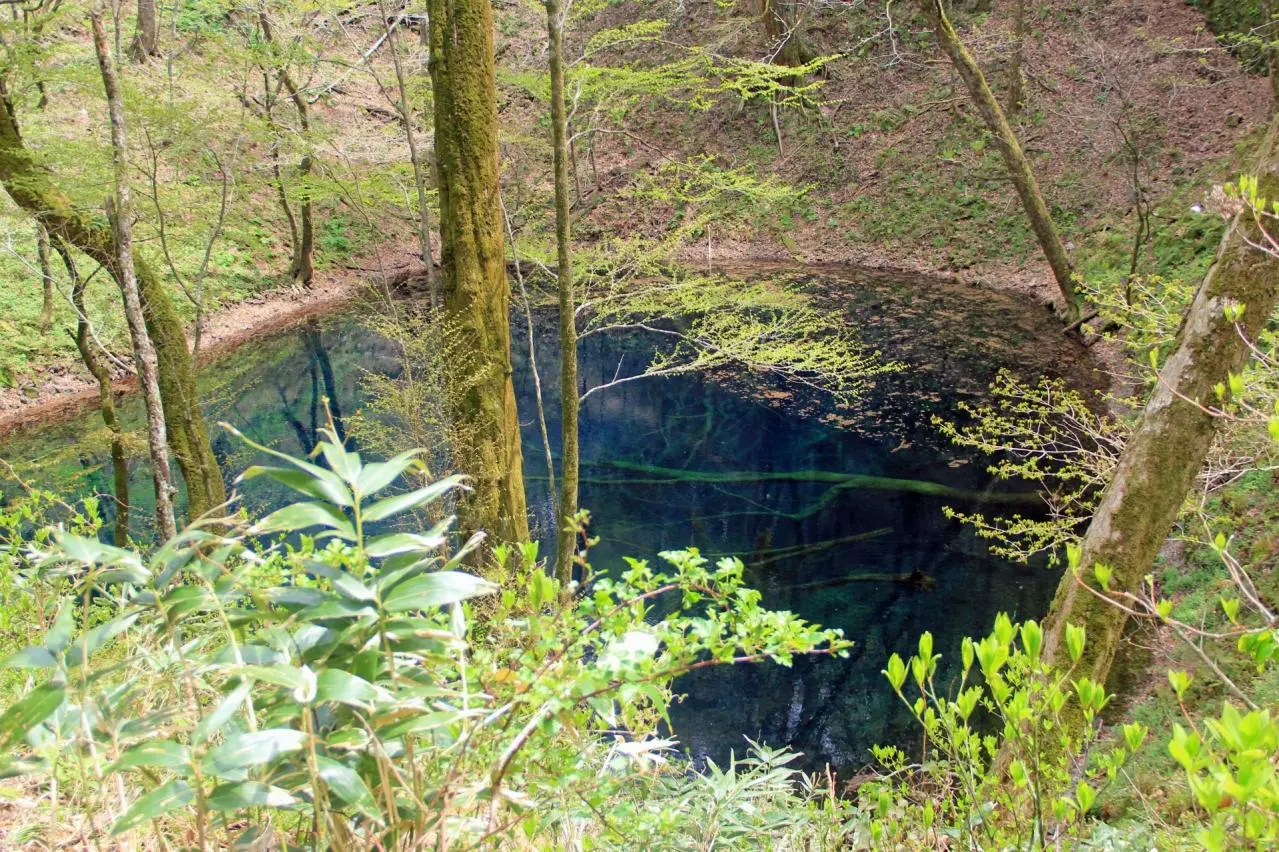
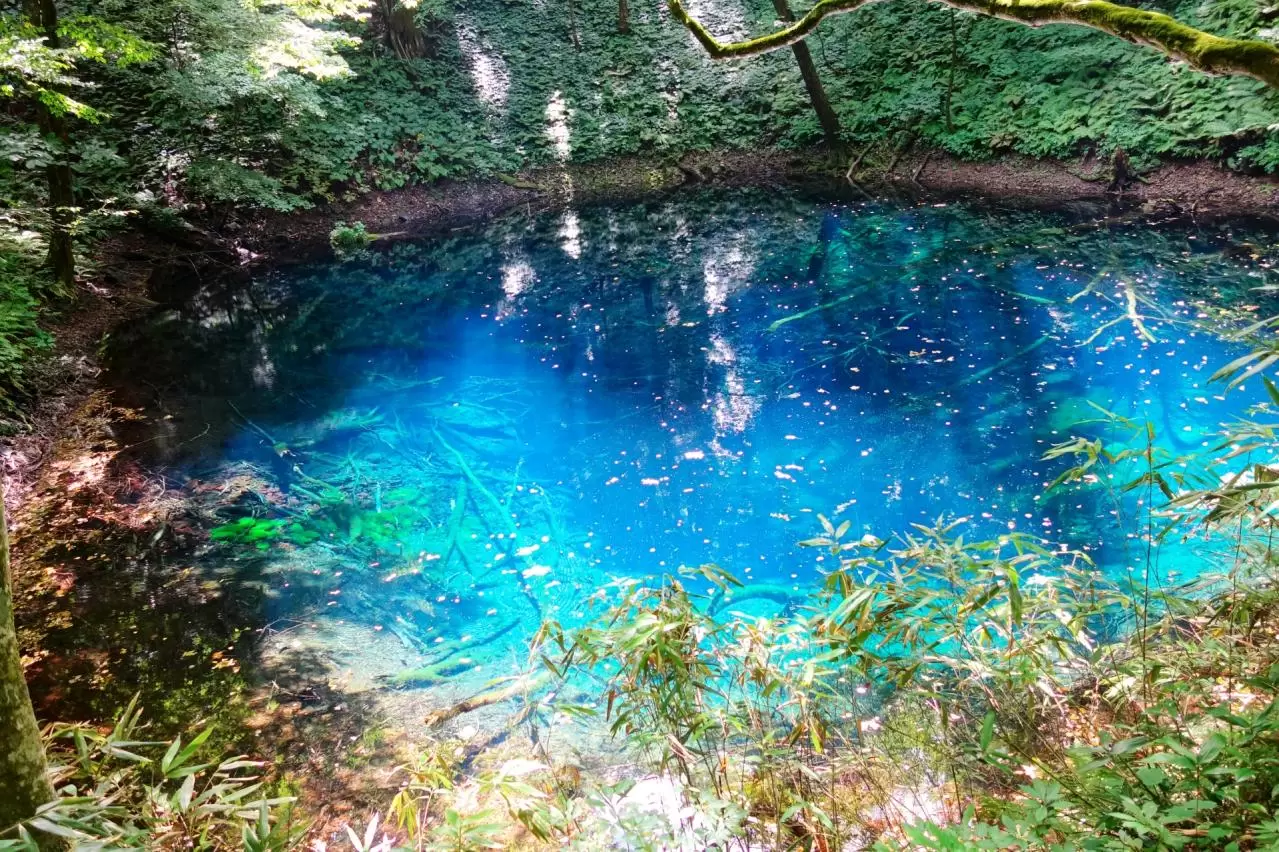
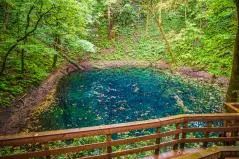
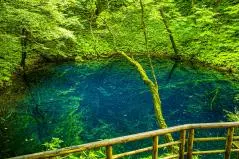
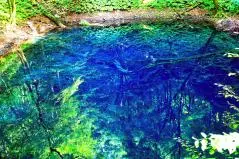
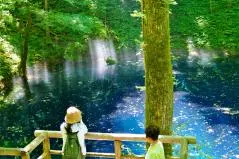
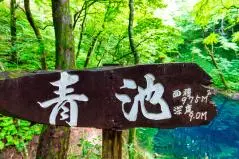
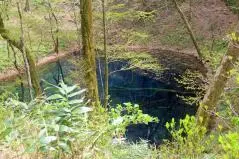
Among the many lakes and ponds, the most famous is Aoike. It is said to be about 9 meters deep, and though not especially deep, it boasts such clarity that the lakebed can be seen distinctly. The surface, glowing a deep cobalt blue as if ink had been poured into it, never fails to overwhelm and enchant visitors.
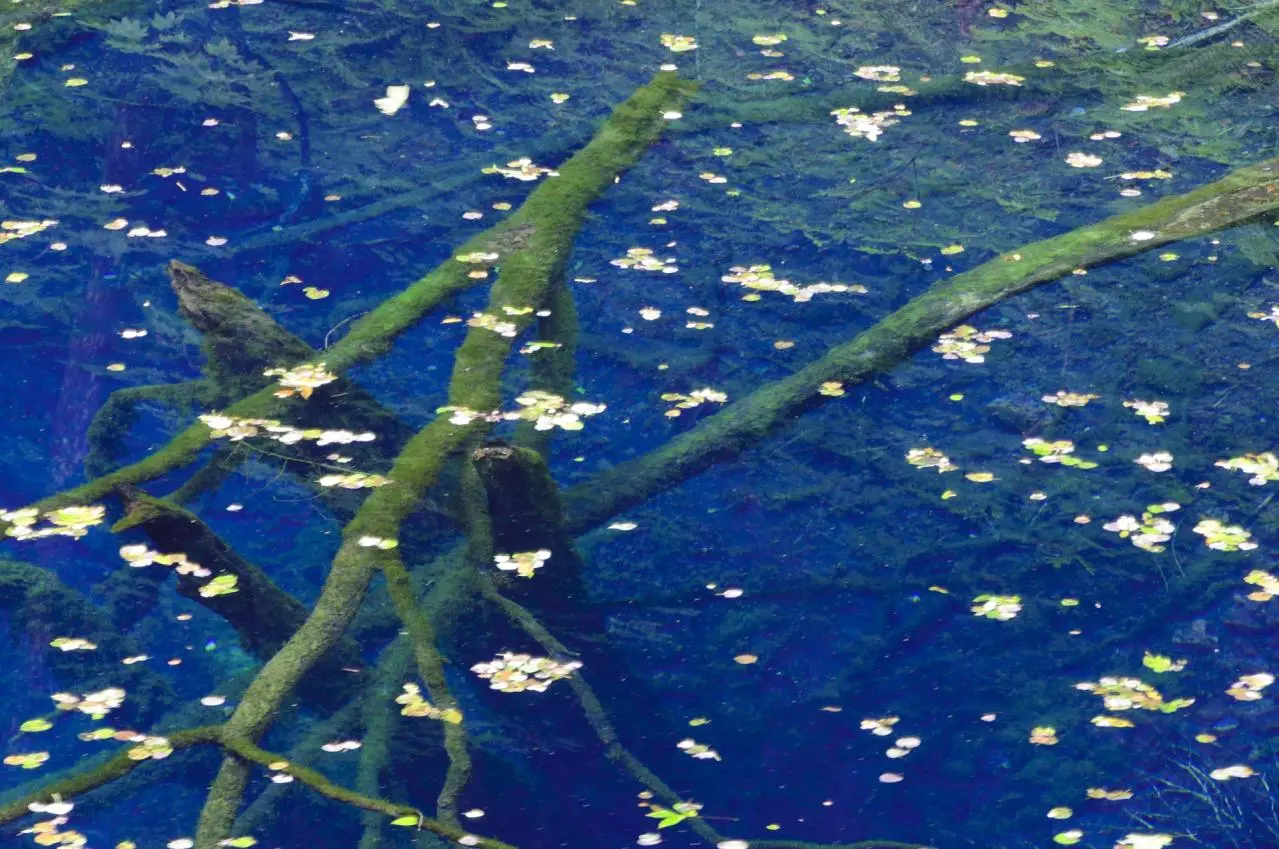
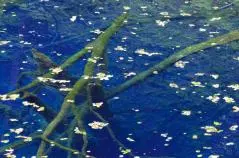
Inside the pond, a fallen beech tree lies submerged, and the contrast between its clearly visible shape and the mysterious blue water creates a truly magical scene.
The reason for this vivid blue color has not been fully explained scientifically, and the phenomenon is often described as a “miracle blue.” The color of the water subtly changes depending on the season and time of day, and it is said to be especially beautiful around midday from April to August, when the sun is high in the sky.
If you look down at Aoike from the observation deck, you may even spot river fish such as iwana (char), if you are lucky. This is a sight made possible by the clear, calm water.
A Walk Beginning at the Mori no Bussankan Kyoro-ro
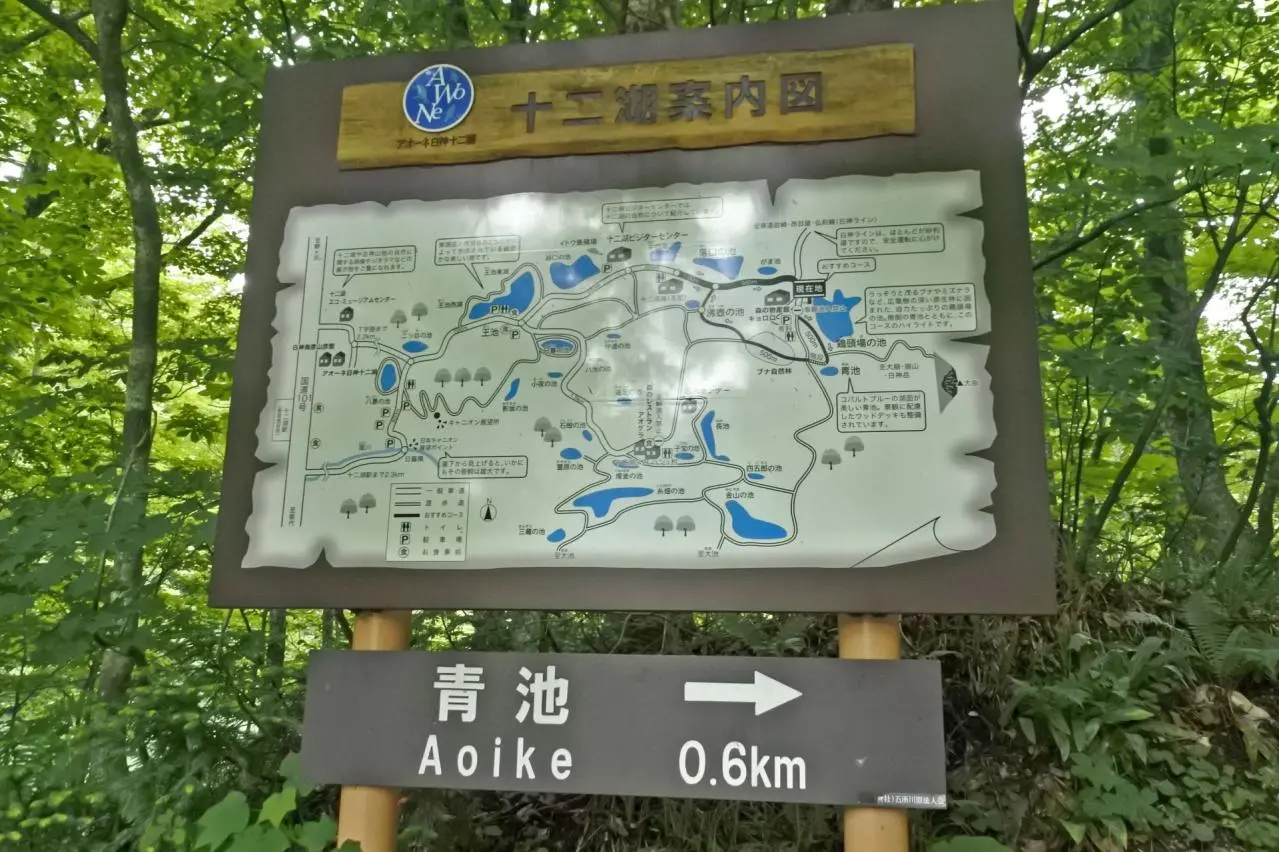
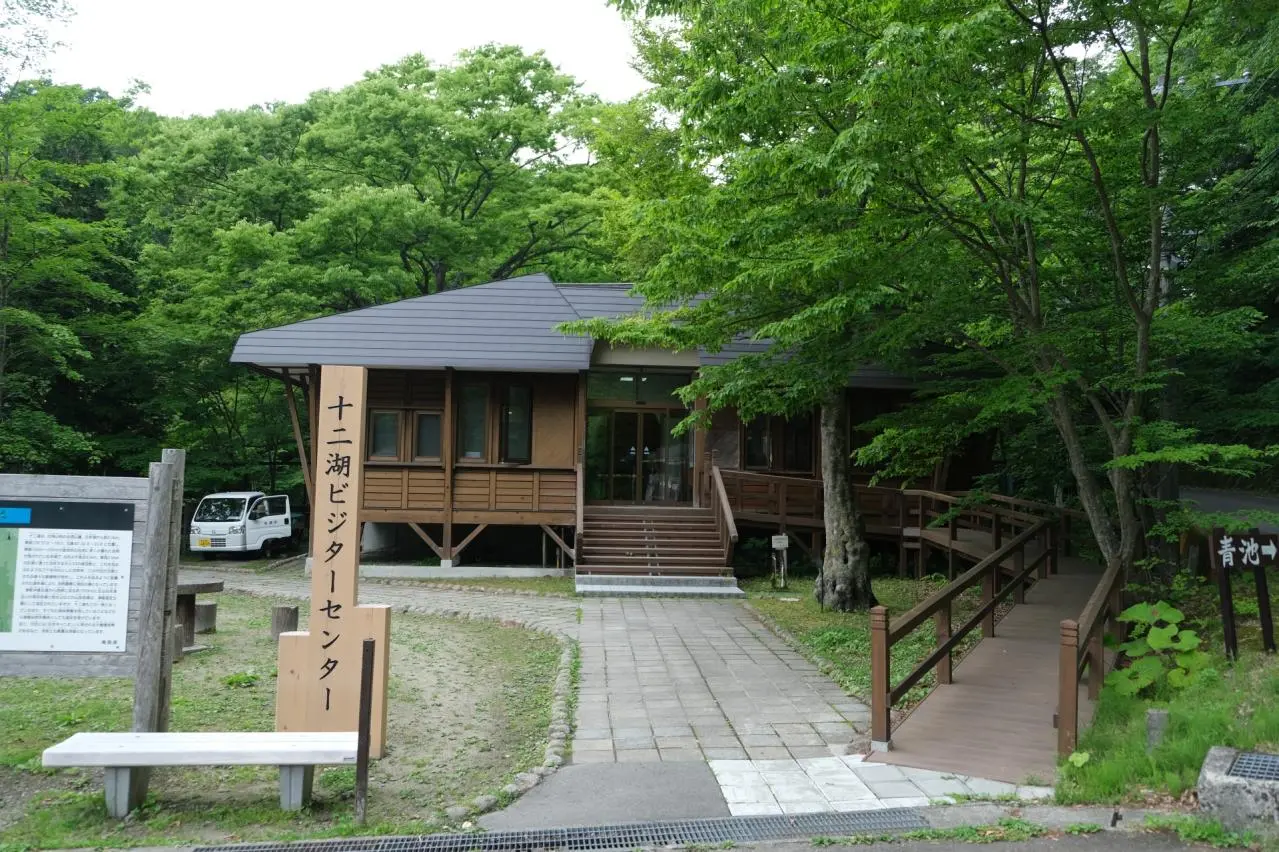
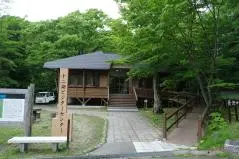
The starting point for a visit to Aoike is the Mori no Bussankan Kyoro-ro. This facility includes a parking lot and a tourist information center, and many visitors begin their walk here.
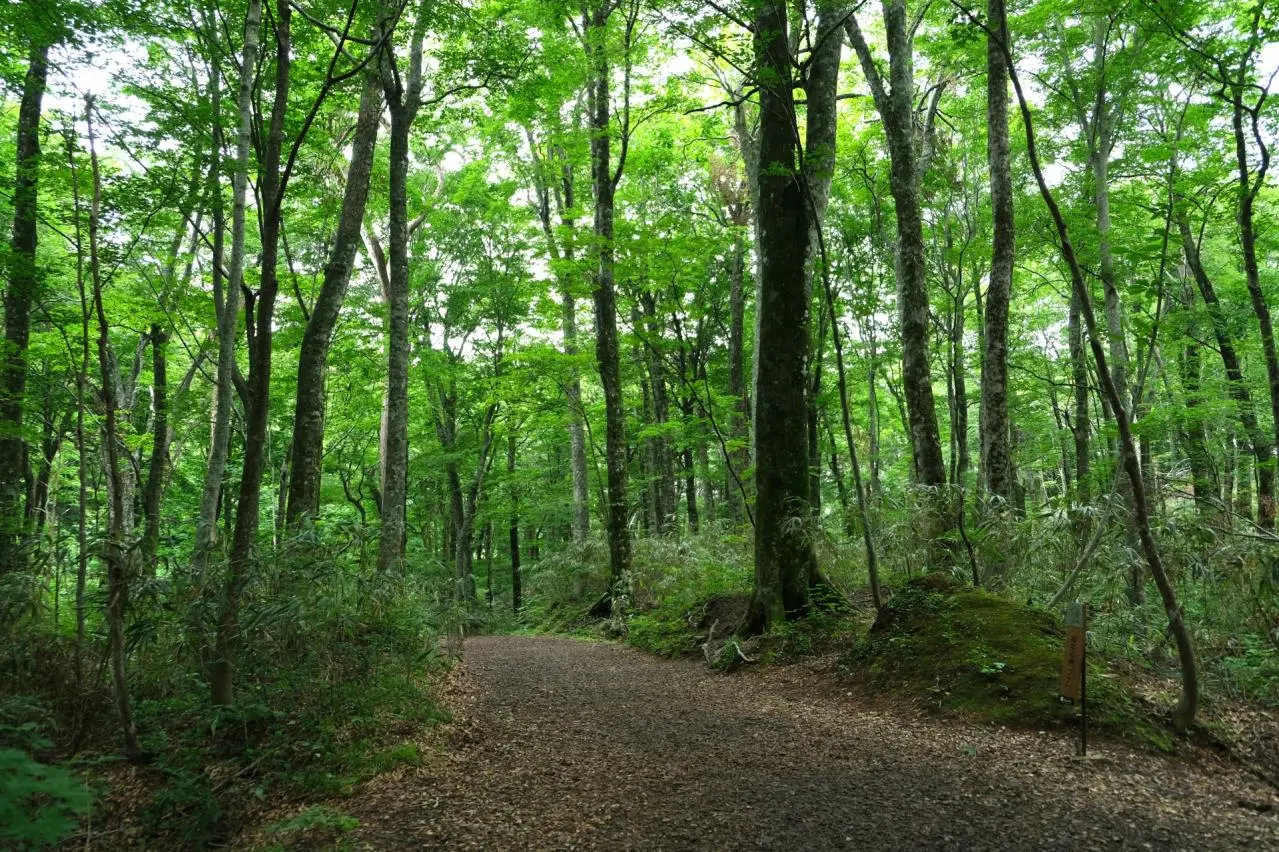
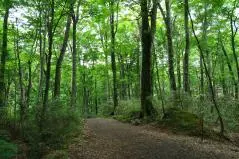
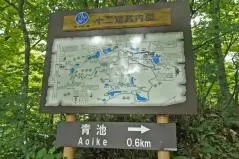
The route from Kyoro-ro to Aoike, passing Keitoba Pond and the beech natural forest, takes about 10 minutes one way along a well-maintained walking trail. It is an easy course even for beginners, allowing visitors to fully enjoy the rich natural beauty of the Shirakami Mountains’ primeval beech forest.
If you continue farther, you will reach Wakitsubo Pond. This pond is also renowned for its clarity, comparable to Aoike, and its surface shines emerald green. Its spring water is designated as one of Aomori Prefecture’s famous waters, and it is known as a place where visitors can experience both its beauty and purity.
Along the way, it is also recommended to take a break at Jūnikoan, a teahouse near Wakitsubo Pond. While enjoying tea brewed with the famous waters of Wakitsubo Pond, you can spend a quiet moment surrounded by the forest.
The Jūniko Forest and Therapy Road
The Jūniko area is also certified as a Forest Therapy Base, earning high praise as a place for forest bathing that soothes both body and mind. The maintained walking paths are developed as “therapy roads,” and depending on your stamina and available time, you can choose from several courses:
- Aoike / Wakitsubo Pond Course (about 2.5 hours at a leisurely pace)
- Kaneyama Pond Short Course (about 2.5 hours)
- Kaneyama Pond / Itobata Pond Long Course (about 4 hours)
- Oike Course (about 2.5 hours)
Each course offers a deeply restorative experience, allowing you to fully savor the rich nature and tranquility of Jūniko.
Seasonal Charms and Important Notes
Jūniko is generally open to the public from April through November each year, and it is especially popular in the spring when fresh greenery appears and in the autumn when the leaves change color, attracting many trekkers and nature lovers.
From December through March of the following year, the road gates are closed and regular car access is unavailable; however, winter visits are still possible through guided tours by advance reservation, allowing you to enjoy the fantastical, snow-covered Jūniko landscape.
In summer, insects are plentiful, so it is advisable to take proper precautions against bugs. In addition to wearing long sleeves and long pants to cover exposed skin, comfortable shoes with good traction are recommended for walking the trails.
Experiencing Great Nature Along with the Shirakami Mountains
The Shirakami Mountains, where Jūniko is located, are a vast natural area home to one of the world’s largest primeval beech forests, covering approximately 130,000 hectares. Of this, the core area of about 17,000 hectares was registered as a UNESCO World Natural Heritage site in 1993.
As a rule, access to the registered core area is restricted, but walking routes are maintained in the surrounding area for anyone to enjoy, allowing visitors to feel the abundant life of the Shirakami Mountains up close.
A “Blue Spectacle” to See with Your Own Eyes
Aoike is a special place that remains in the memories of travelers from Japan and around the world as one of Aomori’s most stunning blue landscapes. Its mystical brilliance offers an experience so moving that no photograph or video can fully convey it. Come and see this miraculous color created by nature with your own eyes.
#Superb view/Scenic spot #Waterfalls, valleys, limestone caves #Climbing/Hiking
Juniko (Aoike Pond) Movies


![日本の世界遺産 [001] 白神山地/十二湖/青池/WorldHeritage/Shirakami-Sanchi/Juni-Lake/Ao-Pond](https://i.ytimg.com/vi/flGR2tKPQvs/mqdefault.jpg)


Aomori Tourist Attractions
View List
Koganezaki Furofushi Onsen
Ogonzaki Furofushi Onsen is a hot spring inn located at the scenic Ogonzaki in Fukura Town, Aomori Prefecture, at the foot of the World Heritage Site, Shirakami-Sanc...

Tsuru-no-Mai Bridge
Tsuru-no-Mai Bridge in Aomori Prefecture is a 300-meter-long, the longest wooden triple-arch bridge in Japan. It spans the beautiful Tsugaru Fujimi Lake, reflecting ...

Aomori Gyosaisen Center
The "Aomori Gyosai Center," located just a 5-minute walk from Aomori Station, is a historic market known locally as "Furukawa Market" with over 40 years of history. ...

Hotokegaura
On the west coast of the Shimokita Peninsula, in Sai Village, lies a breathtaking spot known as "Fukue Cape." A series of white-green odd-shaped rocks stretch for ab...


Sannai-Maruyama Site
The Sannai-Maruyama Site is located in Aomori Prefecture and is designated as a national special historic site as one of Japan's largest Jomon period settlement site...

Mount Osore
Mount Osore is regarded as one of Japan's three great sacred mountains, alongside Mount Hiei and Mount Koya. Located on the Shimokita Peninsula, this spiritual site ...

Hirosaki Castle
Hirosaki Castle is located within Hirosaki Park in Hirosaki City and is an important cultural property that features the northernmost existing tenshu (keep) in Japan...