Scenery reminiscent of hell and paradise
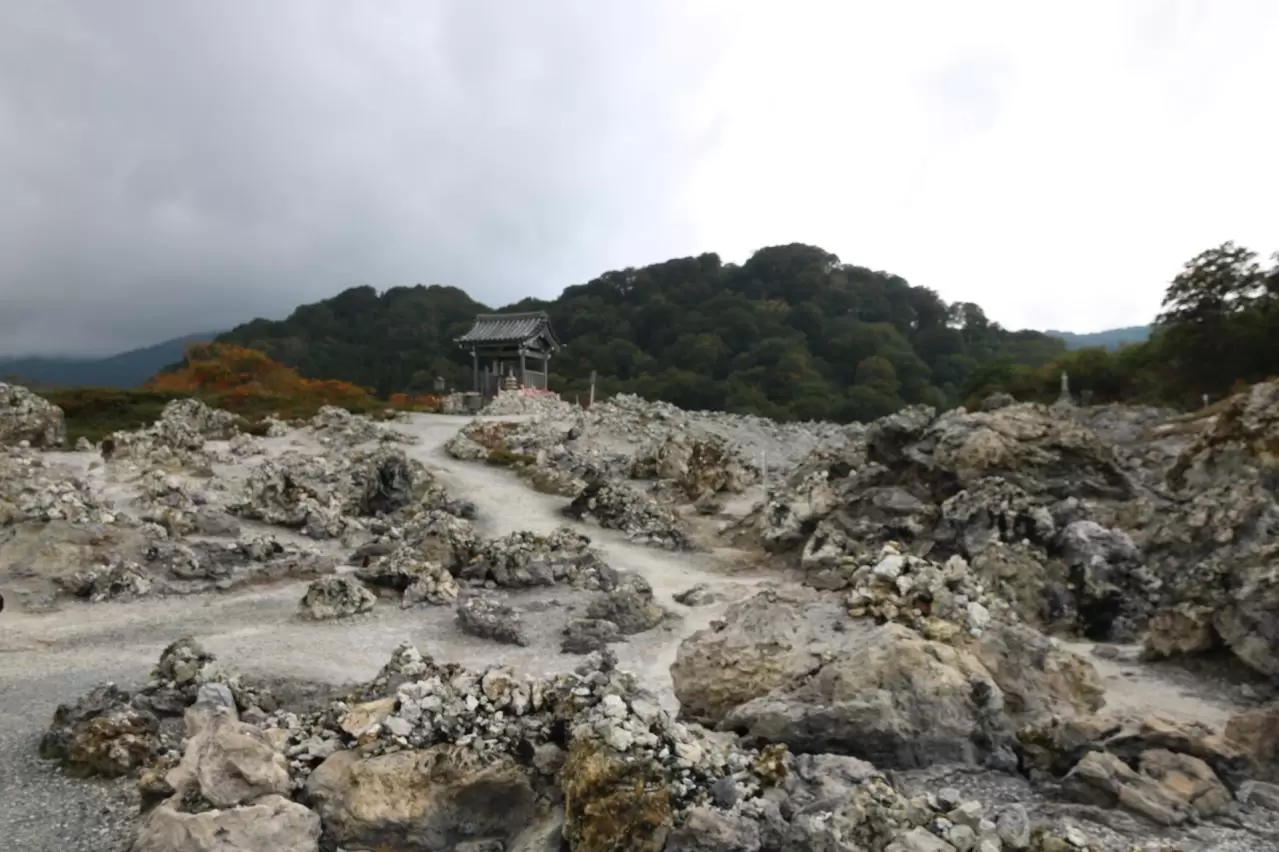
White rock and volcanic steam create a stark landscape, while the lakeshore offers gentler views.
AI Summary
This is an AI-generated summary. Please check the official information for opening hours, fees, and closed days.
A distinctive sacred site where stark volcanic landscapes meet a quiet atmosphere of prayer.
One of Japan’s three major sacred sites, Osorezan lies on the Shimokita Peninsula in Aomori, where rugged volcanic terrain stretches along the shore of Lake Usori. Known as a place to remember the dead, it is marked by the scent of sulfur, free bathhouses, and events associated with itako spirit mediums in summer and autumn. It is best explored as a quiet place for reflection rather than as a typical sightseeing stop.
White rock and volcanic steam create a stark landscape, while the lakeshore offers gentler views.
This sacred site invites visitors to remember loved ones and spend a quiet moment in reflection.
A distinctive feature is the chance to stop at a bathhouse during your visit.
Explore the grounds while taking in the views around Lake Usori, then, if time allows, stop at a bathhouse or stroll along a quieter stretch of the lakeshore.
Osorezan is a sacred site located on the Shimokita Peninsula in Aomori Prefecture, and is widely regarded, along with Hieizan and Koyasan, as one of Japan’s three great spiritual places. Its history dates back about 1,200 years, when it was founded by the high-ranking Tendai Buddhist monk Jikaku Daishi Ennin. Today, the site is maintained by Osorezan Bodai-ji, a temple of the Soto school of Zen Buddhism.
The Origin and Natural Setting of Osorezan
The name “Osorezan” does not refer to a single mountain, but rather to the caldera landscape surrounded by eight peaks (known as Hachiyo or “eight leaves”) centered on Mount Kamafuse. At its heart lies Lake Usori, a caldera lake formed by volcanic activity, and along its shoreline stands Osorezan Bodai-ji.
This area is filled with volcanic rock and sulfurous fumaroles, and its white-stained rock surfaces and lingering smell of sulfur create a desolate landscape that evokes the afterlife. It is an extremely unique spiritual space, where harsh, hell-like terrain exists side by side with the tranquil lakeshore known as “Gokuraku-hama” (“Paradise Beach”).
Faith and Religious Significance
Osorezan has long been revered as a sacred place connecting the dead and the living. Locally, it is said that “when people die, they go to Osorezan,” and it is regarded as an entrance to the afterlife.
Its principal image is Enmei Jizo Bosatsu, said to save even those who have fallen into hell, and one of the most familiar Buddhist figures to the Japanese people. In addition, many other deities and Buddha images are enshrined here, including Shakyamuni Buddha, Amida Buddha, Yakushi Nyorai, Fudo Myoo, and Kannon Bosatsu, drawing faith from people across sectarian boundaries.
Historical Background
The opening of Osorezan is said to have begun when Jikaku Daishi Ennin visited this place guided by a dream revelation. He founded Osorezan Bodai-ji here and enshrined as the principal image an Enmei Jizo statue he had carved himself.
Although many records were lost through warfare and fire, the sacred site was revived in the mid-16th century by the monk Kochi Jugaku of Entsu-ji, and has continued to the present day. Many of the buildings seen today have been rebuilt or restored in recent years.
A Sacred Realm Symbolizing the Afterlife
A visit to Osorezan begins at Taiko-bashi Bridge, which symbolizes the Sanzu River, the boundary between this world and the next. It is said that evil people cannot cross this bridge.
Beyond the bridge are numerous Buddhist statues and halls, including Jizo-do, Jikaku Daishi-do, the Six Jizo, and the Five Wisdom Buddhas. Further on, visitors encounter scenes that seem to embody the afterlife itself, such as Sai no Kawara, Jigoku-dani (Hell Valley), Mukan Jigoku, and Chinoike Jigoku. The sight of steam rising from geothermal vents is truly reminiscent of hell.
Beyond these rugged landscapes appears the beautiful sandy shore known as Gokuraku-hama. The contrast of pure white sand and the crystal-clear surface of Lake Usori creates a scene reminiscent of paradise, leaving a powerful impression on visitors.
Itako Spirit Mediums and the Osorezan Grand Festival
When speaking of Osorezan, the presence of Itako—female shamans who are said to call forth the spirits of the dead—is also essential. Since the 1950s, many people from across Japan have visited during the summer Osorezan Grand Festival (around July 20–24 each year) and the autumn Osorezan Pilgrimage (early October) in hopes of receiving a spirit communion reading from an Itako.
However, Itako are not official religious personnel of Osorezan, nor do they have any formal religious relationship or administrative ties with Osorezan Bodai-ji. Today, due in part to aging, the number of active Itako has been declining.
Hot Springs and Lodging Experiences That Soothe Pilgrims
Within the temple grounds are four bathhouses—Konen no Yu, Kotaki no Yu, Yakushi no Yu, and Hanazome no Yu—where visitors can bathe freely. All of the springs are sulfur springs, offering a rare and special experience of soaking in hot water amid the silence of this sacred site. *Use is separated by gender, and restrictions may apply depending on time and season.
At the shukubo lodging facility, Kisshokaku, guests can stay overnight and experience morning Buddhist services and sutra copying, allowing for a deeper pilgrimage experience than a simple day trip.
The Contemporary Significance of Osorezan
Osorezan is not merely a tourist destination; for many people it continues to hold special meaning as a “spiritual refuge” for remembering the deceased, sharing in the sorrows of this world, and reflecting on life. In this place where hell and paradise coexist, people’s prayers and wishes have quietly accumulated over time.
The air, sounds, scents, and scenery of this land will surely remain deeply etched in the hearts of those who visit. A one-of-a-kind sacred land standing between this world and the next—that is Osorezan.
The Oirase Stream is a two-star tourist attraction in the Michelin Green Guide, featuring a breathtaking 14 km stretch of stream. Everywhere you walk, you are captiv...
"The Nebuta House Wa Rasse" in Aomori City is a facility where visitors can experience the charm of the Nebuta Festival throughout the year. Opened in 2011 and locat...
The Dazai Osamu Memorial Hall "Shayokan" is the birthplace of the renowned author Dazai Osamu. It is a magnificent residence built by his father, Tsushima Gen'emon, ...
On the west coast of the Shimokita Peninsula, in Sai Village, lies a breathtaking spot known as "Fukue Cape." A series of white-green odd-shaped rocks stretch for ab...
Hirosaki Castle is located within Hirosaki Park in Hirosaki City and is an important cultural property that features the northernmost existing tenshu (keep) in Japan...
The Hakkoda Ropeway is a stunning spot to enjoy the magnificent nature of the Hakkoda Mountains. Since its opening in October 1968, it continues to attract visitors ...
The "Aomori Gyosai Center," located just a 5-minute walk from Aomori Station, is a historic market known locally as "Furukawa Market" with over 40 years of history. ...


![[青森観光]下北半島2日目!霊場恐山から大尽山827m登頂、カッパの湯と絶景夕陽の旅|青森旅行](https://i.ytimg.com/vi/4igS_hZ-ggw/mqdefault.jpg)