Shirakawa Suigen
Shirakawa Suigen Movies


![【熊本県 南阿蘇村】名水百選 白河水源で100円さんぽ [4K]](https://i.ytimg.com/vi/PMD6okq0udE/mqdefault.jpg)


Basic Information
- Spot Name
- Shirakawa Suigen
- Location
- 〒869-1502 2040 Shirakawa, Minami Aso Village, Aso District, Kumamoto Prefecture, Japan
- Access
- From JR Higo Otsu Station on the Hohi Main Line, take the Sanko Bus bound for Takamori Station for 53 minutes, and get off at Shirakawa Suigen Entrance. It takes about 80 minutes from Kumamoto city, about 40 minutes from Kumamoto Airport, and about 25 minutes from Aso Kusasenrigahama.
- Parking
- Parking available.
- Business Hours
- 8:00 AM to 5:00 PM (closing times may vary by season)
- Fees
- 100 yen for high school students and above, free for junior high school students and below.
- Contact Information
- Phone Number:0967-67-1112
- Official Website
Map
Detailed Information
Shirakawa Spring is one of Kumamoto Prefecture’s most renowned natural springs, located in Shirakawa, Minamiaso Village, Aso District, Kumamoto Prefecture. It lies at the southern foot of the Central Conical Volcano Group inside the Aso Caldera and is surrounded by lush forests and pastoral landscapes. As a symbol of Minamiaso Village, known as the “Land Where Water Is Born,” it attracts many visitors throughout the year who come to enjoy the beautiful scenery of its clear, continuously flowing spring water.
At Shirakawa Spring, groundwater with a year-round temperature of approximately 14°C rises to the surface at an abundant rate of about 60 tons per minute—equivalent to approximately one ton per second. Beneath the highly transparent surface, sand is constantly stirred by water pushing upward from underground. One of the spring’s greatest attractions is the opportunity to observe up close how water emerges from the earth and immediately begins flowing as a river.
Shirakawa Spring is one of the principal headwaters of the Class A Shirakawa River, which flows through central Kumamoto City before emptying into the Ariake Sea. Minamiaso Village and the Minamiaso Railway introduce it as “the entire source of the clear Shirakawa River,” but not all of the river’s water originates from this spring alone. Rainfall in the Aso Caldera, water from numerous springs scattered throughout the surrounding area, and tributaries all come together to form the Shirakawa River’s abundant flow.
The springs of Minamiaso, including Shirakawa Spring, are closely connected to Aso’s distinctive volcanic landscape. Rain that falls in the Aso region seeps into layers composed of volcanic ejecta and other materials, slowly moving underground as groundwater. Some of this groundwater is believed to emerge at the surface under particular topographical and geological conditions, forming springs in various locations.
However, the ground beneath the Aso region contains many different strata created by volcanic activity, layered together in a complex formation. As a result, not all of the routes taken by groundwater before emerging at the surface have been fully understood. The complicated flow of groundwater, shaped by the topography of the Aso Caldera and the Central Conical Volcano Group within it, is considered one reason why so many springs can be found in Minamiaso.
Most of the springs in the Nango Valley are thought to be fed primarily by groundwater recharged by rain falling on the southern slopes of the Central Conical Volcano Group, with additional water coming from the direction of the Outer Southern Rim of the caldera. Shirakawa Spring is a precious gift of nature created by the terrain shaped by Aso’s volcanic activity, abundant rainfall, and groundwater flows formed over an immense period of time.
In 1985, Shirakawa Spring was selected as one of Japan’s “100 Remarkable Waters” by the Environment Agency, now the Ministry of the Environment. Selection was based not only on water quality and volume, but also on the surrounding environment, scenery, accessibility and enjoyment of the water, and conservation activities conducted by local residents. At Shirakawa Spring, cleaning activities are carried out by the water-source management association and local preservation groups, helping to protect the spring’s beautiful surroundings.
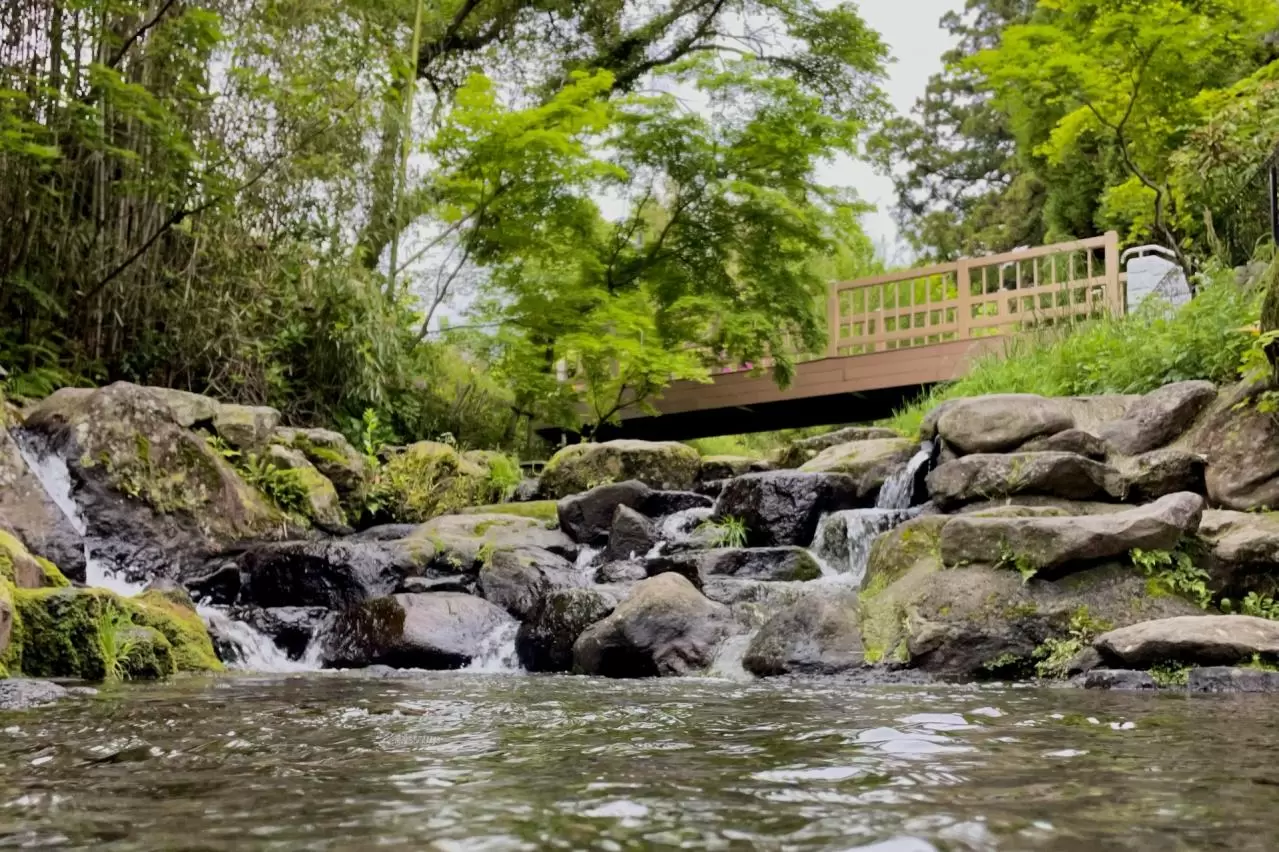
The spring pool is exceptionally clear, allowing visitors to see the sand, pebbles, and other features beneath the water. The surface reflects the surrounding trees, sky, and sunlight, shimmering in shades of blue and green. At the bottom of the pool, sand is constantly moved by the rising water, creating a scene that seems as if the earth itself is breathing. Gazing at the places where the water emerges, visitors can sense the moment when groundwater stored within the Aso landscape is born anew as a flowing stream.
Shirakawa Spring displays a different appearance in each season. In spring, fresh green foliage tints the surface a soft green. In summer, the shade of the trees and the cool spring water create a refreshing atmosphere. In autumn, the surrounding trees change color, creating a beautiful contrast with their reflections on the water. In winter, the clear air, quiet shrine grounds, and transparent water give the area a solemn and tranquil atmosphere.
Because the temperature of the spring water changes very little throughout the year, it may feel refreshingly cold in summer and warmer than the outside air in winter. Although the area experiences distinct seasonal changes, the water’s continual flow at a steady temperature conveys both the mystery and the strength of nature.
At Shirakawa Spring, visitors may drink the spring water on site or fill containers to take it home. Empty bottles and heat-treated water may also be sold near the spring, so visitors without their own containers may still be able to take water home. However, the locations where water may be collected, the methods of use, and the products available for purchase may change, so visitors should follow the instructions provided on site.
The sanitary condition of natural spring water taken home may change over time depending on how it is stored. Visitors are therefore advised to use a thoroughly washed, clean container and consume the water as soon as possible. Anyone concerned about drinking it should take appropriate precautions, such as boiling the water. Since the spring is used by many people, visitors are also expected to avoid collecting large amounts of water over a long period and to take turns considerately.
The Shirakawa Yoshimi Shrine stands immediately beside the spring pool. Although the date of its founding is unknown, it has long been revered by local residents as a shrine protecting the clear and abundant spring water. Its principal deity is Mizuha no Megami, the goddess of water. Her name is pronounced “Mitsuhanome-no-kami,” and she has been worshipped since ancient times as a deity associated with water, rain, wells, and agriculture.
Shirakawa Yoshimi Shrine also enshrines Kunitatsu-no-kami, the principal deity of Kusabe Yoshimi Shrine in Takamori Town. According to tradition, during the Genroku era of the Edo period, Hosokawa Tsunatoshi, lord of the Kumamoto domain, visited the shrine while hunting in the mountains. Recognizing the great benefits that the water brought to his domain and its fields, he ordered the shrine buildings to be repaired. This story illustrates how Shirakawa Spring was valued by both local rulers and residents as an important source of drinking water and agricultural water.
Since ancient times, the water of Shirakawa Spring has also been passed down in tradition as sacred water associated with longevity and protection from illness. The view of the spring pool beside the shrine conveys a faith in which water was revered not merely as a resource, but as a sacred presence that nourishes life and crops. Around late July each year, the local community holds a summer festival at Shirakawa Yoshimi Shrine, although the date and program may vary from year to year.
Numerous springs known for their high-quality water are scattered around Shirakawa Spring. Notable examples include Shioisha Spring, Terasaka Spring, Yuwazatsu Spring, Ikenokawa Spring, Myojin Pond, Takezaki Spring, and Yoshida Castle’s Imperial Water-Collection Site. Depending on the source, Ikenokawa Spring may also be written as “Ikenokawa Spring” using a different character for “kawa.”
Together with Shirakawa Spring, these springs are introduced as the “Minamiaso Spring Cluster Geosite” within the Aso UNESCO Global Geopark. Each spring differs in its water volume, surrounding vegetation, the color of its surface, and relationship with nearby shrines and settlements. Visiting several of them provides a deeper understanding of how groundwater emerges throughout Minamiaso and supports the daily lives and agriculture of local communities.
Some springs are located near residential areas or farmland, so visitors should take care not to disturb local residents. Visitors must not enter private property or restricted areas and should follow the posted instructions at each spring regarding parking and water collection.
Around Shirakawa Spring, trees such as cedars stand tall, creating a peaceful environment filled with the sound of flowing water and birdsong. The path from the entrance to the spring pool is relatively easy to walk, although it can become slippery in rainy weather. Visitors should not enter the spring pool or waterways, collect plants, or leave litter, and should explore the area in a way that does not damage the natural environment.
Near the entrance are shops including the Minamiaso Village Products Center “Shizen-an,” where visitors can purchase local agricultural products, processed foods, beverages, souvenirs, and handicrafts. Foods and drinks made with Minamiaso’s water may also be available, allowing visitors to experience the region’s flavors and culture alongside their visit to the spring. Opening days, hours, and available products vary depending on the season, so those wishing to visit a particular shop are advised to check in advance.
An environmental conservation contribution is collected at Shirakawa Spring to help protect the natural surroundings. According to information from Minamiaso Village, the contribution is 100 yen per person for high school students and older, while junior high school students and younger may enter free of charge. The contributions are used for cleaning the area around the spring and maintaining its facilities. Since the amount and conditions of use may change, visitors should check the information provided at the time of their visit.
For visitors using public transportation, the nearest station is Minamiaso Shirakawa Spring Station on the Minamiaso Railway. The walk from the station to Shirakawa Spring takes approximately 10 to 15 minutes. The train journey itself is also part of the appeal, as the windows offer views of the Aso Five Peaks and the pastoral scenery of the Nango Valley. However, trains run infrequently, so visitors should check the departure times for both the outbound and return journeys in advance.
By car, the spring is approximately 80 minutes from central Kumamoto, 40 minutes from Aso Kumamoto Airport, and 25 minutes from Kusasenri-ga-hama. Parking is available on site, but surrounding roads and parking areas may become crowded during tourist seasons and holiday periods. Travel times vary depending on road conditions, so visitors are advised to allow plenty of time.
Shirakawa Spring is more than a tourist destination where visitors simply collect water. It is a place where the terrain created by Aso’s volcanic activity, abundant rainfall in the caldera, underground water flows, the water deity faith associated with Shirakawa Yoshimi Shrine, and the conservation efforts of local residents come together.
As visitors watch water rise from the bottom of the pool, stirring up the sand, they can feel how water stored within the Aso landscape becomes a river and supports local life and agriculture. By listening to the clear sound of the flowing water and taking a leisurely walk through the surrounding forest and shrine grounds, visitors can experience why Minamiaso is known as the “Land Where Water Is Born.” Shirakawa Spring is one of Kumamoto Prefecture’s most celebrated places of pure water, where visitors can experience at once Aso’s magnificent natural environment and the history of people’s gratitude, faith, and efforts to protect water.
Kumamoto Tourist Attractions
View List
Kumamoto Castle
Kumamoto Castle is one of Japan's three famous castles, featuring both the main and small towers side by side. Constructed by Katō Kiyomasa over a period of six to s...

Green Land
"Greenland," located in Arao City on the border with Fukuoka Prefecture, is one of the largest amusement parks in Kyushu. The park features over 81 attractions, cate...

Kikuchi Gorge
Kikuchi Gorge is a scenic natural forest located in the northwestern part of the Aso Outer Rim Mountains, and it stretches across a vast canyon at an elevation of 50...

Kusasenrigahama
Kusasenrigahama is a representative tourist destination of Aso, located at an altitude of approximately 1,100 meters, featuring a vast grassland. To the east, you ca...

Aso Shrine
Aso Shrine, located in Aso City, Kumamoto Prefecture, is the head shrine of approximately 500 shrines across Japan and has a history of over 2,500 years. The deities...

Suizenji Jojuen Garden
Suizenji Jojuen is a nationally designated scenic spot and historic site located in Kumamoto City. It is a stroll garden created by the Hosokawa clan during the Edo ...


Nabegataki Park
Nabega Falls is a beautiful waterfall with a height of about 10 meters and a width of approximately 20 meters, formed by a volcanic eruption that created the Aso cal...