Uwajima Castle
Uwajima Castle Movies


Basic Information
- Spot Name
- Uwajima Castle
- Location
- 〒798-0060 1 Marunouchi, Uwajima City, Ehime Prefecture, Japan
- Access
- Approximately 15 minutes on foot from JR Uwajima Station.
About 30 minutes by car from Seiyo Uwa IC. - Parking
- Regular cars: 45 vehicles / Large vehicles: 3 vehicles
- Business Hours
- 9:00 AM to 5:00 PM (closed; from November to February, open until 4:00 PM <closed>)
- Regular Holiday
- Open daily.
- Fees
- [Cultural Heritage] Adults: 200 yen / Free for junior high school students and younger / 160 yen for those aged 65 and over / Adults (20 or more people): 160 yen
[Shiroyama Local Museum] Free - Contact Information
- Phone Number:0895-22-2832
- Official Website
Map
Detailed Information
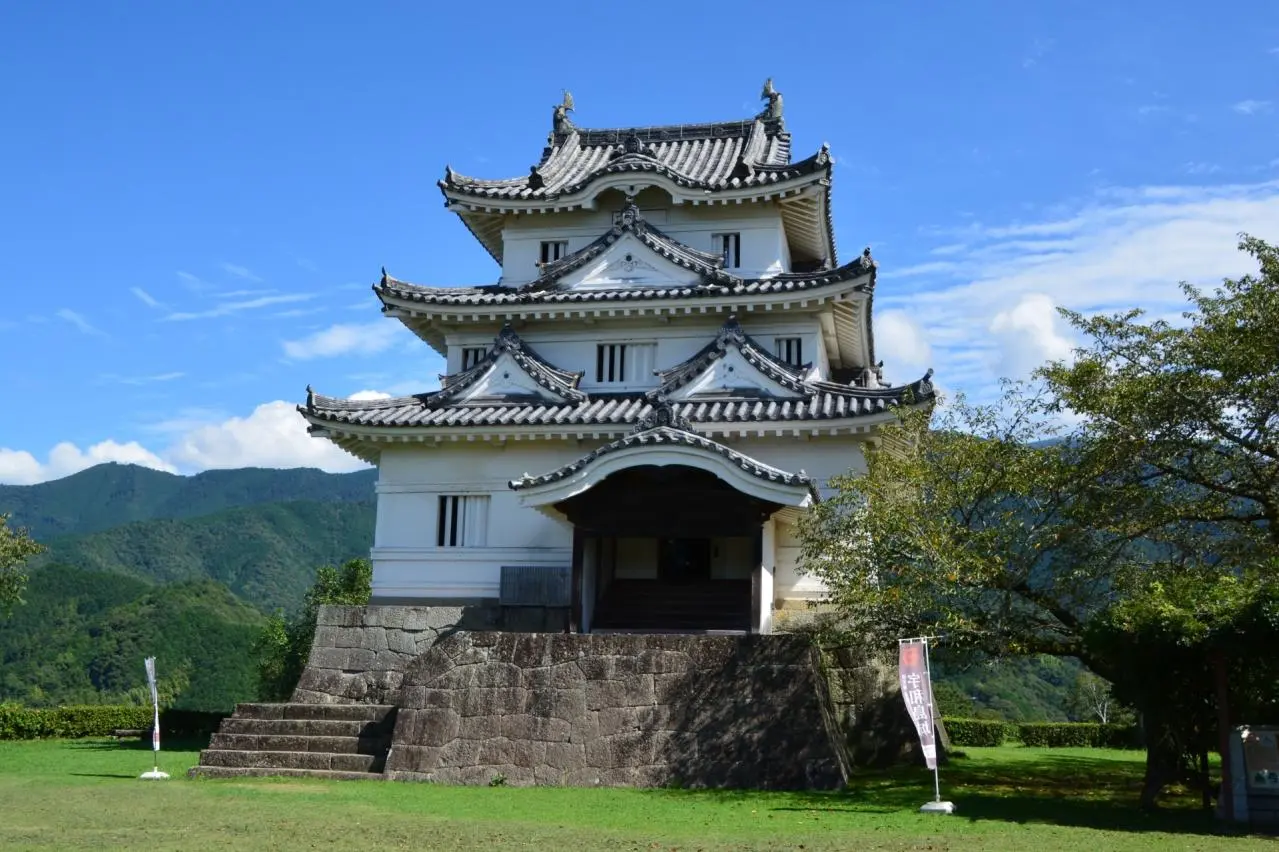
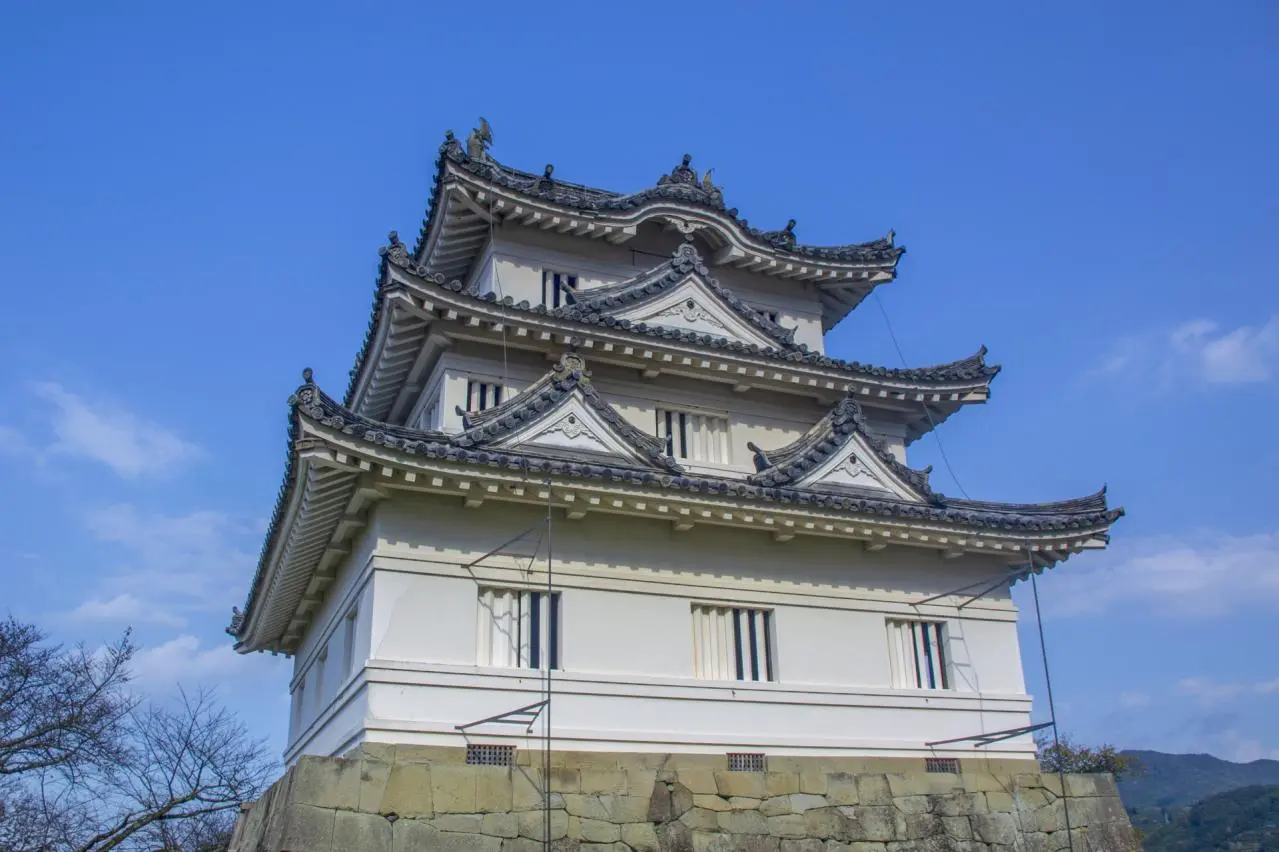
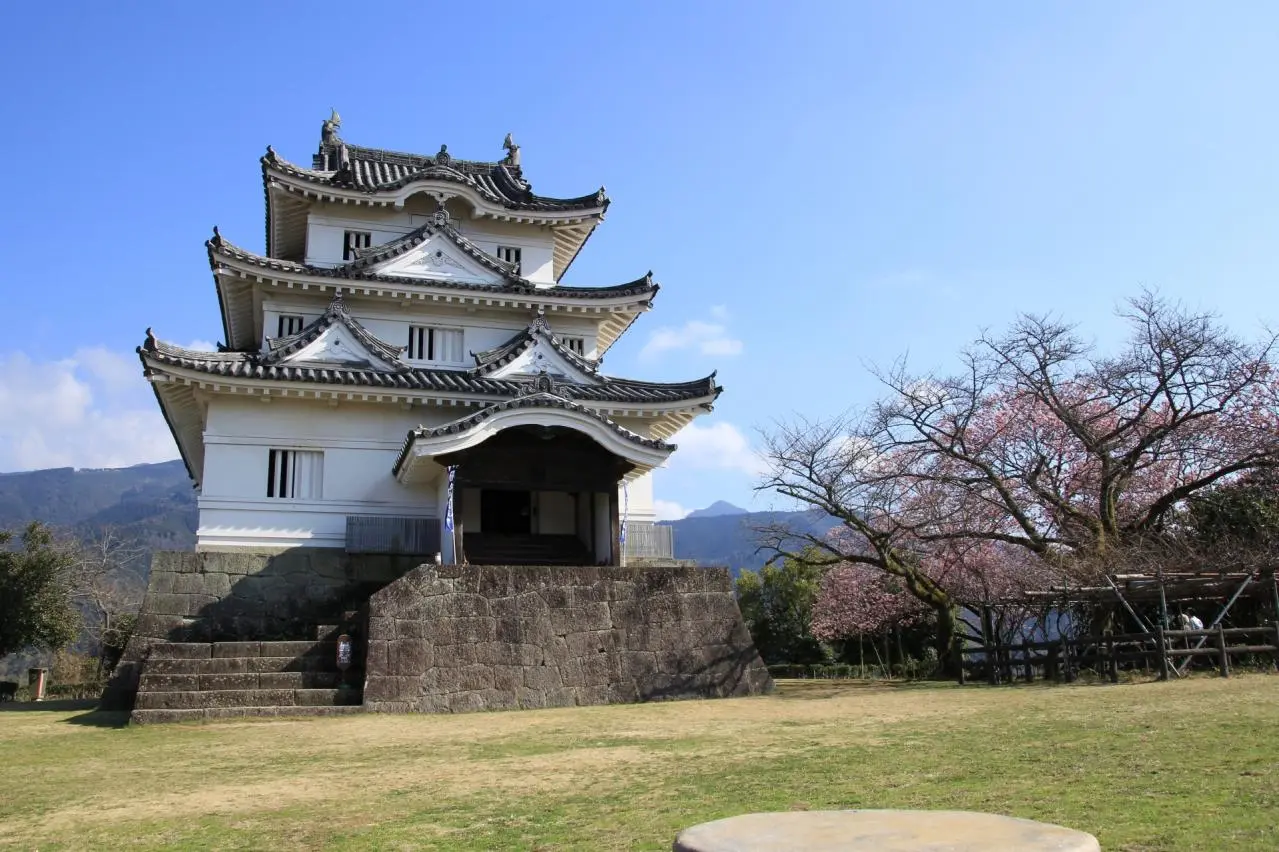
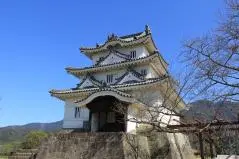
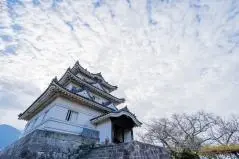
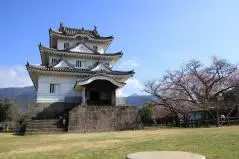
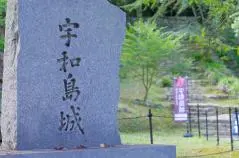
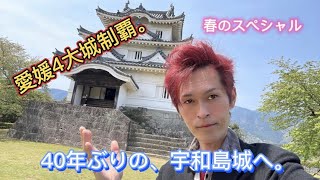
Uwajima Castle is a hilltop castle located in the center of Uwajima City, Ehime Prefecture. Known as one of Japan’s twelve original castle towers, it is one of the finest castles in Shikoku. Built on Mount Shiroyama, which rises approximately 73 meters above sea level, the castle tower offers panoramic views of Uwajima’s urban area, Uwajima Port, and the beautiful Uwajima Sea.
The present castle tower was reconstructed in the early Edo period and is designated as an Important Cultural Property of Japan. It is a valuable castle that preserves the castle-building techniques of Todo Takatora, a renowned castle architect, and is beloved by many as one of Uwajima’s foremost historical tourist attractions.
## History of Uwajima Castle
The origins of Uwajima Castle can be traced back to Itajima-Marugushi Castle, which served as the residence of the Saionji clan during the Warring States period.
In 1595, Todo Takatora entered the Uwano District as its feudal lord and began full-scale construction of the castle in 1596. Over approximately six years, Takatora completed Uwajima Castle as a modern early-modern castle. By 1601, it had become a fully developed castle complex equipped with a castle tower.
Uwajima Castle is also known as the first substantial residential castle built by Todo Takatora after he became a daimyo. Its construction techniques are regarded as the foundation for the castles he later built, including Imabari Castle and Iga-Ueno Castle.
In 1615, Date Hidemune, the eldest son and illegitimate child of Date Masamune, entered the castle as the lord of the 100,000-koku Uwajima Domain. From that time until the Meiji Restoration, it served as the residence of the Date family.
The existing castle tower was extensively renovated during the Kanbun era (1661–1673) by Date Munetoshi, the second lord of the domain, and is believed to have been completed around 1672.
## One of Japan’s Twelve Original Castle Towers
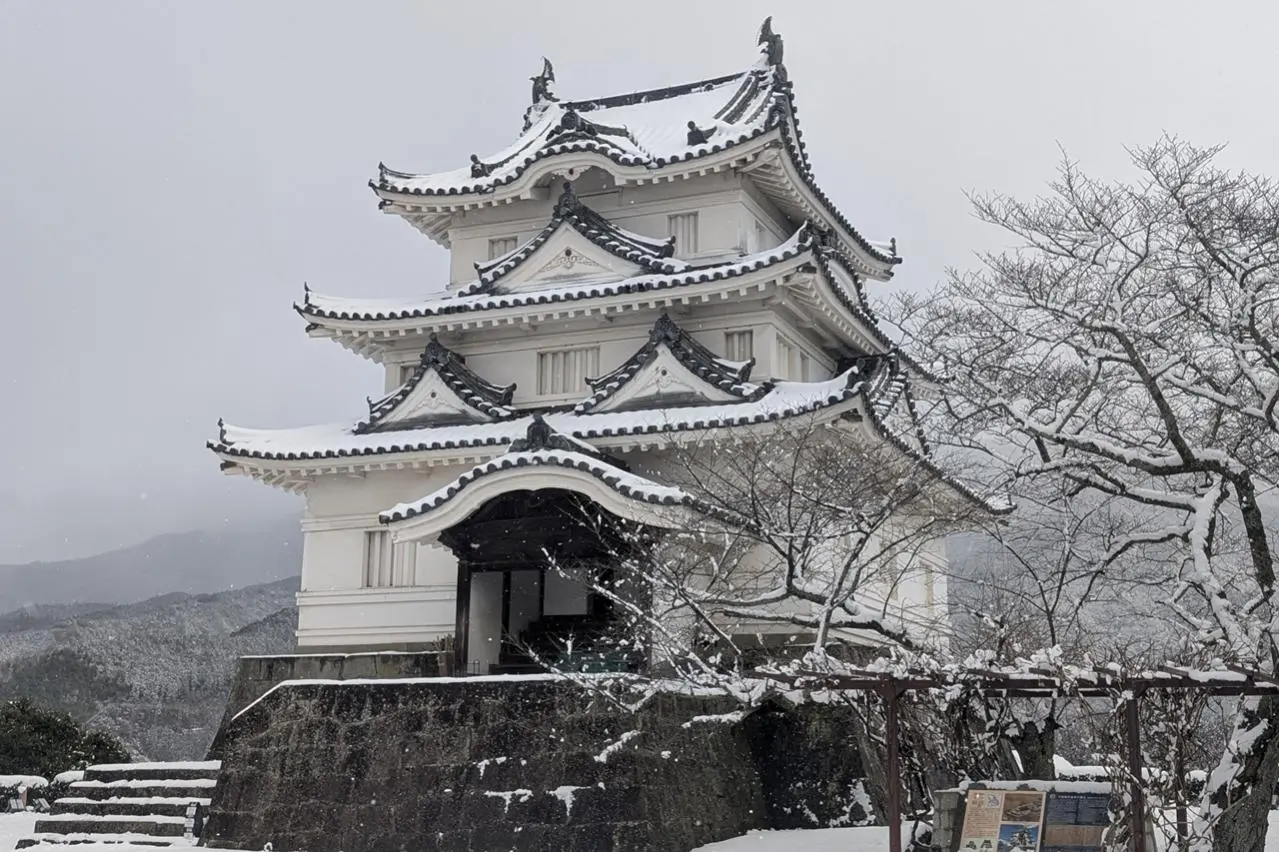
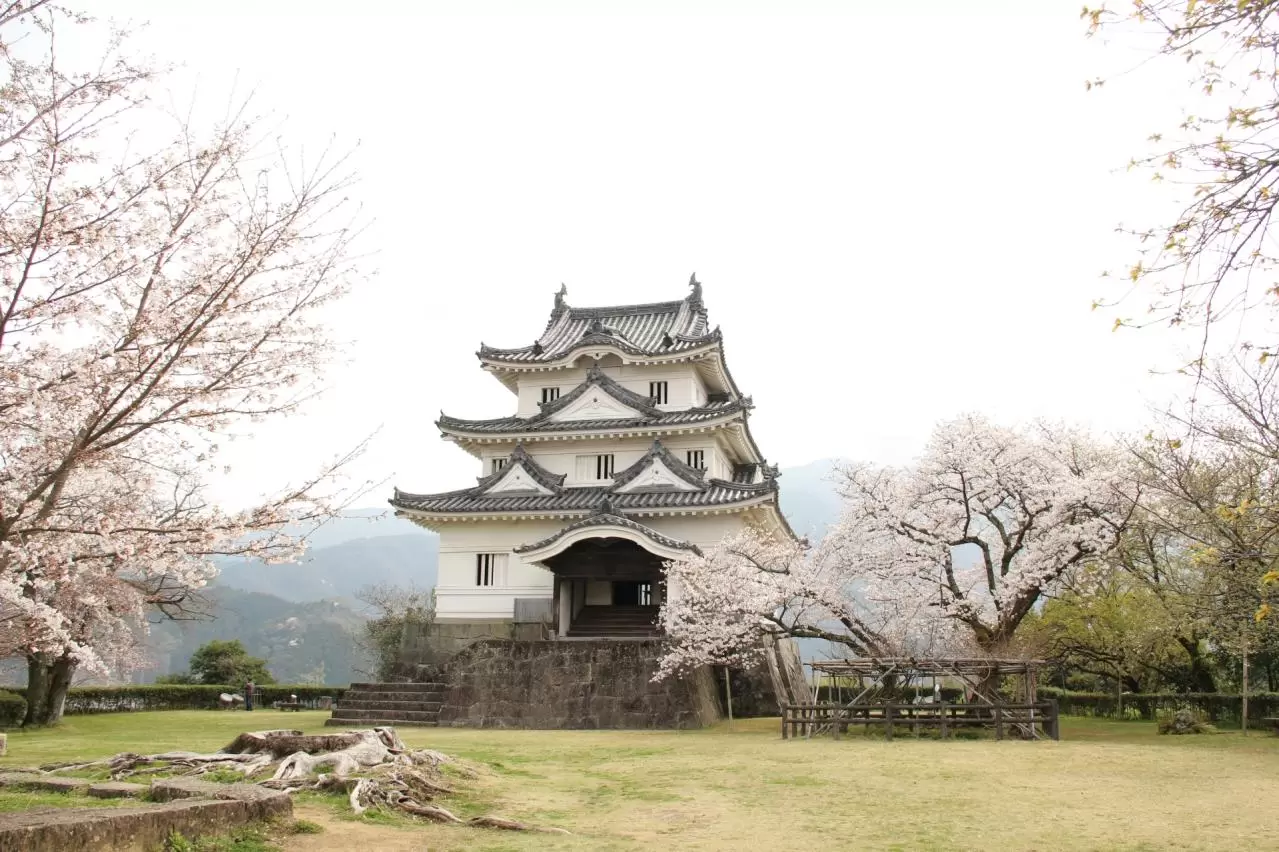
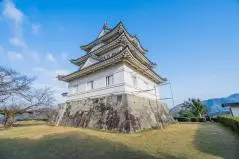
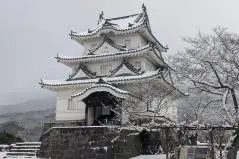
The greatest attraction of Uwajima Castle is its castle tower, which has survived from the Edo period.
Only twelve castle towers remain intact in Japan, and among them, Uwajima Castle presents an especially elegant appearance despite its relatively small size.
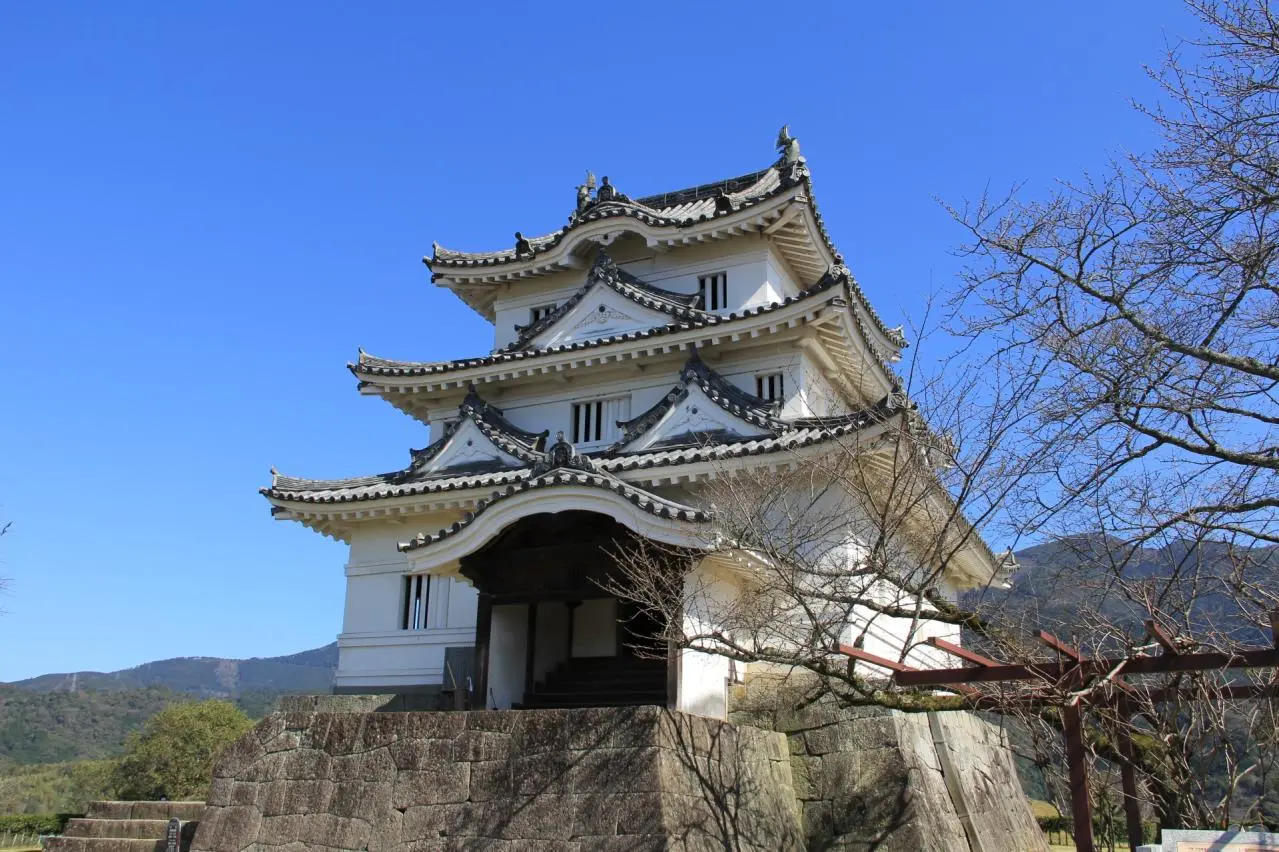
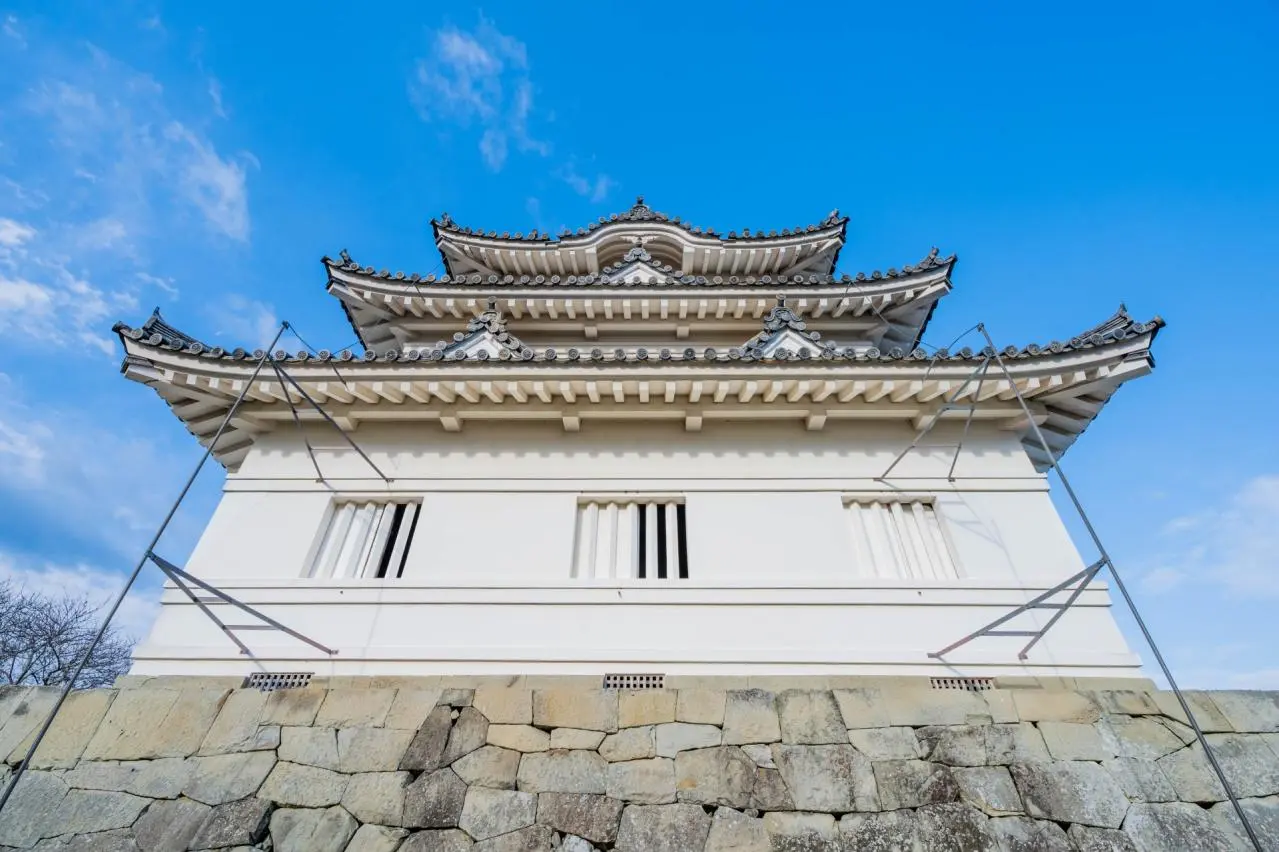
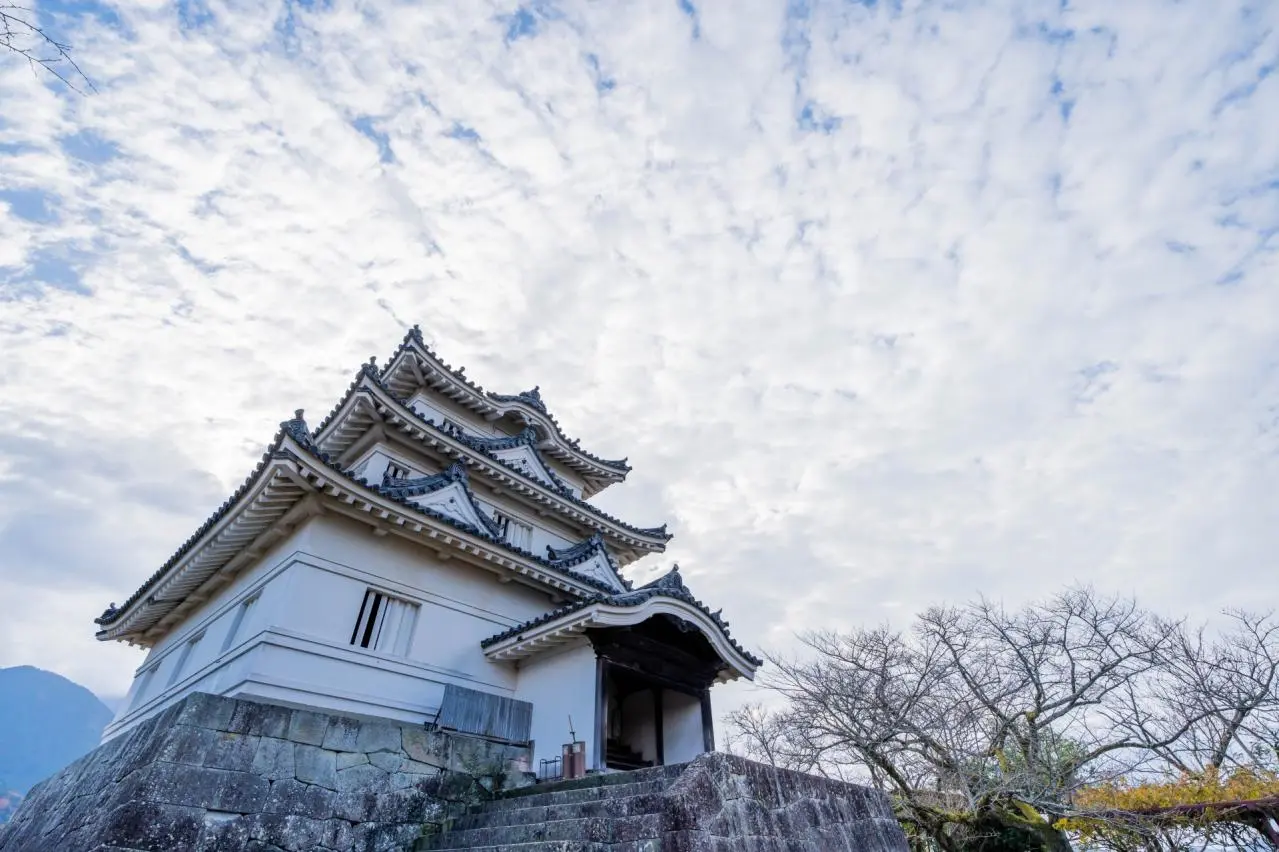
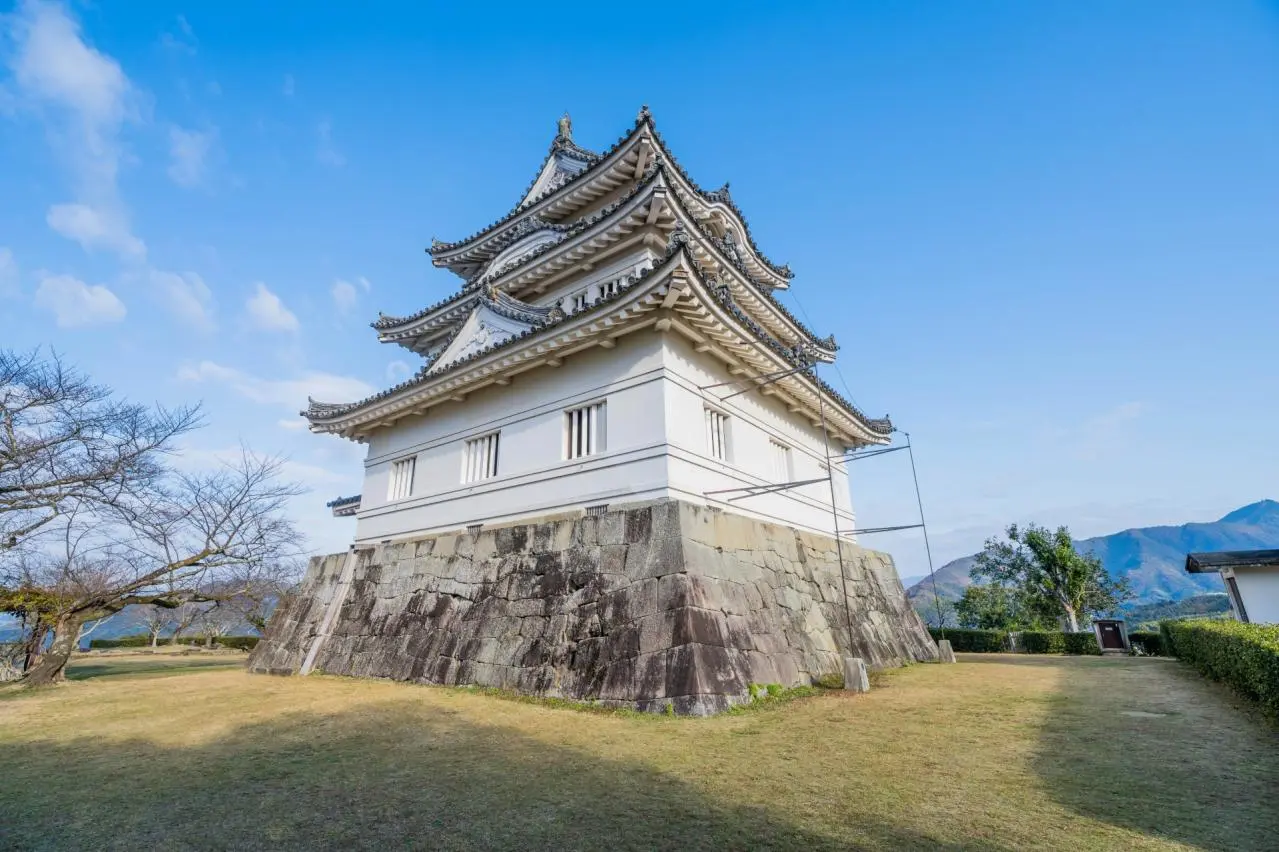
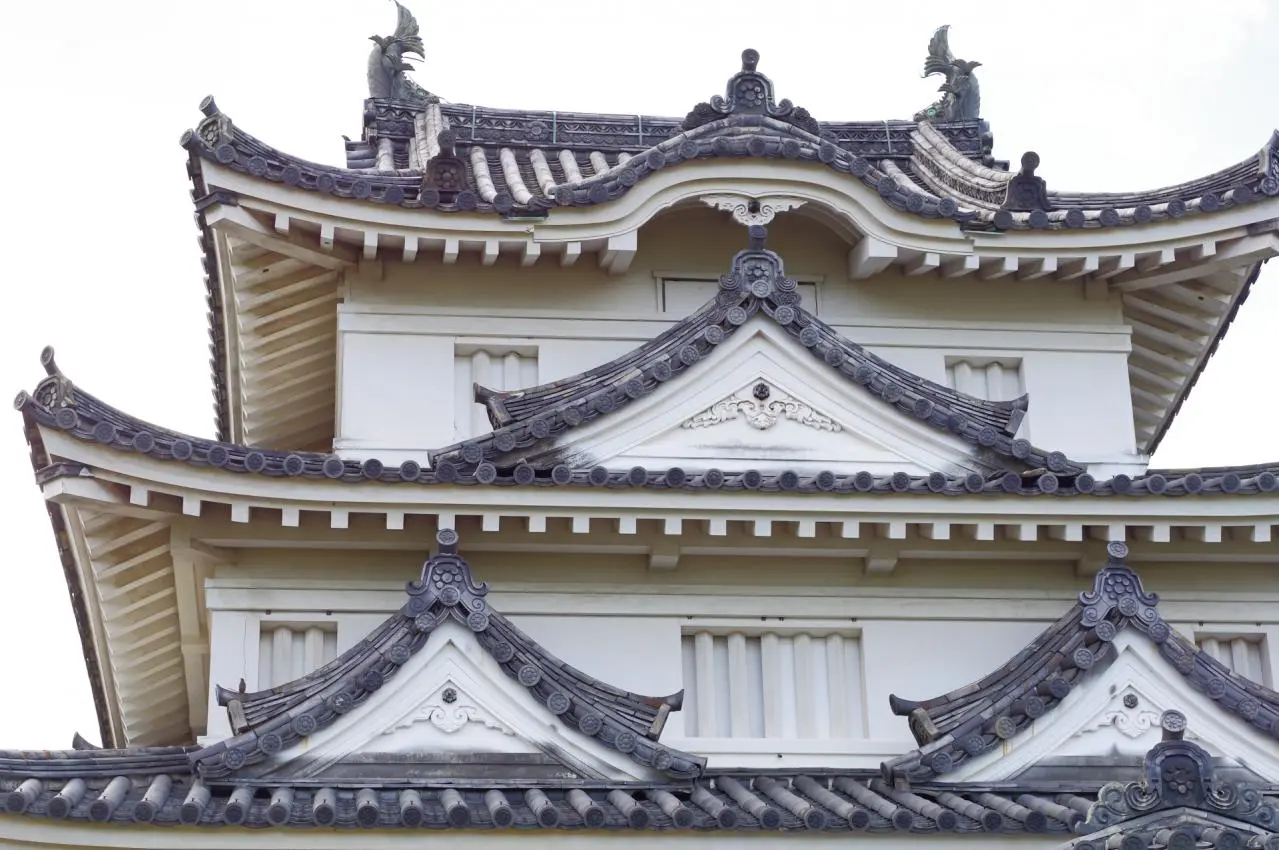
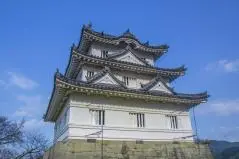
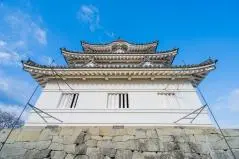
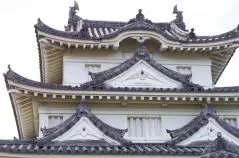
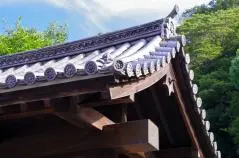
The tower is an independent, three-tiered, three-story structure in the layered-tower style. Its white walls are beautiful, and decorative elements characteristic of palace architecture, such as gables and gegyo ornamental roof-end features, can be seen throughout the building. It is highly regarded as an architectural work that combines the strength required of a military facility with the dignity of a feudal lord’s residence.
Because of its graceful appearance, the castle is also affectionately known by its alternative name, Tsurushima Castle.
## A Castle Layout Showcasing Todo Takatora’s Techniques
Uwajima Castle offers a glimpse of the advanced castle-building techniques characteristic of Todo Takatora, a master castle architect.
Its most distinctive feature is its irregular pentagonal layout.
Viewed from above, the entire castle complex is shaped roughly like a pentagon. It is said that this design was intended to make enemies mistake the castle for a square structure, creating blind spots. There is even a story that covert agents of the Edo shogunate once mistakenly judged it to be square.
Although the area has since been reclaimed, the castle originally faced the sea to the north and west. It therefore also had the character of a seaside castle, using the sea as a natural defensive feature.
## Stone Walls and Castle Gates
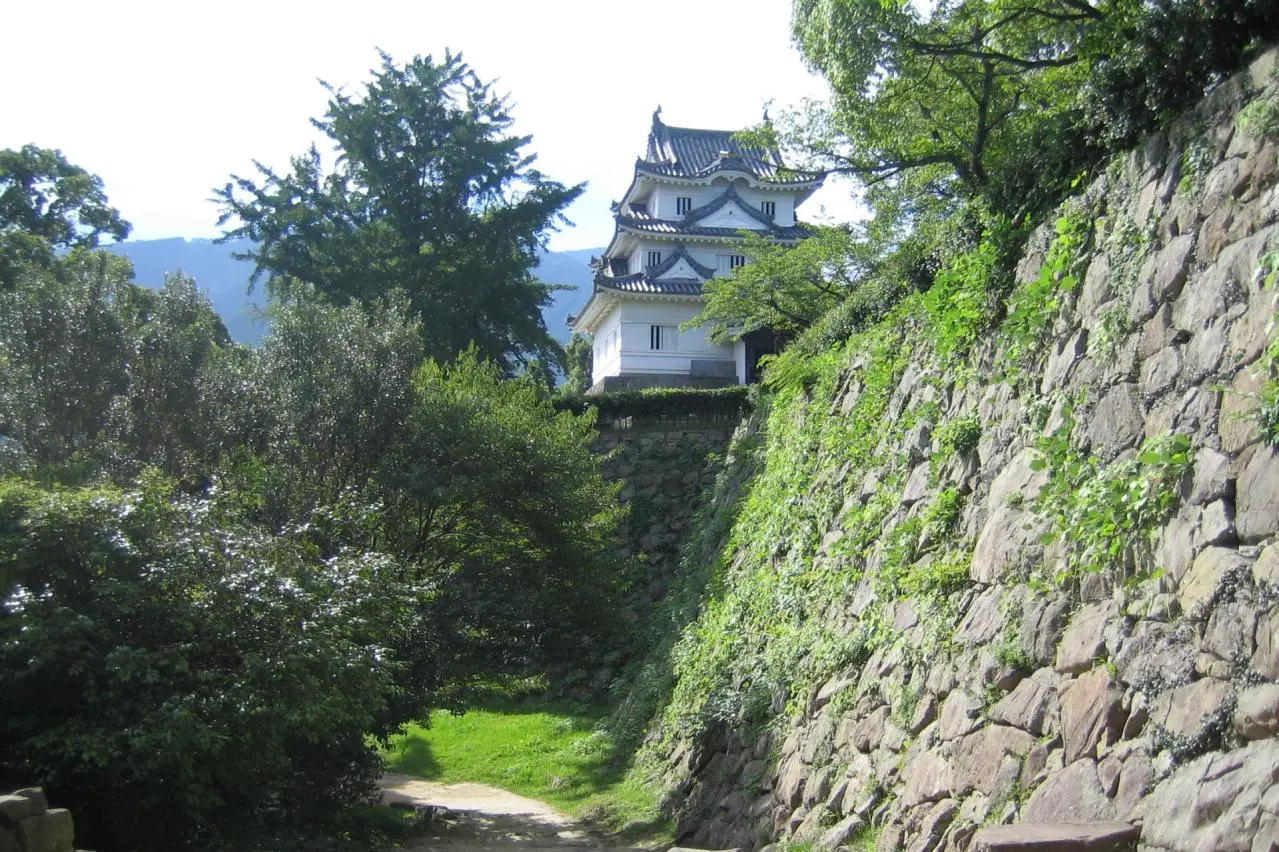
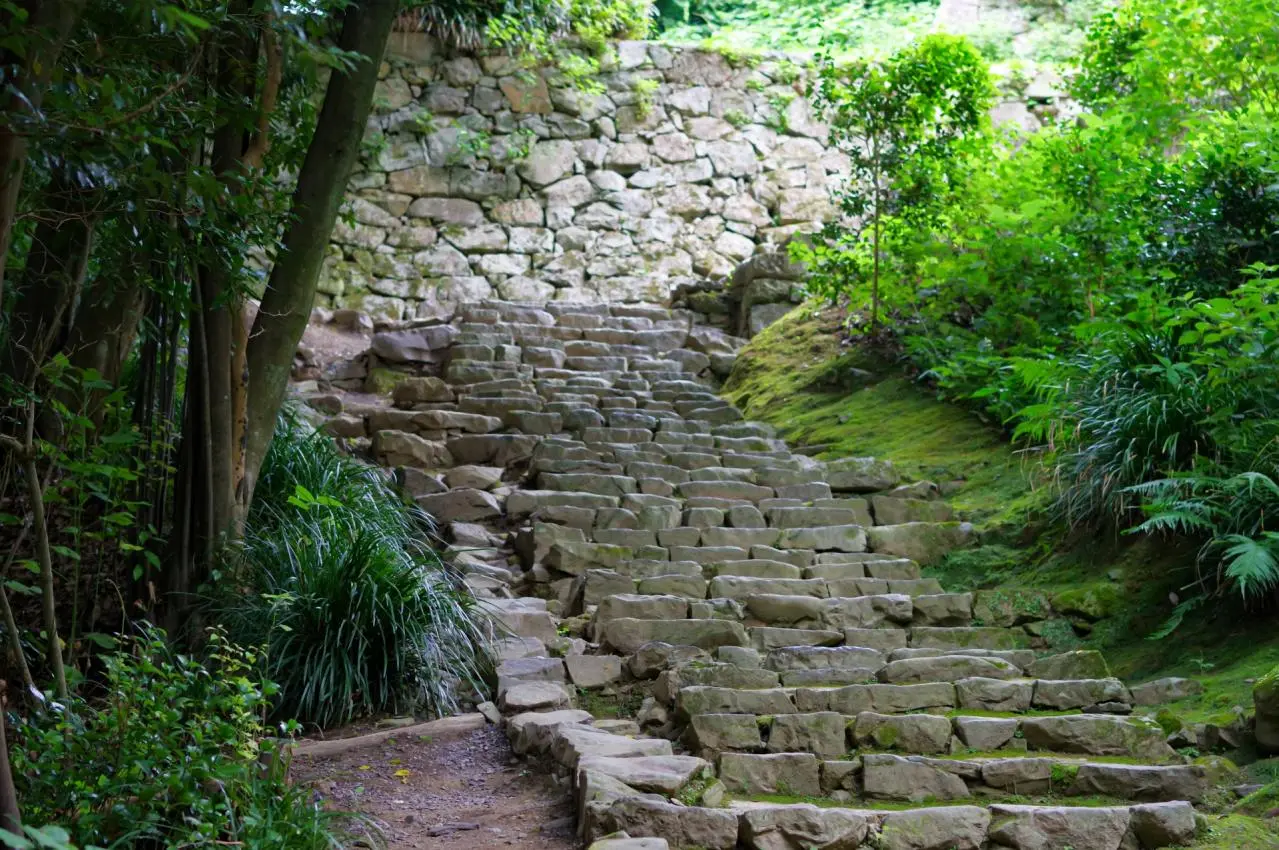
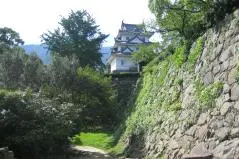
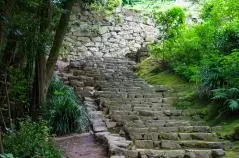
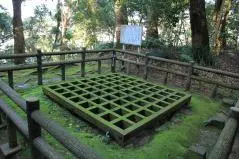
Stone walls dating back to the time of Todo Takatora remain within the castle grounds.
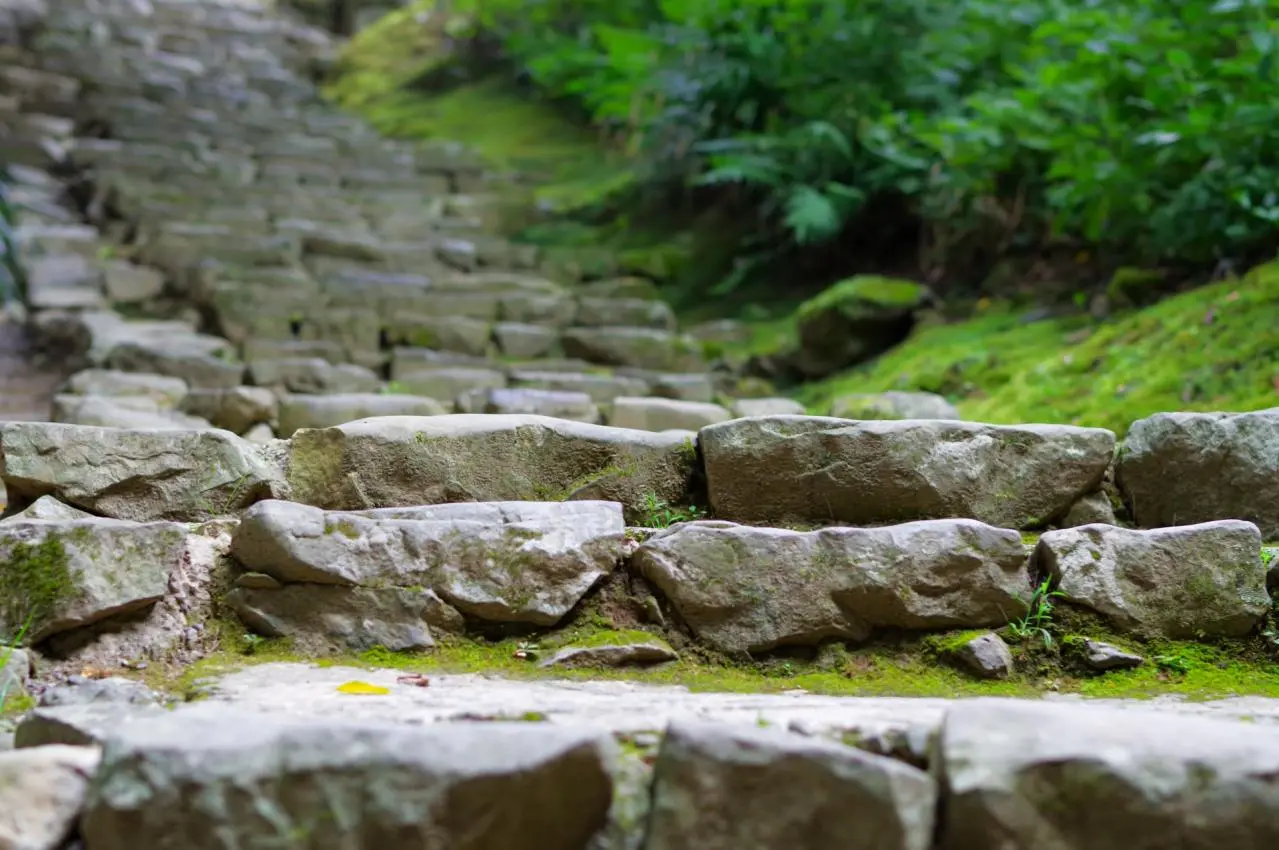
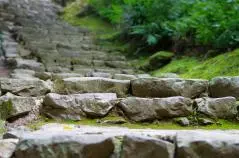
The steep stone steps and massive stone walls convey the strength of Uwajima Castle as a formidable fortress.
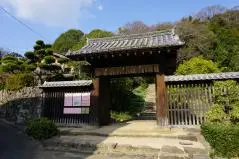
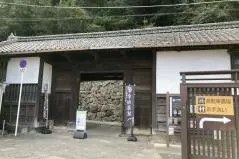
Among the surviving castle gates, the Noboritachi Gate is particularly famous.
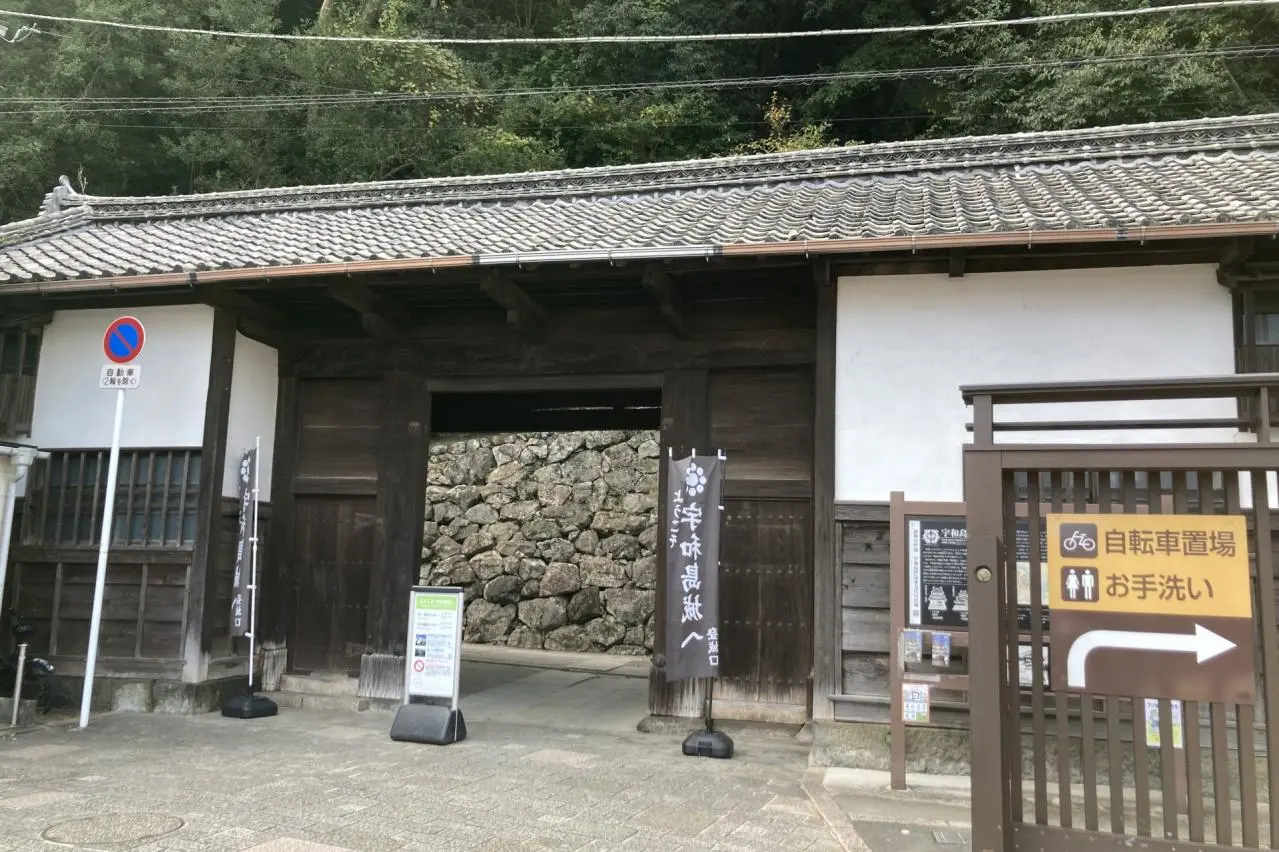
Noboritachi Gate is a yakuimon-style gate and is one of the largest surviving gates of its type in Japan. Its exact date of construction is unknown, but it may date back to the Keicho era (1596–1615).
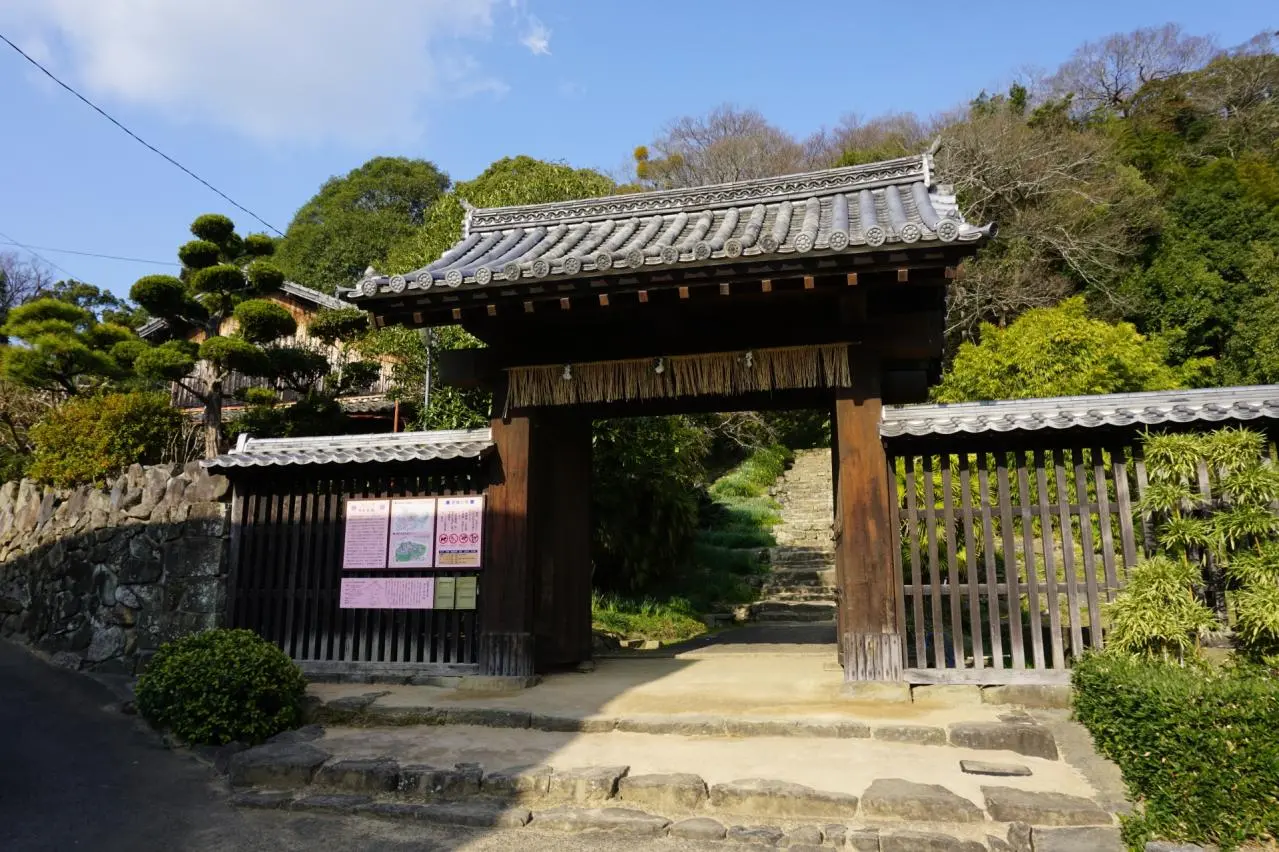
At the northern trailhead, a samurai nagayamon gate once belonging to the Kuwori family, hereditary senior retainers of the Uwajima Domain, also remains. It is designated as a cultural property by Uwajima City.
## Inside the Castle Tower
The interior of the castle tower provides a warm atmosphere unique to traditional wooden architecture.
The pillars and beams preserve Edo-period construction techniques, allowing visitors to experience the historical weight characteristic of an original castle tower.
From the top floor, visitors can enjoy sweeping views of Uwajima’s urban area, Uwajima Port, and the Uwajima Sea.
The view of Uwajima Port beyond the main bailey evokes the history of Uwajima Castle as a castle once built beside the sea.
## The Rich Natural Environment of Mount Shiroyama
Mount Shiroyama, where Uwajima Castle stands, is designated as a National Historic Site.
Approximately 450 species of plants grow on the mountain, including many large trees and rare plants.
Because the area escaped major fires throughout its long history, its rich natural environment has been preserved.
The moss covering the stone walls, saxifrages, and trees that change in appearance with the seasons make the mountain an enjoyable place to stroll while observing nature.
In spring, the cherry blossoms burst into bloom, and the entire mountain becomes a popular hanami, or flower-viewing, destination.
## Shiroyama Local History Museum
The Shiroyama Local History Museum stands halfway up Mount Shiroyama.
The building makes use of the former Yamazato Storehouse, an armory built in the San-no-Maru compound in 1845. Today, it displays historical and ethnographic materials related to Uwajima.
It is popular as a facility where visitors can learn about the history of the Uwajima Domain and the culture of the region.
## Highlights of Uwajima Castle
The appeal of Uwajima Castle extends beyond its original castle tower.
- A valuable castle tower, one of Japan’s twelve original castle towers
- A pentagonal layout that demonstrates Todo Takatora’s castle-building techniques
- Noboritachi Gate, one of the largest surviving yakuimon gates in Japan
- Spectacular views of Uwajima Port and the Uwajima Sea
- Mount Shiroyama, home to approximately 450 species of plants
- A castle tower designated as an Important Cultural Property of Japan
- Castle remains that convey the history associated with the Date family
These are just some of the many attractions to be found at Uwajima Castle.
## Conclusion
Uwajima Castle is a renowned castle built by Todo Takatora, a master castle architect, and passed down through generations by the Date family. As one of Japan’s twelve original castle towers, it possesses great historical value. Its elegant tower, ingenious layout, and imposing stone walls preserve the appearance of the castle as it once stood.
The castle offers many attractions, including spectacular views of Uwajima Port and the Uwajima Sea from the tower, the nature-rich grounds of Mount Shiroyama, and the history associated with the Date family. It is one of Ehime Prefecture’s most celebrated castles and is highly recommended not only for history enthusiasts, but also for anyone interested in castle architecture or nature walks.
Ehime Tourist Attractions
View List
Bocchan Train
The "Botchan Train" is a diesel locomotive based on a steam engine that was beloved by the citizens of Matsuyama for 67 years starting from 1888. It gets its name fr...

Imabari Castle
Imabari Castle is a flat-topped castle built by the renowned castle architect Todo Takatora after the Battle of Sekigahara and is one of Japan's three major seaside ...

Kumano San Ishiteji
Ishiteji Temple is the 51st temple of the Shikoku 88 Temple Pilgrimage, located near Dogo Onsen. It features important cultural properties including the National Tre...

Kirishima Tenbou Kouen
Located at the southern tip of Oshima, Kamero Mountain Observatory Park boasts one of the best views along the Shimanami Kaido. From its observation deck at an altit...

Dogo Onsen Honkan
The hot springs are said to have been opened during the Jomon period and were visited by Prince Shotoku. Many famous figures, including Masaoka Shiki, have connectio...

Oyamazumi Shrine
Oyamazumi Shrine is the head shrine of all Yamazumi shrines and Mishima shrines across the country, and it is the oldest shrine in Ehime Prefecture. Within the groun...

Matsuyama Castle
Standing at an elevation of 132 meters, Matsuyama Castle is a magnificent structure that symbolizes Japan's history and culture. Construction was initiated by Kato Y...

Shikoku Karst
Shikoku Karst is a treasure trove of nature that stretches along the border between Ehime Prefecture and Kochi Prefecture. Spanning approximately 25 km from east to ...