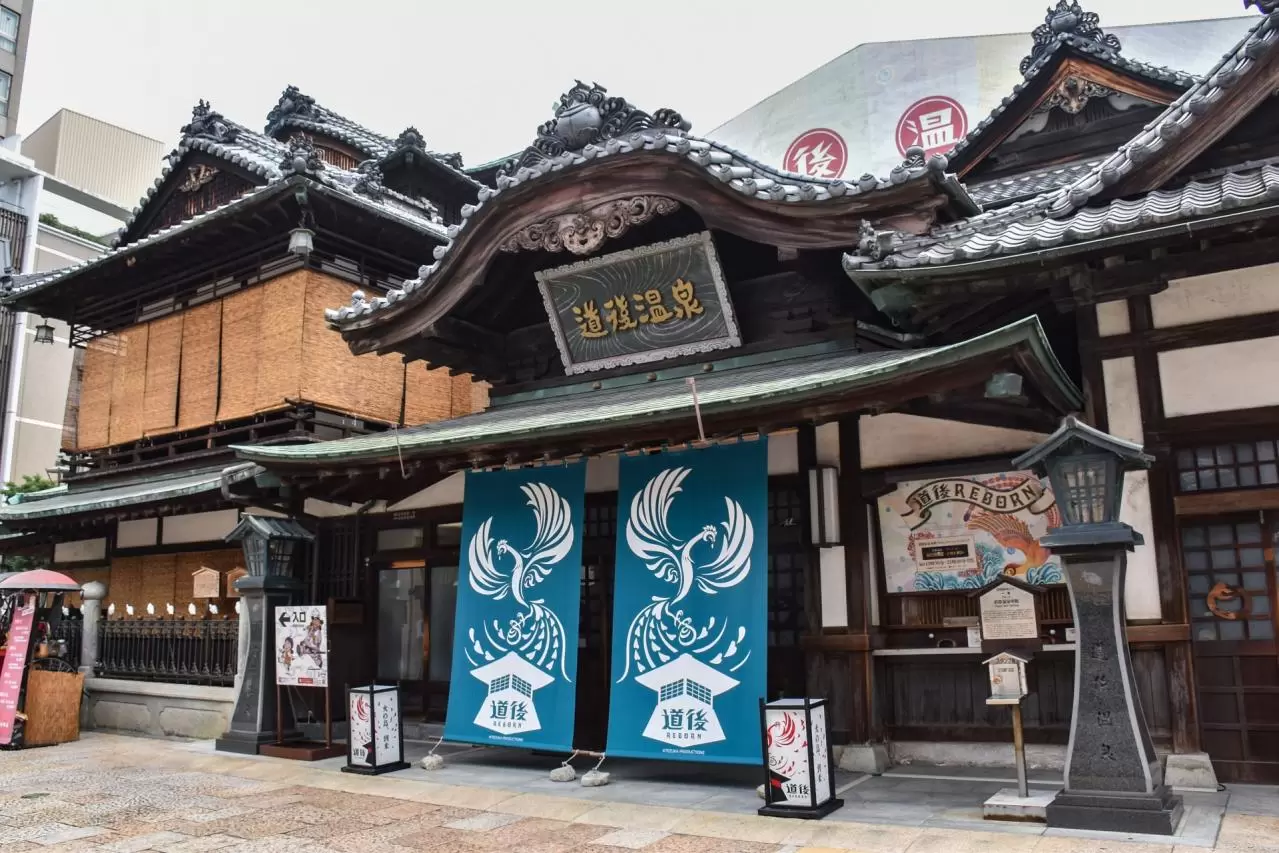
Dogo Onsen Honkan
Dogo Onsen Honkan Movies


Basic Information
- Spot Name
- Dogo Onsen Honkan
- Location
- 〒790-0842 Dogo Yuno-cho, Matsuyama City, Ehime Prefecture, and Dogo Sagiya-cho, among others.
- Access
- Take the Iyotetsu Matsuyama City Line bound for Dogo Onsen from JR Matsuyama Station for 25 minutes, and get off at the last stop, which is just a short walk away.
- Parking
- No parking available.
- Business Hours
- No information available.
- Contact Information
- Phone Number:089-921-5141
- Official Website
Map
Detailed Information
Dogo Onsen Main Building is a public bathhouse located at the heart of the Dogo Onsen district in Matsuyama, Ehime Prefecture. It is an iconic symbol of Dogo Onsen, which is said to be one of Japan’s oldest hot springs. With a history believed to span approximately 3,000 years, Dogo Onsen is renowned as a famous hot spring that appears in classical works such as the *Nihon Shoki* and the *Man’yōshū*. It has been loved by many people since ancient times.
The present Dogo Onsen Main Building was constructed in 1894 and is characterized by its imposing three-story wooden structure. Its historical and architectural value has been highly acclaimed, and in 1994 it became the first public bathhouse in Japan to be designated a National Important Cultural Property. Following conservation and repair work carried out from 2019, the entire building resumed operations in July 2024, and the restoration work was completed in December of the same year. Today, it welcomes many visitors while preserving its appearance from earlier times.
## Dogo Onsen, Said to Be One of Japan’s Oldest Hot Springs
Dogo Onsen is counted as one of the three oldest hot springs in Japan and has been cherished since ancient times by members of the imperial family, aristocrats, and samurai warlords.
Dogo Onsen is associated with the legend of the white heron. According to the story, people discovered the hot spring after seeing a white heron with an injured leg healing its wound in hot water welling up between rocks. The white heron remains a symbol of Dogo Onsen today, and a statue of one can be seen in the Shinrokaku tower rising above the Main Building.
Dogo Onsen also appears in Natsume Sōseki’s novel *Botchan* and has been portrayed as a setting in numerous works of literature, films, and television dramas. In recent years, it has also attracted attention in Japan and abroad as one of the possible inspirations for the Aburaya bathhouse in Studio Ghibli’s film *Spirited Away*.
## The Architectural Beauty of Dogo Onsen Main Building
Dogo Onsen Main Building is known for its distinctive three-story wooden architecture, which evokes the appearance of a castle.
The building was designed by Matahachirō Sakamoto, a castle carpenter from Matsuyama, who adopted a three-story wooden structure that was extremely unusual at the time. Because the building was repeatedly expanded and renovated from the Meiji period through the early Shōwa period, its interior features a complex arrangement of narrow corridors and steep staircases, creating an almost maze-like atmosphere.
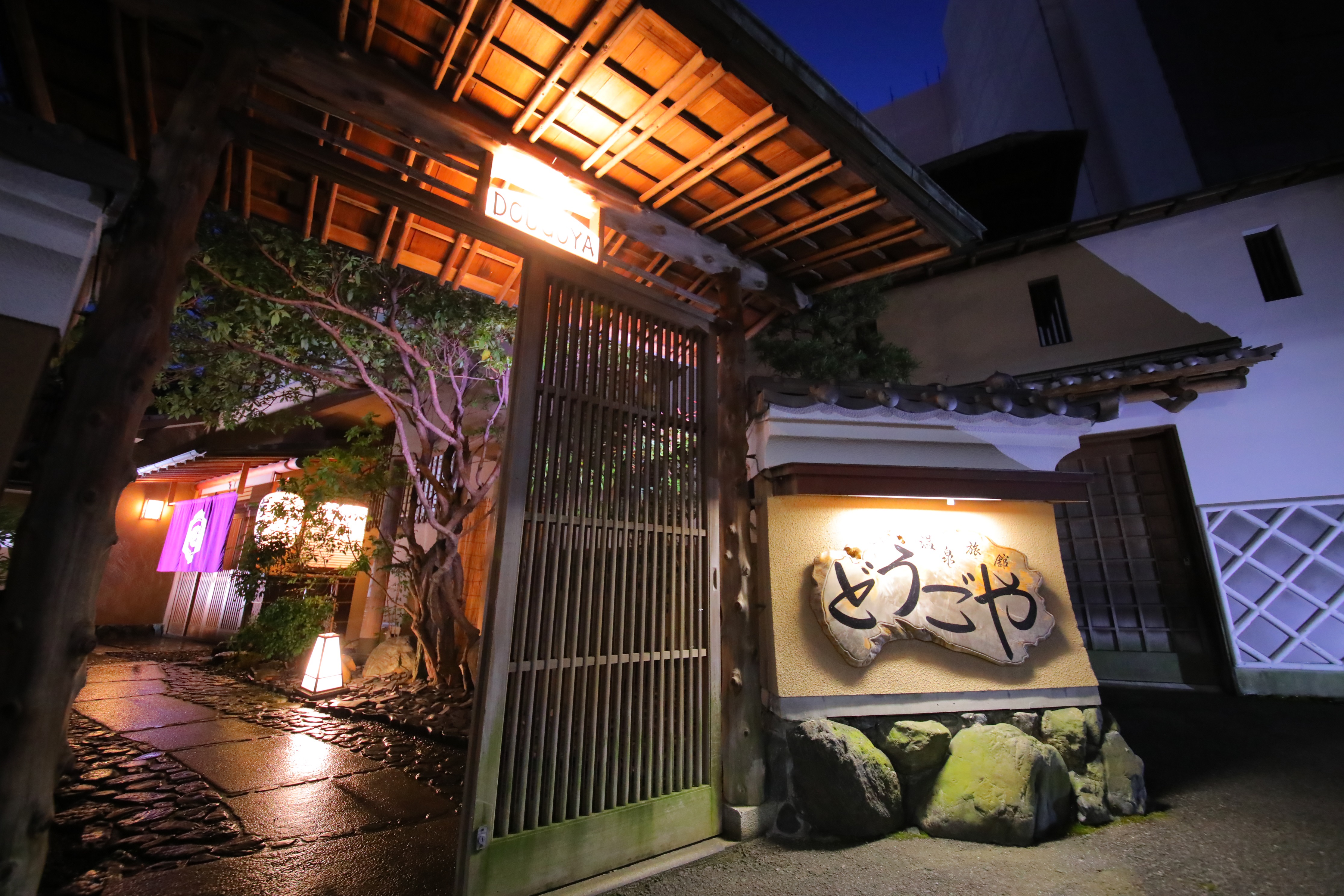
During the day, visitors can admire the beautiful harmony between the white walls and wooden architecture. At night, the building is illuminated by gas lamps and surrounding lights, creating an even more atmospheric scene.
## Shinrokaku and the Time-Announcing Drum
A tower called Shinrokaku stands on the roof of the Main Building.
A statue of a white heron is installed on Shinrokaku, where it is cherished as a symbol of Dogo Onsen. Three times a day—at 6:00 a.m., noon, and 6:00 p.m.—the “Toki Daiko,” or time-announcing drum, is struck to signal the time throughout the hot spring district.
The sound of the drum is a beloved feature of Dogo Onsen and a familiar part of the local scenery for many visitors.
## A Famous Natural Hot Spring
One of the greatest attractions of Dogo Onsen Main Building is its free-flowing natural hot spring water, which is generally neither heated nor diluted.
The water is an alkaline simple spring. Because it is gentle on the skin and causes little irritation, it is also known as the “Beauty Bath.” It is colorless and transparent, with a soft feel, and is said to leave the skin smooth and moisturized after bathing.
Not only the bathtubs but also the faucets at the washing areas provide natural hot spring water, allowing visitors to fully enjoy the blessings of Dogo Onsen.
## Kami no Yu
One of the Main Building’s signature baths is Kami no Yu, or the “Bath of the Gods.”
Kami no Yu is a spacious public bathhouse beloved by local residents, where visitors can relax in a generous bathing area. The bathing room is decorated with Tobe-yaki ceramic panels depicting the legend of the white heron and myths associated with Dogo Onsen, offering a sense of Ehime’s local culture.
The bath is popular not only with tourists but also with local users, allowing visitors to experience the atmosphere of a traditional Japanese public bathhouse.
## Tama no Yu
The other main bath is Tama no Yu, or the “Bath of the Spirits.”
Tama no Yu has a more prestigious character than Kami no Yu and was developed as a bathhouse once used by members of the imperial family and government officials. The bathtubs are made from high-quality stone, including Aji stone from Kagawa Prefecture and Ōshima stone from Ōshima Island in Ehime Prefecture. Marble is used on the walls.
Visitors can enjoy a refined bathing experience in a calm and elegant setting.
## Yūshin-den
Dogo Onsen Main Building is home to Yūshin-den, the only surviving bathhouse in Japan built exclusively for the Imperial Family.
Constructed in 1899 as an imperial facility, it was used by successive members of the Imperial Family. Highly prestigious features, including the Imperial Entrance and the Imperial Throne, remain preserved. Today, the interior can be viewed as part of a guided tour.
Yūshin-den is the only surviving facility in Japan built as a bathhouse exclusively for the Imperial Family and is regarded as an especially valuable part of the National Important Cultural Property.
## Relaxation Rooms for After Your Bath
The relaxation rooms available after bathing at Dogo Onsen Main Building are also very popular.
### Kami no Yu Second-Floor Lounge
This is the Main Building’s signature large reception room, featuring an open and spacious Japanese-style interior. Visitors can relax in yukata robes while being served tea and sweets.
### Tama no Yu Second-Floor Lounge
This lounge is distinguished by lighting inspired by white herons. Its calm atmosphere provides a pleasant place to unwind.
### Tama no Yu Third-Floor Private Room
This atmospheric private room is designed in the sukiya-zukuri style. Natsume Sōseki is also said to have frequently visited Dogo Onsen Main Building. Guests can enjoy a special moment in this quiet space.
### Private Rooms: Shirasagi no Ma and Hishō no Ma
These private rooms became available for use when the entire building resumed operations in 2024. From the windows, guests can view the white heron statue atop Shinrokaku and enjoy an even more luxurious stay.
## Exploring the Dogo Onsen District
When visiting Dogo Onsen Main Building, exploring the surrounding hot spring district is also essential.
Many visitors stroll through the area wearing yukata, while retro shopping streets, souvenir shops, cafés, and traditional Japanese confectionery stores line the streets around the Main Building. Along Dogo Haikara-dori, visitors can enjoy Ehime specialties such as mikan-orange sweets and Botchan dango dumplings.
Dogo Onsen Annex Asuka-no-Yu and Tsubaki no Yu are also located nearby, making it possible to enjoy a tour of several hot springs.
## Dogo Onsen Main Building at Night
After sunset, Dogo Onsen Main Building takes on a fantastical appearance quite different from its daytime view.
The wooden structure, softly illuminated by gas lamps and surrounding lights, is exceptionally beautiful and creates the feeling of stepping back in time to the Meiji period. The area is ideal for evening strolls and photography, attracting many visitors.
## Conclusion
Dogo Onsen Main Building is a symbol of Dogo Onsen, which is said to be one of Japan’s oldest hot springs, and is a historic structure designated as a National Important Cultural Property. Its beautiful three-story wooden structure, built in 1894, is beloved by many people as the symbol of the Dogo Onsen district.
With its free-flowing natural hot springs, Kami no Yu and Tama no Yu, Yūshin-den—formerly a bathhouse exclusively for the Imperial Family—and its atmospheric relaxation rooms, the Main Building offers numerous attractions. Visitors can enjoy both Japan’s bathing culture and architectural beauty in one place.
After completing its conservation and repair work, Dogo Onsen Main Building resumed full operations in 2024, becoming even more appealing than before. It is one of Ehime Prefecture’s most representative tourist attractions, where visitors can soak in the hot springs, explore the district in yukata, and fully experience the culture and atmosphere nurtured by this celebrated hot spring’s long history.
Ehime Tourist Attractions
View List
Oyamazumi Shrine
Oyamazumi Shrine is the head shrine of all Yamazumi shrines and Mishima shrines across the country, and it is the oldest shrine in Ehime Prefecture. Within the groun...

Kirishima Tenbou Kouen
Located at the southern tip of Oshima, Kamero Mountain Observatory Park boasts one of the best views along the Shimanami Kaido. From its observation deck at an altit...

Imabari Castle
Imabari Castle is a flat-topped castle built by the renowned castle architect Todo Takatora after the Battle of Sekigahara and is one of Japan's three major seaside ...

Uwajima Castle
Uwajima Castle is one of the 12 existing tenshu (castle keeps) and was built by Date Munenori as a stronghold. Facing Uwajima Bay, it features an irregular pentagona...

Matsuyama Castle
Standing at an elevation of 132 meters, Matsuyama Castle is a magnificent structure that symbolizes Japan's history and culture. Construction was initiated by Kato Y...

Bocchan Train
The "Botchan Train" is a diesel locomotive based on a steam engine that was beloved by the citizens of Matsuyama for 67 years starting from 1888. It gets its name fr...

Kumano San Ishiteji
Ishiteji Temple is the 51st temple of the Shikoku 88 Temple Pilgrimage, located near Dogo Onsen. It features important cultural properties including the National Tre...

Shikoku Karst
Shikoku Karst is a treasure trove of nature that stretches along the border between Ehime Prefecture and Kochi Prefecture. Spanning approximately 25 km from east to ...