One of Japan’s 12 original castle keeps
This rare castle retains a keep from before the Edo period, making it especially rewarding for castle enthusiasts.


AI Summary
This is an AI-generated summary. Please check the official information for opening hours, fees, and closed days.
One of Japan’s 12 original castles, Matsuyama Castle is a city landmark offering sweeping views, impressive stone walls, and seasonal cherry blossoms.
This hilltop castle in central Matsuyama is one of Japan’s 12 castles with original keeps. Highlights include its connected keep complex, a rare two-story watchtower, and unusual climbing stone walls. From the castle, you can look out over the city and the Seto Inland Sea. The ropeway and chairlift make the climb easier, and spring blossoms and nighttime views add to the appeal.
This rare castle retains a keep from before the Edo period, making it especially rewarding for castle enthusiasts.
See defensive features up close, including climbing stone walls and the connected keep complex.
Enjoy views of the city and Seto Inland Sea, along with cherry blossoms and nighttime scenery.
Take the ropeway up, explore the keep and stone walls, then enjoy the views from the main bailey.
▶A must-see among the 21 nationally designated Important Cultural Properties
The chrysanthemum crest on the roof tiles and Japan’s only surviving turret
The keep, rebuilt and completed in 1602, is a three-story, one-basement, tiered-style keep and is the last complete castle structure from the Edo period. The keep complex, which connects the main keep, small keep, and corner turrets by linking turrets, is said to be a representative example of a connected-style castle keep. Among the twelve surviving castle keeps, it is the only one built by the Matsudaira clan, a branch of the shogunate family, and traces of this can be seen in the “hollyhock crest” on the roof tiles and elsewhere. Of the turrets constructed for defense, the most notable is Nohara Turret, located north of the main enclosure. Nohara Turret is the only surviving two-story watchtower-style turret in Japan and is said to be the prototype of the castle keep; it has been designated an Important Cultural Property. If you want to make sure you don’t miss the highlights or would like to learn more about Matsuyama Castle, we recommend taking a tour with a Matsuyama Castle volunteer guide.
▶Admire rare and artistic stone walls
The “ascending stone walls” linking the keep and the Ninomaru
Matsuyama Castle features a type of stone wall known as “nobori-ishigaki,” which is rare even nationwide. Among the twelve surviving castle keeps, only Matsuyama Castle and Hikone Castle still retain these “ascending stone walls.” They connect the Ninomaru at the foot of the mountain with the keep at the summit by means of two stone walls that climb the slope. Longer than those at Hikone Castle, they extend for over 230 meters in total. They remain almost perfectly preserved on the south side and can be seen from Sannomaru (Horinouchi Park) and the castle approach behind the prefectural office. Also still standing are a folding-screen-style stone wall over 14 meters high and a gracefully curved wall resembling an open fan. The spectacular view created by the castle walls, the castle structure, and the trees is well worth seeing.
▶Enjoy views from the castle, and of the castle
Beautiful nighttime illumination too
Matsuyama Castle stands atop a mountain in the center of Matsuyama City. The views from the castle are magnificent, and the panoramic view from the top floor of the keep, at an elevation of 161 meters, is a must-see. To the west, the Seto Inland Sea can be seen, and to the south, the Ishizuchi mountain range may be visible in the distance. The Honmaru plaza is open until 9:00 p.m., so many people come to enjoy the night view. On special nighttime opening days for the keep, you can also enjoy the night scenery from the keep itself, so be sure to check! If you want to view the castle from afar, recommended viewpoints include looking up at Shiroyama from the west side of Horinouchi Park, with the keep directly in front of you, or from around Matsuyama City Hall. The view from Matsuyama General Park, a little farther out, is also popular. The keep is illuminated until 11:00 p.m.
▶Enjoy the seasons and events
A popular spot for cherry blossom viewing and birdwatching
Matsuyama Castle and Shiroyama Park at its foot are famous cherry blossom spots, and during the bloom of Somei Yoshino cherry trees, the area is crowded with hanami visitors. In addition to Somei Yoshino, Matsuyama Castle is planted with many other kinds of cherry trees, including Kawazu-zakura, Yoko-zakura, Edohigan-zakura, and Oshima-zakura. Flowers such as plums, Japanese quince, wintersweet, and azaleas, as well as autumn leaves, delight visitors throughout the seasons. It is also well known as a birdwatching spot where you can encounter many kinds of wild birds. Interesting events are also held here, such as “Shiro no Mai,” held on specific days in January, August, and October, and “Otogiza’s Old Tales,” performed on Saturdays at Kinkomon Tsuzuki Yagura.
▶Easy access by ropeway or lift
We recommend taking the aerial route to the eighth station
There are four walking routes to Matsuyama Castle’s main enclosure, but all of them involve quite steep slopes, even for fit people. If you want to experience what it feels like to attack a castle, we highly recommend climbing on foot; however, for sightseeing visitors, the ropeway or lift is the popular choice. The ropeway takes about 3 minutes, and the lift about 6 minutes, to reach Chojaga-hira, located at the eighth station. From there, it is about a 10-minute walk to the keep. If you use the castle approach routes, it takes about 20 to 30 minutes.
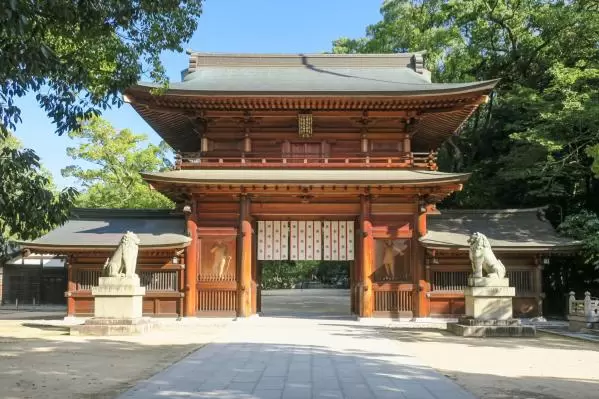
Oyamazumi Shrine is the head shrine of all Yamazumi shrines and Mishima shrines across the country, and it is the oldest shrine in Ehime Prefecture. Within the groun...
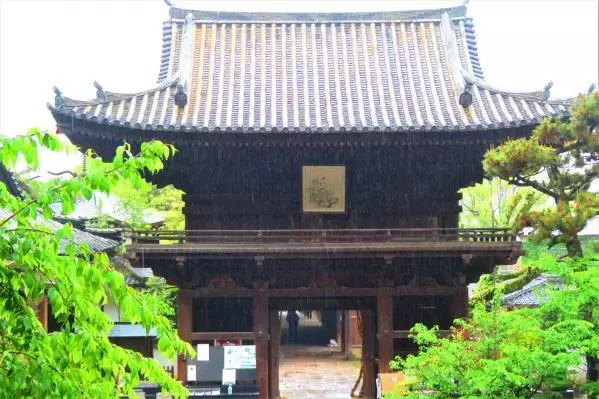
Ishiteji Temple is the 51st temple of the Shikoku 88 Temple Pilgrimage, located near Dogo Onsen. It features important cultural properties including the National Tre...
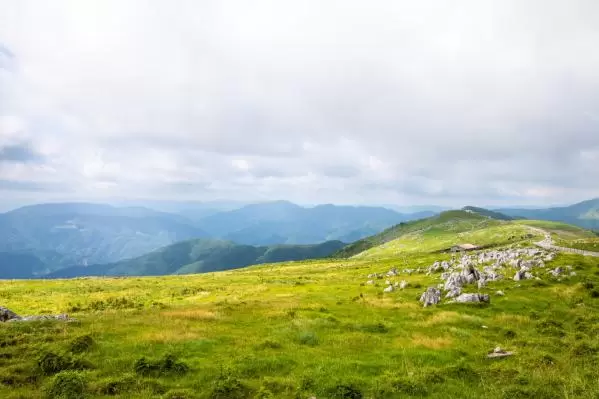
Shikoku Karst is a treasure trove of nature that stretches along the border between Ehime Prefecture and Kochi Prefecture. Spanning approximately 25 km from east to ...
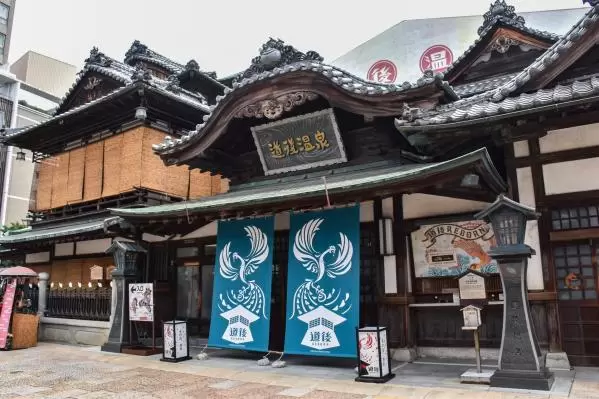
The hot springs are said to have been opened during the Jomon period and were visited by Prince Shotoku. Many famous figures, including Masaoka Shiki, have connectio...
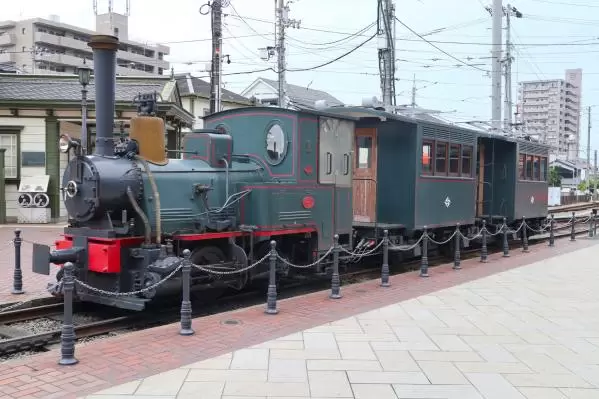
The "Botchan Train" is a diesel locomotive based on a steam engine that was beloved by the citizens of Matsuyama for 67 years starting from 1888. It gets its name fr...
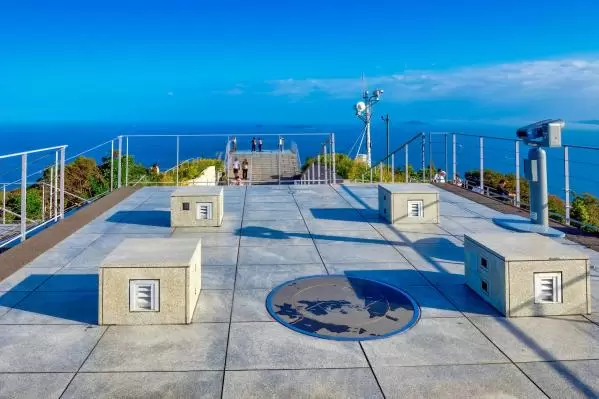
Located at the southern tip of Oshima, Kamero Mountain Observatory Park boasts one of the best views along the Shimanami Kaido. From its observation deck at an altit...
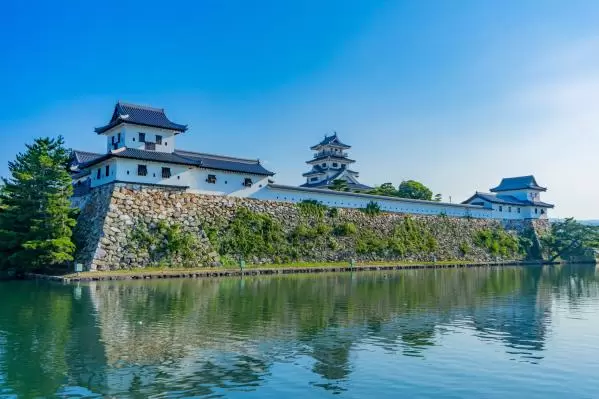
Imabari Castle is a flat-topped castle built by the renowned castle architect Todo Takatora after the Battle of Sekigahara and is one of Japan's three major seaside ...
Uwajima Castle is one of the 12 existing tenshu (castle keeps) and was built by Date Munenori as a stronghold. Facing Uwajima Bay, it features an irregular pentagona...