Kumano San Ishiteji
Kumano San Ishiteji Movies


Basic Information
- Spot Name
- Kumano San Ishiteji
- Location
- 〒790-0852 2-9-21 Ishite, Matsuyama City, Ehime Prefecture
- Access
- From Matsuyama Station of Iyotetsu, take the Iyotetsu Bus bound for Dogo Onsen Station via Ishiteji for 22 minutes, and get off at Ishiteji. It is just a short walk from there.
- Parking
- Approximately 40 to 50 regular cars / about 10 large vehicles.
- Business Hours
- 8:00 AM to 5:00 PM
- Regular Holiday
- Open all year round.
- Fees
- [Treasure Museum] Adults 200 yen / Junior and senior high school students 150 yen / Elementary school students 100 yen
- Contact Information
- Phone Number:089-977-0870
- Official Website
Map
Detailed Information
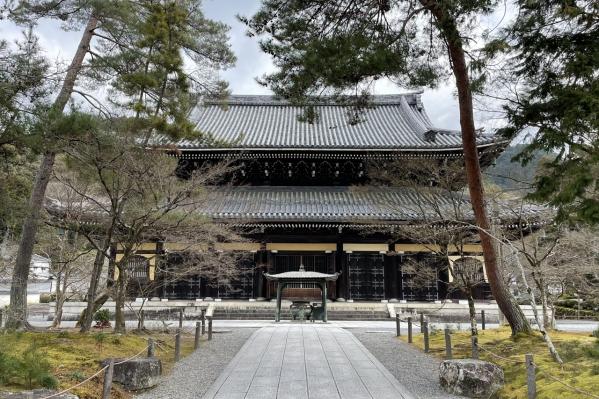
Kumanozan Kūkūzō-in Ishite-ji is a temple of the Buzan branch of Shingon Buddhism located in Matsuyama, Ehime Prefecture. It is the 51st temple of the Shikoku 88-Temple Pilgrimage. Situated near Dogo Onsen, said to be Japan’s oldest hot spring, the temple is popular not only with pilgrims but also with tourists.
Ishite-ji is one of the most historic temples among the sacred sites of Shikoku, possessing numerous cultural properties, including its National Treasure-designated Niōmon Gate, the Main Hall, Three-Story Pagoda, Bell Tower, Gorintō Stone Tower, Karitei-mo Hall, and Goma Hall. The temple grounds are lined with halls and pagodas that convey the grandeur of the Kamakura period. Its unique layout, reminiscent of a three-dimensional mandala, fascinates visitors.
## History of Ishite-ji
The origins of Ishite-ji date back to the Nara period.
According to temple legend, in 728, during the fifth year of the Jinki era, Ochi Tamazumi, a powerful local clan leader in Iyo, had a sacred dream in which the Twenty-Five Bodhisattvas descended to earth. Realizing that this was a holy site, he enshrined the Kumano Twelve Shrines’ deities here. The following year, in 729, Gyōki Bosatsu carved a statue of Yakushi Nyorai and enshrined it as the principal image. The temple was then founded as a Hossō Buddhist temple named Anyō-ji.
Later, Kōbō Daishi Kūkai transformed it into a center for Shingon esoteric Buddhism, and it developed as an important temple along the Shikoku pilgrimage route.
In addition, studies of ancient roof tiles excavated from the temple grounds suggest that the temple’s predecessor may date back to the Hakuhō period, in the latter half of the seventh century. Ishite-ji is therefore known as a temple with a remarkably long history.
## The Origin of the Name “Ishite-ji”
The name Ishite-ji is said to derive from the legend of Emon Saburō, who is regarded as the founder of the Shikoku pilgrimage.
Emon Saburō was a wealthy farmer in Iyo. One day, he rudely turned away Kōbō Daishi, who had come to his home seeking alms. After a series of misfortunes befell his family, he regretted his actions and set out on a pilgrimage to find Kōbō Daishi.
However, no matter how many times he undertook the pilgrimage, he was unable to meet Kōbō Daishi. Eventually, he fell gravely ill during his journey. At the moment of his death, Kōbō Daishi appeared before him, and Emon Saburō expressed his wish: “In my next life, I would like to be reborn into the Kōno family and be of service to the people.”
Kōbō Daishi placed a stone inscribed with the words “Emon Saburō Reborn” in Saburō’s hand. Later, a child born into the Kōno family was born clutching the same stone, and was believed to be Saburō’s reincarnation.
It is said that after this stone was enshrined at the temple, Anyō-ji came to be known as Ishite-ji, meaning “Stone-Hand Temple.”
## National Treasure: Niōmon Gate
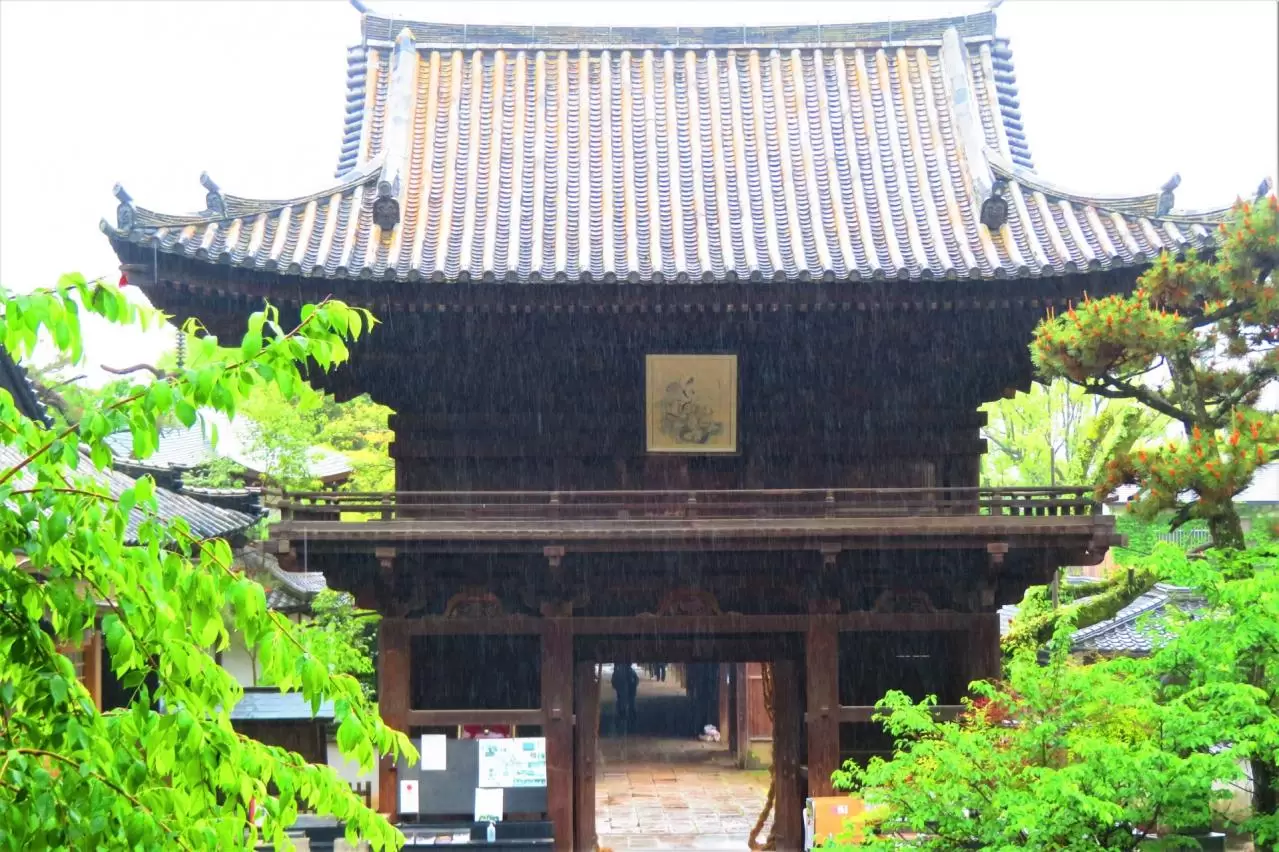
The most prominent cultural property at Ishite-ji is its Niōmon Gate, which has been designated a National Treasure.
Built in 1318 during the Kamakura period, the gate is an imposing two-story structure approximately seven meters high. Its dignified appearance serves as a symbol of Ishite-ji, and it is highly regarded as one of the most important historic structures among the sacred sites of Shikoku.
Powerful statues of the Niō guardian kings are enshrined on either side of the gate, solemnly welcoming worshippers.
## Important Cultural Property Halls and Pagodas
Numerous Important Cultural Properties remain within the grounds of Ishite-ji.
The principal cultural properties include:
- Main Hall
- Three-Story Pagoda
- Bell Tower
- Gorintō Stone Tower
- Karitei-mo Hall
- Goma Hall
- Bronze Bell
The bronze bell is particularly noteworthy. Bearing an inscription dated 1251, it is known as one of the oldest bells in Ehime Prefecture.
The Three-Story Pagoda, built during the Kamakura period, is also an iconic feature of the temple grounds and adds considerable charm to the historic landscape.
## The Main Hall and Principal Image
The Main Hall is designated as an Important Cultural Property of Japan.
The principal image is Yakushi Nyorai, the Buddha of healing. It is believed to offer blessings for recovery from illness and a long, healthy life, and many worshippers offer prayers here.
The mantra of the principal image is:
“On korokoro sendari matougi sowaka”
Pilgrims on the Shikoku pilgrimage recite sutras in the Main Hall and receive a pilgrimage stamp at the temple office.
## Karitei-mo Hall
One of the most deeply revered places on the temple grounds is Karitei-mo Hall.
Karitei-mo, also known as Kishimojin, is worshipped as a guardian deity of safe childbirth, fertility, and child-rearing.
At Ishite-ji, there is a custom in which pregnant women take home a stone placed around the hall. After giving birth safely, they express their gratitude by splitting the stone in two and returning it to the temple.
Many returned stones are piled around the hall, creating a distinctive landscape filled with expressions of gratitude for fulfilled prayers.
## Amida Hall
Amida Hall stands to the left after passing through the Niōmon Gate.
The hall is known as a place to pray for protection against cognitive decline. Many worshippers visit to pray for longevity, good health, and the prevention of dementia.
It is also deeply revered by local residents.
## Mantra Cave
One of Ishite-ji’s unique attractions is the Mantra Cave.
Inside the cave, Buddhist statues and a mandala-like world have been recreated. Visitors can experience a mysterious atmosphere as they make their way through the dimly lit passageways.
This unusual facility is rarely found at ordinary temples and is one of the reasons Ishite-ji is sometimes called the “Mysterious Temple.”
## Inner Sanctuary
Ishite-ji also has an inner sanctuary, or okunoin.
The inner sanctuary includes Ishizuchi-ji and Shōjō-ji, and is enveloped in a tranquil atmosphere quite different from the area surrounding the Main Hall.
It is a recommended place of worship for those who wish to experience the world of Buddhist faith more deeply.
## Treasure Hall
A treasure hall is located within the temple grounds.
The exhibits include valuable temple treasures such as Buddhist statues, ritual implements, and ancient documents. Visitors can learn more about the history and religious traditions of Ishite-ji.
Among the sacred sites of the Shikoku pilgrimage, Ishite-ji is particularly rich in cultural properties, making the treasure hall a rewarding place to visit.
## Corridor-Style Approach
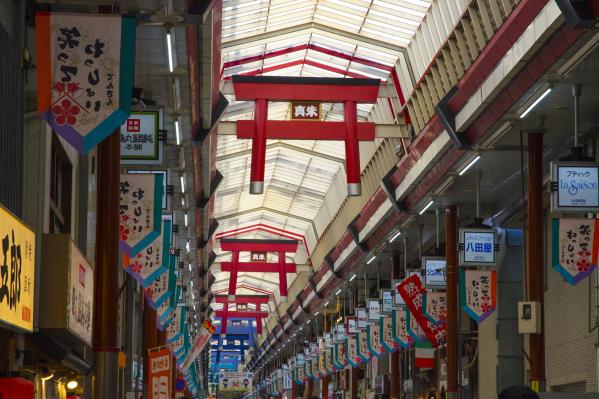
The approach to Ishite-ji takes the form of a covered corridor, with souvenir shops and restaurants lining both sides.
Many stores sell pilgrimage goods, Matsuyama specialties, and souvenirs from Dogo Onsen, making it enjoyable to stroll around before or after visiting the temple.
Sampling local specialties such as yakimochi rice cakes while walking is one of the pleasures of visiting Ishite-ji.
## A Temple Layout Resembling a Three-Dimensional Mandala
The grounds of Ishite-ji have a mandala-like design, with halls and pagodas arranged in a three-dimensional composition.
The Main Hall, Three-Story Pagoda, Bell Tower, Goma Hall, and Karitei-mo Hall are skillfully positioned throughout the grounds, revealing a different view with every step.
The space created by these Kamakura-period buildings is particularly impressive among the sacred sites of Shikoku.
## The 51st Temple of the Shikoku 88-Temple Pilgrimage
Ishite-ji is the 51st temple of the Shikoku 88-Temple Pilgrimage.
It lies along the route from Temple No. 50, Hantaji, to Temple No. 52, Taisanji.
Its pilgrimage hymn is:
“西方を よそとは見まじ 安養の 寺に詣りて 受くる十楽”
“I shall not regard the Western Pure Land as somewhere distant; by visiting Anyō-ji, I receive the ten joys.”
As a temple associated with the legend of Emon Saburō, Ishite-ji is an indispensable part of the history of the Shikoku pilgrimage.
## A Convenient Location Near Dogo Onsen
Ishite-ji is within walking distance of Dogo Onsen.
By visiting the Dogo Onsen Main Building, Asuka-no-Yu, and Dogo Shopping Arcade together with the temple, visitors can enjoy hot springs, history, and religious culture all in one excursion.
A popular itinerary is to soothe the fatigue of travel at Dogo Onsen after visiting the temple.
## Access
Ishite-ji is approximately a 20-minute walk from Dogo Onsen Station on the Iyo Railway.
Alternatively, visitors can take an Iyo Railway bus operating from the direction of JR Matsuyama Station or Matsuyama-shi Station and get off at the Ishite-ji-mae bus stop, located immediately in front of the temple.
With convenient access from central Matsuyama, Ishite-ji is a popular destination and a classic sightseeing spot in the city.
## Summary
Kumanozan Kūkūzō-in Ishite-ji is one of Matsuyama’s most historic temples and is known as the 51st temple of the Shikoku 88-Temple Pilgrimage. It is highly regarded as one of the greatest treasure houses of cultural properties among the sacred sites of Shikoku, possessing numerous important works including the National Treasure-designated Niōmon Gate, Main Hall, Three-Story Pagoda, Bell Tower, Gorintō Stone Tower, Karitei-mo Hall, and Goma Hall.
The temple’s name derives from the legend of Emon Saburō Reborn and is deeply connected with the history of the Shikoku pilgrimage. The temple offers numerous highlights, including Karitei-mo Hall, known for prayers for safe childbirth and fertility; Amida Hall, associated with protection against cognitive decline; the mysterious Mantra Cave; the treasure hall; and the inner sanctuary.
Its proximity to Dogo Onsen is another appealing feature, allowing visitors to combine historical sightseeing with a hot spring excursion. Rich in history, culture, and faith, Ishite-ji is one of the finest temples to visit when exploring Matsuyama or undertaking the Shikoku pilgrimage.
Ehime Tourist Attractions
View List
Oyamazumi Shrine
Oyamazumi Shrine is the head shrine of all Yamazumi shrines and Mishima shrines across the country, and it is the oldest shrine in Ehime Prefecture. Within the groun...

Kirishima Tenbou Kouen
Located at the southern tip of Oshima, Kamero Mountain Observatory Park boasts one of the best views along the Shimanami Kaido. From its observation deck at an altit...

Matsuyama Castle
Standing at an elevation of 132 meters, Matsuyama Castle is a magnificent structure that symbolizes Japan's history and culture. Construction was initiated by Kato Y...

Dogo Onsen Honkan
The hot springs are said to have been opened during the Jomon period and were visited by Prince Shotoku. Many famous figures, including Masaoka Shiki, have connectio...

Bocchan Train
The "Botchan Train" is a diesel locomotive based on a steam engine that was beloved by the citizens of Matsuyama for 67 years starting from 1888. It gets its name fr...

Shikoku Karst
Shikoku Karst is a treasure trove of nature that stretches along the border between Ehime Prefecture and Kochi Prefecture. Spanning approximately 25 km from east to ...

Imabari Castle
Imabari Castle is a flat-topped castle built by the renowned castle architect Todo Takatora after the Battle of Sekigahara and is one of Japan's three major seaside ...

Uwajima Castle
Uwajima Castle is one of the 12 existing tenshu (castle keeps) and was built by Date Munenori as a stronghold. Facing Uwajima Bay, it features an irregular pentagona...