Bocchan Train
Bocchan Train Movies


Basic Information
- Spot Name
- Bocchan Train
- Location
- 〒790-0843 Dogo, Matsuyama City, Ehime Prefecture
- Access
- The Botchan Train can be boarded from Dogo Onsen Station, Okaido, Matsuyama City Station, JR Matsuyama Station front, and Komachi tram stops.
- Parking
- Please use the nearby paid parking facilities.
- Business Hours
- Every Saturday, Sunday, and public holiday
Operating sections: 【1】Dogo Onsen ⇔ Matsuyama Station, 【2】Dogo Onsen ⇔ JR Matsuyama Station ⇔ Komachi - Fees
- Adult: 1,300 yen / Child: 650 yen
- Contact Information
- Phone Number:089-948-3323
- Official Website
Map
Detailed Information
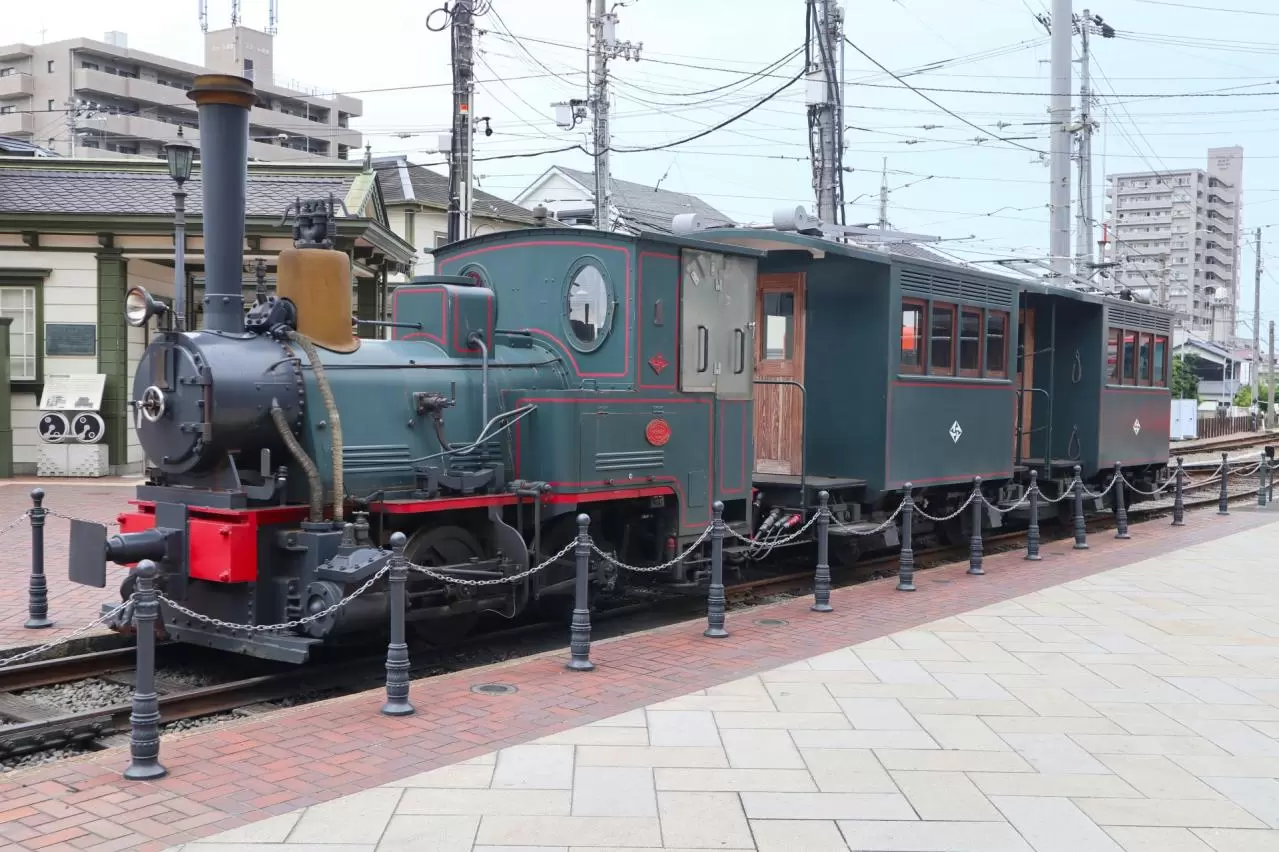
The Botchan Train is a sightseeing train that runs through Matsuyama, Ehime Prefecture. Its retro carriages recreate the steam locomotives that operated during the Meiji period. It is popularly known by this name because it appears in Natsume Soseki’s novel *Botchan*, and it has become one of Matsuyama’s most iconic tourist attractions.
The Botchan Train currently in operation was restored in 2001 based on the steam locomotives that served on the Iyo Railway for approximately 67 years, beginning in 1888 (Meiji 21). Although its exterior faithfully reproduces the steam locomotives of that era, it is actually powered by a diesel engine, allowing passengers to enjoy the atmosphere of the Meiji period in an environmentally friendly way.
The train’s leisurely journey through Matsuyama is popular with tourists. Looking out at Matsuyama Castle and the cityscape through its retro windows, passengers can enjoy the feeling of traveling back in time to the Meiji period.
## History of the Botchan Train
The steam locomotive that served as the model for the Botchan Train began operating in 1888 (Meiji 21), the year after the Iyo Railway opened.
Established in 1887 (Meiji 20), the Iyo Railway is one of Japan’s oldest private railways and is known as the first railway to open in the Chugoku and Shikoku region. It was created as a means of transportation connecting Matsuyama with Mitsuhama Port, playing an important role in transporting people and goods.
The steam locomotives of the time were also called “oka-joki,” or “steam locomotives on land,” because of the black smoke they emitted as they traveled. They were beloved by many people and served as an essential means of transportation for the residents of Matsuyama, making a major contribution to the development of the local economy, industry, and culture.
As the times changed, the railway was gradually electrified. The steam locomotives continued operating until around 1954 (Showa 29), after which they were retired.
However, in response to strong local demands to “bring the Botchan Train back,” a restoration project was launched while overcoming various technical challenges. In October 2001, the Botchan Train returned to Matsuyama in the 21st century.
## The Origin of the Name “Botchan Train”
The nickname Botchan Train comes from Natsume Soseki’s novel *Botchan*.
In 1895 (Meiji 28), Natsume Soseki was assigned to teach English at Matsuyama Middle School, now Ehime Prefectural Matsuyama Higashi High School. In *Botchan*, which he wrote based on his experiences there, the protagonist is shown using Matsuyama’s light railway.
In the novel, the train is described as a “train like a matchbox.” As the novel became popular, the actual steam locomotive also came to be known as the “Botchan Train.”
It is also known that Masaoka Shiki and Natsume Soseki themselves used this railway.
## The Botchan Train Today
The current Botchan Train is a diesel locomotive that recreates the railway vehicles of the Meiji period.
The exterior and passenger-car designs faithfully reproduce those of the steam locomotives of the time. The sight of the small, charming carriages traveling in a line is particularly popular with tourists.
The crew uniforms have also been recreated with reference to Meiji-period designs, allowing passengers to enjoy a retro atmosphere along with the conductor’s announcements.
Another distinctive feature is the smoke-like effect rising from the chimney. A smoke machine that produces odorless, pollution-free vapor, together with water vapor, is used to recreate the atmosphere of a steam locomotive.
## Operating Routes
The Botchan Train mainly runs along the streetcar routes in Matsuyama.
Its main routes connect Dogo Onsen Station, Matsuyama-shi Station, the area in front of JR Matsuyama Station, and Komachi. The train travels slowly through central Matsuyama.
From the windows, passengers can view some of Matsuyama’s most representative sights, including Matsuyama Castle, Horinouchi Park, and the main building of the Ehime Prefectural Government Office. This makes it possible to enjoy sightseeing and transportation at the same time.
Please note that operating days, the number of services, and routes may change. It is recommended that visitors check the official Iyo Railway website before traveling.
## Highlights of the Botchan Train
### Experience the Atmosphere of the Meiji Period
The greatest appeal of the Botchan Train is the opportunity to experience railway travel in the Meiji period.
Everything from the retro interior with its warm wooden atmosphere and classical furnishings to the conductors’ period-style uniforms has been recreated in detail.
The journey, enjoyed while gazing out of the windows, makes passengers feel as though they have stepped into the world of *Botchan*.
### Manually Turning the Train Around
One of the Botchan Train’s unique attractions is the manual turning maneuver performed at the terminal station.
Because the Botchan Train does not have a turntable, the crew uncouples the locomotive at the terminus and turns it around by hand.
This unusual sight is popular with tourists, and many visitors enjoy taking photographs of the process.
### A Perfect Match with Dogo Onsen Sightseeing
Because the Botchan Train departs from and arrives at Dogo Onsen Station, it is an excellent complement to sightseeing around Dogo Onsen.
After strolling around Dogo Onsen Main Building and Dogo Haikara-dori, taking a ride on the Botchan Train allows visitors to fully enjoy Matsuyama’s distinctive charm and atmosphere.
### A Popular Spot for Commemorative Photos
The train’s retro appearance is also well known for being highly photogenic.
Many tourists and railway enthusiasts gather around Dogo Onsen Station, the Okaido area, and Matsuyama-shi Station to photograph the Botchan Train.
The combination of the train and the station building in front of Dogo Onsen Station is especially popular, making it one of Matsuyama’s most iconic photo spots.
## Botchan Train Museum
The Botchan Train Museum is located in front of Matsuyama-shi Station.
Inside, visitors can see a full-size replica of Locomotive No. 1, which operated during the Meiji period. The locomotive can be viewed up close.
The museum also displays railway-related documents, photographs, and parts from that era, allowing visitors to learn about the history of the Botchan Train and the Iyo Railway.
Admission to the museum is free. It is popular not only with railway enthusiasts but also with visitors interested in the modern history of Matsuyama.
## Access
Because the Botchan Train operates through central Matsuyama, it is a convenient form of transportation that can easily be used during sightseeing.
The main boarding locations are:
- Dogo Onsen Station
- Matsuyama-shi Station
- In front of JR Matsuyama Station
- Komachi Station
The train is convenient for reaching major tourist destinations such as Dogo Onsen and Matsuyama Castle and is also widely used as a means of transportation while sightseeing in Matsuyama.
## Conclusion
The Botchan Train is a sightseeing train restored based on the Iyo Railway steam locomotives that operated for approximately 67 years beginning in 1888. It became known by its name because it appeared in Natsume Soseki’s novel *Botchan*, and today it is one of Matsuyama’s most popular tourist attractions.
Its retro exterior, the conductor’s period-style uniform, effects that evoke a steam locomotive, and the manual turning maneuver allow visitors to fully enjoy the atmosphere of the Meiji period. Since it can also be enjoyed together with visits to Dogo Onsen and Matsuyama Castle, it is an ideal way to experience the history and culture of Matsuyama.
When visiting Matsuyama, why not ride the Botchan Train and reflect on the castle-town scenery that Natsume Soseki and Masaoka Shiki may once have seen?
#Traditional culture experience #Cultural assets/historic sites
Ehime Tourist Attractions
View List
Oyamazumi Shrine
Oyamazumi Shrine is the head shrine of all Yamazumi shrines and Mishima shrines across the country, and it is the oldest shrine in Ehime Prefecture. Within the groun...

Imabari Castle
Imabari Castle is a flat-topped castle built by the renowned castle architect Todo Takatora after the Battle of Sekigahara and is one of Japan's three major seaside ...

Dogo Onsen Honkan
The hot springs are said to have been opened during the Jomon period and were visited by Prince Shotoku. Many famous figures, including Masaoka Shiki, have connectio...

Kirishima Tenbou Kouen
Located at the southern tip of Oshima, Kamero Mountain Observatory Park boasts one of the best views along the Shimanami Kaido. From its observation deck at an altit...

Kumano San Ishiteji
Ishiteji Temple is the 51st temple of the Shikoku 88 Temple Pilgrimage, located near Dogo Onsen. It features important cultural properties including the National Tre...

Uwajima Castle
Uwajima Castle is one of the 12 existing tenshu (castle keeps) and was built by Date Munenori as a stronghold. Facing Uwajima Bay, it features an irregular pentagona...

Shikoku Karst
Shikoku Karst is a treasure trove of nature that stretches along the border between Ehime Prefecture and Kochi Prefecture. Spanning approximately 25 km from east to ...

Matsuyama Castle
Standing at an elevation of 132 meters, Matsuyama Castle is a magnificent structure that symbolizes Japan's history and culture. Construction was initiated by Kato Y...