Ichijo-dani Asakura Site
Ichijo-dani Asakura Site Movies


![[#ゆる城 7] 一乗谷 2023/8/07訪城 ブラタモリ紹介 2022年10月オープン 巨石下城戸 福井旅行編 完](https://i.ytimg.com/vi/7cyxWLekfxc/mqdefault.jpg)


Basic Information
- Spot Name
- Ichijo-dani Asakura Site
- Location
- 〒910-2153 28-37 Kido No Uchi-cho, Fukui City, Fukui Prefecture, Japan
- Access
- About a 5-minute walk from JR Echime Main Line "Ichijodani Station" to the museum, and about a 25-minute walk to the center of the ruins.
Approximately 10 minutes from Hokuriku Expressway "Fukui IC." - Parking
- Parking available
- Business Hours
- Free admission for visits. *The restored townscape is open from 9:00 AM to 5:00 PM (last admission 30 minutes before closing).
- Regular Holiday
- New Year's holidays
- Fees
- Restored Townscape / General 330 yen (Group 260 yen), 70 years and older 100 yen (Group 80 yen), Elementary and Middle School Students 100 yen (Group 80 yen)
- Contact Information
- Phone Number:0776-41-2330
- Official Website
Map
Detailed Information
Ichijodani Asakura Clan Ruins are a large-scale archaeological site from the Sengoku period located in Kido-no-uchi, Fukui City, Fukui Prefecture, and the remains of the castle town of the Asakura clan, a Sengoku warlord family that ruled Echizen. This extremely valuable cultural heritage site is designated as a Special Historic Site, Special Place of Scenic Beauty, and Important Cultural Property, and because of its excellent state of preservation, it is also known as “Japan’s Pompeii.”
1. Overview and Significance
The Ichijodani Asakura Clan Ruins are located about 10 km southeast of Fukui City, spread across the mountain basin of Ichijodani. They were the base from which the five generations of the Asakura clan ruled Echizen Province for about 100 years (roughly 103 years) during the Sengoku period, and their greatest feature is that the castle town of that era has been excavated in remarkably good condition.
The designated area of the Special Historic Site extends over approximately 278 hectares, with a mountain castle, samurai residences, temples, merchant houses, gardens, roads, and more preserved as an integrated whole. The excavated artifacts are also designated as Important Cultural Properties, giving the entire site exceptionally high historical value.
It is also one of the cultural properties that make up the Japan Heritage “Fukui-Katsuyama Ishi-gatari,” and today it is known as a tourist destination with a museum, a reconstructed townscape, and a roadside station.
2. The Asakura Clan and the Formation of Ichijodani
The ancestors of the Asakura clan were local lords from Tajima Province (present-day Yabu City, Hyogo Prefecture) who moved into Echizen during the Nanboku-cho period. They expanded their power amid the turmoil of the Onin War and in 1471 expelled the Shiba clan to take control of all of Echizen Province.
Asakura Takakage, the first head of the clan, moved the main base to Ichijodani, a geographically defensive location, and established the foundations for politics, military affairs, and talent recruitment. Thereafter, through the fifth lord Yoshikage, the Asakura clan maintained stable rule, and Echizen developed into a prosperous province.
Ichijodani at the time is believed to have been a city of more than 10,000 people, thriving to the extent that it was called “the capital of the north.” Another notable feature was that many cultural figures moved there from Kyoto, which had been devastated by the Onin War, and a brilliant culture blossomed.
3. Economic and Cultural Prosperity
The economic foundation of the Asakura clan was the abundant tax revenue collected from the entire province of Echizen. With the country stable, commerce and distribution also developed, and port towns such as Mikuni and Tsuruga, as well as religious centers such as Heisenji, prospered.
Excavations have uncovered valuable items from international trade of the time, including high-quality Chinese ceramics and Venetian glass, showing that Ichijodani was one of the nation’s leading cultural cities.
In addition, the fifth lord, Asakura Yoshikage, was highly cultured and had a strong appreciation for waka poetry and the arts. Such governance that valued culture is also thought to have contributed to Ichijodani’s prosperity.
4. Military Power and Notable Figures
The Asakura clan is sometimes thought of as a “weak daimyo” family, but in reality it possessed considerable military strength. The central figure in this was Asakura Sōteki (Kageyori).
Sōteki was a renowned general who experienced 12 battles, served under the third through fifth lords, and supported the Asakura family’s military affairs. He remained active until he fell ill and died while on campaign at the age of 79.
There is also a theory that Akechi Mitsuhide once served the Asakura clan, and he is said to have worked as an instructor in firearms, but there is no conclusive evidence for this.
5. Downfall and Aftermath
However, amid the upheavals of the Sengoku period, the Asakura clan came into conflict with Oda Nobunaga.
After setbacks in the Battle of Kanegasaki in 1570 and the Battle of Anegawa, they suffered a major defeat at the Battle of Tonezaka in 1573.
In August of that year, Ichijodani was burned down for a long period by Oda forces, and the town was completely destroyed.
Afterwards, the site remained buried beneath fields for about 400 years and disappeared from history.
6. Excavation and “Japan’s Pompeii”
Full-scale excavation began in 1967, and samurai residences, temples, merchant houses, artisans’ homes, roads, and more were discovered in excellent condition.
Because the townscape of the time remained intact, it came to be called “Japan’s Pompeii.” Excavations are still ongoing, with new valuable materials that shed light on life during the Sengoku period continuing to be uncovered.
7. Highlights
(1) Reconstructed Townscape
Based on excavation results, a townscape about 200 meters long has been recreated, lined with samurai residences and merchant houses.
Walking through it gives visitors the feeling of traveling back in time to the Sengoku period.
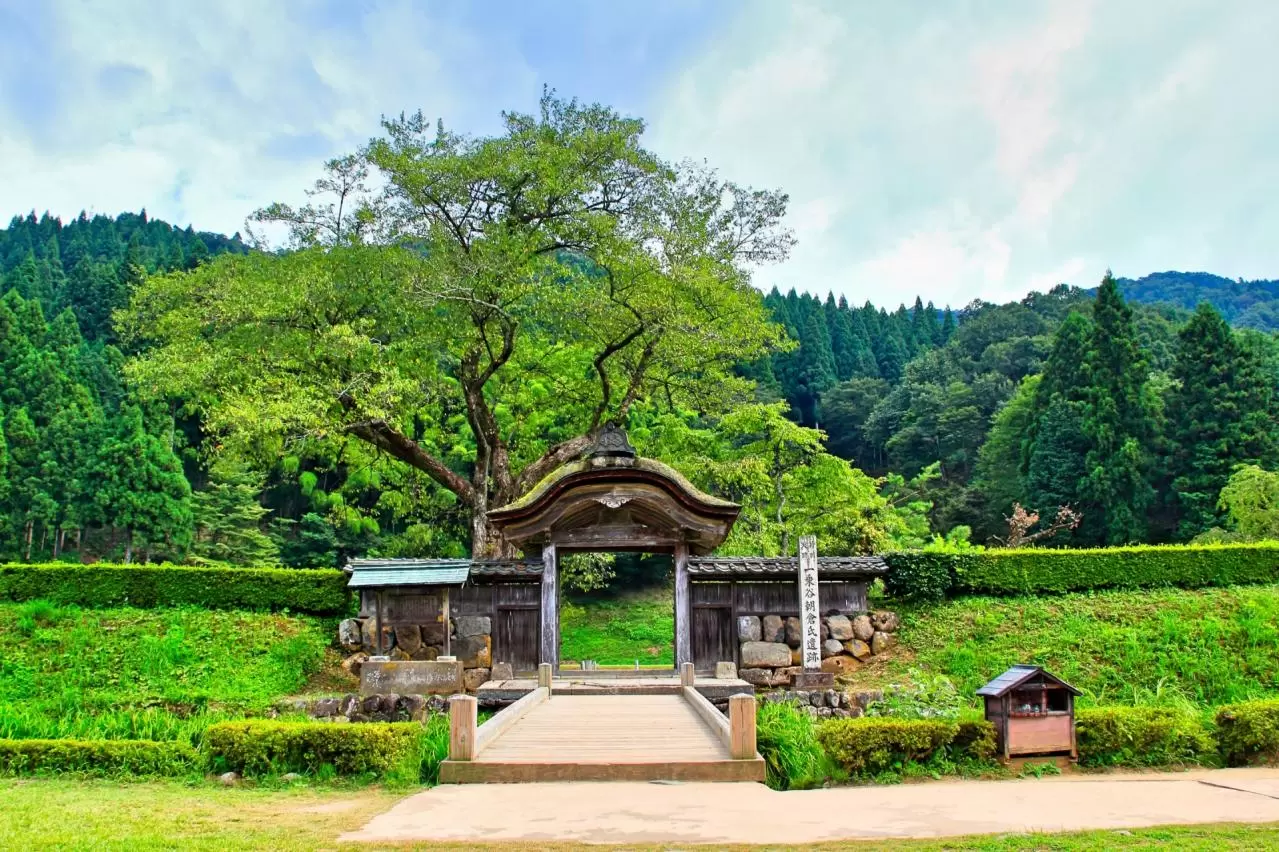
(2) Site of Yoshikage Asakura’s Residence and Karamon Gate
The site of Yoshikage’s residence covers about 6,500 square meters and was a large residence surrounded by earthen walls and moats.
The Karamon gate at the entrance was built in the Edo period, and the family crests of the Asakura and Toyotomi clans can be seen there.
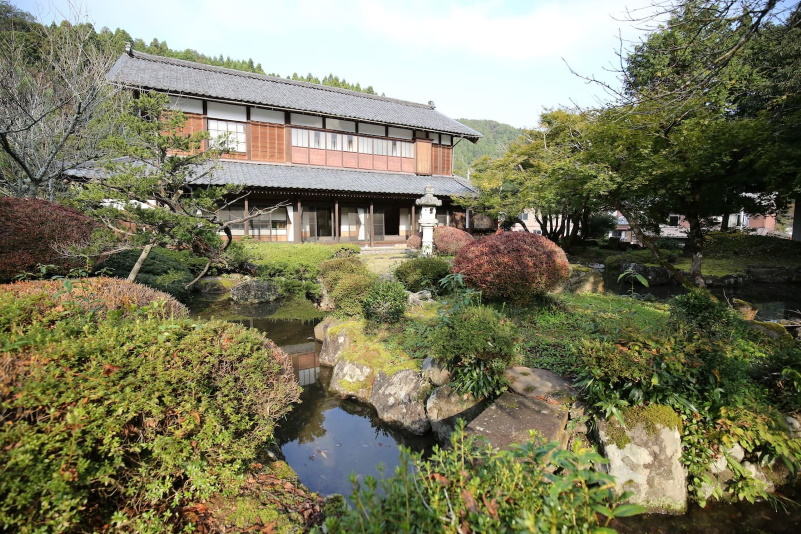
(3) Four Gardens (Special Place of Scenic Beauty)
- Garden at the Asakura Residence Site
- Garden at the Yudono Site
- Garden at the Suwa Residence Site
- Garden at the Nanyoji Temple Site
These are valuable remains that convey the garden culture of the Sengoku period, and they also suggest cultural ties with Kyoto.
(4) Mountain Castle Remains
Deeper in Ichijodani, baileys such as the first, second, and third compounds, as well as moats, remain, confirming the site’s defensive functions as a mountain castle.
8. Current Tourism and Appeal
Today, the Ichijodani Asakura Clan Ruins have been developed as a tourist destination where history, nature, and culture come together.
Visitors can enjoy the scenery of the four seasons—cherry blossoms, fresh greenery, autumn leaves, and snowy landscapes—while also sensing the prosperity and downfall of the past.
Events such as Sengoku festivals and kimono-dressing experiences are also offered, making it popular as an experiential tourist destination.
Conclusion
The Ichijodani Asakura Clan Ruins are an extremely rare site in Japan, preserving a Sengoku-period castle town in remarkably good condition.
It is a place where visitors can experience the flow of history: the image of a prosperous city, its sudden destruction, and its rediscovery some 400 years later.
Not only history enthusiasts but also those who are not particularly interested in history will find it deeply appealing as a romantic space that connects the past with the present.
Fukui Tourist Attractions
View List

Shibamasa World
Shibamasa World is a large theme park covering an expansive area of 560,000 square meters facing the Sea of Japan. During the summer, it opens one of Japan's largest...


Echizen Matsushima Aquarium
Echizen Matsushima Aquarium is an interactive aquarium themed around "see, touch, and learn with fun." It features enjoyable attractions such as dolphin shows and pe...

Daibo Mountain Eihei-ji
Eiheiji, the head temple of the Soto Zen school, was founded by Zen Master Dogen in the second year of the Kan'gen era (1244). Located in Fukui Prefecture, its seren...

Fukui Prefectural Dinosaur Museum
The Fukui Prefectural Dinosaur Museum, one of the largest dinosaur-themed museums in Japan, provides visitors with an opportunity to learn about dinosaurs and the hi...

Maruoka Castle
Maruoka Castle, also known as Kasumiga Castle, was built by Katsuie Shibata's nephew, Katsutoyo. The name "Kasumiga Castle" comes from a legend in which a giant serp...

Mikata Goko
Mikata Five Lakes is the collective name for five lakes located in Mihama and Wakasa towns in Fukui Prefecture. They consist of Mikata Lake, Suigetsu Lake, Suga Lake...