Maruoka Castle
Maruoka Castle Movies


![[#1]福井県の観光名所、丸岡城や東尋坊に行ってきました!!#福井観光 #東尋坊 #丸岡城](https://i.ytimg.com/vi/zs3pUzlXGaE/mqdefault.jpg)

![【車中泊でぼっち旅】#36 [ 福井県 ] 北陸地方唯一の現存天守【 丸岡城 】前編!目指すは出雲大社!節約 観光 ズボラ女子 C-HR 2023 Fukui](https://i.ytimg.com/vi/nir48pXhRb8/mqdefault.jpg)

Basic Information
- Spot Name
- Maruoka Castle
- Location
- 〒910-0231 1-59 Kazamachi, Maruoka Town, Sakai City, Fukui Prefecture, Japan
- Access
- From JR Awara Onsen Station, take the Keifuku bus bound for Eiheiji for about 20 minutes, and get off at Maruoka Castle, which is just a short walk away. From Fukui Station West Exit, take the Keifuku bus bound for Maruoka Castle for about 50 minutes, and get off at Maruoka Castle, which is just a short walk away. It is a 5-minute drive from the Maruoka IC on the Hokuriku Expressway.
- Parking
- Parking available
- Business Hours
- Opening hours: 8:30 AM to 5:00 PM (last admission 30 minutes before closing)
- Regular Holiday
- Open year-round.
- Fees
- Adults: 450 yen; Elementary and junior high school students: 150 yen.
- Contact Information
- Phone Number:0776-66-0303
- Official Website
Map
Detailed Information
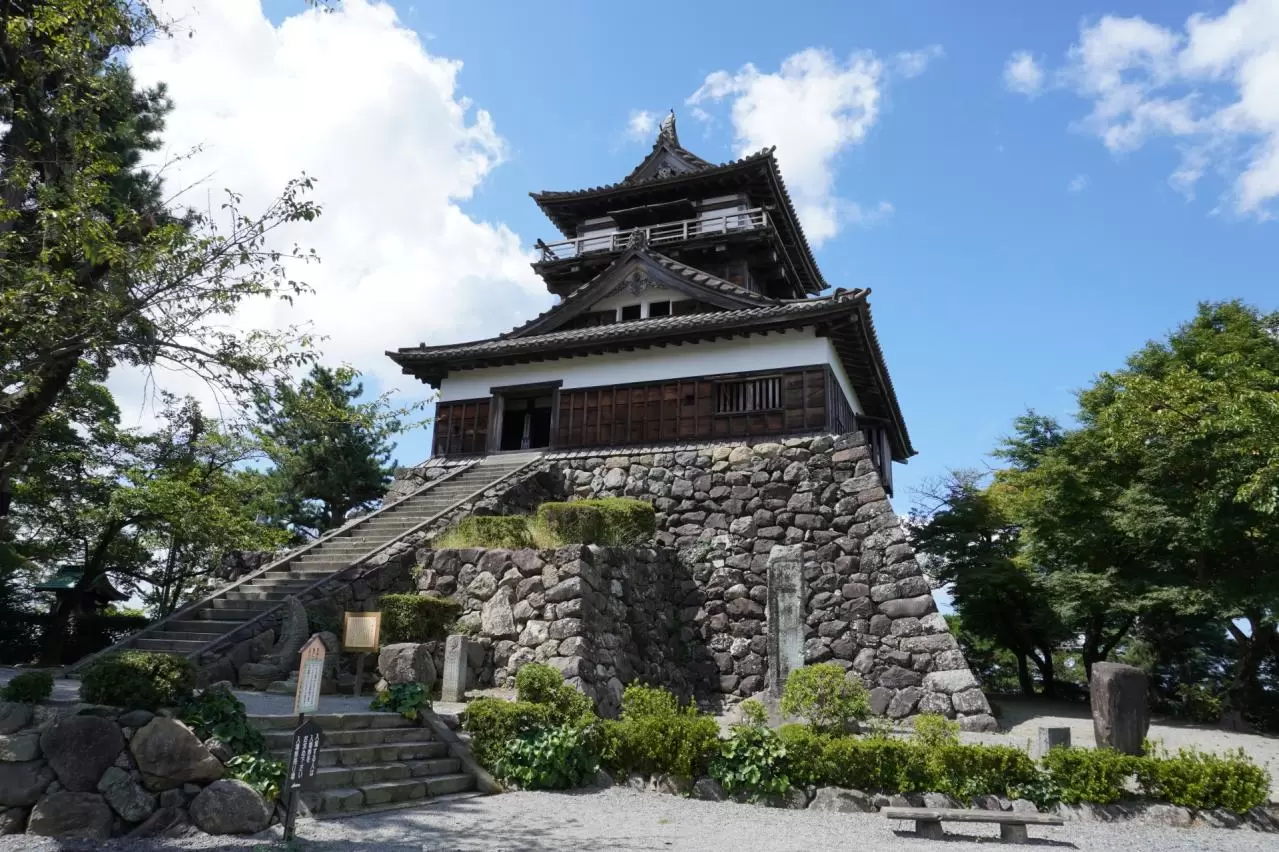
Maruoka Castle is a historic castle located in Sakai City, Fukui Prefecture, and was built in Tensho 4 (1576) during the Sengoku period by Shibata Katsutoyo, the nephew of Shibata Katsuie. It is said to have been constructed under the orders of Oda Nobunaga as a defense against the Ikkō-ikki uprising. It is also known by the nickname “Kasumigajo” (Castle in the Mist), a name derived from a legend that a giant serpent appeared during battle, blew mist, and concealed the castle. In spring as well, when the castle is surrounded by fully blossomed cherry trees, it seems as though it is wrapped in mist, making the name especially fitting.
Maruoka Castle is known as the only surviving keep in the Hokuriku region and has been designated an Important Cultural Property of Japan. A surviving keep refers to a castle tower built before the Edo period that still remains today; there are only 12 such keeps in all of Japan, and Maruoka Castle is one of them. However, the keep was completely destroyed in the Fukui Earthquake of 1948. It was later restored in 1955 using more than 70 percent of the original materials, including major structural members such as pillars and beams, bringing it back to its present form. Such a surviving keep rebuilt with old materials after collapse is extremely rare, and the castle is a historic heritage site preserved through the support and efforts of many people.
Architecturally, Maruoka Castle is a hirayama-style castle with a standalone watchtower-style keep. Although it appears to be a two-story structure from the outside, it actually has three internal levels. Its unique structure has the first floor supporting the second and third floors, and it is also characterized by the absence of a continuous central pillar. The roof is covered with about 6,000 tiles, some of which are made of Shakudani stone. This stone-tiled roof is the only one of its kind among surviving keeps and is one of the castle’s defining features. In addition, the stone walls were built using the old nozura-zumi method, in which natural stones are stacked as they are. While leaving many gaps, this method is considered highly drainable and resistant to collapse.
There are many highlights inside the castle as well. The stairs inside the keep are extremely steep, with an incline of about 65 degrees from the first to the second floor and about 67 degrees from the second to the third floor, making them among the steepest in Japan. A rope is provided to assist visitors as they climb. The top floor on the third level has windows on all four sides, offering a spectacular panoramic view of the Sakai Plain and the surrounding scenery. For defense, the castle is also equipped with stone-drop openings for throwing stones at enemies climbing the stone walls, as well as small openings called sama for firing guns and bows, preserving the defensive functions of the Sengoku period to this day.
Historically, after the castle was built, Honda Narishige became the first lord of Maruoka Domain and devoted himself to developing the castle town. Later, the domain was ruled by several feudal families, including the Arima clan. Around the castle, sites such as Honko-in Temple, the family temple of the Honda clan, and temples associated with the Arima clan remain, allowing visitors to feel the history of the era. There is also a stone monument related to the famous letter “Ippitsu Keijo: Beware of fire, do not make Osen cry, and feed the horses well,” and today the “Ippitsu Keijo Award,” a contest for Japan’s shortest letters, is held, drawing attention to the castle’s cultural significance as well.
Its appeal as a tourist destination is also abundant. Maruoka Castle has been selected as one of the “100 Best Cherry Blossom Spots in Japan,” and in spring, about 400 Somei Yoshino cherry trees bloom in full splendor. Every year from late March to mid-April, the Maruoka Castle Cherry Blossom Festival is held, and in the evenings the area is illuminated by bonbori lanterns, creating a fantastical atmosphere. In October, the Maruoka Furushiro Festival is also held, featuring a warrior procession and a grand dance, attracting many visitors.
Maruoka Castle is also appealing for the beauty of its changing seasons. It offers different expressions throughout the year—spring cherry blossoms, summer greenery, autumn foliage, and winter snowscapes—so every visit brings new charm.
In this way, Maruoka Castle is a precious cultural heritage site that combines historical value, architectural distinction, and the natural beauty of the four seasons. Its steep stairs and defensive features also allow visitors to experience the atmosphere of the Sengoku period, making it especially attractive. If you are confident in your legs, be sure to climb the keep and experience its charm firsthand.
Fukui Tourist Attractions
View List
Mikata Goko
Mikata Five Lakes is the collective name for five lakes located in Mihama and Wakasa towns in Fukui Prefecture. They consist of Mikata Lake, Suigetsu Lake, Suga Lake...

Ichijo-dani Asakura Site
The Ichijodani Asakura Clan Ruins is a valuable archaeological site where the remains of the castle town ruled by the Asakura clan during the Sengoku period have bee...


Fukui Prefectural Dinosaur Museum
The Fukui Prefectural Dinosaur Museum, one of the largest dinosaur-themed museums in Japan, provides visitors with an opportunity to learn about dinosaurs and the hi...

Daibo Mountain Eihei-ji
Eiheiji, the head temple of the Soto Zen school, was founded by Zen Master Dogen in the second year of the Kan'gen era (1244). Located in Fukui Prefecture, its seren...

Echizen Matsushima Aquarium
Echizen Matsushima Aquarium is an interactive aquarium themed around "see, touch, and learn with fun." It features enjoyable attractions such as dolphin shows and pe...

Shibamasa World
Shibamasa World is a large theme park covering an expansive area of 560,000 square meters facing the Sea of Japan. During the summer, it opens one of Japan's largest...