Toujinbo
Toujinbo Movies


Basic Information
- Spot Name
- Toujinbo
- Location
- 〒913-0063 Mikuni Town, Sakai City, Fukui Prefecture
- Access
- About 15 minutes by Keifuku Bus to Tohoku from Echizen Railway Mikuni Station, alight at the final stop / About 45 minutes by Keifuku Bus to Tohoku from JR Awara Onsen Station / About 15 minutes by car from Kanazu IC on the Hokuriku Expressway.
- Parking
- Parking available
- Business Hours
- Open for visits free of charge.
- Regular Holiday
- None
- Fees
- 【Tojinbo Tower】
Observation Deck Admission Fee: Adults (Middle School and above) 500 yen, Children 300 yen
【Tojinbo Sightseeing Cruise】
Adults (Middle School and above) 1,800 yen, Children 900 yen - Contact Information
- Phone Number:0776-82-5515
- Official Website
Map
Detailed Information
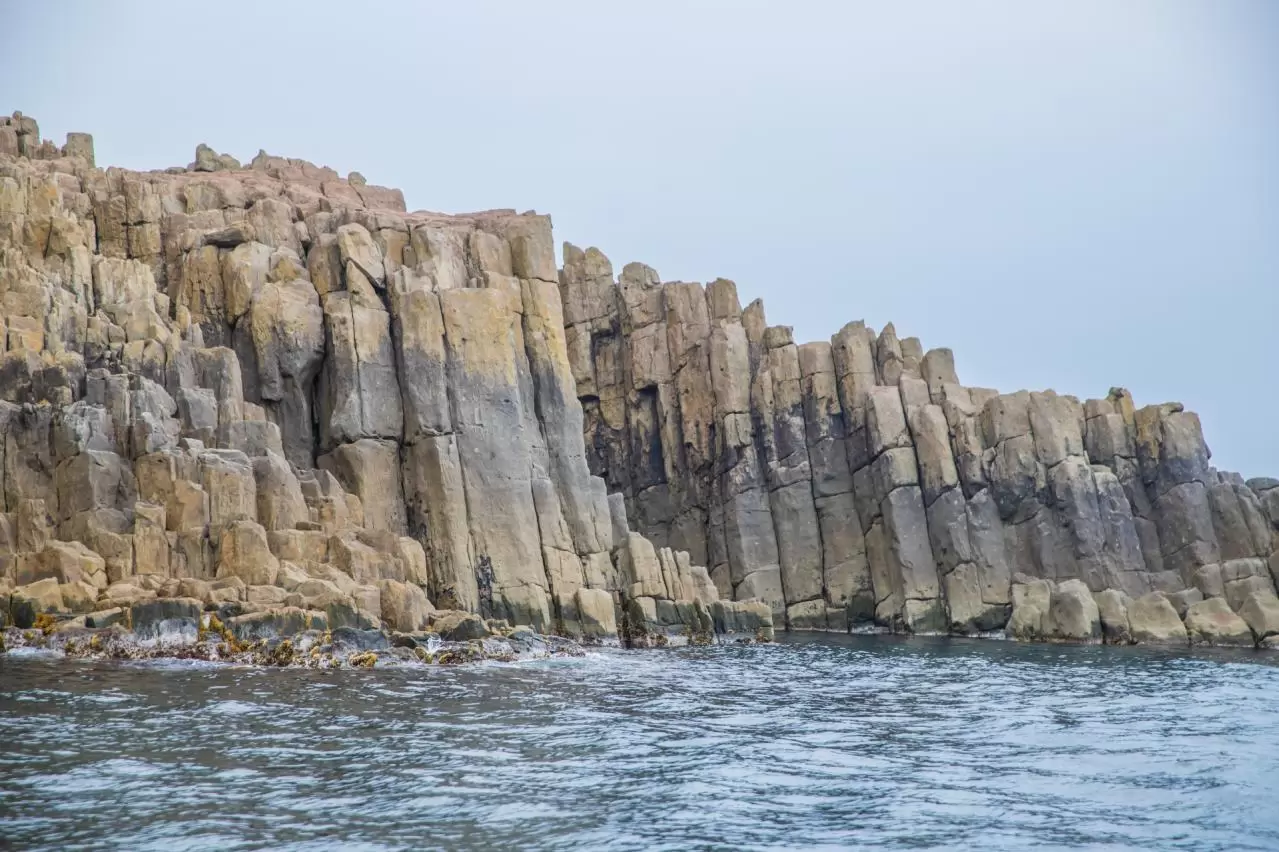
Tojinbo is one of Japan’s most famous scenic spots, located in Sakai City, Fukui Prefecture. Facing the Sea of Japan, it features a dramatic stretch of sheer cliffs extending for about 1 km, renowned for its grand and powerful scenery.
Tojinbo’s greatest hallmark is its columnar jointing. This geological formation occurs when lava cools and contracts, causing it to split into regular pillar-like shapes. At Tojinbo, a vast area of columnar jointing formed by pyroxene andesite can be seen. Columnar jointing on this scale is rare in the world, and Tojinbo is considered one of the most representative examples. Owing to its high academic value, it has also been designated a National Natural Monument and selected as one of Japan’s 100 Geological Sites.
The cliffs reach heights of 20 to 25 meters, and standing at the edge can be so awe-inspiring that it makes one’s knees tremble. The sight of the rough waves of the Sea of Japan crashing against the rocks is extremely dynamic, allowing visitors to feel the power of nature up close. The rocks also include many oddly shaped formations that resemble a lion, a candle, a beehive, and a folding screen, making them another highlight of the area.
Tojinbo is also known for its beautiful seasonal scenery. In early summer, the contrast of the blue sky and sea spreads out before you, while in autumn, the sunset over the Sea of Japan creates a spectacular view. In winter, visitors can see the harsh face of nature as rough waves and snow combine. Its sunset views are especially highly regarded, and it has been selected as one of Japan’s 100 Best Sunset Spots. It is also known as a place where the “green flash” phenomenon can be observed when conditions are right as the sun sinks below the horizon, though sightings are rare.
There are many ways to enjoy sightseeing here. In addition to the view from atop the cliffs, popular options include taking a pleasure boat to admire the scenery from the sea and viewing the area from Tojinbo Tower, which is about 55 meters tall with an observation deck at approximately 100 meters above sea level. The pleasure boat tour takes about 30 minutes and lets visitors see the highlights while feeling the power of the cliffs up close. From the tower, visitors can enjoy views not only of Tojinbo but also of the Echizen Coast, the distant Noto Peninsula, and even the Hakusan mountain range.
Notable spots include Oike, a cliff about 25 meters high, and Senjojiki, where visitors can observe a cross-section of the columnar jointing, each offering a different appeal.
In the surrounding area, old-fashioned souvenir shops and restaurants line the streets, and visitors can also enjoy local delicacies such as Echizen soba, a specialty of Fukui. In autumn, events such as Tojinbo SUNSET, where visitors can enjoy the sunset along with music and cafes, are held, further enhancing the area’s appeal as a tourist destination.
In this way, Tojinbo is a place that combines geological rarity with overwhelming natural beauty, making it one of Japan’s premier tourist destinations that reveals different expressions throughout the seasons. It continues to captivate many people as a spot where the power and beauty of nature can be experienced at the same time.
Fukui Tourist Attractions
View List
Echizen Matsushima Aquarium
Echizen Matsushima Aquarium is an interactive aquarium themed around "see, touch, and learn with fun." It features enjoyable attractions such as dolphin shows and pe...

Fukui Prefectural Dinosaur Museum
The Fukui Prefectural Dinosaur Museum, one of the largest dinosaur-themed museums in Japan, provides visitors with an opportunity to learn about dinosaurs and the hi...

Mikata Goko
Mikata Five Lakes is the collective name for five lakes located in Mihama and Wakasa towns in Fukui Prefecture. They consist of Mikata Lake, Suigetsu Lake, Suga Lake...

Maruoka Castle
Maruoka Castle, also known as Kasumiga Castle, was built by Katsuie Shibata's nephew, Katsutoyo. The name "Kasumiga Castle" comes from a legend in which a giant serp...


Shibamasa World
Shibamasa World is a large theme park covering an expansive area of 560,000 square meters facing the Sea of Japan. During the summer, it opens one of Japan's largest...

Daibo Mountain Eihei-ji
Eiheiji, the head temple of the Soto Zen school, was founded by Zen Master Dogen in the second year of the Kan'gen era (1244). Located in Fukui Prefecture, its seren...

Ichijo-dani Asakura Site
The Ichijodani Asakura Clan Ruins is a valuable archaeological site where the remains of the castle town ruled by the Asakura clan during the Sengoku period have bee...