Mikata Goko
Mikata Goko Movies


Basic Information
- Spot Name
- Mikata Goko
- Location
- Mihama Town, Fukui Prefecture (Mihama Town, Wakasa Town)
- Access
- Approximately 20 minutes by car from Wakasamiha IC on the Maizuru-Wakasa Expressway.
- Parking
- Available
- Business Hours
- Free to visit
- Contact Information
- Phone Number:0770-32-0222
- Official Website
Map
Detailed Information
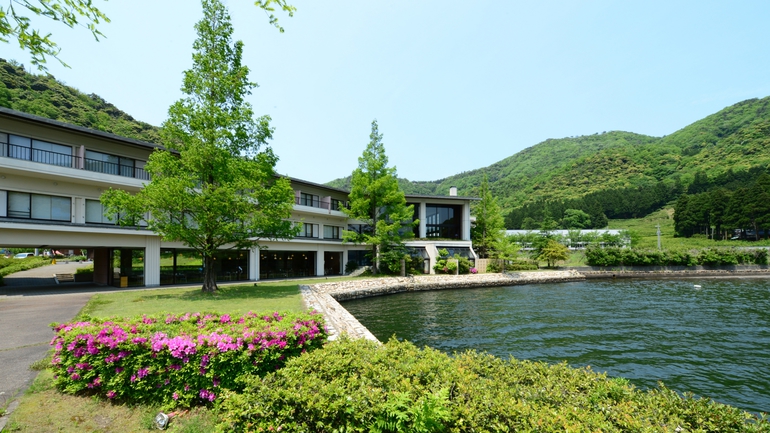
Mikata Five Lakes is the collective name for the five lakes that spread across Mihama Town and Wakasa Town in Fukui Prefecture: Lake Mikata, Lake Suigetsu, Lake Suge, Lake Kugushi, and Lake Hinata. Because each lake differs in depth, salinity, and water quality, the surface of each lake appears in subtly different colors, and the area is also known as the “Five-Colored Lakes.” It is a scenic area that represents Wakasa Bay Quasi-National Park and has been designated as a Place of Scenic Beauty by the Japanese government.
Topographically, the five lakes each have a different origin. Lake Kugushi is thought to have formed as a lagoon when a cove created by sea-level rise in the early Jomon period was later cut off by sediment accumulation. The other lakes, on the other hand, are believed to be fault lakes formed when water collected in depressions created by fault activity. In addition, long-term sediment layers known as varves can be found on the lakebeds, including Lake Suigetsu, and the approximately 70,000 years of varves in Lake Suigetsu are recognized as a global standard for chronological dating.
Each of the five lakes has its own distinctive characteristics. Lake Mikata is the only freshwater lake among the five, and is home to carp, crucian carp, small cyprinids, shrimp, and eels. From winter to spring, the traditional fishing method known as “tataki-ami” is practiced here. Lake Suigetsu is the largest of the five and is a brackish lake where seawater and freshwater mix; it is also highly important from an academic standpoint. Lake Suge is the smallest lake and, like Lake Suigetsu, is a brackish lake. It is known as a place where many wild birds, including white-tailed eagles, Steller’s sea eagles, and various ducks, can be observed. Lake Kugushi is a long, north-south-oriented brackish lake close to the sea, and seawater flows in at high tide. In the past, it was famous for shijimi clam fishing, and today it is also used as a venue for boat racing. Lake Hinata is the deepest of the five and is a saltwater lake directly connected to the Sea of Japan. It is home to many marine fish such as black sea bream, horse mackerel, and sardines, and aquaculture and fishing are actively carried out there as well.
This region has also long prospered as an important center for transportation and distribution. During the Kamakura period, fishing, salt production, and coastal shipping developed, and seafood such as sea bream, sardines, and abalone were transported to the capital as “Wakasa no bimono,” or Wakasa delicacies. In the Edo period, “Wakasa unagi” was highly prized in Kyoto, and efforts were made to transport it alive. In the midst of this history, unique food culture such as “heshiko” and “narezushi,” methods of preserving mackerel and other fish, also developed and have been passed down to the present day.
Mikata Five Lakes has also been highly valued for its natural environment, and in 2005 it was registered as a Ramsar Convention wetland. Furthermore, in 2019 it was recognized as a Japanese Agricultural Heritage site in recognition of the traditional fishing culture adapted to each lake’s characteristics, including the “tataki-ami” fishing method of Lake Mikata.
It is also extremely popular as a tourist destination. In particular, the Mikata Five Lakes Rainbow Line Prefectural Road is known as a spectacular driving route offering panoramic views of the five lakes and the Sea of Japan. Traveling along this approximately 11.2-kilometer road leads to the Rainbow Line Summit Park at the top of Mt. Bijo. It can be accessed from the first parking area by lift or cable car, and several terraces have been developed at the summit. From these terraces, visitors can enjoy a 360-degree panorama including Mikata Five Lakes, Wakasa Bay, and the vast sky above.
The summit park also features facilities such as the “Terrace in the Sky,” foot baths, a café, and a rose garden, allowing visitors to relax while taking in the scenery. There is also a spot designated as a “Sacred Place for Lovers,” making it a popular destination for couples.
In this way, Mikata Five Lakes is a highly appealing area where diverse topography and nature, a long history, and beautiful scenery come together, making it one of Japan’s premier scenic destinations where visitors can enjoy different expressions in every season.
Fukui Tourist Attractions
View List
Daibo Mountain Eihei-ji
Eiheiji, the head temple of the Soto Zen school, was founded by Zen Master Dogen in the second year of the Kan'gen era (1244). Located in Fukui Prefecture, its seren...

Fukui Prefectural Dinosaur Museum
The Fukui Prefectural Dinosaur Museum, one of the largest dinosaur-themed museums in Japan, provides visitors with an opportunity to learn about dinosaurs and the hi...


Echizen Matsushima Aquarium
Echizen Matsushima Aquarium is an interactive aquarium themed around "see, touch, and learn with fun." It features enjoyable attractions such as dolphin shows and pe...

Maruoka Castle
Maruoka Castle, also known as Kasumiga Castle, was built by Katsuie Shibata's nephew, Katsutoyo. The name "Kasumiga Castle" comes from a legend in which a giant serp...

Shibamasa World
Shibamasa World is a large theme park covering an expansive area of 560,000 square meters facing the Sea of Japan. During the summer, it opens one of Japan's largest...

Ichijo-dani Asakura Site
The Ichijodani Asakura Clan Ruins is a valuable archaeological site where the remains of the castle town ruled by the Asakura clan during the Sengoku period have bee...