Hakusan Park
The park's construction began in 1872 under the guidance of Governor Masataka Kusumoto, and additional features like hills and ponds were later added, along with various cultural facilities. One of the highlights is the Dutch-style strolling garden, which features a built mound called Miyuki-ga-oka positioned between Hyotan Pond and Lotus Pond. The park is dotted with scenic stones, stone lanterns, and numerous stone monuments, along with a diverse array of trees such as pines, plums, azaleas, and wisteria.
In 1998, the park was expanded to surround cultural facilities like the Niigata City Civic Art and Culture Center "Ryutopia." Six aerial gardens and sky corridors were developed, allowing visitors to once again walk to the Shinano River just like in the past.
Hakusan Park has become a place where not only the citizens of Niigata but also tourists can experience healing, culture, and history. With its multifaceted charm, Hakusan Park is a must-visit location when exploring Niigata.
Hakusan Park Movies


Basic Information
- Spot Name
- Hakusan Park
- Location
- 1-2 Ichibanboridori-cho, Chuo-ku, Niigata-shi, Niigata Prefecture
- Access
- 【By Train】Get off at JR Echigo Line "Hakusan" Station and walk for about 20 minutes.
【By Bus】Get off at Niigata Kotsu Bus Stop "Shiyakusho-mae" and walk for about 3 minutes.
From Niigata Station, take the "Niigata City Sightseeing Circular Bus" heading to Hakusan Park, travel time is about 10 minutes. - Parking
- Hakusan Park Parking Lots A, B, C, and D total 601 spaces (paid parking).
Standard vehicles: 100 yen per 30 minutes. - Business Hours
- Open for visitation自由
- Contact Information
- Phone Number:025-223-7403(中央区役所建設課)
- Official Website
Map
Detailed Information
Hakusan Park is a historic park located in the center of Niigata City’s Chuo Ward. It stands next to Hakusan Shrine, the principal guardian shrine of Niigata, and was originally part of the shrine grounds. Even today, it retains a landscape integrated with the shrine and is cherished as one of Niigata City’s leading places of relaxation.
Construction of Hakusan Park began in 1872, when Masataka Kusumoto, who had just been appointed prefectural governor, took the initiative. This site was a scenic spot overlooking Mount Yahiko, Mount Kakuda, and the Echigo mountain range across the Shinano River, and it had long been a popular outing destination for the people of Niigata Town, especially during festivals such as the Hakusan Festival. In 1873, it was officially approved under Daijo-kan Proclamation No. 16 as one of the earliest urban parks in Japan, and it has since been used as a place for leisure and gatherings.
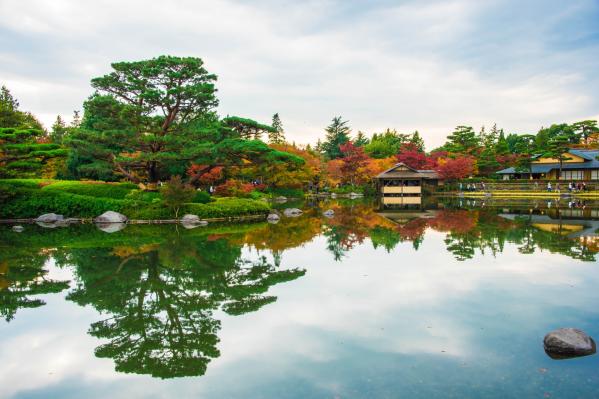
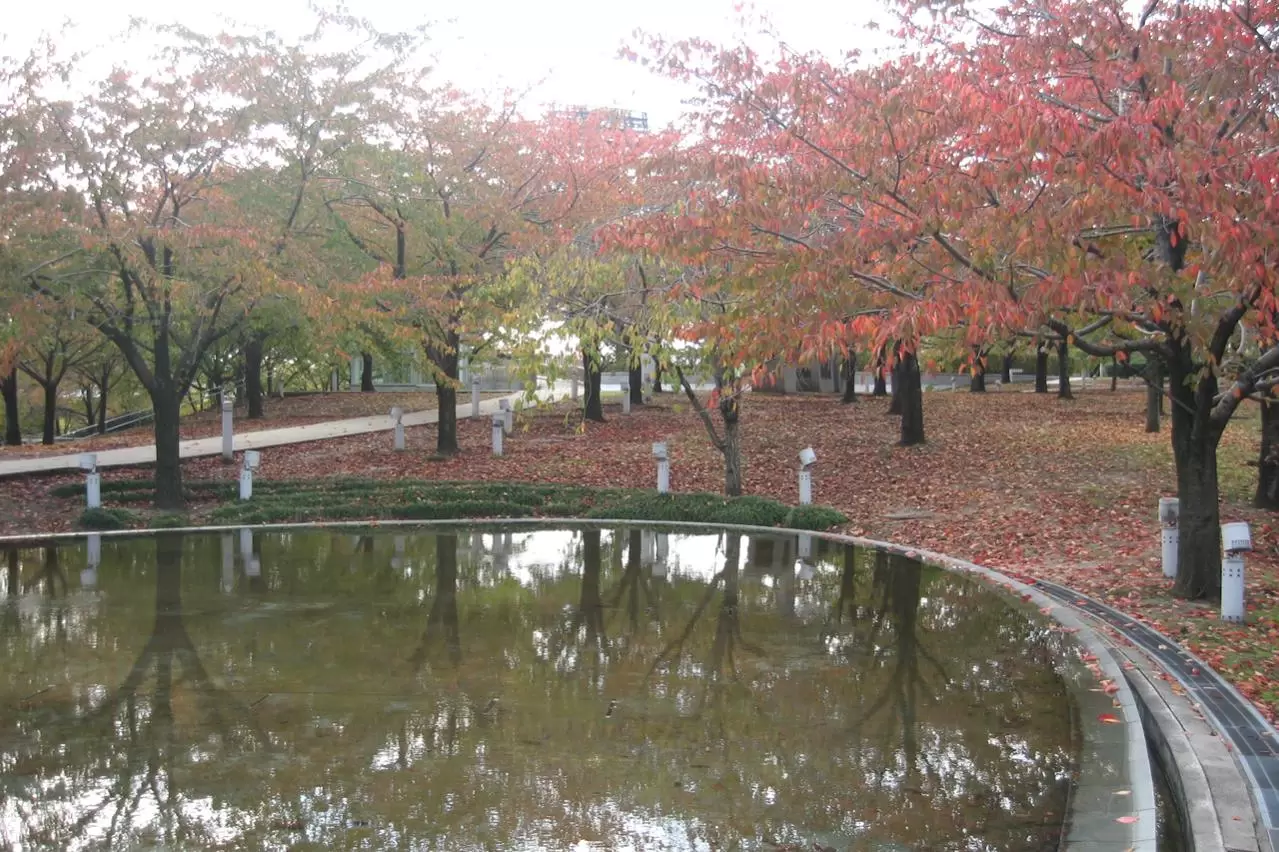
The park is designed as a Dutch-style strolling garden incorporating elements of modern Western garden design, with ponds, artificial hills, and flowering trees arranged skillfully throughout. On the east side is Hyotan Pond, and on the west side is Lotus Pond. Between the two ponds stands the artificial hill Miyukigaoka, built in 1878 to coincide with Emperor Meiji’s visit to Niigata, and it is one of the park’s highlights. Scenic rocks and stone lanterns are placed throughout the grounds, and many stone monuments and historic sites, including the Niigata Yuen Monument that explains the park’s origins, can be found here.
The plantings are diverse, centered on pines and plum trees, along with azaleas, wisteria, and other species, allowing visitors to enjoy different seasonal expressions throughout the year. In spring, cherry blossoms bloom profusely; in summer, the lotus leaves and flowers spread across Lotus Pond; in autumn, the foliage turns brilliant colors; and in winter, the snow-covered scenery captivates visitors with its seasonal beauty.
Since its creation in the early Meiji era, Hakusan Park has been maintained without major changes to its spatial composition. Its historical and scenic value has been highly regarded, and in October 2018 it was designated a National Place of Scenic Beauty. It was also selected in 1989 as one of the “100 Best Urban Parks in Japan.” Along with Ueno Park and Asakusa Park in Tokyo, Kairakuen Park in Mito, Sumiyoshi Park in Osaka, and Itsukushima Park in Hiroshima, it is one of the 25 parks that were among the first to be established in Japan.
In 1998, the park grounds were expanded, and six rooftop gardens together with connecting aerial walkways were developed around the adjacent Niigata City Performing Arts Center, Ryutopia. This made it possible to stroll through the park and continue walking toward the Shinano River area, further enhancing its appeal as a park symbolizing Niigata, the “City of Water.” The rooftop gardens linking Hakusan Park and Ryutopia are also known as a famous cherry blossom spot, and at night they are illuminated, creating a fantastical landscape.
The park also includes an area equipped with playground equipment such as swings, seesaws, and slides, where many families with children can be seen enjoying themselves. Its moderate size makes it easy to keep an eye on children, and it provides a safe environment for toddlers through elementary school students to play.
In addition, the park is home to Enkikan, a building that was relocated and reconstructed from part of the residence of a major merchant family from the Meiji period. Enkikan features a tea room and an inner reception room, and is used for cultural activities such as tea ceremony, while also being open to the public. Visitors can enjoy matcha there and spend a peaceful moment relaxing in a calm space while looking out over a Japanese garden. The view of Lotus Pond from inside the building is especially exquisite.
Scattered throughout the park are also bronze statues and monuments that convey Niigata’s history to the present day. These include a statue honoring the loyal dog Tamakou, who lived in present-day Muramatsu Town and saved human lives, as well as a bronze statue of Masataka Kusumoto, the founder of Hakusan Park, offering a glimpse into Niigata’s modern history.
Hakusan Park is a representative park of Niigata City, where history, nature, culture, and the daily life of its citizens exist in harmony. Even simply strolling through the park provides a soothing and peaceful experience, making it a place recommended for people of all ages, from children to adults.
Niigata Tourist Attractions
View List
Niigata City Aquarium Marinepia Nihonkai
Marinepia Nihonkai is one of the largest aquariums on the Sea of Japan coast, where you can encounter approximately 500 species and 20,000 aquatic organisms. Notably...

Sasagawa Nagare
Sasakawa Nagare, located from Hamashinbo (Torigoeyama) in Murakami City, Niigata Prefecture, to Samukawa (Kitsuzaki), is a beautiful coastline boasting some of the b...

Naena Falls
Naena Falls is a spectacular waterfall selected as one of Japan's Top 100 Waterfalls, boasting a height of 55 meters. It flows over the Sekigawa River, which marks t...

Sado Gold Mine
Sado Gold Mine is a historical site that boasts a 400-year history as Japan's largest gold and silver mine. It was opened in 1601, and during the Edo period, it was ...

Northern Culture Museum
The Northern Culture Museum preserves and opens to the public the former grand residence of the Ito family, one of the most affluent farming families in Niigata. The...

Yahiko Shrine
Yahiko Shrine is an ancient shrine that has long been revered as the first shrine of Echigo. Known affectionately as "Oyahiko-sama," it attracts over 200,000 visitor...

Bijinbayashi Forest
Bijinbayashi is a beech forest about 100 years old, located in Matsunoyama, Tokamachi City. It was cut down for charcoal production at the end of the Taisho era, but...

Kiyotsu Gorge
Kiyotsu Gorge is one of Japan's three great gorges, alongside the Kurobe Gorge in Toyama Prefecture and Osu Valley in Mie Prefecture. This magnificent landscape was ...