Dragon Blue underground lakes
The crystal-clear blue water adds to the cave’s mysterious atmosphere.
AI Summary
This is an AI-generated summary. Please check the official information for opening hours, fees, and closed days.
One of Japan’s three great limestone caves, Ryusendo is known for its clear blue underground lakes and striking stalactites.
Follow a public route of about 700 meters through this atmospheric limestone cave. The remarkably clear underground lakes—known for their “Dragon Blue” color—and stalactites formed over countless years are the main draws. There is also a science museum, offering more ways to explore the natural wonders of the area.
The crystal-clear blue water adds to the cave’s mysterious atmosphere.
The route brings the main sights together and lets you experience the cave’s dramatic scale.
A combined ticket also includes exhibits about limestone caves.
Explore Ryusendo Cave first, then visit the New Cave Science Museum across the way if you have time.
Ryusendo is one of Japan’s Three Great Limestone Caves, located in Iwaizumi Town, Iwate Prefecture. In 1938, it was designated a National Natural Monument as “Iwaizumi Spring Cave and Bats.” Surveys are still ongoing, and the total length of the cave is estimated to exceed 5,000 meters, with more than 4,088 meters confirmed so far and a vertical range of 195 meters. The cave contains several subterranean lakes, and the water of the “Dragon Blue” lake, celebrated for its world-class clarity, is especially famous for its dreamlike beauty.
Features of the Cave
Stalactites and Cave Formations
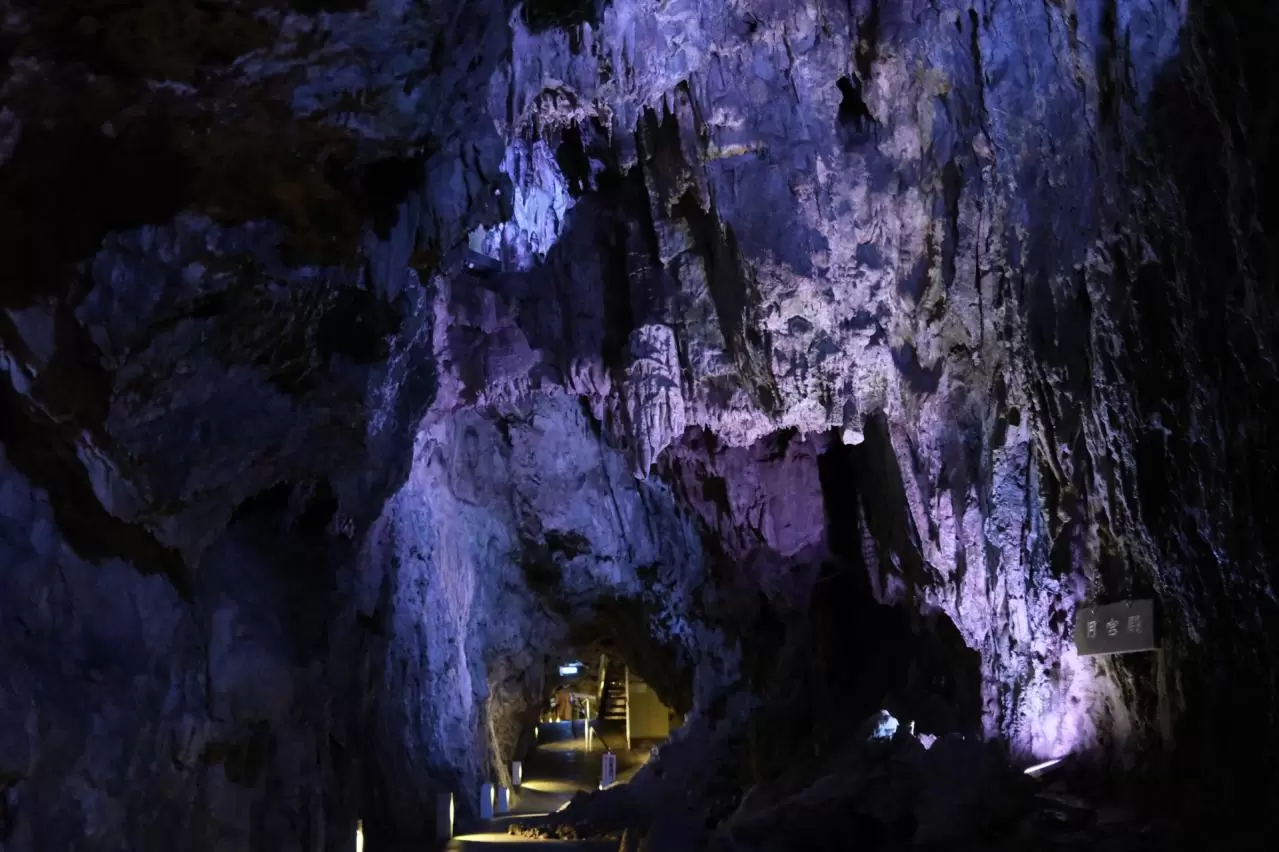
Inside the cave, visitors can admire the natural sculptural beauty of stalactites, stalagmites, and other formations created over countless years. About 700 meters of the cave are open to the public as a sightseeing route, and the straight passage was formed along a fault line. A legend once said that the cave was created by a dragon passing through it.
Subterranean Lakes
Eight subterranean lakes have currently been confirmed in Ryusendo, three of which are open to visitors.
First Subterranean Lake (35 m deep): This lake has been the subject of exploration since the 1920s, and full-scale investigation began in 1959. There is also an observation platform from which it can be viewed from above.
Second Subterranean Lake (38 m deep): Discovered in 1962 through diving surveys by Kenichiro Ochi. Water flowing into it is gathered over a 14-kilometer area from the northern forest region.
Third Subterranean Lake (98 m deep): Discovered in 1967. It is the final point of the sightseeing route, and its deep, clear blue water emits a mysterious glow.
Even farther beyond, more subterranean lakes exist, and investigations are still continuing.
Wildlife
Five species of bats inhabit Ryusendo, including the greater horseshoe bat and the “rabbit bat” (a common name used in tourist information; scientifically, this includes other species as well). It is rare in Japan for as many as five bat species to live in a single cave, so visitors are encouraged to observe them gently without touching them.
Water and Legends
The water from Ryusendo is used as part of the water supply for Iwaizumi Town and is also bottled and sold as a popular souvenir. A long-held saying claims that “drinking one sip will make you live three years longer,” and the water has been cherished for generations. Other highlights include spots named after the shapes of rocks and stalactites, such as “Dragon’s Head” and “Turtle Rock.”
Sightseeing and the Science Museum
A visit to Ryusendo begins at the entrance, where visitors pass through a layer of air known as the “air curtain,” and can enjoy the fantastical stalactite formations and the blue-glowing lake waters. The cave lighting has been converted to LED, enhancing the mystical atmosphere with light effects.
Across from the entrance is the Ryusen Shinto Science Museum (commonly known as the Ryusendo Shinto Science Museum), which can be entered with a combined ticket. Using about 200 meters of limestone cave as an exhibition space, visitors can observe stalactites of various shapes. Artifacts such as pottery, ornaments, and shells have also been excavated from a site believed to date to the early Jomon period.
As one of Japan’s Three Great Limestone Caves, Ryusendo is a precious natural heritage site and has been designated a National Natural Monument. Its total length is estimated at over 5,000 meters, and it brings together subterranean lakes of exceptional clarity, stalactites shaped over vast spans of time, and a diverse ecosystem. Through the approximately 700-meter public route, visitors can experience the mysterious and dreamlike beauty of nature’s creations. It is a place that leaves a lasting impression, offering the wonder of nature and the depth of history at the same time.
Morioka Hachimangu Shrine is located in Morioka City, Iwate Prefecture, and was founded in 1680 (the 8th year of the Enpo era) by the 29th lord of the Nanbu clan, Sh...
Koiwai Farm Makiba Park is one of Japan’s largest private comprehensive farms, boasting a history of over 130 years since its establishment in 1891. Covering an area...
Chuson-ji Temple was founded in 850 by the high priest Jikaku Daishi Ennin and had large-scale structures built by Kiyohira, the first ruler of the Oshu Fujiwara cla...
The Iwate Bank Red Brick Building was established in 1911 as the main branch of Morioka Bank. This beautiful red brick structure was designed by the architectural fi...
Geibikei is a beautiful gorge located along the Iwai River, which flows into Ichinoseki City and originates from Mount Kurikoma. Its approximately 2-kilometer stretc...
The Iwate Prefectural Museum of Art was opened in 2001 in the new cultural zone of Central Park in Morioka City. The museum's collection focuses on works by local ar...
The Iwate Tsunami Memorial, located within the Takada Matsubara Tsunami Restoration Memorial Park in Iwate Prefecture, opened on September 22, 2019. This facility ai...
Tono Furusato Village is a wonderful place where nostalgic rural landscapes unfold. It has recreated an old-fashioned village by relocating traditional curved houses...