Visit Osamu Dazai’s childhood home
A memorable place to connect with the roots of the writer, especially for literature fans.
AI Summary
This is an AI-generated summary. Please check the official information for opening hours, fees, and closed days.
Explore the world of Osamu Dazai through his childhood home and literary memorabilia in a quiet, reflective setting.
Shayokan preserves and opens to the public the home where writer Osamu Dazai was born. The impressive Meiji-era building blends Japanese and Western styles. Inside, you can see handwritten manuscripts, personal belongings, and first editions—making it a rewarding stop for literature fans and anyone interested in historic architecture or modern Japanese culture.
A memorable place to connect with the roots of the writer, especially for literature fans.
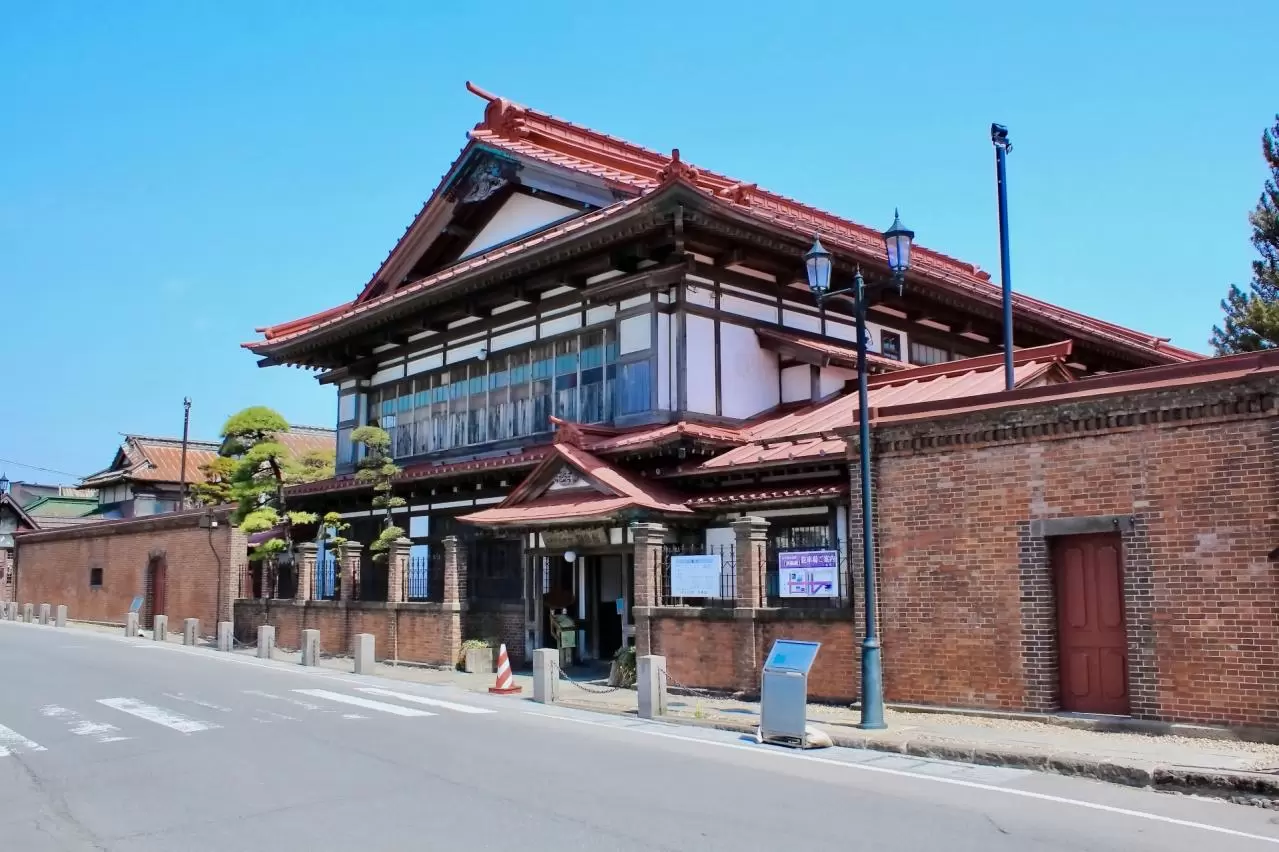
Its traditional Japanese roof and Western-influenced details, along with its spacious grounds, offer a glimpse of life in the era.
Handwritten manuscripts and personal belongings offer a fuller picture of Dazai as a person.
Start at Kanagi Station and visit Shayokan; if time allows, continue to nearby places connected with Dazai.
The Dazai Osamu Memorial Museum “Shayokan” is a memorial museum located in Kanagi-cho, Goshogawara City, Aomori Prefecture, preserving and opening to the public the birthplace of the literary master Osamu Dazai. Built in 1907 by Dazai’s father, Genuemon Tsushima, this grand residence is now designated an Important Cultural Property of Japan. In addition to its architectural value as the home of a wealthy merchant in the Meiji period, it is cherished by literary fans and many tourists as a place deeply connected to Dazai Osamu’s life and works.
Architecture and Historical Background
Shayokan is a particularly valuable example of Meiji-era wooden architecture: a large residence in a Japanese-Western eclectic style with an irimoya roof. It was constructed mainly from hiba (Thujopsis dolabrata var. hondae), a local Aomori wood, and the site covers approximately 680 tsubo (about 2,200 square meters). In addition to the main house, there are several storehouses, including a rice storehouse, library storehouse, inner storehouse, pickle storehouse, miso storehouse, and charcoal storehouse, along with a garden pond.
The design was handled by Sakichi Horie, a master carpenter known for Western-style architecture in the Tsugaru region, and construction was carried out by his fourth son, Isaburo Saito. The construction cost at the time was about 40,000 yen, equivalent to roughly 7,000 bales of rice, illustrating the Tsushima family’s wealth. Surrounded by a red-brick wall, the imposing mansion is highly regarded as a representative example of modern Japanese-style residential architecture, and in 2004 it was designated an Important Cultural Property of Japan.
Osamu Dazai and Shayokan
Osamu Dazai (real name: Shuji Tsushima) was born in this house on June 19, 1909, as the tenth child of the Tsushima family. He spent his childhood here until entering a former middle school in Aomori City at the age of 13.
In his autobiographical work *An Annual of Crises*, Dazai wrote of this house: “My father built a terribly large house. It has no charm whatsoever; it is simply enormous.” This suggests how strongly his birthplace influenced his literary world.
Following postwar land reform, the Tsushima family lost much of its extensive landholdings, and the mansion itself was transferred to another family in 1948. In 1950, it began operating as the inn “Shayokan,” named after Dazai’s major work *The Setting Sun* and the poem “Shayo” inscribed on the fusuma sliding doors inside the building. It became popular among literary fans as a place where they could stay in Dazai’s birthplace. In March 1996, it was purchased by the former Kanagi Town (now Goshogawara City), restored to its original appearance, and then opened to the public as the Dazai Osamu Memorial Museum.
Exhibits and Highlights
Inside the museum, exhibition rooms have been created using the former storehouses, displaying many valuable items such as the cape Dazai wore in his lifetime, writing tools, handwritten manuscripts, letters, first editions, and books translated and published overseas. Some exhibits are changed seasonally or for special exhibitions, offering new discoveries with each visit.
The living spaces of the time—such as the rooms, guest rooms, and dining room—have also been preserved and opened to the public, allowing visitors to experience the atmosphere in which the young Dazai lived. The architectural style and furnishings that convey the lifestyle of the Meiji-era upper class are also among the highlights.
Nearby Information and Access
The Dazai Osamu Memorial Museum “Shayokan” is about a 7-minute walk from Kanagi Station on the Tsugaru Railway. However, trains and local buses are infrequent, so it is recommended to check timetables in advance. Access by car is also possible, and parking facilities are available nearby.
In addition, the former Tsushima Family New Residence, where Dazai lived in evacuation during the war, still stands about a 4-minute walk from Shayokan. Visiting both sites offers further insight into another aspect of his life.
The Dazai Osamu Memorial Museum “Shayokan” is a valuable cultural facility where visitors can encounter not only the life and literary world of the great writer Osamu Dazai, but also Meiji-period architectural culture and the social background of the Tohoku region. It is a literary and cultural destination worth visiting at least once, not only for admirers of Dazai’s works, but also for those interested in modern Japanese literature and historical architecture.
"The Nebuta House Wa Rasse" in Aomori City is a facility where visitors can experience the charm of the Nebuta Festival throughout the year. Opened in 2011 and locat...
Hirosaki City Apple Park spans approximately 9.7 hectares and features 80 varieties of apple trees with a total of 2,300 trees. From early August to mid-November, vi...
Juuni Lake is located in the western part of the Shirakami Mountains and consists of a group of 33 lakes and ponds. It is believed to have originated from a landslid...
Sukayu Onsen is a traditional hot spring area with a history of about 300 years, located on the slopes of Mount Hakkoda. It is particularly famous for its large mixe...
On the west coast of the Shimokita Peninsula, in Sai Village, lies a breathtaking spot known as "Fukue Cape." A series of white-green odd-shaped rocks stretch for ab...
Aomori Prefectural Tourist Center ASPAM serves as an information hub for tourism and local products in Aomori Prefecture, showcasing the魅力 of the region to visitor...
Mount Osore is regarded as one of Japan's three great sacred mountains, alongside Mount Hiei and Mount Koya. Located on the Shimokita Peninsula, this spiritual site ...
Hirosaki Park is a vast park located in the center of Hirosaki City, Aomori Prefecture, centered around Hirosaki Castle. It is the northernmost castle tower in Japan...