Takayama Inari Shrine
Basic Information
- Spot Name
- Takayama Inari Shrine
- Location
- 〒038-3305 147-1 Washinosawa, Ushigata Town, Tsugaru City, Aomori Prefecture, Japan
- Access
- Take the Konan Bus Kodomari Line (via Jusan) from Goshogawara Station (approximately 40 minutes), get off at Takayama Shrine Entrance, and take a taxi for about five minutes. It takes about 30 minutes by car from Goshogawara Station on the JR Gono Line.
- Parking
- Available
- Business Hours
- [Worship] 9 AM to 5 PM
- Regular Holiday
- Open year-round.
- Contact Information
- Phone Number: 0173-56-2015
- Official Website
Map
Detailed Information
Takayama Inari Shrine is a historic shrine located in Tsugaru City, Aomori Prefecture, known for its blessings of abundant harvests, maritime safety, and prosperous business. It is especially famous for its Senbon Torii, a thousand vermilion torii gates that line up in layers, creating a fantastical scene that has been called the “Fushimi Inari of Tohoku.” In recent years, it has also drawn nationwide attention through social media.
History and Origins
The exact date of its founding is unclear, but it is said to have been established by the Ando clan, a powerful local family that ruled this area from the Kamakura to Muromachi periods. In the precincts, a large sacred site once formed around Sannobof Hiyoshi Shrine, with thirteen temples and shrines lined up, and it prospered as a place of prayer for the Ando clan. However, in 1443, it was burned down in an attack by the Nanbu forces and fell into ruin.
Later, in 1701, according to legend, a retainer named Terasaka Kichiemon, said to have been involved in the Ako Incident, arrived here after wandering with the sacred object of Inari Okami and enshrined it at this site. This is said to have revived the worship of Inari in this sacred place of Takayama, and since then it has been supported by the deep faith of local people.
Deities and Blessings
Takayama Inari Shrine enshrines the following three deities as its principal gods:
- Ukanomitama-no-Mikoto: deity of bountiful harvests and prosperous business
- Satahiko-no-Mikoto: deity of opening paths and warding off bad directions
- Omiyanome-no-Mikoto: deity of performing arts and matchmaking
Prayers are accepted for prosperity in all aspects of life, including agriculture, fishing, industry, commerce, household safety, and recovery from illness, and worshippers visit from all over Japan as well as from the local area.
Senbon Torii and the Sacred Garden
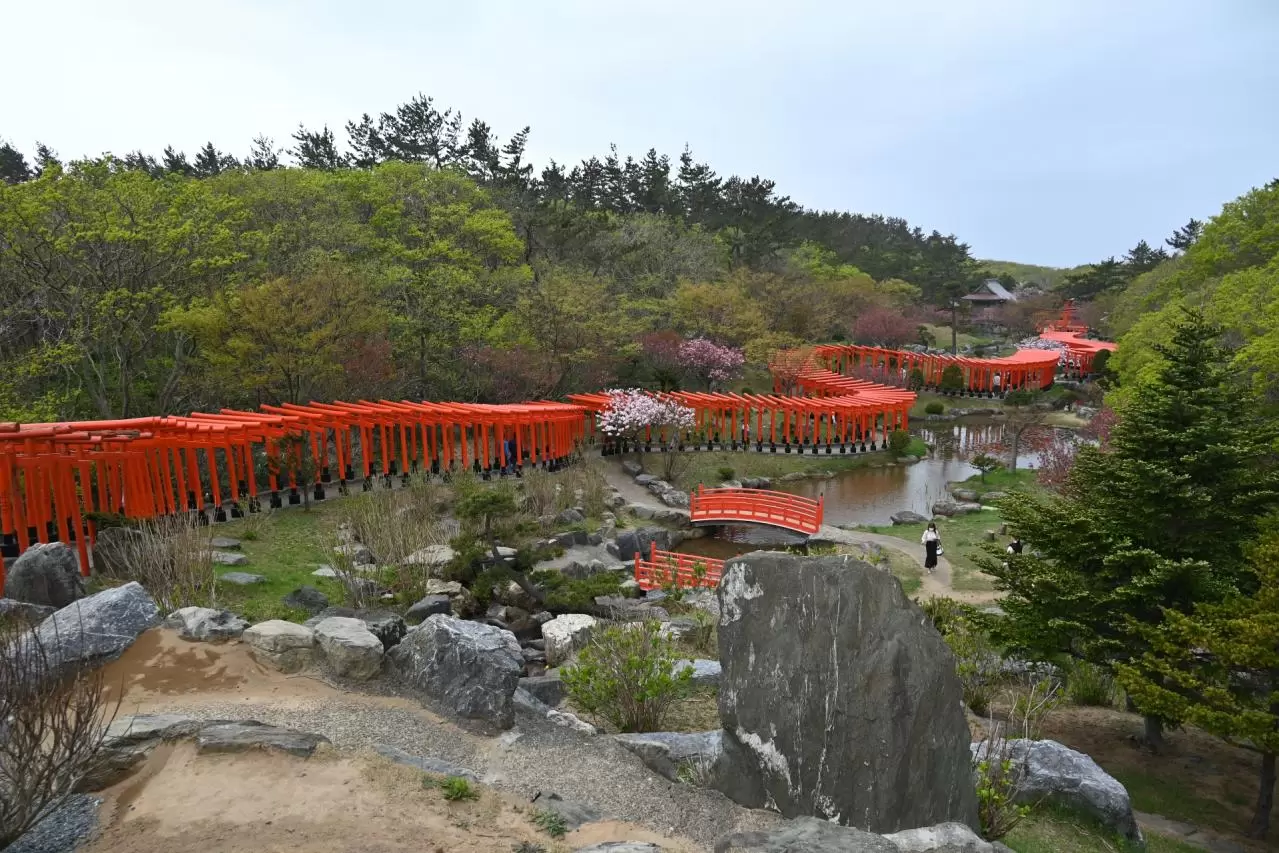
The greatest highlight of Takayama Inari Shrine is the Senbon Torii, where vermilion torii gates about two meters high are arranged in a winding line. Originally, this began when local farmers dedicated torii gates in gratitude for fulfilled prayers. Due to the terrain, they were arranged not in a straight line but in a unique pattern that resembles a winding dragon. As a result, an unparalleled and fantastical landscape was created, and today hundreds of torii gates stand thanks to dedications from all over the country.
Beyond the Senbon Torii lies the sacred garden, where hundreds of fox statues that have completed their role at Inari shrines across Japan are enshrined. The mystical sight creates an atmosphere as if one has stepped into another world. Depending on the season, flowers such as hydrangeas, double cherry blossoms, wisteria, and lotus bloom in harmony with the torii gates, creating a richly colored landscape.
Highlights Within the Grounds
- Worship Hall (Main Shrine): Located on high ground, the stately shrine building welcomes visitors. In summer, “hana-chōzu,” a water basin decorated with floating hydrangeas, adds a sense of seasonal charm.
- Myōbusha: A shrine dedicated to the white foxes serving Inari Okami, popular among female worshippers as a power spot for matchmaking and marital harmony.
- Ryujingū: A shrine building standing beside Ryujin Pond. The Senbon Torii continues beyond the taiko bridge. It is also revered as a water deity for protection against fire.
- Observatory: A spot overlooking the full view of the Senbon Torii. It is a superb photo location where the winding torii gates resemble a red dragon.
Seasonal Appeal
Spring: Double cherry blossoms bloom in profusion, beautifully harmonizing with the vermilion torii gates.
Summer: Lush greenery, hydrangeas, and lotus flowers create a mystical atmosphere.
Autumn: Autumn leaves color the grounds, bringing a peaceful and gentle time.
Winter: Covered in snow, the precincts are filled with silence and mystery, and the vermilion of the torii gates stands out all the more.
Annual Events
The most important festival is the Annual Grand Festival, held every year on September 25. It is solemnly observed with a procession of priests heading to the worship hall, offerings before the deity, and performances of Tsugaru kagura. At the eve festival, kagura dances are performed by firelight, filling the grounds with a fantastical atmosphere.
Facilities on the Grounds
- Sacred Talismans Counter: Distributes goshuin stamps, omamori charms, ema wooden votive plaques, and more.
- Rest Area: Newly established in May 2023. In addition to soba, udon, and light meals, local souvenirs are also sold.
- Lodging Hall: Equipped with accommodation facilities, recommended for those who wish to fully experience the atmosphere of the shrine.
Takayama Inari Shrine is a representative power spot in Aomori Prefecture, where the magnificent scenery of the Senbon Torii, deep history, and seasonal natural beauty come together in harmony. Visitors can enjoy not only worship, but also nature walks, photography, and traditional events. If you are looking for a moment of peace and serenity, why not visit at least once?
Takayama Inari Shrine Movies


Aomori Tourist Attractions
View List
Nebuta Museum Wa Rasse
"The Nebuta House Wa Rasse" in Aomori City is a facility where visitors can experience the charm of the Nebuta Festival throughout the year. Opened in 2011 and locat...

Aomori Prefecture Tourist Information Center (ASPAM)
Aomori Prefectural Tourist Center ASPAM serves as an information hub for tourism and local products in Aomori Prefecture, showcasing the魅力 of the region to visitor...

Hirosaki Castle
Hirosaki Castle is located within Hirosaki Park in Hirosaki City and is an important cultural property that features the northernmost existing tenshu (keep) in Japan...

Dazai Osamu Memorial Hall (Shayokan)
The Dazai Osamu Memorial Hall "Shayokan" is the birthplace of the renowned author Dazai Osamu. It is a magnificent residence built by his father, Tsushima Gen'emon, ...

Aomori Prefectural Misawa Aviation Science Museum
The Aomori Prefectural Misawa Aviation Science Museum is an aviation and science museum themed around "the sky" and "flight," located adjacent to Misawa Airport. The...

Hachinohe Yatai Village (Hasshoku Center)
Yasushi Center, also known as the kitchen of Hachinohe citizens, features about 60 specialty shops lined up along a length of 170 meters. It offers a rich variety of...

Hakkoda Ropeway
The Hakkoda Ropeway is a stunning spot to enjoy the magnificent nature of the Hakkoda Mountains. Since its opening in October 1968, it continues to attract visitors ...

Tsuru-no-Mai Bridge
Tsuru-no-Mai Bridge in Aomori Prefecture is a 300-meter-long, the longest wooden triple-arch bridge in Japan. It spans the beautiful Tsugaru Fujimi Lake, reflecting ...