Lake Towada
Basic Information
- Spot Name
- Lake Towada
- Location
- 486 Okuse Towadako-han Kyuboya, Towada City, Aomori Prefecture
- Access
- From JR Shin-Aomori Station by JR Bus:
Approximately 3 hours and 10 minutes (in summer)
Approximately 4 hours (in winter) - Parking
- Available
- Business Hours
- Open for visits.
- Contact Information
- Phone Number:0176-75-1531
- Official Website
Map
Detailed Information
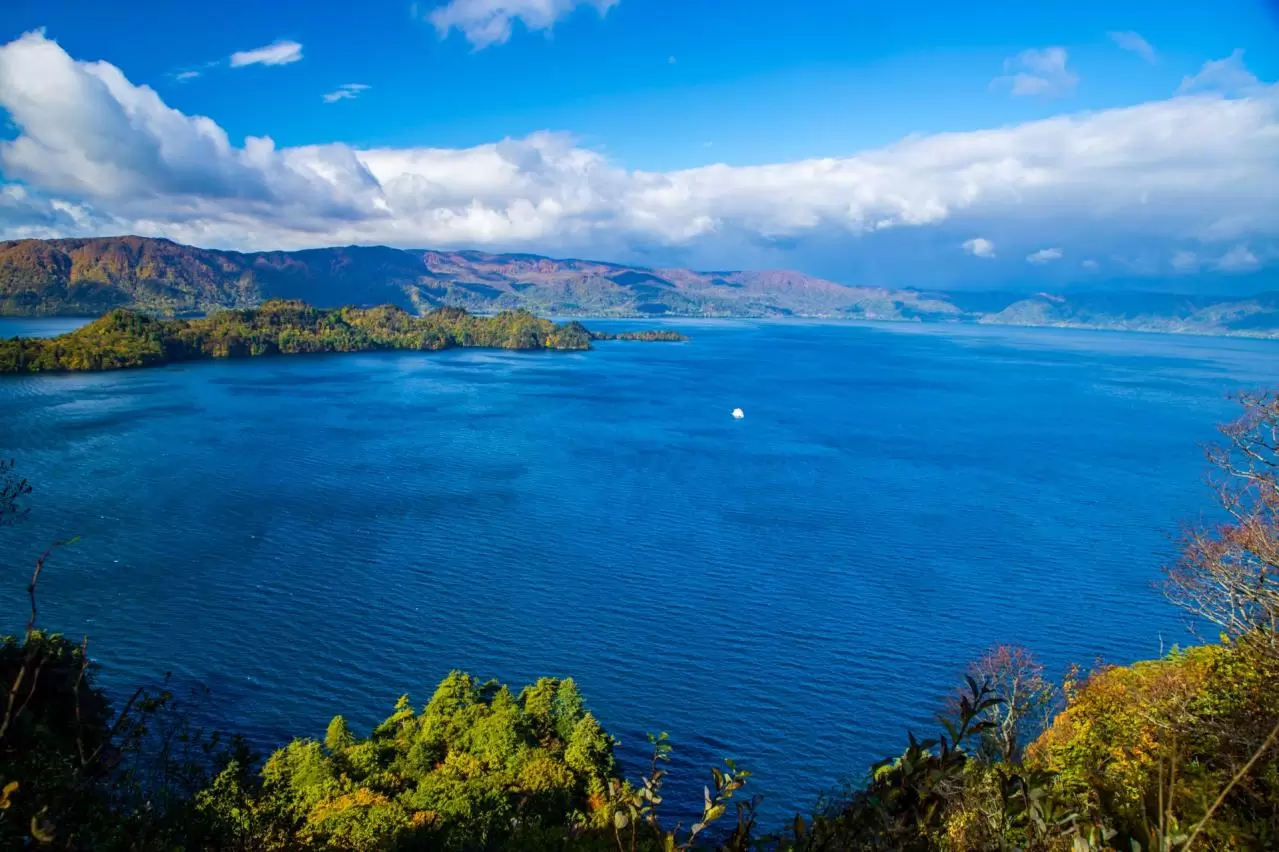
Lake Towada is a magnificent and mysterious caldera lake that straddles the border between Aomori and Akita Prefectures. One of the most scenic highlights of Towada-Hachimantai National Park, the lake sits at an elevation of about 400 meters and creates a world wrapped in silence, reflecting the sky and surrounding mountains like a mirror.
From the fresh green of spring, to the deep green of summer, to the autumn foliage that resembles a brocade painting, and finally to the solemn snowy landscapes of winter, it reveals a different face in every season.
A Vast Scale and a Mysterious Landform
Lake Towada is a “double caldera lake” formed by volcanic activity that began around 200,000 years ago. Rainwater gradually collected over many years in the depression created by a massive eruption, giving rise to the lake we see today.
Its shoreline stretches about 46 kilometers, and its deepest point reaches 327 meters, making it the third deepest lake in Japan. This dramatic terrain offers a tangible sense of the Earth’s energy and the flow of vast, ancient time.
In the center of the lake, the Oirase Peninsula and Nakayama Peninsula extend into the water, with the deepest area known as “Naka-ko” lying between them. Although located in a northern region, the lake rarely freezes completely, and because it remains quietly covered with water even in winter, it is also called the “Lake of Mystery.”
Nature and Life in Every Season
Around the lake, natural forests of beech and Mongolian oak spread out, forming a rich woodland where diverse plants and animals coexist. In spring, mountain cherry blossoms bloom in abundance, and from May to June, fresh greenery envelops the lakeshore. From mid- to late October, the outer rim mountains turn brilliant shades of red and gold, creating a stunning brocade-like landscape.
In winter, the entire area is covered in snow and transforms into a serene silver world. The strength and beauty of nature felt in that stillness gently soothe the heart.
Walking along the trails, you can appreciate how each small piece of moss, stone, and wildflower is part of this vast natural environment.
Activities to Enjoy on the Lake and in Nature
At Lake Towada, you can enjoy a wide variety of outdoor experiences throughout the year.
Sightseeing cruises: The route connecting Yasumiya and Nenokuchi is especially popular. On this approximately 50-minute lake cruise, you can admire the surrounding mountains and the beauty of nature reflected on the water’s surface.
Canoeing and SUP: From April to November, you can enjoy activities that let you glide quietly across the lake. The appeal lies in the feeling of becoming one with nature.
Cycling and hiking: Along the lakeshore and on routes around the outer rim, you can enjoy refreshing cycling and full-scale hiking.
Winter nature experiences: From January to March, tours that use snowshoes or snow ramblers to walk across snowy fields and observe icicles and frozen waterfalls up close are also popular.
Places Where History and Myth Live On
Towada Shrine — A power spot steeped in dragon-god worship
Situated on the Nakayama Peninsula, Towada Shrine has long been known as a sacred place of dragon-god worship. According to legend, the ascetic monk Nansobo fought a dragon and eventually transformed into one himself, later enshrined as “Seiryu Daigongen.”
Set deep within the forest, the shrine buildings offer visitors a special place of quiet and spiritual healing.
The Maiden Statue — Love left behind by Kotaro Takamura
On the lakeshore in the Yasumiya area stands The Maiden Statue, the final work of poet and sculptor Kotaro Takamura. Erected in 1953, this bronze statue was created based on his wife Chieko and is imbued with his affection and poetic sensibility.
The pedestal is made of black granite from Fukushima Prefecture, Chieko’s hometown, adding another moving layer to the story behind the work.
The Flavors and Healing of Lake Towada
Lake Towada is also known as a famous place for himemasu, a type of landlocked salmon. Tender and rich in fat, himemasu can be enjoyed as sashimi, salt-grilled fish, or simmered in sweet sauce. Other local specialties include smelt dishes and wine produced in the Towada area.
In recent years, “Towada Sauna,” which harmonizes with the lakeside natural environment, has also been attracting attention. A sauna experience in nature offers exceptional relaxation for both mind and body.
During the tourist season, sightseeing boats operate and a full range of nearby accommodation facilities are available, making it a destination that can be enjoyed both on a day trip and with an overnight stay.
Lake Towada is a special place where nature, culture, and myth exist in harmony. Every visit brings new discoveries and inspiration, and each season offers its own distinct charm.
Lake Towada Movies


Aomori Tourist Attractions
View List
Aomori Gyosaisen Center
The "Aomori Gyosai Center," located just a 5-minute walk from Aomori Station, is a historic market known locally as "Furukawa Market" with over 40 years of history. ...

Mount Osore
Mount Osore is regarded as one of Japan's three great sacred mountains, alongside Mount Hiei and Mount Koya. Located on the Shimokita Peninsula, this spiritual site ...

Hachinohe Yatai Village (Hasshoku Center)
Yasushi Center, also known as the kitchen of Hachinohe citizens, features about 60 specialty shops lined up along a length of 170 meters. It offers a rich variety of...

Nebuta Museum Wa Rasse
"The Nebuta House Wa Rasse" in Aomori City is a facility where visitors can experience the charm of the Nebuta Festival throughout the year. Opened in 2011 and locat...

Aomori Prefecture Tourist Information Center (ASPAM)
Aomori Prefectural Tourist Center ASPAM serves as an information hub for tourism and local products in Aomori Prefecture, showcasing the魅力 of the region to visitor...


Koganezaki Furofushi Onsen
Ogonzaki Furofushi Onsen is a hot spring inn located at the scenic Ogonzaki in Fukura Town, Aomori Prefecture, at the foot of the World Heritage Site, Shirakami-Sanc...

Sukayu Onsen
Sukayu Onsen is a traditional hot spring area with a history of about 300 years, located on the slopes of Mount Hakkoda. It is particularly famous for its large mixe...