Engaging animal exhibits
The exhibits make it easier to observe animals’ natural movements, offering more than a traditional viewing experience.
AI Summary
This is an AI-generated summary. Please check the official information for opening hours, fees, and closed days.
This interactive zoo lets you see animals behaving naturally up close and is a popular choice for families.
Known as Japan’s northernmost zoo, Asahiyama Zoo is famous for exhibits designed to showcase animals’ natural behaviors. Creative displays featuring penguins and polar bears help keep visitors of all ages engaged. Seasonal events add to the appeal, but the zoo can get busy, so allow plenty of time for your visit.
The exhibits make it easier to observe animals’ natural movements, offering more than a traditional viewing experience.
The winter penguin walk and summer evening opening give the zoo a different feel throughout the year.
Popular exhibits featuring penguins, polar bears, seals, and other animals are all here.
Start with the popular exhibits, then explore the rest of the zoo at a relaxed pace, fitting in feeding and activity sessions along the way.
Asahiyama Zoo in Asahikawa City, Hokkaido, is Japan’s northernmost zoo, which opened in 1967. By making use of its cold climate and devising exhibits that allow visitors to observe animals in their natural state, it has become a highly popular tourist destination nationwide.
A pioneer of original “behavioral exhibits”
The greatest feature of Asahiyama Zoo is its “behavioral exhibit” approach. This is an exhibition method designed to bring out the animals’ natural abilities and behaviors so that visitors can observe them up close in a more natural setting. Going beyond the conventional idea of “exhibits for viewing,” it aims to create “exhibits for feeling and thinking,” and is highly regarded from the perspective of animal welfare as well.
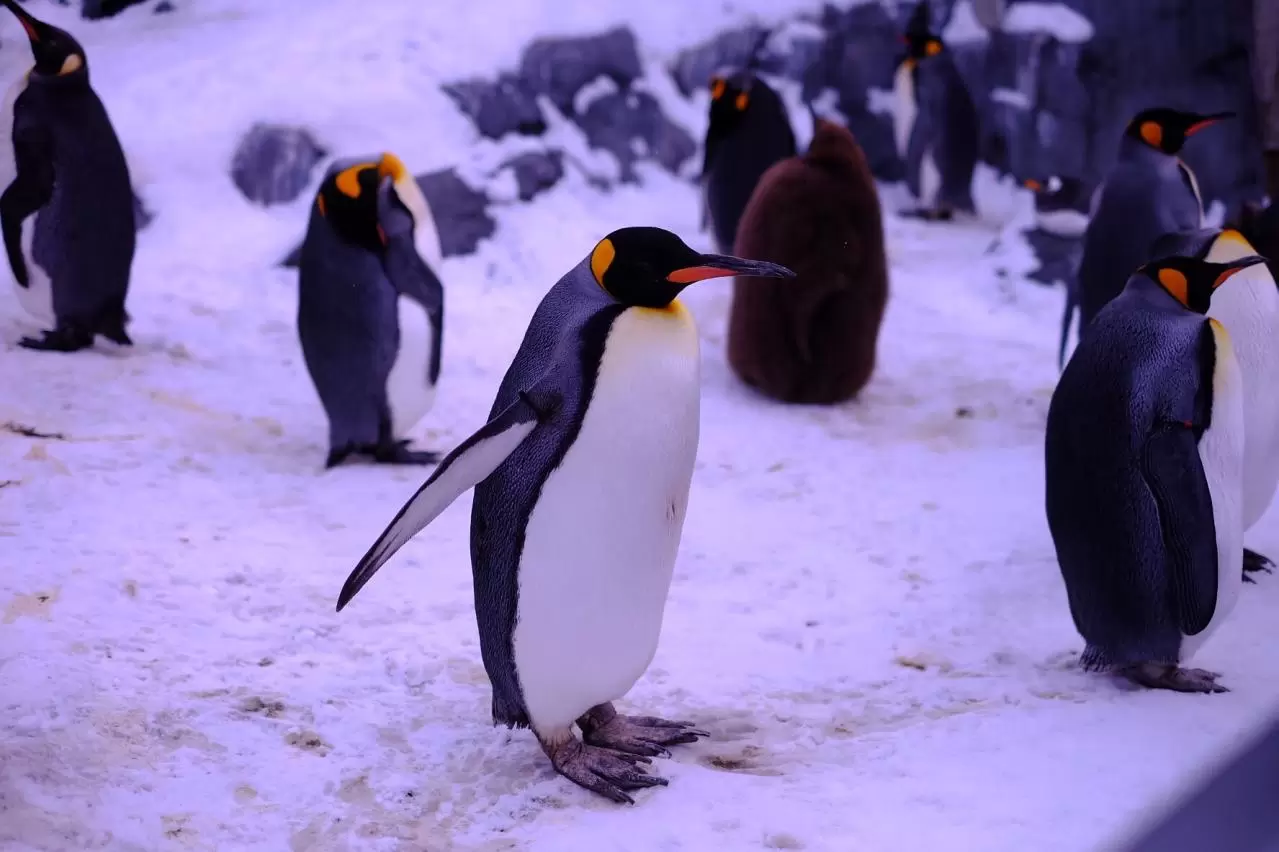
For example, at the Penguin House, visitors can watch penguins swimming overhead and beside them from inside a transparent underwater tunnel. At the Seal House, they can see the seals’ speedy movements up close as they move up and down a cylindrical tank, captivating everyone who visits.
In addition, at the Polar Bear House, visitors can observe polar bears diving powerfully into the water, and their dynamic movements are extremely popular. At the Orangutan House, visitors can see orangutans crossing a 17-meter-high tower on wires in an aerial walk, and especially in summer, this thrilling mode of movement draws a lot of attention. At the Hippopotamus House, visitors can also observe hippos swimming underwater from below through glass, and the graceful movement of their massive bodies is striking.
There are also many exhibits focused on animals unique to Hokkaido. At the Red-Crowned Crane House, Ezo Deer Forest, and Hokkaido Animal House, visitors can learn about the ecology and living environments of animals native to the region. In 2022, the Ezo Brown Bear House, focused on the brown bears that represent Hokkaido’s wildlife, opened. With an indoor free-range area modeled after the natural environment of Shiretoko, visitors can now observe brown bears more closely.
Seasonal events are also a major attraction
At Asahiyama Zoo, a variety of seasonal events are held throughout the year. In summer, “Night Zoo” is held, and during the Obon holiday period the zoo remains open at night. Visitors can observe animals at night, when they are usually not seen, as well as the active behavior of nocturnal animals; in particular, the moment when wolves howl in the distance leaves a deep impression on visitors.
Meanwhile, the popular winter event “Penguin Walk” features penguins waddling along a snow-covered course without fences, delighting visitors with their adorable姿.
“Mogumogu Time” and “One-Point Guide”
“Mogumogu Time,” where visitors can watch animals actually eating, is one of Asahiyama Zoo’s popular attractions. Since the schedule differs depending on the animal, planning your route after checking the day’s notice board or the official website will make for a more fulfilling experience.
The zoo also offers “One-Point Guide” sessions, in which keepers provide direct explanations about the animals they care for, offering a valuable opportunity to learn more deeply about animal ecology and characteristics.
The zoo’s philosophy and role
Asahiyama Zoo is more than just a tourist facility; it fulfills the following four important roles.
1. A place for recreation
It provides an environment where visitors can spend enjoyable time with beautiful animals and feel the strength and preciousness of life.
2. A place for education
Through zoo guides, outdoor observation sessions, animal classes, visiting lessons, and more, it offers opportunities for both children and adults to learn about the current state of wild animals and their relationship with humans.
3. A place for conservation
It carries out planned breeding for endangered animals, aiming to preserve species and eventually return them to the wild, while also providing opportunities to think about the natural environments that are the animals’ homes. To date, Asahiyama Zoo has received 20 breeding awards for animals including polar bears.
4. A place for research and study
By utilizing various data obtained through animal care, the zoo contributes to wildlife conservation, research on zoonotic diseases, and studies on coexistence between humans and animals.
The phrase “What we convey is life,” the guiding principle of Asahiyama Zoo, expresses the hope that through contact with animals, visitors will feel the warmth and preciousness of life and gain an opportunity to seriously confront the meaning of life.
Changes in visitor numbers and the path to revival
In its early years, the zoo developed as a facility loved by the local community, but in 1996, annual visitor numbers fell to 260,000, bringing it to the brink of closure. However, after the introduction of behavioral exhibits, innovations in display content, and the construction of new facilities, visitor numbers surged. In 2004, the zoo recorded 1.449 million visitors, surpassing one million for the first time.
In 2006, annual visitors reached 3.04 million, and in 2007, 3.072 million. For a regional city like Asahikawa, with a population of about 350,000, attracting such numbers is truly remarkable.
Today, the zoo is visited not only by tourists from Hokkaido and all over Japan, but also by school excursion groups and travelers from overseas, including Taiwan and Hong Kong. As a zoo supported by people of all ages, it enjoys high praise both domestically and internationally.
Asahiyama Zoo in Asahikawa City is a place filled with learning and inspiration, where new connections between people and animals continue to be created through experiences that confront the meaning of life. If you visit Hokkaido, why not stop by and experience it for yourself?
Goryokaku Park is a national special historic site known as the location of the end of the Boshin War. It is where the old shogunate troops led by Takeaki Enomoto an...
Otaru Canal was created to assist the logistics of Otaru Port, which was an important gateway for the development of Hokkaido. Completed in 1923, this canal is speci...
Otaru Sakaimachi Street is the main street for sightseeing in Otaru, located just a 5-minute walk from Otaru Canal. Lined with historical buildings constructed from ...
The "Sapporo Hitsujigaoka Observation Hill," accessible in just 30 minutes from downtown Sapporo, is a picturesque spot where you can forget the hustle and bustle of...
Odori Park is a special park spanning approximately 1.5 km and 7.8 hectares in the center of Sapporo, the capital of Hokkaido. Established in 1871 as a firebreak, it...
Shiretoko Goko consists of five enchanting lakes surrounded by primeval forests, captivating the hearts of visitors with its tranquility and abundant nature. The lak...
Noboribetsu Onsen is well-known for its abundant hot water and diverse mineral springs, making it extremely popular in Japan. It is particularly referred to as the "...
Cape Kamui is a beautiful tourist spot located in the northwest part of the Shakotan Peninsula in Hokkaido, offering a breathtaking view of the Sea of Japan from a h...