Distinctive underground architecture
One of the few fully underground museums in the world, with an exterior that also makes an impression.
AI Summary
This is an AI-generated summary. Please check the official information for opening hours, fees, and closed days.
This distinctive underground museum is a good choice for visitors who want to take their time exploring contemporary art.
Located on Nakanoshima in Osaka, this fully underground museum focuses on contemporary art from Japan and around the world dating from 1945 onward. Exhibitions change frequently, so there is often something new to discover. The free space on B1 is also worth a stop, especially for architecture fans and museum-goers.
One of the few fully underground museums in the world, with an exterior that also makes an impression.
The collection focuses on Japanese and international works from the postwar era onward, with exhibitions changing frequently.
The B1 free space offers an easy way to get a feel for the museum.
Add the museum to a tour of Nakanoshima's museums for an easy half-day outing.
The National Museum of Art, Osaka is a rare fully underground art museum in Japan, with all of its exhibition galleries located below ground, situated in Nakanoshima, Kita Ward, Osaka City. It opened in 1977 and was originally operated by reusing the building of the “Expo Museum of Art,” which had been constructed in Expo ’70 Commemorative Park in Suita, Osaka, for the 1970 Japan World Exposition. However, due to issues such as the aging of the facility, it was newly built and relocated to its current site in 2004. Today, as one of the seven museums operated by the National Museum of Art, Japan, it plays an important role as a center for contemporary art in Japan and abroad.
Architecture and Design
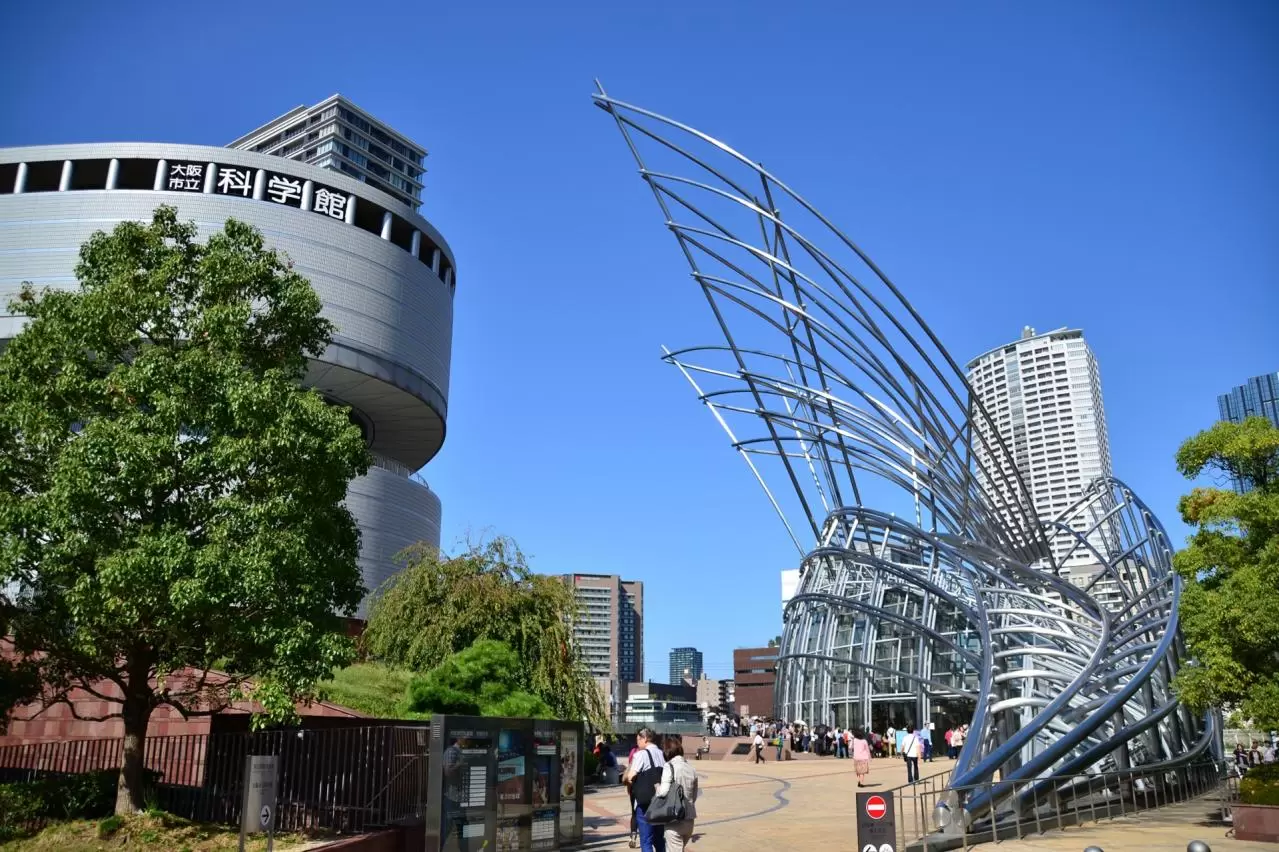
The current museum was designed by Caesar Pelli & Associates Japan, led by the world-renowned Argentine-born architect César Pelli. On the ground level, an impressive steel monument inspired by the vitality of bamboo and the development and growth of contemporary art stands as a striking symbol of the museum. Its innovative and futuristic design has become an icon of the institution.
Although it is entirely underground, the museum offers a comfortable and open exhibition space for visitors, and the first basement floor features a freely accessible public zone. This area serves as a place for interaction between people and art, allowing visitors to encounter art in a natural and welcoming environment.
Collection and Exhibitions
The National Museum of Art, Osaka houses approximately 8,200 works as of March 2022, focusing primarily on contemporary art from Japan and abroad created after 1945. While most of the collection consists of paintings, sculptures, prints, and photographs, the museum also actively embraces new genres such as video and performance art, and boasts one of Japan’s leading collections of contemporary art.
In its permanent exhibitions, works such as The Laughter of Innocence by Spanish master Joan Miró and pieces by American sculptor Alexander Calder are displayed throughout the year, while the exhibition lineup changes frequently through special exhibitions. The presentations are characterized by thematic curatorial concepts, introducing works from fresh perspectives and offering new discoveries with every visit.
The collection has also grown through donations of private collections, including the Ohashi Kaichi Collection (828 works), which reflects postwar art trends in the Kansai region, a group of works by printmaker Yozo Hamaguchi (about 400 works), and more than 900 poster works by artist Tadanori Yokoo.
Educational Programs and Events
Beyond hosting exhibitions, the National Museum of Art, Osaka actively engages in a wide range of educational and outreach activities, including lectures, workshops, symposia, events for children, and programs for parents and children to enjoy together. As a place for learning that deepens understanding and interest in art, it provides opportunities for experience and discovery to visitors of all ages.
Convenience and Surrounding Area
Its current location in the western Nakanoshima area is in the heart of Osaka City, making accessibility one of its major attractions. Within walking distance are cultural facilities such as the Nakanoshima Museum of Art, Osaka, and the Osaka Science Museum, and the area is bustling with visitors who come for museum-hopping and cultural experiences.
In addition, a café and restaurant were newly opened inside the museum in 2024, making it possible for visitors to relax between art-viewing sessions.
As a hub for sharing Japanese contemporary art with the world, the National Museum of Art, Osaka is a museum that combines a high level of artistic value with public accessibility. Through its original architectural design, substantial collection, and diverse educational and cultural activities, it offers every visitor a meaningful artistic experience.
Osaka Castle is an important architectural landmark deeply connected to Japan’s history. It started as the predecessor of the Osaka Honganji Temple (Ishiyama Honganj...
The Umeda Sky Building is a 40-story skyscraper located in the Umeda area of Osaka, standing at 173 meters tall, and was completed in 1993. This building was designe...
America Mura, or "Amemura", located west of Shinsaibashi Station in Osaka, is renowned as a hub of youth culture in the Kansai region. Centered around Triangle Park,...
Tsutenkaku, a symbol of Osaka, was built in 1912 as part of Luna Park. The original Tsutenkaku stood at 75 meters tall, boasting the title of "the tallest in the Eas...
The Osaka City Museum of Fine Arts was opened in 1936 in Tennoji Park. It consists of the main building constructed on the site of the former Sumitomo family's main ...
Kuromon Ichiba Market is an arcade shopping street located in Nipponbashi, Chuo Ward, Osaka, stretching approximately 580 meters in length. About 150 shops line the ...
Namba Grand Kagetsu (NGK) is a theater often referred to as the hall of Japanese comedy culture. Operated by Yoshimoto Kogyo, this theater boasts the largest capacit...
The Osaka City Central Public Hall, completed in 1918 based on a donation from stockbroker Einosuke Iwamoto, is a beautiful iron-framed brick building in the Neo-Ren...


![[vlog]大阪京都2Days|グルメとアートを楽しむ日|美術館巡り|購入品紹介](https://i.ytimg.com/vi/sK37Q-FD6vo/mqdefault.jpg)