Seawater Pond
A rare Tokyo scene where seawater from Tokyo Bay flows in and out with the tide.
AI Summary
This is an AI-generated summary. Please check the official information for opening hours, fees, and closed days.
A peaceful garden in central Tokyo where you can enjoy Edo-period landscaping and the changing tides.
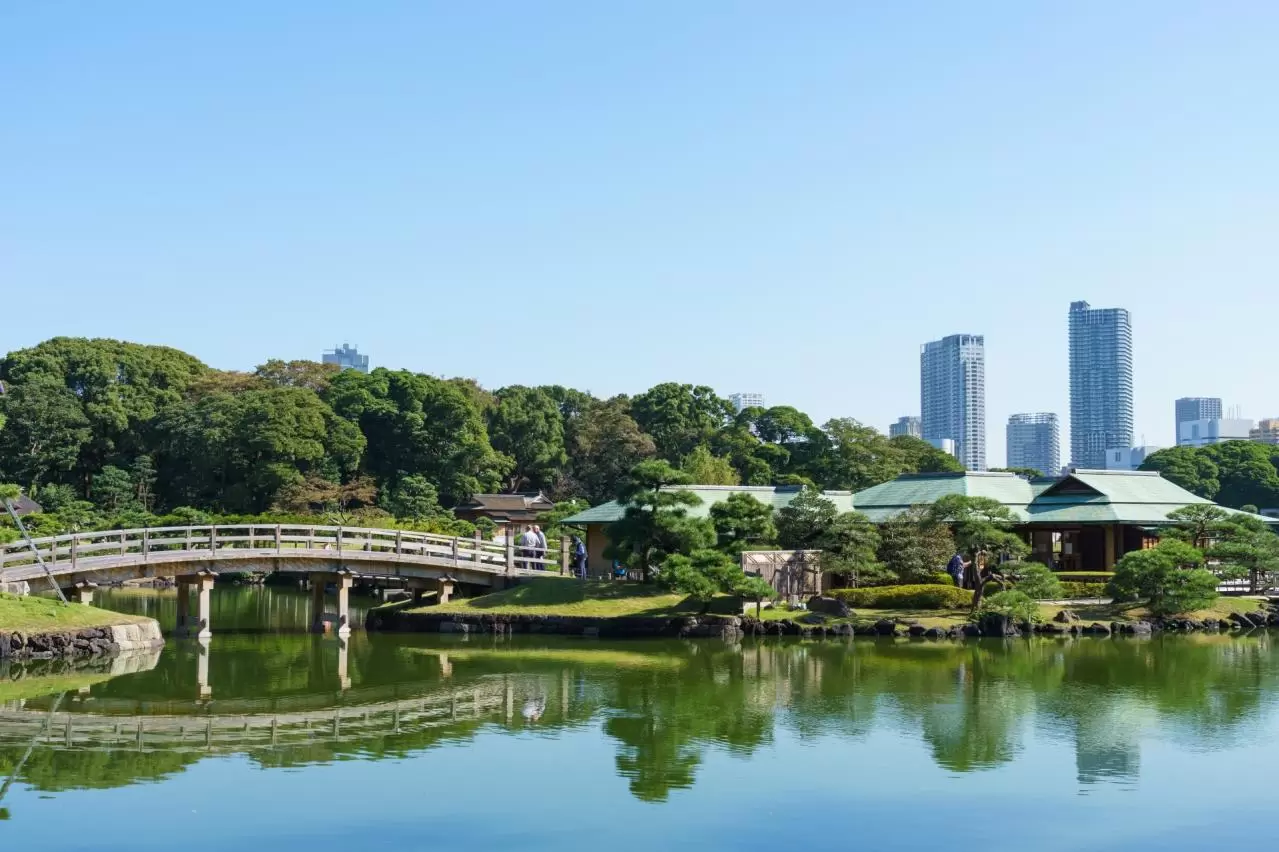
Centered on a seawater pond connected to Tokyo Bay, Hama-rikyu Gardens is a rare traditional Japanese garden in the heart of the city. Enjoy its history and seasonal scenery, from cherry blossoms and irises to migratory birds, with the city’s skyscrapers creating a striking contrast. You can get a feel for the garden even on a short visit; comfortable walking shoes are recommended.
A rare Tokyo scene where seawater from Tokyo Bay flows in and out with the tide.
Once associated with the shogun’s family, the garden offers a glimpse of the past in the middle of the city.
Look out for cherry blossoms, irises, and migratory birds throughout the year.
Take a leisurely loop around the seawater pond, stopping by the teahouses and pine trees along the way.
Hamarikyu Gardens is a historic Japanese garden located in Chuo City, Tokyo. Although it is set in the modern urban environment of central Tokyo, it is beloved by many for combining the traditions that have continued since the Edo period with the beauty of nature.
History and Origins
This area was originally used as a falconry ground for the shogun’s family, and until the Kanei era (1624–1644), it was entirely marshland filled with reeds. In 1654, Matsudaira Tsunashige, the younger brother of Tokugawa Ietsuna, the fourth shogun, obtained permission from the shogun to reclaim land from the sea and build a villa called “Kofu Hama-yashiki.”
Later, when Tsunashige’s son, Tokugawa Ienobu, became the sixth shogun, the residence became a villa for the shogun’s family and was renamed “Hama Goten.” Thereafter, successive shoguns expanded and renovated the garden, and it took on almost its present form during the reign of Tokugawa Iesada, the eleventh shogun.
After the Meiji Restoration, it was used as an imperial villa and renamed “Hamarikyu.” However, many valuable structures such as teahouses, as well as trees, were lost in the Great Kanto Earthquake and in air raids during World War II. On November 3, 1945, it was bestowed upon Tokyo Metropolitan Government, developed and opened to the public in April 1946. In 1948, it was designated a National Place of Scenic Beauty and Historic Site, and in March 1952, the garden and the surrounding water area were designated a Special Place of Scenic Beauty and Special Historic Site, earning high recognition for its historical and cultural value.
Features and Highlights of the Garden
Tide-Influenced Pond
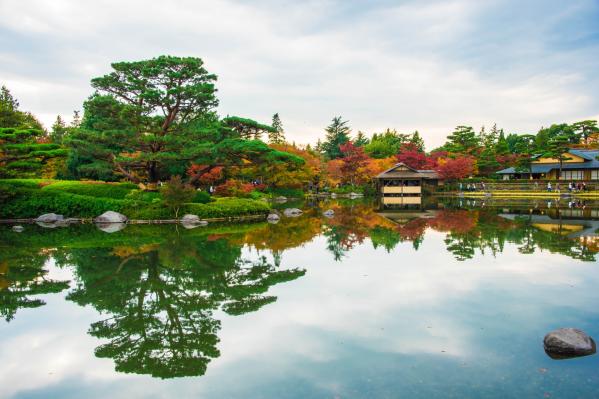
The “shioiri no ike” tide-influenced pond in the center of the garden draws in seawater from Tokyo Bay, and its water level and scenery change with the ebb and flow of the tide. While this style was once seen in other Edo-period gardens, Hamarikyu Gardens is now the only garden in Tokyo where seawater actually flows in and out. The pond is home to fish such as black sea bream, sea bass, and gobies, and visitors may also see seagulls and migratory birds.
Nakashima Teahouse and Otsutai Bridge
You can cross the Otsutai Bridge to reach Nakajima no Ochaya, a teahouse located in the middle of the pond. This teahouse was restored in 1983 based on historical materials after being lost in the Great Kanto Earthquake and other events. Here, you can enjoy matcha and Japanese sweets while taking in views of the pond and surrounding nature. The scenery of the teahouse and bridge reflected on the water is especially charming.
Three-Hundred-Year-Old Pine
This giant pine tree is said to have been planted to commemorate the great renovation carried out by Tokugawa Ienobu, the sixth shogun. Its majestic form and thick, low-spreading branches make it one of the garden’s most iconic sights.
Matsu no Ochaya
The “Matsu no Ochaya” teahouse was built during the era of Tokugawa Iesada, the eleventh shogun. It was destroyed by fire during the war but was restored in 2010 based on historical records. Free special guided tours are usually offered on Thursday afternoons, where visitors can learn more about the building’s history and structure.
Nature Through the Seasons
Spring (plum blossoms, cherry blossoms, rape blossoms)
In spring, about 100 cherry trees, including Somei Yoshino and yaezakura varieties, color the garden. In particular, during the peak bloom period in April, opening hours are extended by one hour, and the garden becomes bustling with many hanami visitors. Also, from late March to early April, rape blossoms bloom, creating a beautiful pairing with the cherry blossoms in the flower field.
Early Summer (Japanese irises)
In early June, about 350 Japanese iris plants reach full bloom. Their blue, purple, and white flowers bring a refreshing touch of color to the early summer garden.
Summer (yellow cosmos)
Around August, yellow cosmos decorate the garden’s flower field. Their vivid yellow and orange blossoms stand out in the summer sunlight, captivating visitors.
Winter (migratory birds)
In winter, ducks and other migratory birds arrive at the tide-influenced pond, allowing visitors to feel a sense of life amid the stillness.
Kasai Rinkai Park, located along Tokyo Bay, is an urban oasis packed with attractions that can keep you entertained all day long. Its excellent access, just a one-mi...
Tokyo Solamachi is a large commercial facility located at the base of Tokyo Skytree®, boasting over 300 shops. It features a variety of fashion items, miscellaneous ...
Yasukuni Shrine was established in 1869 by the order of Emperor Meiji and enshrines over 2.466 million spirits of those who died in wars from the late Edo period to ...
Tokyu Kabukicho Tower is a super high-rise complex located in Shinjuku's Kabukicho area, featuring 48 floors above ground and 5 below, with a height of 225 meters. O...
The National Art Center, Tokyo is located in Roppongi, known as the art hub of Japan's capital city, Tokyo. This museum opened in 2007, and its architectural design ...
The Futako Tamagawa Rise Shopping Center, directly connected to Futako Tamagawa Station, is a trendy spot featuring sophisticated shops, popular restaurants, and fir...
Kabukiza is renowned as a prestigious theater for Japan's traditional performing art, Kabuki. Established in 1889, it witnessed the "Dan-Kiku Era" when famous actors...


![[大都会のオアシス] 浜離宮恩賜庭園 東京都中央区 Hama-rikyu Gardens in Chuo city Tokyo](https://i.ytimg.com/vi/je2ROsXbxEA/mqdefault.jpg)