The Bookshelf Theater is a signature attraction
Surrounded by towering bookshelves about 8 meters high, this striking space is one of the museum’s defining sights.
AI Summary
This is an AI-generated summary. Please check the official information for opening hours, fees, and closed days.
A distinctive cultural museum where books, anime, and art come together.
A landmark of Tokorozawa Sakura Town, this complex brings together library, museum, and art spaces. Highlights include the Bookshelf Theater and anime-related exhibitions, alongside a café and shops. There is plenty to explore, so allow enough time for your visit.
Surrounded by towering bookshelves about 8 meters high, this striking space is one of the museum’s defining sights.
Explore a range of genres, including the Manga and Light Novel Library and the EJ Anime Museum.
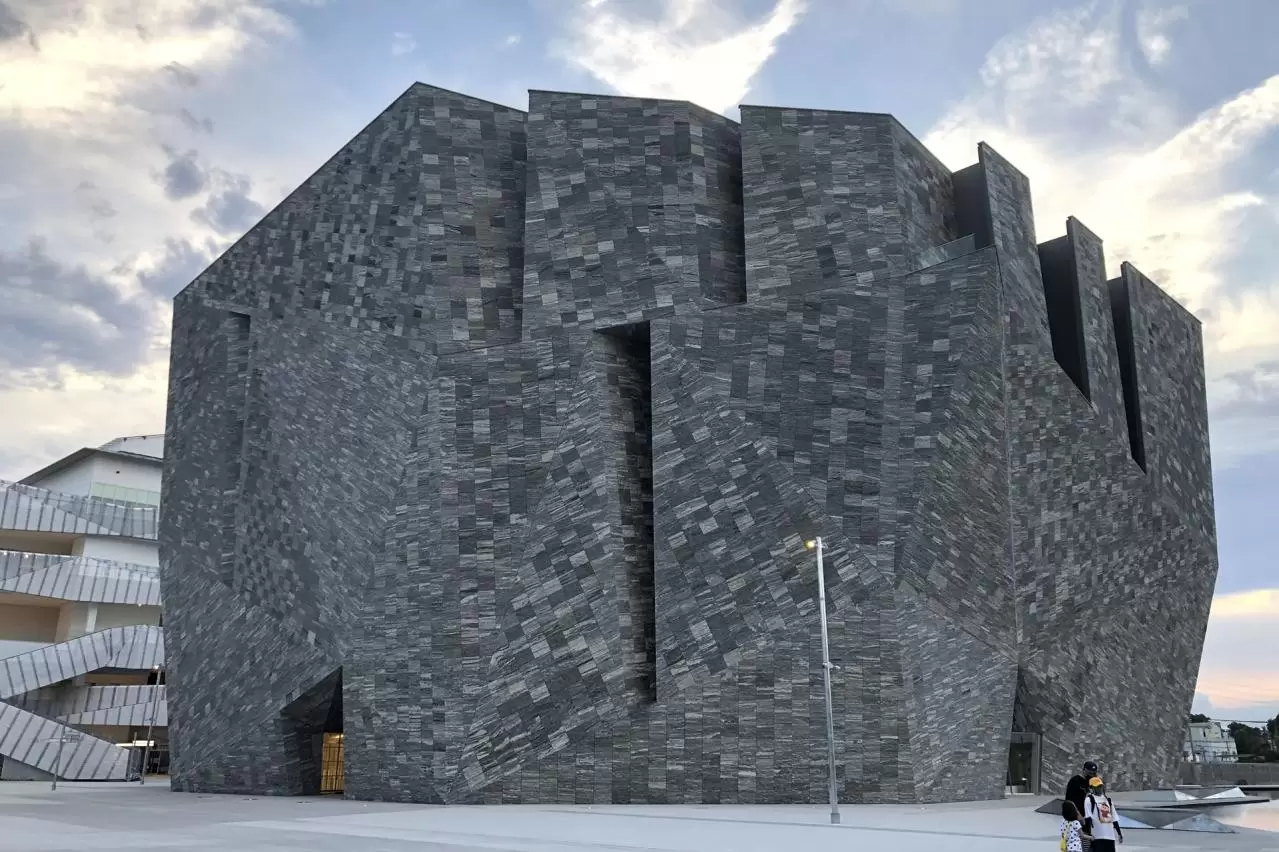
Designed by Kengo Kuma, the distinctive building offers plenty of photo opportunities inside and out.
Start at the Bookshelf Theater, then visit the exhibitions that interest you and take a break at the café.
Floor Guide
▸ 1F
This garden recreates the former “Aogaki Sanso,” designed by Seijun Nishihata of Sora Botanical Garden, with the Chinese tulip tree beloved by Minamoto Yoshizono at its center, along with the seven autumn herbs and weeping cherry trees. Visitors holding a ticket for the Manga & Light Novel Library may enter the garden (closed in severe weather).
A roughly 1,000 m² space that presents experimental exhibitions with bold compositions, displaying all things with stories to tell—nature, science, art, museums, fashion, the environment, society, and more. Science becomes artistic, museums become fashionable, art comes with stories, and the past meets the future. It is a place to discover something new where one thing intersects with another.
A space that shares and develops the world of “light novels and manga” conveyed by KADOKAWA together with readers. It houses nearly all light novels published by the KADOKAWA Group, as well as light novels from various other publishers, making it Japan’s most extensive library for light novels. Through a variety of approaches, including the development of genre classifications for light novels and manga, it showcases their appeal. It also carries KADOKAWA’s children’s books, totaling approximately 35,000 volumes.
▸ 2F
A wide selection of original goods unique to the Kadokawa Musashino Museum, cute items for everyday use, and various crafts made in Musashino. The shop also offers merchandise inspired by the museum’s distinctive architecture.
A wide variety of original products, including original sweets made with sweet potatoes, a specialty of Tokorozawa.
▸ 3F
EJ stands for “Entertainment Japan.” This museum presents anime, a cultural form that Japan is proud to share with the world, from its own unique perspective. It introduces anime as works created by many forms of creativity—original works, studios, cast, staff, and more—and showcases the full scope of entertainment surrounding them, including books, films, games, and merchandise.
▸ 4F
A library space like a “town,” where you can feel the breath and bustle of books. Under the supervision of Director Seigo Matsuoka, approximately 25,000 books are arranged according to “nine contexts” for understanding the world. It is a groundbreaking and advanced model of book selection unlike anything in conventional libraries.
A chamber of wonders supervised by Hiroshi Aramata, crafted with a special focus on how to present “imagination” and “anima.” Filled with every kind of surprise, it offers a wide variety of experience-focused exhibits, from the birth of life to a mechanical zoetrope, from the essence of a Wunderkammer to the pinnacle of the academic.
A space surrounded by giant bookshelves approximately 8 meters high. KADOKAWA publications, along with the private collections of Minamoto Yoshizono, Kenkichi Yamamoto, Michizo Takeuchi, and Morisane Hokama, are displayed together. The Book Hall Theater also regularly screens projection mappings based on the concept of “playing with books, interacting with books.”
▸ 5F
A space for exploration and exchange that uncovers and shares the appeal of the Musashino region, stretching across Saitama, Chiba, and Tokyo and now home to 10 million people.
Showcasing the charm of Musashino, this restaurant serves original local-production, local-consumption cuisine.
Hitsujiyama Park is located on the eastern side of Chichibu City and in spring, the "Shibazakura Hill" is covered with a beautiful carpet of flowers, attracting many...
Tokorozawa Aviation Memorial Park is a vast public park, approximately 50 hectares in size, established on the site of Japan's first airport. Inside the park, there ...
The symbol of Kawagoe, the "Toki no Kane" (Bell of Time), is a historic bell tower that rises above the town's traditional warehouse-style buildings. It was founded ...
Moomin Valley Park is a theme park located by Lake Miyazawa in Hannō City, Saitama Prefecture, where visitors can experience the Nordic worldview. It is part of the ...
The thoughts of the Finnish fairy tale author Tove Jansson are scattered throughout the park. It is an enchanting spot that evokes the world of her representative wo...
Nagatoro is located in the Chichibu district of Saitama Prefecture and is particularly famous for the "Nagatoro Iwadatami," a popular tourist destination. The Iwadat...
Saitama Stadium 2002 is the largest soccer-only stadium in Japan, located in Saitama City, Saitama Prefecture. It opened in 2001 and was constructed for the FIFA Wor...