Saigo Takamori Statue
Saigo Takamori Statue Movies


![[50歳の大冒険]⑥桜島満喫の後は西郷隆盛像と維新ふるさと館を見学👍鹿児島の歴史が分かりました😄🎶](https://i.ytimg.com/vi/AjTEfZQ93nE/mqdefault.jpg)


Basic Information
- Spot Name
- Saigo Takamori Statue
- Location
- 〒892-0853 4 Shiroyamacho, Kagoshima City, Kagoshima Prefecture
- Access
- Take the Kagoshima City Tour Bus from JR Kagoshima Chuo Station for 10 minutes and get off at the Saigo Statue stop, which is just a short walk away. It’s about an 8-minute walk from the "Asahidori" streetcar stop.
- Parking
- Please use the nearby paid parking.
- Business Hours
- Open for viewing.
- Contact Information
- Phone Number: 099-298-5111
- Official Website
Map
Detailed Information
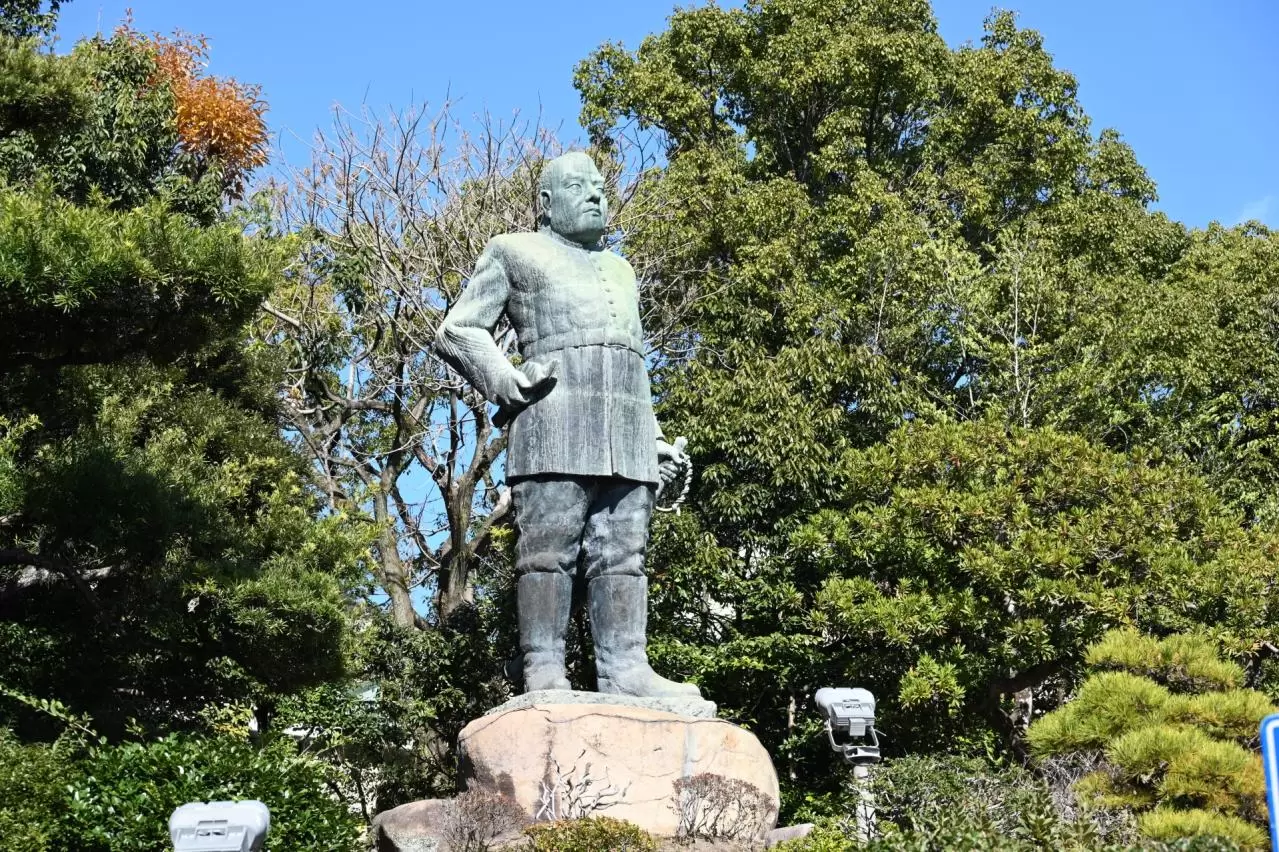
The Saigo Takamori Statue is one of Kagoshima’s most representative historical monuments. It stands in Shiroyamacho, Kagoshima City, Kagoshima Prefecture. With the greenery of Mount Shiroyama behind him, Saigo stands proudly in the uniform of a general of the Imperial Japanese Army. His imposing figure expresses the strength and dignity of Saigo Takamori, who played a central role in the Meiji Restoration. Located in the heart of Kagoshima City, the statue is a popular stop on tours of Kagoshima’s history, with the Kagoshima City Museum of Art, the Reimeikan Museum, and the former site of Kagoshima Castle, also known as Tsurugamaru Castle, nearby.
Saigo Takamori was born on December 7 in the 10th year of the Bunsei era—January 23, 1828, according to the Gregorian calendar—in Shimo-Kajiyacho, in the castle town of Kagoshima in the Satsuma domain. His childhood name was Koyoshi, and after reaching adulthood he used names including Kichinosuke. Saigo’s original personal name, or imina, was “Takanaga.” However, when his official rank was registered after the Meiji Restoration, his father’s personal name, “Takamori,” was mistakenly submitted instead. It is said that he subsequently came to be known as Saigo Takamori.
Saigo grew up under goju education, a distinctive system of youth education in the Satsuma domain. Under this system, older members of the community instructed younger children in scholarship, martial arts, etiquette, and the importance of bonds among companions. It is believed that this environment helped Saigo develop a respect for his elders, a strong sense of responsibility, and an attitude of cherishing his fellow members.
In his youth, Saigo was a low-ranking samurai of the Satsuma domain and worked in areas related to the domain’s agricultural administration. After witnessing the realities of rural communities, he submitted a petition to the domain calling for improvements in the lives of farmers. His initiative and character caught the attention of the domain lord, Shimazu Nariakira. When Saigo was appointed to serve in the lord’s household, his life changed dramatically.
While serving Nariakira, Saigo traveled between Edo and Kyoto, handling communications and gathering information related to the issue of succession to the shogun. Through Nariakira, he came into contact with influential court nobles and people from various domains, becoming deeply involved in the complex political situation of the late Edo period.
However, when Nariakira died suddenly in 1858, Saigo lost a major patron. Around the same time, he accompanied the monk Gessho to Satsuma. Gessho was being pursued by the shogunate during the Ansei Purge, but Saigo was informed that the domain could not protect him. Driven into a desperate situation, the two entered the waters off Ryugamizu in Kinko Bay later that year. Gessho died, while Saigo was rescued.
Afterward, by order of the domain, Saigo lived in seclusion on Amami Oshima under the name “Kikuchi Gengo.” There, he formed a household with a local woman named Aikana and lived among and interacted with the island’s people. After returning to Satsuma once, he came into conflict with Shimazu Hisamitsu, who held real power in the domain, and was exiled again. He was sent first to Tokunoshima and then to Okinoerabujima.
On Okinoerabujima, Saigo was initially confined in a harsh prison exposed to rain and wind, placing his life in danger. His treatment later improved, and he deepened his ties with the islanders by teaching them academic subjects and interacting with the local community. It is believed that these two periods of island exile had a profound influence on Saigo’s ideas and view of humanity.
After receiving a pardon and returning to the Satsuma domain, Saigo once again played an important role as tensions between the shogunate and Choshu grew. At first, he was involved on the shogunate’s side in the First Choshu Expedition. In time, however, he recognized the limitations of shogunate rule and began working to improve relations between Satsuma and Choshu.
With mediation by figures such as Sakamoto Ryoma and Nakaoka Shintaro, the Satsuma–Choshu Alliance was formed in 1866, between Saigo and Kido Takayoshi of Choshu, among others. The alliance established mutual cooperation in areas such as responding to the shogunate’s planned second expedition against Choshu and procuring weapons. It became a major turning point that eventually led to the movement to overthrow the shogunate.
During the Boshin War, which began in 1868, Saigo became one of the central figures of the forces of the new government. As those forces approached Edo and planned a general assault, Saigo met with Katsu Kaishu, who represented the shogunate, following preliminary negotiations conducted by Yamaoka Tesshu and others. As a result, the planned attack on Edo Castle was canceled, and the castle was handed over to the new government without a large-scale battle. This event is known as the Bloodless Surrender of Edo Castle.
The bloodless surrender was not achieved solely through the efforts of Saigo and Katsu. It also involved the negotiations of Yamaoka Tesshu and others, Tokugawa Yoshinobu’s willingness to submit, and efforts made through Kazunomiya and Atsuhime, among many other people. Nevertheless, the final meeting between Saigo and Katsu played an important role in protecting the city of Edo from widespread destruction by fire and warfare.
After the establishment of the Meiji government, Saigo held important positions, including councillor of state and general of the Imperial Japanese Army. He was involved in policies to establish a new national system, including the abolition of the domains and establishment of prefectures, and is considered to have become Japan’s first general of the Imperial Japanese Army.
However, in the dispute over diplomatic relations with Korea, Saigo argued that he himself should be sent to Korea as an envoy. Iwakura Tomomi, Okubo Toshimichi, and others, who had returned from an inspection tour of Europe and the United States, opposed the proposal, arguing that domestic policies should take priority. The disagreement could not be resolved, and during the Political Crisis of 1873, Saigo resigned from the government and returned to Kagoshima.
After returning to Kagoshima, Saigo became involved in educating young people, including through the establishment of a private school. He himself led a relatively quiet life, hunting and working on farms, but former samurai who were dissatisfied with the government’s policies gradually gathered at the private school.
As tensions between the government and the private-school faction increased, students of the school attacked a government arsenal and rose in rebellion in 1877. Although it is unlikely that Saigo had planned the rebellion from the outset, he ultimately took command of the rebels, leading to the Satsuma Rebellion, also known as the Seinan War.
After besieging Kumamoto Castle, the Satsuma forces fought government troops in various parts of Kyushu. However, they were gradually defeated by the government army, which had been organized under the conscription system and possessed abundant troops, weapons, and supplies. Saigo and his followers traveled through the Miyazaki area before returning to Kagoshima, where they finally took refuge on Mount Shiroyama. The Seinan War is known as the last large-scale civil war in Japan.
On September 24, 1877, government forces launched a general assault on Shiroyama. It is said that, while descending toward the Iwasakidani area with the remaining officers and soldiers of the Satsuma army, Saigo was shot in the lower back and thigh. He is said to have met his end after receiving kaishaku, the assistance traditionally provided at the moment of death, from his close aide Beppu Shinsuke. He was 49 years old.
Some details of Saigo’s final moments, including the precise circumstances of the kaishaku, remain unclear in the historical records. Therefore, rather than simply stating that Saigo took his own life, it is more accurate to say that he was shot and is traditionally believed to have died after Beppu Shinsuke assisted him in his final moments.
The Saigo Takamori Statue was planned as a commemorative project for the 50th-anniversary memorial ceremony held in 1927, 50 years after Saigo’s death. The sculptor responsible for its creation was Teru Ando, who was born in Kagoshima City. Ando studied sculpture at the Tokyo School of Fine Arts and is also known as the creator of the original Hachiko statue installed in front of Shibuya Station in Tokyo before World War II.
The original Hachiko statue was lost during the wartime collection of metal. The statue currently standing in front of Shibuya Station is the second statue, created after the war by Teru Ando’s son, Takeshi Ando.
Teru Ando is said to have spent approximately eight years creating the Saigo Takamori Statue. No photograph definitively confirmed to be an image of Saigo himself has been identified to date. For this reason, the statue is thought to have been created with reference to the facial features of his relatives, existing portraits, and descriptions of Saigo’s appearance passed down by people who knew him.
One widely known portrait of Saigo was painted by the Italian artist Edoardo Chiossone. This portrait was not drawn from direct observation of Saigo. Instead, it is said to have been based on the facial features of his younger brother, Saigo Tsugumichi, and his cousin, Oyama Iwao, among others. However, the method used to create this portrait and the specific process by which Teru Ando created the statue should be considered separately.
The statue was completed on May 23, 1937. It was commissioned by the Nanshu Shrine 50th Anniversary Support Association. The statue itself is 5.76 meters high, and including the stone pedestal, it stands approximately 8 meters tall. Its enormous figure, set against the greenery of Mount Shiroyama, makes a powerful impression even when viewed from across the road.
Saigo is depicted in the uniform of a general of the Imperial Japanese Army. He holds his military cap in one hand, spreads his feet wide, and gazes straight ahead in a dignified pose. Rather than adding dramatic movement, the statue expresses Saigo’s strong will and stature as a leader through his solid, firmly grounded posture.
The Saigo Takamori Statue in Ueno Park in Tokyo depicts him in a more approachable manner, wearing a kimono with a heko obi sash and accompanied by a dog. By contrast, the Kagoshima statue presents him in the official uniform of a general of the Imperial Japanese Army. While the Ueno statue conveys the familiar image of “Saigo-don,” beloved by ordinary people, the statue in Kagoshima strongly emphasizes his role as a military officer and politician involved in the Meiji Restoration and the formation of the modern Japanese state.
The statue does not stand at the summit of Mount Shiroyama, but in Shiroyamacho, at the foot of the mountain’s eastern side. Nor does it stand at the exact place where Saigo died. The “Site of Saigo Takamori’s Death” is located in Iwasakidani, on the northeastern side of Mount Shiroyama, some distance from the statue. Nearby is Saigo’s Cave, where Saigo is said to have spent the final five days of the Seinan War.
Across the road from the statue is the Saigo Takamori Statue Photography Plaza. It is an ideal place to capture the entire statue and the greenery of Mount Shiroyama in a single photograph, and a stand for placing cameras is also available.
The photography plaza also has a statue of a dog modeled after Saigo’s beloved dog. Visitors can enjoy taking commemorative photographs beside the dog statue, with the Saigo Takamori Statue standing across the road in the background. Since it can be difficult to fit the entire statue into a photograph when looking up at it from directly nearby, the plaza across the road is better suited for photography.
The statue is outdoors and can be viewed free of charge. Although there are no clearly designated visiting hours, a busy road runs directly in front of the statue. When moving to the photography plaza, visitors should always use the crosswalk and check carefully for traffic. For a more relaxed visit and better photography conditions, daytime, when the surroundings are bright, is recommended.
The statue is immediately outside the “Saigo Statue” stop on the Kagoshima City View sightseeing bus. If traveling by Kagoshima City Tram, it is approximately an eight-minute walk from Asahidori Station. Since trams and buses are available from Kagoshima-Chuo Station, the site is easy to reach by public transportation. Bus timetables and routes may change, so it is advisable to check the latest information before visiting.
The surrounding area is home to many facilities and historic sites where visitors can learn about Saigo Takamori, the Satsuma domain, and the Meiji Restoration. Close by are the Kagoshima City Museum of Art, the Kagoshima Modern Literature Museum and Kagoshima Märchenkan, and the Kagoshima Prefectural Museum. A little farther north, visitors can explore the Reimeikan Museum, built on the former site of the main compound of Kagoshima Castle, as well as the restored Goryomon Gate of Kagoshima Castle.
Those who wish to learn more about the Seinan War should visit the bullet marks remaining in the stone walls at the former site of the private school, Saigo’s Cave, and the Site of Saigo Takamori’s Death. Visitors can also walk along the Shiroyama Nature Trail to the Shiroyama Observatory, which offers panoramic views of Sakurajima, Kinko Bay, and the city of Kagoshima. By visiting the statue and surrounding historic sites in sequence, visitors can understand Saigo’s final days and the course of the Seinan War in relation to the actual terrain.
The Saigo Takamori Statue is more than simply a place to take commemorative photographs. It offers an opportunity to reflect on Saigo Takamori’s complex life: as a leader who advanced the Meiji Restoration; as a politician who left important government positions and returned to Kagoshima; as a figure involved in the education of young people; and as the leader of the Satsuma army that fought government forces during the Seinan War.
Looking up at the statue of Saigo in the uniform of a general of the Imperial Japanese Army, with Mount Shiroyama behind him, and visiting the nearby remains of Kagoshima Castle and sites connected with the Seinan War, visitors can gain a more vivid sense of the turbulent period from the final years of the Edo period to the early Meiji era. The statue is one of Kagoshima City’s leading historical attractions, conveying the achievements and struggles of the man affectionately known by the people of Kagoshima as “Saigo-don.”
Kagoshima Tourist Attractions
View List
Meisho Sengannen
Sengan-en is a villa built by Shimizu clan's 19th generation leader, Mitsuhisa, in the first year of Manji (1658). It is a grand feudal lord's garden designed with S...

Jomon Sugi
Jomon Sugi is the most famous giant tree among the Yakusugi trees located on Yakushima Island in Kagoshima Prefecture, with an estimated age ranging from 2,170 to 7,...

Sakurajima
Sakurajima is a composite active volcano known as a symbol of Kagoshima, featuring two main peaks: Kitadake (North Peak) and Minamidake (South Peak). Standing at 1,1...

Chiran Peace Museum
Chiran Peace Museum is located in Minamikyushu City, Kagoshima Prefecture, and serves as a facility to convey the history of the special attack units that launched f...

Kirishima Shrine
Kirishima Shrine is a shrine located in Kirishima City, Kagoshima Prefecture, dedicated to Ninigi-no-Mikoto, the central figure in the myth of the descent of the hea...

Iowa World Kagosima Aquarium
Iow World Kagoshima Aquarium is located in a prime location with a spectacular view of Kagoshima's symbol, Sakurajima. It is one of the largest aquariums in Kyushu, ...

Ohama Seaside Park
Oohama Seaside Park is a nature-rich park located in Minamisatsuma City, Kagoshima Prefecture. This park, which combines the beautiful coastline of the southern coun...

Yurigahama Beach
Yurigahama is a beautiful sandy beach created by nature, located in Yakushima Town, Kagoshima Prefecture. The approximately 8 km long stretch of white sand consists ...