The National Museum of Modern Art, Kyoto
The establishment of this museum originated from the return of the art collection of Kojiro Matsukata, the president of Kawasaki Shipbuilding Corporation (now Kawasaki Heavy Industries), which had been confiscated in France. Initially, there was a plan to exhibit the Matsukata collection in Kyoto, but it eventually led to the concept of the "National Museum of Modern Art, Kyoto Branch."
The museum frequently changes its collection exhibitions to allow visitors to enjoy the works from multiple perspectives. The displayed works range from Western masters like Picasso and Van Gogh to Japanese artists such as Bakusen Tsuchida and Kagawa Kō. The scope of crafts has also expanded to include glass, jewelry, textiles, furniture, and architecture.
In 1986, a new building designed by architect Fumihiko Maki was added, and in 2001, it was reorganized as an independent administrative institution. The collection is diverse, with recent additions including collections from architect Isaburo Ueno and craftsman Richi Ueno.
This museum greatly contributes to the development of culture and art in Kyoto, attracting many visitors with its diverse exhibitions. Set in a lush environment, it is beloved by many as a place to appreciate not only Japanese art but also art and crafts from around the world.
The National Museum of Modern Art, Kyoto Movies


Basic Information
- Spot Name
- The National Museum of Modern Art, Kyoto
- Location
- 〒606-8344 26-1 Okazaki Enshoji-cho, Sakyo-ku, Kyoto City, Kyoto Prefecture, Japan
- Access
- About a 10-minute walk from Exit 1 of Higashiyama Station on the Kyoto City Subway Tozai Line.
Approximately 30 minutes by city bus from JR Kyoto Station, get off at "Okazaki Park Art Museum/Heian Shrine Mae," and it's a short walk from there.
About 20 minutes by city bus from Hankyu Railway Kyoto Line's Karasuma Station and Kyoto Kawaramachi Station, or Keihan Electric Railway Main Line's Sanjo Station and Gion Shijo Station. Get off at "Okazaki Park Art Museum/Heian Shrine Mae," and it's a short walk from there. - Parking
- No parking available.
- Business Hours
- Regular Hours: 10 AM to 6 PM (Last admission is until 5:30 PM)
Extended Hours: Every Friday during special exhibitions, open until 8 PM (Last admission is until 7:30 PM) - Regular Holiday
- Every Monday (if Monday is a holiday, the following day will be closed) and during the year-end and New Year holidays.
- Fees
- General admission: 430 yen, University students: 130 yen *Special exhibitions have separate fees.
- Contact Information
- Phone Number:075-761-4111
- Official Website
Map
Detailed Information
The Kyoto National Museum of Modern Art is a national art museum that opened in 1963 in Okazaki Park in Okazaki, Sakyo Ward, Kyoto City. It collects, exhibits, and studies works in a wide range of fields, with a focus on Japanese modern and contemporary art, including Japanese-style painting, Western-style painting, prints, sculpture, crafts, photography, design, and architecture. One of its defining features is its special emphasis on art and crafts from western Japan, especially Kyoto.
History and Background
The Kyoto National Museum of Modern Art was established as part of the nation’s cultural policy and opened in 1963 as the “Kyoto Branch of the National Museum of Modern Art.” At the time, it was positioned as a branch of the National Museum of Modern Art in Tokyo, but in 1967 it became independent and relaunched as the Kyoto National Museum of Modern Art.
As part of the broader background to the museum’s establishment, there were also developments in art administration concerning the return of the art collection assembled by Kojiro Matsukata, former president of Kawasaki Dockyard Co. (now Kawasaki Heavy Industries), and the founding of the National Museum of Western Art in connection with that collection. However, these developments were not directly related to the establishment of the Kyoto National Museum of Modern Art.
Architecture and Design
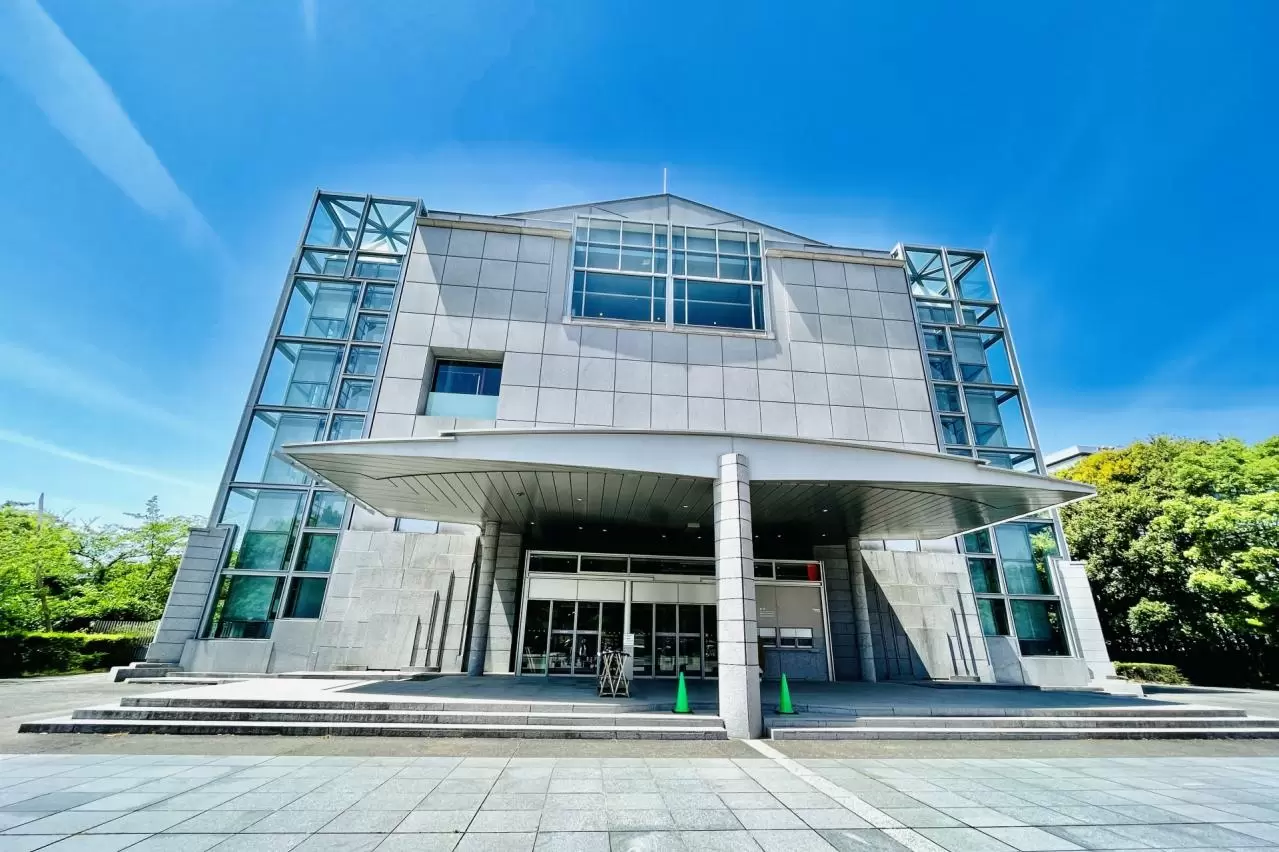
The current museum building was completed in 1986. It was designed by Fumihiko Maki, one of Japan’s leading architects and a recipient of numerous international architectural awards, including the Pritzker Prize. The building features a modern design with extensive use of glass, creating an open and refined space that skillfully incorporates natural light.
The exterior walls use Portuguese granite and a lattice-like design, harmonizing with Kyoto’s grid-patterned urban layout and the symmetrical landscape of the Okazaki area centered on Heian Shrine. Many students and architecture enthusiasts visit the museum specifically for the building itself, and it is also well regarded as an “intellectual space.”
Exhibitions and Collection
The Kyoto National Museum of Modern Art holds approximately 13,000 works in its collection. Centered on Japanese modern and contemporary art, it places particular emphasis on Japanese painting, Western-style painting, prints, sculpture, and also crafts such as ceramics, textiles, lacquerware, glass, and jewelry. In particular, its collections of works by artists representing the Kyoto art world, modern Western-style painting in the Kansai region, and traditional crafts are highly valued in Japan and abroad.
In recent years, the museum has also acquired a group of works by architect Iisaburo Ueno and craft artist Lizzi Huber Ueno, further broadening the scope of its collection.
On the fourth floor, the “Collection Gallery” serves as a permanent exhibition space, presenting rotating seasonal displays of works by artists mainly from western Japan. Thanks to its diverse, cross-disciplinary collection, visitors can enjoy new discoveries every time they come. The museum also presents “related displays” linked to its special exhibitions, offering deeper understanding and a richer viewing experience.
Special Exhibitions and Events
The museum holds about five special exhibitions each year. These exhibitions explore themes related to Japanese and international art and crafts, and are organized through diverse, cross-genre approaches. They offer visitors stimulating and moving experiences, including interactive displays and fresh perspectives that cannot be found in regular exhibitions.
In addition, the museum is actively engaged in outreach and educational activities such as lectures, workshops, and educational programs, providing opportunities for a wide range of age groups, from children to adults. Multilingual guides and digital content are also available inside the museum, making it a welcoming environment for overseas visitors as well.
Management Policy and Philosophy
The Kyoto National Museum of Modern Art’s major mission is to organize and examine the flow of art from the modern era to the present and return those成果 to society. Its activities are carried out under the following guiding principles:
- Preserving and developing the tradition of valuing crafts that has existed since the museum’s founding
- Focusing on artistic activity in Kyoto and the Kansai region and presenting new perspectives
- Researching and presenting a wide range of genres, including painting, sculpture, crafts, architecture, photography, and moving images
- Deepening exchange with art from Japan and abroad and providing a broad international perspective
The museum also actively collects, preserves, and restores artworks, related materials, and books, focusing not only on exhibitions but also on future public access and use. It also promotes the acceptance of donations of works with academic and artistic value, contributing to the overall quality of its collection.
Located in a lush natural setting facing the large torii gate of Heian Shrine and the Lake Biwa Canal, the Kyoto National Museum of Modern Art is surrounded by many cultural facilities, including the Kyoto City KYOCERA Museum of Art, Kyoto City Zoo, and the Kyoto Kaikan (ROHM Theatre Kyoto), making the entire Okazaki area a center of culture and the arts.
Inside the museum, there is a café and a museum shop that can be used without an admission fee, making it easy to stop by between exhibitions or simply enjoy a casual visit. Spaces other than the exhibition galleries are also comfortably maintained, so even a visit out of curiosity can be fully satisfying.
The Kyoto National Museum of Modern Art is one of Kyoto’s leading cultural institutions, offering visitors the chance to experience the rich appeal of art and crafts. While rooted in Kyoto’s traditions, it maintains an international perspective and carries out outstanding activities in exhibitions, research, and education. In its sophisticated architecture and intellectually engaging exhibition spaces, it is a treasured place where visitors can experience the diversity of modern and contemporary art, and it is beloved by many visitors from Japan and abroad. If you are sightseeing in Kyoto, it is definitely a spot worth visiting.
Kyoto Tourist Attractions
View List
Kyoto Railway Museum
The Kyoto Railway Museum, opened in 2016, is one of the largest railway museums in Japan, designed to be a fun and educational facility with the theme of "see, touch...


Kenninji Temple
Kennin-ji Temple, founded in 1202 by the Zen master Eisai, is the oldest Zen temple in Kyoto and serves as the head temple of the Kennin-ji branch of the Rinzai sect...

Kamikamo Shrine
Kamigamo Shrine (Kamo-wake-ikazuchi Shrine) is one of the oldest shrines in Kyoto, dedicated to the god of thunder, Kamo-wake-ikazuchi no Ōkami. The shrine grounds h...

Nijo Castle
Nijo Castle, originally built as a retreat for the Shogun, can be described as a place condensed with Japan’s history and culture. Constructed in 1603 by the first S...

Tofuku-ji Temple
Tōfuku-ji is the head temple of the Rinzai sect of Zen Buddhism, founded in 1236 by Kujō Tadayoshi, with its main hall completed in 1255. It is counted among the fiv...

Nishiki Market
Nishiki Market is a historic marketplace located in the heart of Kyoto, which began as a fish wholesaler known as "Nishino-ten" during the Tensho period (about 400 y...