One of the world’s largest planetariums
The impressive dome and live commentary make the starry-sky experience memorable.

AI Summary
This is an AI-generated summary. Please check the official information for opening hours, fees, and closed days.
Home to one of the world’s largest planetariums and hands-on exhibits, this science museum offers an engaging visit for children and adults alike.
Nagoya City Science Museum is an interactive museum where you can see, touch, and explore scientific phenomena. Highlights include its Guinness-recognized, world-class planetarium and immersive exhibits featuring tornadoes, electrical discharges, and extreme cold. It’s a good choice for science fans and families looking for an educational day out.
The impressive dome and live commentary make the starry-sky experience memorable.
Explore scientific phenomena such as tornadoes and electrical discharges through immersive displays.
The exhibits are accessible without being overly technical, making the museum easy to explore as a family or group.
Start with the planetarium, then explore the hands-on exhibits if you have time.
Nagoya City Science Museum, located in Sakae, Naka Ward, Nagoya City, Aichi Prefecture, within Shirakawa Park, is one of Japan’s leading comprehensive science museums.
With the concept of “See, touch, and verify,” it is a beloved facility where visitors from children to adults can enjoyably experience and learn the principles of science and natural phenomena.
The Nagoya City Science Museum began on November 3, 1962, when the “Astronomical Hall,” centered on a planetarium, opened to commemorate the 70th anniversary of Nagoya’s city system. Later, the “Science and Technology Hall” opened in 1964, and the “Life Hall” opened in 1989. Together with major renovations of the existing facilities, the museum was developed into the comprehensive science museum it is today.
■ Facility Structure and Exhibition Features
Nagoya City Science Museum consists of the following three halls:
● Astronomical Hall
The Astronomical Hall is themed around space and astronomy, and its biggest highlight is the Guinness World Record-certified planetarium, “Planetarium NTP Planet,” one of the largest in the world by dome inner diameter.
- Dome inner diameter: 35 meters
- Recreates a starry sky as close to reality as possible using the latest digital technology and high-definition imagery
- Visitors can watch from large reclining seats with live commentary by curators
The screening programs change their themes every month, and in addition to constellation myths, they clearly explain astronomical phenomena visible in that month, as well as topics such as the expansion of the universe and black holes. One of its major attractions is that each visit offers new discoveries.
● Science and Technology Hall
The Science and Technology Hall is themed around physics, chemistry, engineering, energy, and technology.
It features many hands-on exhibits where visitors can actually “touch,” “move,” and “verify” things for themselves, making it easy to intuitively understand scientific principles.
Major highlights include impressive large-scale exhibits such as:
- “Tornado Lab,” which generates a 9-meter-high artificial tornado
- “Discharge Lab,” where visitors can observe 1.2 million volts of electrical discharge up close
These powerful exhibits allow visitors to experience the scale of scientific forces and natural phenomena firsthand.
● Life Hall
The Life Hall is themed around life, humans, the environment, and the Earth, and visitors can learn about biological evolution, the human body, environmental issues, and more.
A particularly popular exhibit is:
- “Extreme Cold Lab,” where visitors can experience a world of minus 30°C
Inside an actual low-temperature environment, visitors can experience aurora imagery and deepen their understanding of polar natural environments.
■ Number of Exhibits and Hands-on Programs
The museum contains around 250 diverse exhibits across 14 exhibition floors.
In addition, science shows and experiments/demonstrations are held several times daily, and on weekends and during long holidays, craft workshops using familiar materials and hands-on workshop events are also offered.
Rather than simply viewing exhibits, the museum emphasizes “experiencing,” “thinking,” and “verifying,” making it especially well suited to help children naturally become familiar with science in an era when many are said to be drifting away from science.
■ Architecture and Environmental Considerations
Nagoya City Science Museum has been designed so that the building itself becomes part of the “exhibit.”
- Solar power generation system
- Green walls
- Seismic damping structure
- Visualization of elevator structures and architectural technology
These advanced architectural methods, with an awareness of sustainability and ecology, are highly regarded from the perspective of environmental education as well.
Its exterior design, highlighted by a massive sphere, has become one of the iconic sights of Nagoya.
■ Supporting Facilities
The museum also includes a Museum Shop selling science-themed merchandise, as well as a Museum Café where visitors can enjoy unique menu items such as “Space Ramen” and “Ogura Dog.” It is a perfect place to take a break between tours or choose souvenirs.
Nagoya City Science Museum is:
- A comprehensive science museum with one of the world’s largest planetariums by dome inner diameter
- A place where visitors can experience science through “see, touch, and verify”
- A facility where people of all generations, from children to adults, can gain learning and inspiration
By successfully combining entertainment and education at a high level, Nagoya City Science Museum is a landmark of knowledge in Nagoya and comes highly recommended for anyone interested in science.
The Linear Railway Museum is a Japanese museum that showcases the evolution of railway technology and its impact on society. Opened in 2011, it features 39 actual tr...
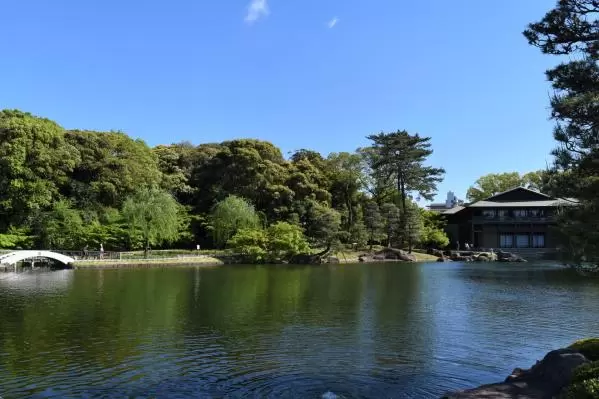
Tokugawaen is a Japanese garden designed in the style of a pond and garden stroll, located at the site of the Ozoneshi residence built by Mitsutomo, the second lord ...
The Tokugawa Art Museum is an art museum located in Nagoya City that broadly introduces Japanese history and culture. It opened in 1935 and showcases over 10,000 val...
"Flight of Dreams" is a unique commercial complex located at Chubu Centrair International Airport in Japan. Its main attraction is the first Boeing 787 (ZA001), whic...
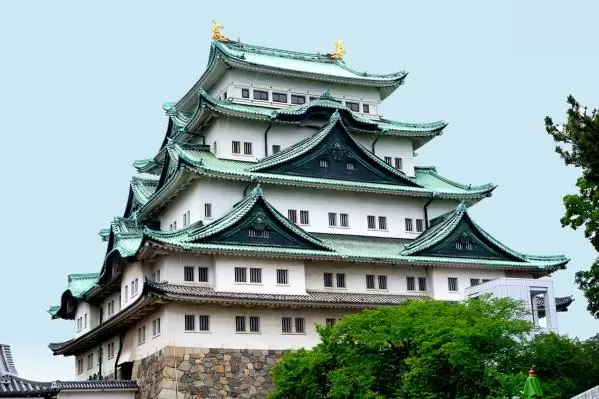
Nagoya Castle is an important place in Japan's history and culture, and it is considered a symbol of Nagoya City. Construction of the castle began in 1610 (the 15th ...
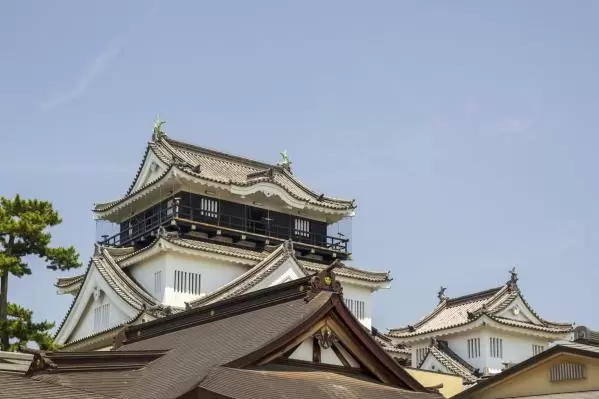
Okazaki Castle is a historic landmark located in Okazaki City, Aichi Prefecture, Japan, and is especially known as the birthplace of Tokugawa Ieyasu. According to le...
Toyokawa Inari is one of Japan's three major Inari shrines, attracting about five million visitors from across the country with its blessings for prosperous business...