An Inari site that is a Buddhist temple
Its formal name is Myogon-ji. Here you can encounter a form of Inari worship distinct from that of a Shinto shrine.
AI Summary
This is an AI-generated summary. Please check the official information for opening hours, fees, and closed days.
A Buddhist temple known as an Inari shrine, with a strong association with business prosperity and striking fox imagery.
Toyokawa Inari is a Soto Zen Buddhist temple known as one of Japan’s three great Inari sites. Highlights include the rows of fox statues at Reiko-zuka and the lively approach street, where you can combine a visit with local food tasting. The atmosphere is strongly religious, but it is well worth a visit for those interested in temple culture and distinctive scenery.
Its formal name is Myogon-ji. Here you can encounter a form of Inari worship distinct from that of a Shinto shrine.
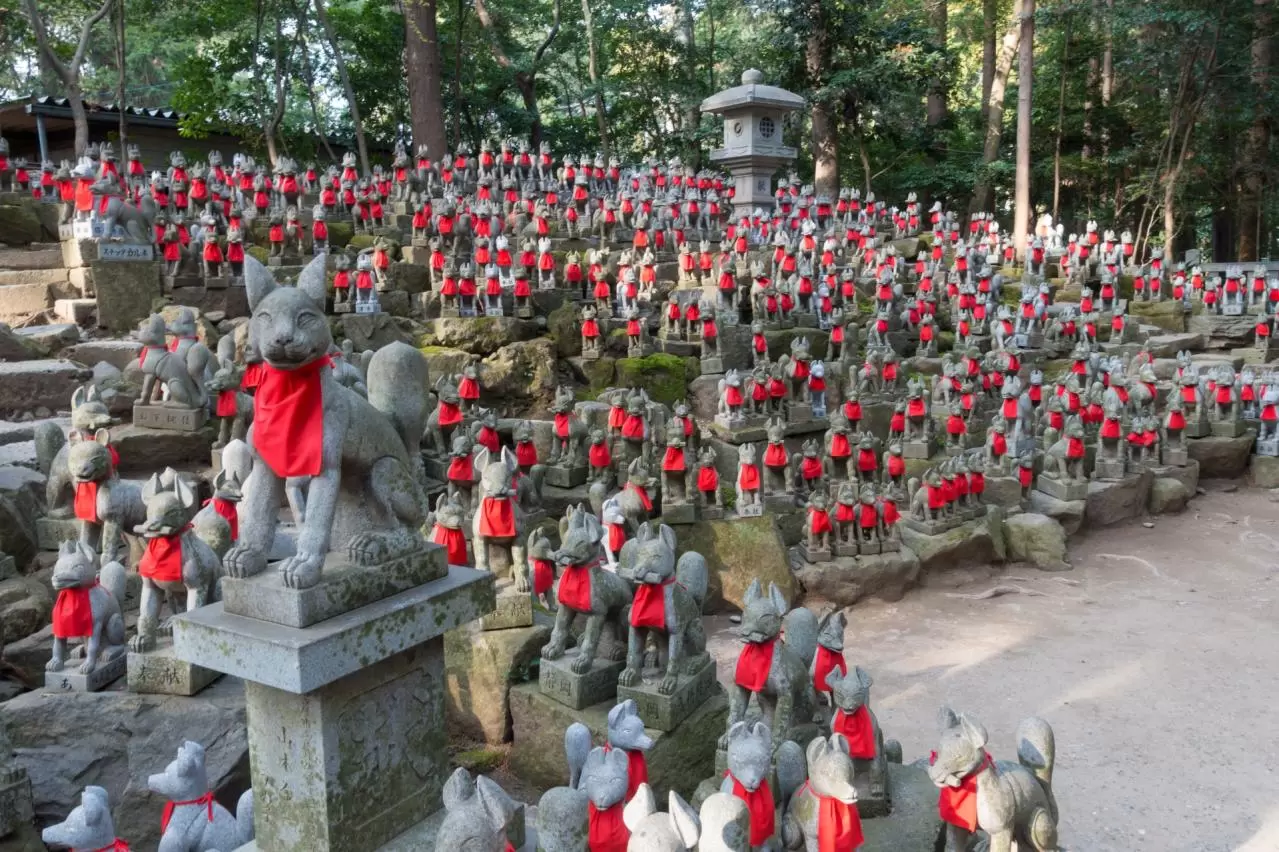
More than 1,000 fox statues of various sizes create a distinctive and impressive scene.
Enjoy local snacks after your visit, including the popular Toyokawa inari sushi.
Visit the main hall first, continue to Reiko-zuka, then finish with Toyokawa inari sushi along the approach street.
Toyokawa Inari is known as one of the Three Great Inari Shrines of Japan and is one of the country’s foremost sacred places, attracting about 5 million visitors a year. Its official name is Enpukuzan Myogonji, and a major distinctive feature is that it is not a Shinto shrine, but a Soto Zen Buddhist temple.
Although many people generally think of “Inari” as meaning “shrine,” Toyokawa Inari draws devotees from all over Japan as a sacred place of Inari worship managed by a temple.
This unique form strongly reflects Japan’s ancient culture of syncretism between Shinto and Buddhism. Within the grounds, torii gates stand alongside numerous fox statues, while the Buddhist manji symbol is also displayed, conveying a distinctly Japanese religious worldview in which gods and buddhas have long coexisted in faith.
What is the Guardian Deity, Toyokawa Dakini Shinten?
The deity enshrined at Toyokawa Inari is not the Inari deity of a Shinto shrine, but Toyokawa Dakini Shinten, the guardian deity of the temple.
Dakini Shinten is known for appearing:
- riding a white fox
- carrying ears of rice
She has long been revered as a benevolent deity of business prosperity, household safety, good fortune, and success. Various legends also tell of her holding a sacred jewel and appearing in other forms.
During the Edo period, Inari faith spread among common people, and Dakini Shinten became widely known throughout Japan as “the deity of Toyokawa Inari.” As a result, although it is a temple, the name “Inari” became firmly established and has continued to the present day.
History Leading to the Founding of Myogonji
— The Encounter between Zen Master Kangan Gion and Dakini Shinten —
The history of Toyokawa Inari cannot be told without mentioning the great Zen master Kangan Gion of the Kamakura period.
◇ Kangan Zen Master’s Early Life
Zen Master Kangan Gion was born as a prince of Emperor Juntoku, the 84th emperor, and entered the Buddhist priesthood at Mount Hiei. He later visited Dogen Zenji, the founder of the Soto school, at Koshoji in Uji, trained as his disciple, and eventually inherited the Dharma.
With the great vow to “save the times,” he crossed to China twice to deepen his understanding of the Buddhist teachings.
◇ A Spiritual Experience on the Return from China
On the voyage home from his second trip, a goddess riding a white fox appeared on the sea and called herself Dakini Shinten, saying:
“If you follow my teachings, suffering and sorrow will surely be transformed into joy.”
Deeply moved by this event, Kangan Zen Master enshrined a statue of Dakini Shinten after returning to Japan and devoted himself to works of social salvation, including founding temples, building bridges, and opening farmland throughout Kyushu.
◇ The Birth of Myogonji
About 200 years after Kangan Zen Master’s death, in 1441, Tokai Gieki, a monk from Totomi Province (present-day Shizuoka Prefecture), brought back statues of Dakini Shinten and Senju Kannon from Kyushu and opened a small temple in present-day Toyokawa. This is considered the beginning of Myogonji, or Toyokawa Inari.
Faith Spreading from Warriors and Scholars to the Common People
Since its founding, Myogonji has been worshipped by many warlords, scholars, and ordinary people.
◆ Major Worshippers
- Oda Nobunaga
- Toyotomi Hideyoshi
- Tokugawa Ieyasu
- Imagawa Yoshimoto
- Scholars such as Watanabe Kazan
In addition, the famous Edo-period magistrate Okubo Echizen-no-kami Tadasuke enshrined Dakini Shinten at his own residence, which became the origin of the current Toyokawa Inari Tokyo Betsuin in Akasaka, Tokyo.
Against this backdrop, Toyokawa Inari spread nationwide as a center of faith for business prosperity, good fortune, and success.
A major open-to-the-public unveiling of Toyokawa Dakini Shinten is scheduled for 2026, the first in 72 years.
Highlight 1: The Main Hall and Reikozuka
After visiting the main hall, the place you should definitely see is Reikozuka.
Here, more than 1,000 fox statues of various sizes, donated by devotees, are lined up, creating a scene that has become one of Toyokawa Inari’s most iconic sights.
Originally a place to enshrine fox statues that had been dedicated, it continues to receive offerings to this day as a testament to faith from all over Japan.
Highlight 2: Artistic Structures and Buddhas Who Grant Good Fortune
The temple grounds are dotted with many attractions where faith and art blend together.
- Osasuri Daikokuten
It is believed that stroking it will bring good fortune, and it is beloved by many visitors.
- Keiunmon Gate
A unique gate where you can worship Daikokuten while waving a mallet of fortune.
- Magnificently carved temple buildings
- Beautiful gardens that show different expressions in each season
A leisurely stroll through the grounds allows you to appreciate the deep charm that is unique to Toyokawa Inari.
Highlight 3: The Monzen Town and the Famous Toyokawa Inari Sushi
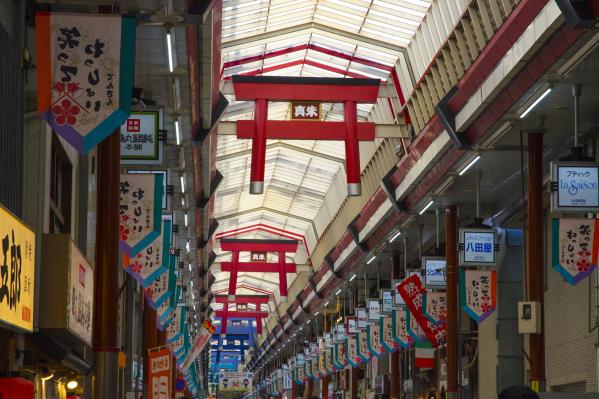
In the temple’s approach district, more than 100 restaurants and souvenir shops line the streets.
Among them, the local specialty “Toyokawa Inari sushi” is a must-try delicacy.
◆ Features of Toyokawa Inari Sushi
- Said to have originated from rice stuffed into fried tofu used as an offering
- Today, it comes in a wide variety, including:
- ichimi-spiced
- yuzu-flavored
- miso-katsu style
- eel mixed rice style
Exploring the Monzen town along with your visit to the temple is one of the great pleasures of visiting Toyokawa Inari.
Conclusion — A Center of Inari Faith Where Shinto-Buddhist Syncretism Lives On Today
Toyokawa Inari (Myogonji) is an exceptionally fascinating place where:
- a temple that nevertheless upholds Inari worship
- deep history rooted in the spiritual experiences of Kangan Gion and Dakini Shinten
- a faith in business prosperity that spread from warlords to the common people
- Reikozuka, lined with more than 1,000 fox statues
- a lively Monzen town and its signature Inari sushi
all come together.
It is easy to understand why people say, “Once you visit, you’ll want to come back again and again.” Even today, it continues to attract many visitors as an extraordinary place where long-standing faith and new appeal remain in harmony.
Tokugawaen is a Japanese garden designed in the style of a pond and garden stroll, located at the site of the Ozoneshi residence built by Mitsutomo, the second lord ...
"LEGOLAND Japan" is an outdoor theme park that opened in 2017 at Knjyo Point in Nagoya City, targeting children aged 2 to 12 and their families. This park is the eig...
The Tokugawa Art Museum is an art museum located in Nagoya City that broadly introduces Japanese history and culture. It opened in 1935 and showcases over 10,000 val...
Atsuta Shrine is a prestigious shrine located in Nagoya City, Aichi Prefecture, dedicated to one of the three sacred treasures of Japan, the Kusanagi no Tsurugi (Gra...
Laguna Ten Bosch is a Japanese integrated resort located in the naturally rich Mikawa Bay. It features the theme park "Lagunasia," shopping and dining facilities at ...
Nagoya Port Aquarium is a popular tourist destination located at the Nagoya Port Garden Wharf, divided into two areas: the South Building and the North Building. The...
Osu Kannon (Hōshō-in) is one of Japan's three great Kannon temples, located in the heart of Nagoya City. Its formal name is Kitano-san Shinpukuji Hōshō-in, with its ...
Higashiyama Zoo and Botanical Gardens is one of Japan's largest comprehensive zoos and botanical gardens, sprawling over an extensive area of 60 hectares in Nagoya C...