Architecture linked to Kingo Tatsuno
It is known as the only surviving building in the Tohoku region designed by Kingo Tatsuno.
AI Summary
This is an AI-generated summary. Please check the official information for opening hours, fees, and closed days.
A popular spot in central Morioka where you can see Meiji-era bank architecture up close.
This cultural property is a striking red-brick building associated with architect Kingo Tatsuno. Along with admiring its exterior, you can explore exhibits on the history of banking and the building itself, with both free and paid areas. It’s easy to combine with a walk around Morioka and works well as a short stop.
It is known as the only surviving building in the Tohoku region designed by Kingo Tatsuno.
There are highlights in the free-access areas, making it easy to drop in.
The red brick and green dome make a memorable subject for photos during a city walk.
Stop by during a walk around central Morioka, then enjoy the interior exhibits after viewing the exterior.
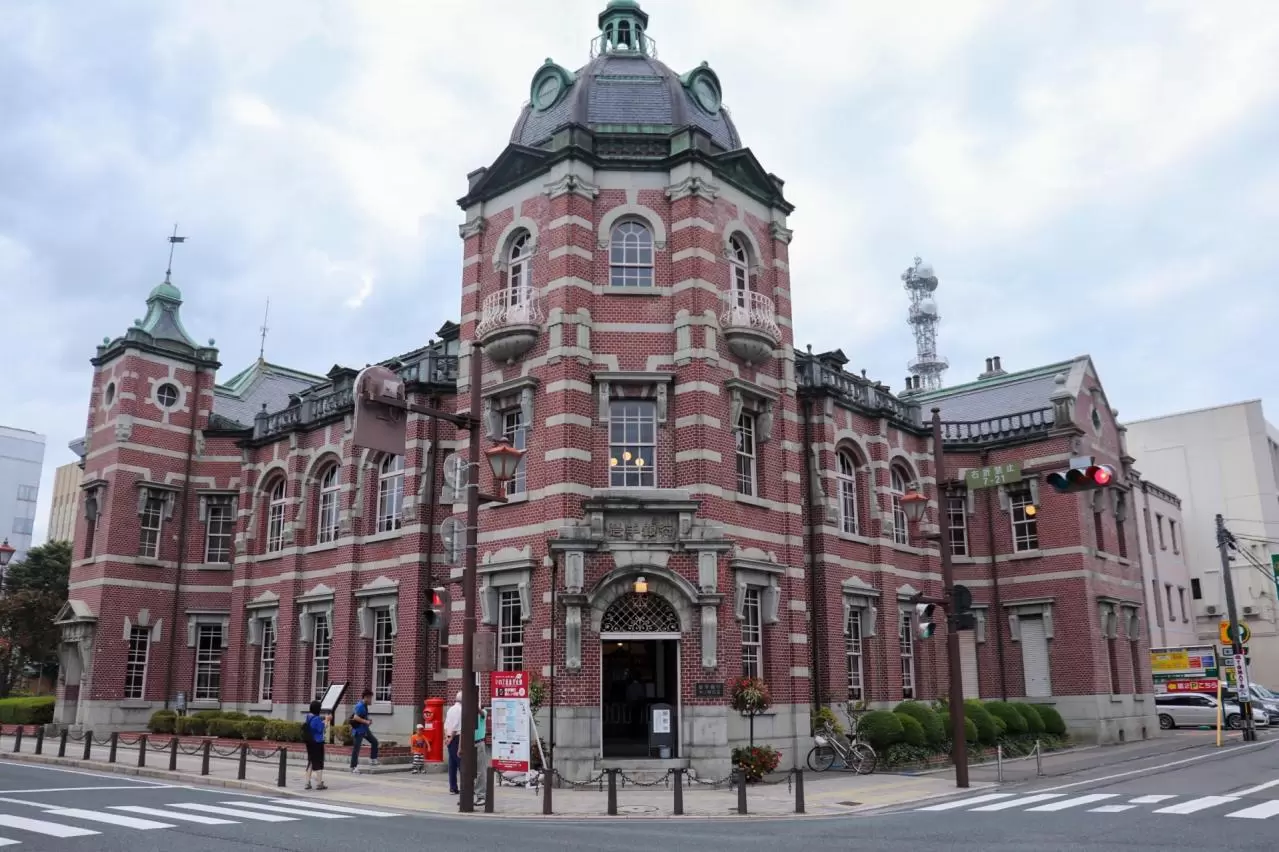
The Iwate Bank Red Brick Building is a representative example of modern Western-style architecture from the Meiji period, located on Nakanohashi-dori in Morioka, Iwate Prefecture. Construction began in 1908 (Meiji 41), and after about three years of work, it was completed in April 1911 (Meiji 44) and opened in May of that same year as the former Morioka Bank head office. It was designed by the Tatsuno-Kazai Architectural Office, led by Kingo Tatsuno—known for the Marunouchi Station Building at Tokyo Station—and Manji Kasai, an architect from Morioka. It is the only surviving work in the Tohoku region designed by Kingo Tatsuno.
The exterior features red brick walls accented with white granite bands. The first-floor windows have lintels, while the second-floor windows are arched. An octagonal tower topped with a green copper-roofed dome stands at the southeast corner, and a rectangular tower is placed on the south side. Dormer windows on the roof give the building a stately yet graceful Renaissance-style appearance. The roof combines slate and copper roofing, creating a harmonious landscape of red brick, granite, and the green dome. Inside, the lobby and banking hall are designed with open, double-height spaces, and a corridor runs along the second floor. Decorative plaster motifs and engaged columns adorn the ceilings and pillars, preserving the luxurious beauty of Meiji-era bank architecture.
Although it was originally used as the head office of Morioka Bank, after the bank failed in 1936 (Showa 11), Iwate Shokusan Bank purchased the building and used it as its head office. During this period, the exterior walls were painted white, earning it the nickname “the White Meiji Hall,” and it retained that appearance until around 1958 (Showa 33). In 1983 (Showa 58), when Iwate Bank—renamed from Iwate Shokusan Bank—completed its new headquarters, the building became the Nakanohashi Branch. While still in active use as a bank building, it was designated a National Important Cultural Property on December 27, 1994 (Heisei 6), the first active bank building ever to receive this designation.
Banking operations ended on August 3, 2012 (Heisei 24), and a preservation and restoration project lasting about three and a half years was carried out under the ownership of Iwate Bank. On July 17, 2016 (Heisei 28), it was opened to the public as the “Iwate Bank Red Brick Building.” Located at the foot of Nakanohashi in the center of the city, on the banks of the Nakatsu River, it forms an iconic streetscape together with the surrounding townscape of Morioka.
The interior is divided into the free “Iwate Bank Zone” and the paid “Morioka Bank Zone.” The free zone includes a multipurpose hall and a library lounge introducing Morioka’s industrial and commercial history. In the paid zone, visitors can see the reception room and banking hall as they were at the time of the building’s founding, as well as the surviving large vault room. Exhibits also present the history of finance in Iwate Prefecture and the building’s structure and restoration process through videos and materials, offering a place of learning from both architectural and local-history perspectives.
The contrast between the red brick and granite, the green domed roof, and the elegant Renaissance-style design strongly reflect Kingo Tatsuno’s style and the characteristics of Meiji-period Western-style architecture. As a valuable architectural heritage symbolizing Morioka’s history and culture, it continues to be beloved by many people today.
Jodogahama is a beautiful coastline located in Iwate Prefecture, Japan, and serves as the centerpiece of the Sanriku Reconstruction National Park and Sanriku Geopark...
Koiwai Farm Makiba Park is one of Japan’s largest private comprehensive farms, boasting a history of over 130 years since its establishment in 1891. Covering an area...
The Iwate Tsunami Memorial, located within the Takada Matsubara Tsunami Restoration Memorial Park in Iwate Prefecture, opened on September 22, 2019. This facility ai...
Geibikei is a beautiful gorge selected as one of Japan's top 100 scenery spots, featuring approximately 2 kilometers of cliffs that rise around 100 meters on both si...
Geibikei is a beautiful gorge located along the Iwai River, which flows into Ichinoseki City and originates from Mount Kurikoma. Its approximately 2-kilometer stretc...
The Iwate Prefectural Museum of Art was opened in 2001 in the new cultural zone of Central Park in Morioka City. The museum's collection focuses on works by local ar...
Tono Furusato Village is a wonderful place where nostalgic rural landscapes unfold. It has recreated an old-fashioned village by relocating traditional curved houses...
Morioka Hachimangu Shrine is located in Morioka City, Iwate Prefecture, and was founded in 1680 (the 8th year of the Enpo era) by the 29th lord of the Nanbu clan, Sh...