See a major work by Tsuguharu Foujita
His large mural, Events in Akita, is an impressive work that also offers a glimpse of local life and culture.
AI Summary
This is an AI-generated summary. Please check the official information for opening hours, fees, and closed days.
See a monumental mural by Tsuguharu Foujita and architecture by Tadao Ando at this easy-to-visit museum near the station.
Located in the Area Nakaichi complex within walking distance of Akita Station, the museum offers a chance to enjoy both art and architecture. Highlights include Tsuguharu Foujita’s large mural, Events in Akita. Nearby Senshu Park makes it a good stop for a quiet break.
His large mural, Events in Akita, is an impressive work that also offers a glimpse of local life and culture.
The simple, calming design makes striking use of light and shadow.
Close to Akita Station, the museum pairs well with a walk around Senshu Park.
After visiting the museum, take a walk through Senshu Park before heading back toward the area around Akita Station.
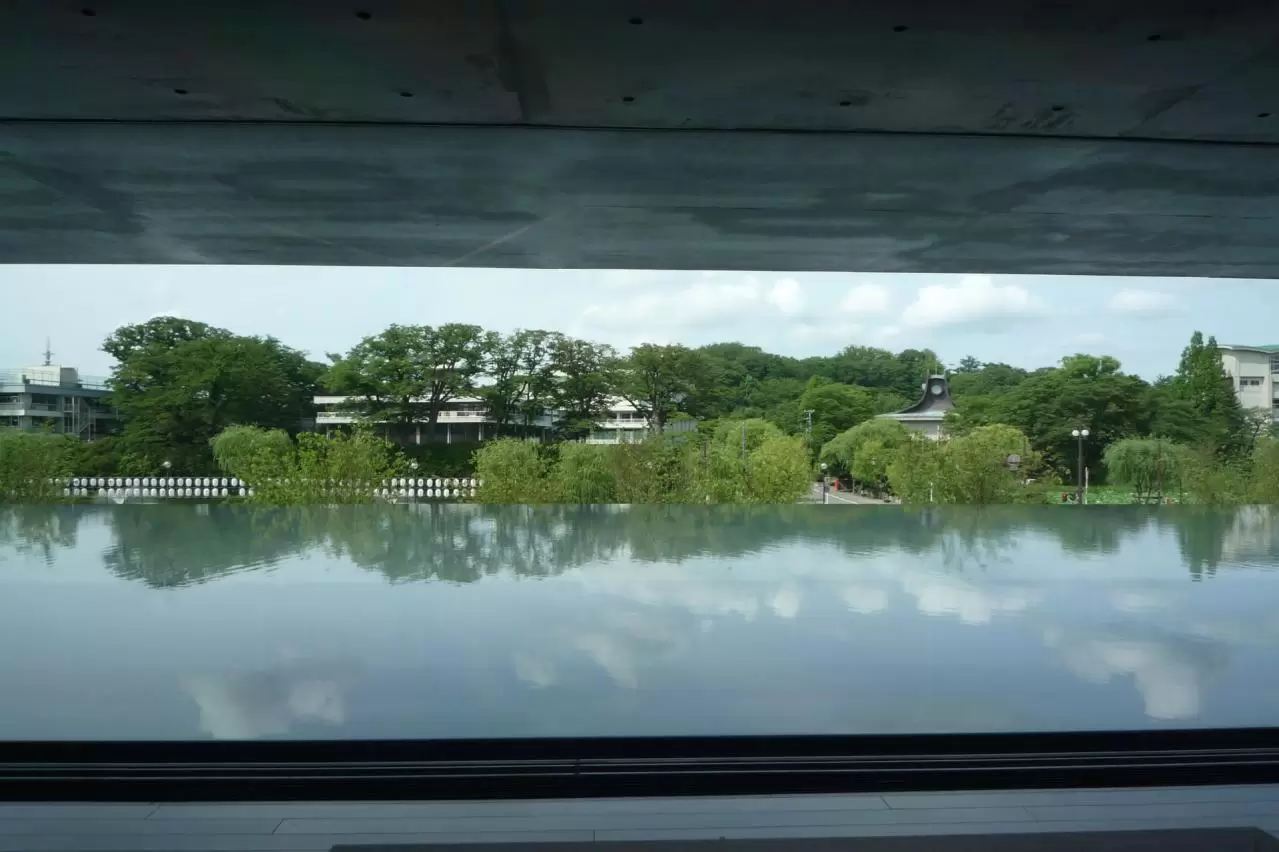
Akita Prefectural Art Museum is located in the “Area Nakaichi” cultural complex near Akita Station. Designed by one of Japan’s most renowned architects, Tadao Ando, it opened on September 28, 2013. The building incorporates triangular motifs throughout, and its exposed concrete walls and slit windows create a beautiful contrast of light and shadow, resulting in a serene and simple space. The architecture itself is a major attraction, featuring a large atrium entrance hall filled with natural light, a spiral staircase supported by no columns or walls, and a lounge overlooking the seasonal scenery of Senshu Park across a water garden.
History and Collections
The museum’s origins date back to 1967, when the former Akita Prefectural Art Museum opened in Senshu Meitoku-machi, Akita City. It primarily exhibited artworks collected by Akita businessman Masakichi Hirano (1895–1989), known as the “Masakichi Hirano Collection.” Among these, the most famous are the works of the Western-style painter Tsuguharu Foujita (Leonard Foujita, 1886–1968). Foujita and Hirano grew close in the 1930s and shared the vision of building a museum in Akita. Foujita transferred many works to Hirano, and the centerpiece created for the museum was the monumental mural Akita’s Customs (1937).
The Great Mural “Akita’s Customs”
Akita’s Customs is one of the world’s largest murals, measuring 3.65 meters in height and 20.50 meters in width. It vividly depicts festivals and daily life in early Showa-era Akita, including the Kanto Festival, snow storehouses, farm work, and traditional performing arts. This masterpiece was created in just 15 days in the Hirano family’s rice storehouse, and since its completion it has captivated many visitors as an iconic work of art representing Akita. The mural also incorporates scenes of Akita’s industries and merchant district at the time, expressing the universal human activities of celebration and everyday life.
Exhibitions and Activities
Inside the museum, Akita’s Customs and other works by Tsuguharu Foujita from the 1930s are on permanent display. The collection also includes works such as Street Performers, After the Carnival, and Sleeping Woman, allowing visitors to appreciate Foujita’s characteristic milky-white skin tones and delicate brushwork. In addition, the museum regularly hosts planned exhibitions and special exhibitions featuring a wide range of artists beyond Foujita, serving as an open venue for artistic and cultural activities for local residents and visitors alike. It also offers a rental gallery to support creative activities in the region.
Architectural Appeal
The interior, designed by Tadao Ando, features triangular design elements throughout, harmonizing with the roof form of the former museum. The natural granite floors, the ceiling structure that softly admits daylight, and the reflections of sky and trees on the water garden all create an ever-changing spatial experience depending on the time of day and season. Visitors can enjoy not only the exhibits but also the “artistic experience” created by the building itself.
Location and Access
The museum is located very close to Senshu Park, so after viewing the exhibits, visitors can also enjoy Akita’s natural beauty with a stroll through the park. From the museum café on the second floor, guests can enjoy panoramic views of the water garden and the park while relaxing at leisure. Akita Prefectural Art Museum is one of the highlights of sightseeing in Akita, offering a chance to experience Foujita’s art, the appeal of Tadao Ando’s architecture, and the culture and scenery of Akita all in one visit.
Hachibodai is a breathtaking spot where you can enjoy a panoramic view of the magnificent scenery from the highlands of the Oga Peninsula at an elevation of 180 mete...
Oga Aquarium GAO is the only aquarium in Akita Prefecture, situated in a breathtaking location overlooking the Sea of Japan. The aquarium features around 10,000 mari...
Located in Akita Prefecture, Lake Tazawa is known as the deepest lake in Japan, with a depth of 423.4 meters. The surface of the lake changes into a variety of color...
The "Akita Inu Museum," located in Odate City, Akita Prefecture, is a facility dedicated to the preservation of Akita dogs and the promotion of their charm. The muse...
The "Namahage Museum" is a facility located in Oga City, Akita Prefecture, focusing on "Namahage of Oga," which has been registered as a UNESCO Intangible Cultural H...
Hōkaeri Valley is a beautiful 10-kilometer-long gorge that stretches along the midstream of the Tamagawa River, which flows between Lake Tazawa and Kakunodate. It ha...
Kakunodate is a picturesque town located in Senboku City, Akita Prefecture, where beautiful streets from the Edo period still remain. Known as the "Little Kyoto of M...