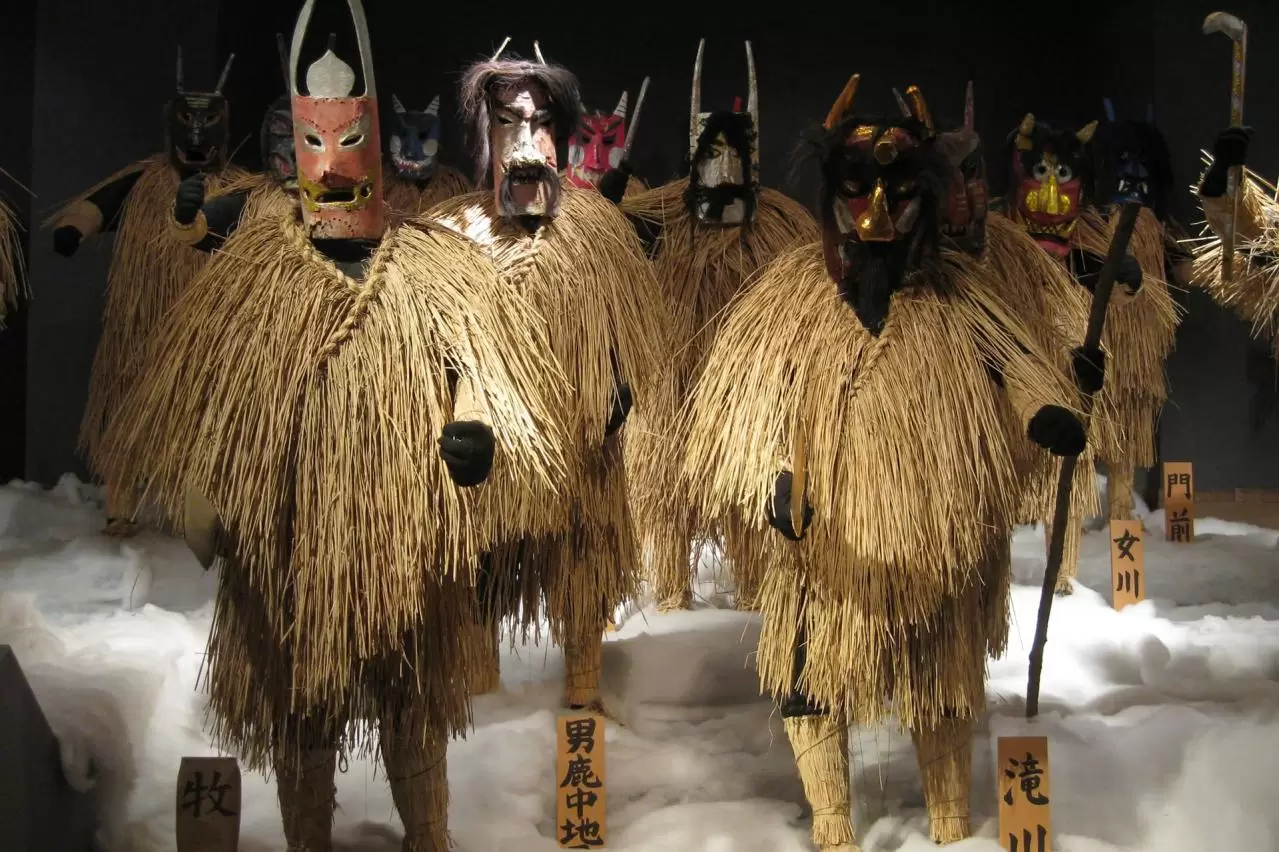
A striking display of Namahage masks
Masks from across Oga are displayed together, making for an impressive sight even if you simply compare their different styles.
AI Summary
This is an AI-generated summary. Please check the official information for opening hours, fees, and closed days.
Explore the traditions of Oga’s Namahage through exhibits, videos, and hands-on experiences.
This cultural museum is ideal for anyone curious about Oga’s Namahage. See a wide range of masks and costumes, and learn about the customs through films and explanations. The dress-up experience is popular with families, and visiting the neighboring facility can add to your understanding.
Masks from across Oga are displayed together, making for an impressive sight even if you simply compare their different styles.
At the Namahage dress-up corner, you can join in rather than just observe.
Visiting the nearby Shinzan Folklore Museum and Shinzan Shrine helps put the traditions into context.
After exploring the Namahage Museum, continue to the Shinzan Folklore Museum and Shinzan Shrine for a well-rounded visit.
★The Namahage of Shinzan, Passing Down Tradition★
In the Shinzan district, two Namahage visit each house in pairs, wearing the hornless masks that have long been handed down there.
Namahage do not enter houses indiscriminately. The decision to let them in rests with the head of the household.
A person called the “sakidachi” first checks with the homeowner in advance whether the Namahage may enter.
When the signal from the sakidachi is confirmed, the two young men dressed as Namahage burst in with a loud cry of “Uwooo!”
Each movement in Shinzan’s Namahage ritual follows long-established customs. They do not simply move around wildly.
First, immediately after entering the house, they stomp the ground seven times. Only then may they walk around inside.
Shouting rough cries such as “I smell a lazybones!” or “Is there a lazybones here?”, they stride about while forcefully stamping on the tatami.
Then the head of the household calms the raging Namahage, treats them with respect, and serves them a meal. Before sitting down at the offered tray, the Namahage stamps the ground five times. While growling “Uwooo! Uwooo!”, the homeowner offers them food and drink.
After various exchanges between the homeowner and the Namahage, the Namahage prays for a bountiful harvest in the coming year, rises again, stamps the ground three times, and resumes walking around.
Before leaving the house, the Namahage says, “We’ll come again next year!” and heads to the next home. The Namahage stamp the ground to ensure that the children of the house will live happily without illness or injury.
Seven times upon entering the house, five times before sitting at the tray, and three times when standing up—this “7-5-3” custom is unique to the Namahage of Shinzan, Oga.
This Namahage tradition is still passed down by local people today, being inherited from one generation to the next.
★Introduction to the Namahage Museum★
▶A Gathering of Namahage
More than 150 diverse Namahage masks, actually used in various parts of Oga City, are on display. The sheer scale is overwhelming.
▶Mystery Hall
Using displays of folk tools such as dugout canoes, as well as videos, graphic panels, and computer search terminals, this area introduces the distinctive climate and way of life in Oga that created, nurtured, and preserved Namahage.
▶Namahage Tradition Hall
This hall depicts the Namahage ritual that continues to live on in Oga, along with its customs and the spirit of those who preserve it. On the screen, the film “A Night of Namahage,” which introduces the New Year’s Eve Namahage custom in Oga, is shown every 30 minutes from 8:30 to 16:30.
▶Special Exhibition Corner
Various special exhibitions are held here, including displays of masks used in folk rituals similar to Namahage in Akita Prefecture and overseas.
▶Digital Namahage Transformation Corner
Experience a digital Namahage transformation using AR. Download the dedicated app inside the museum and try it on your own smartphone. You can customize the mask and the items you carry, making it a more realistic experience for both children and adults.
▶Demonstration of Namahage Mask Carving by Chiaki Ishikawa
A live demonstration of hand-carving Namahage masks by Chiaki Ishikawa, currently the world’s only Namahage mask carver and sculptor in wood. (3–4 days a week / irregularly)
▶Namahage Information Corner
You can browse information about Oga’s Namahage through books and touchscreen terminals.
▶Shop with Original and Limited-Edition Namahage Goods
We offer a wide selection of local specialties and souvenirs, including Namahage goods available only here.
#Traditional culture experience #Cultural assets/historic sites
Unsho-ji is a historic temple located in Akita Prefecture's Oga City, cherished by many since its founding in 1624. However, recent attention has shifted from its hi...
Hachibodai is a breathtaking spot where you can enjoy a panoramic view of the magnificent scenery from the highlands of the Oga Peninsula at an elevation of 180 mete...
Kakunodate is a picturesque town located in Senboku City, Akita Prefecture, where beautiful streets from the Edo period still remain. Known as the "Little Kyoto of M...
Choka Park is located about a 10-minute walk from Akita Station and offers beautiful seasonal landscapes along with the history of the Akita Domain. Originally the s...
The Akita Museum of Art, designed by the renowned architect Tadao Ando, features a tranquil and simple space. Inside the museum, various works by different artists a...
The Akita Port Tower Selion, located at the Michi no Eki (Roadside Station) Akita Port, is a symbol of Akita City. From the observation deck at 100 meters above grou...
Oga Shinzan Folklore Museum is located on the Oga Peninsula in Akita Prefecture and is a facility where visitors can experience the traditional "Namahage" culture. T...
The "Akita Inu Museum," located in Odate City, Akita Prefecture, is a facility dedicated to the preservation of Akita dogs and the promotion of their charm. The muse...