




Hiyono Sato Okuwatayama
Hiyono Sato Okuwatayama Movies


Basic Information
- Spot Name
- Hiyono Sato Okuwatayama
- Location
- 〒848-0025 1806 Okanouchi-machi, Imari-shi, Saga-ken, Japan
- Access
- 15 minutes by car from JR Imari Station. 30 minutes by car from Nagasaki Expressway Kitakata IC / 20 minutes by car from Nishi-Kyushu Expressway Higashifusai IC.
- Parking
- 400 vehicles
- Business Hours
- 9 AM to 5 PM
- Contact Information
- Phone Number:0955-23-3479
- Official Website
Map
Detailed Information
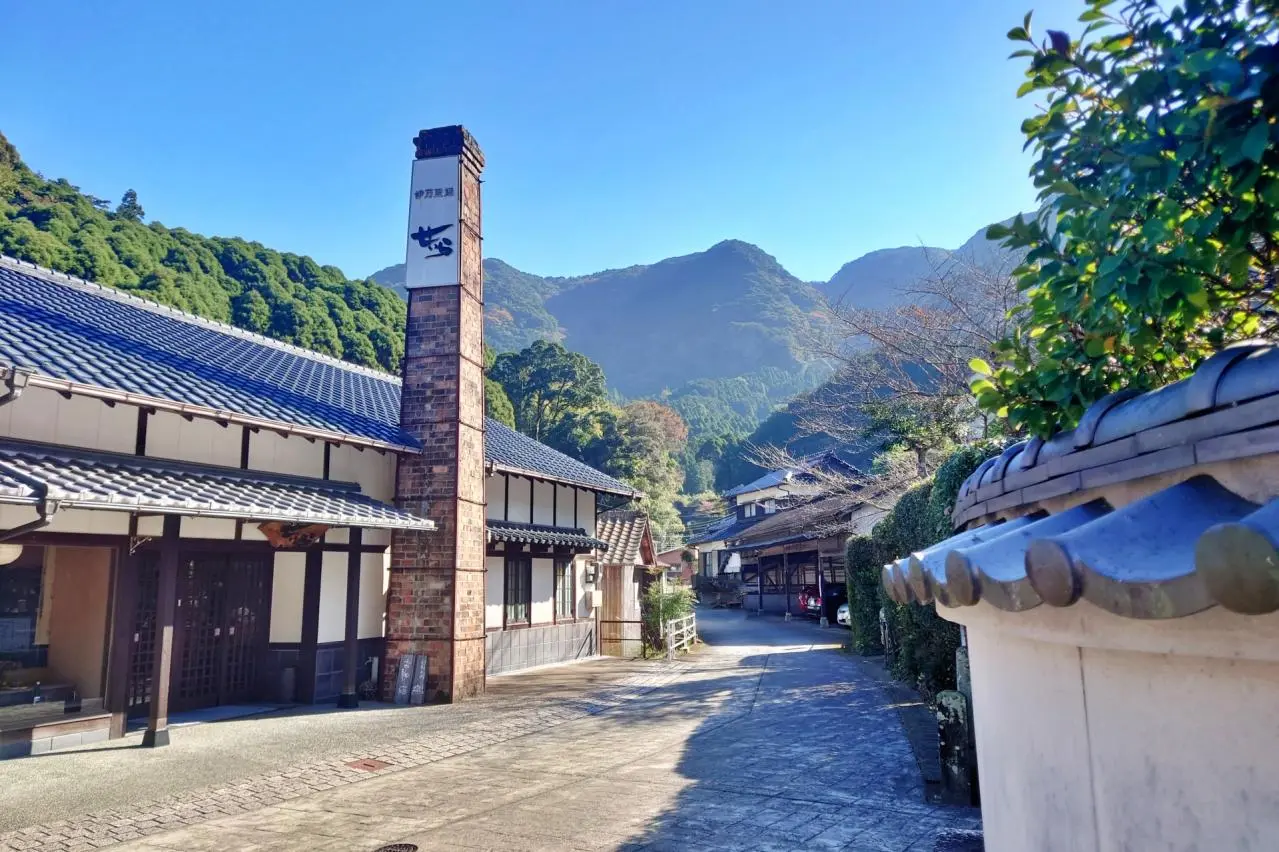
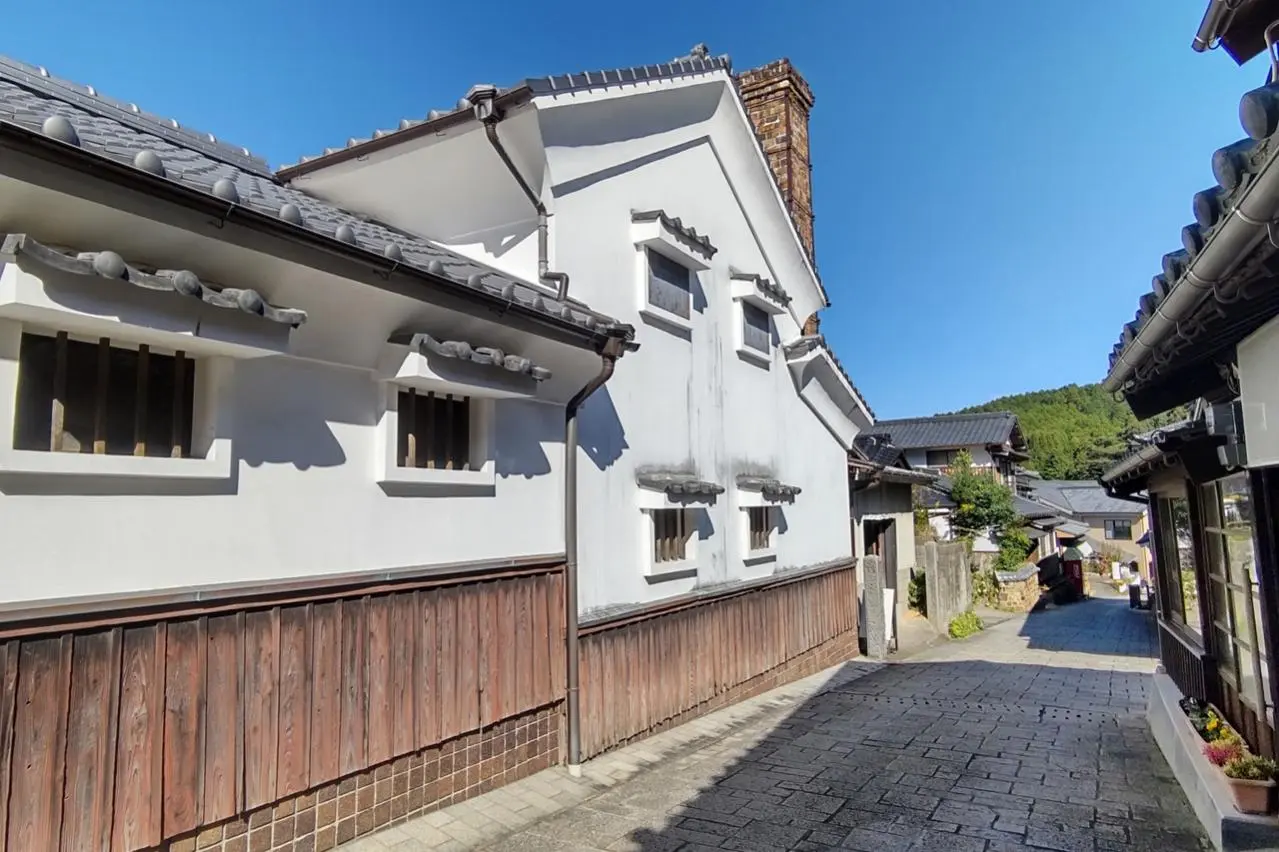
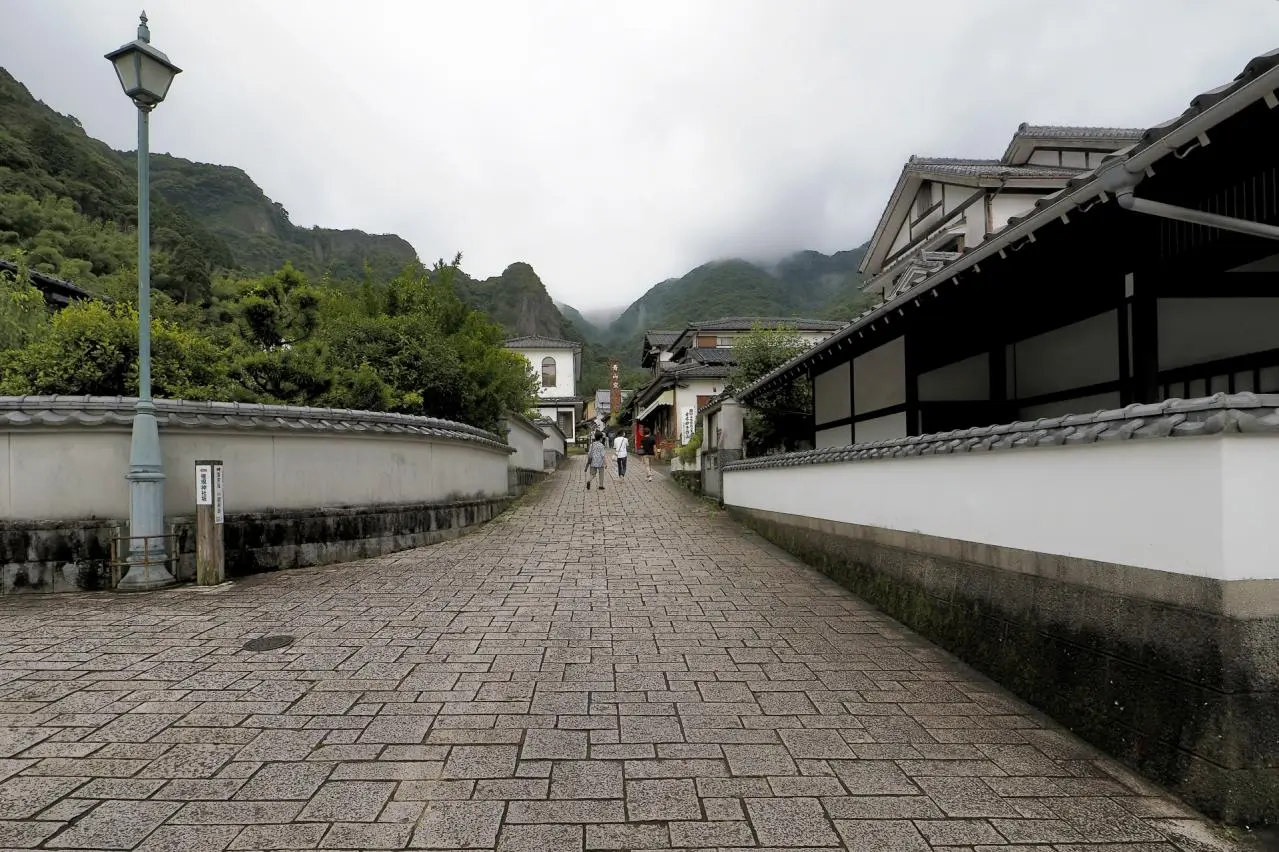
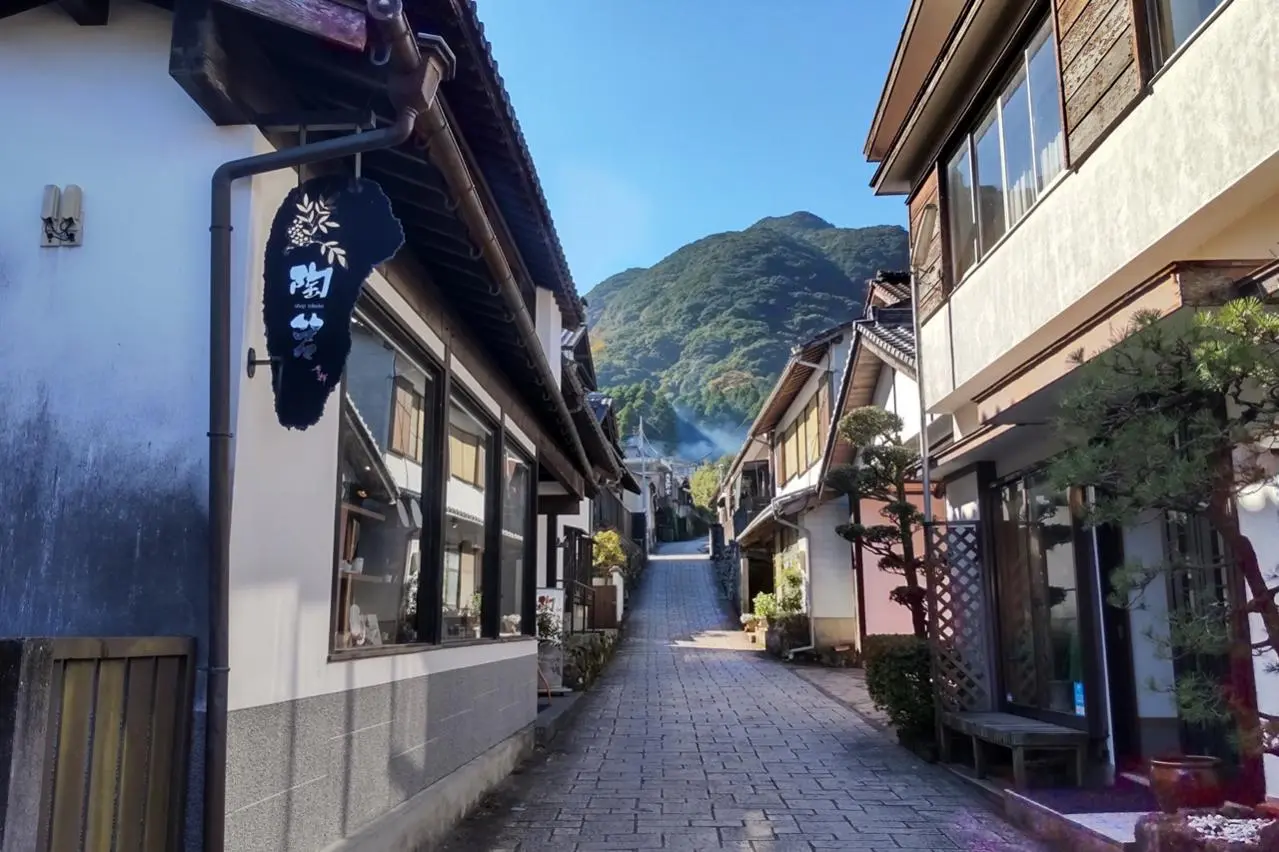
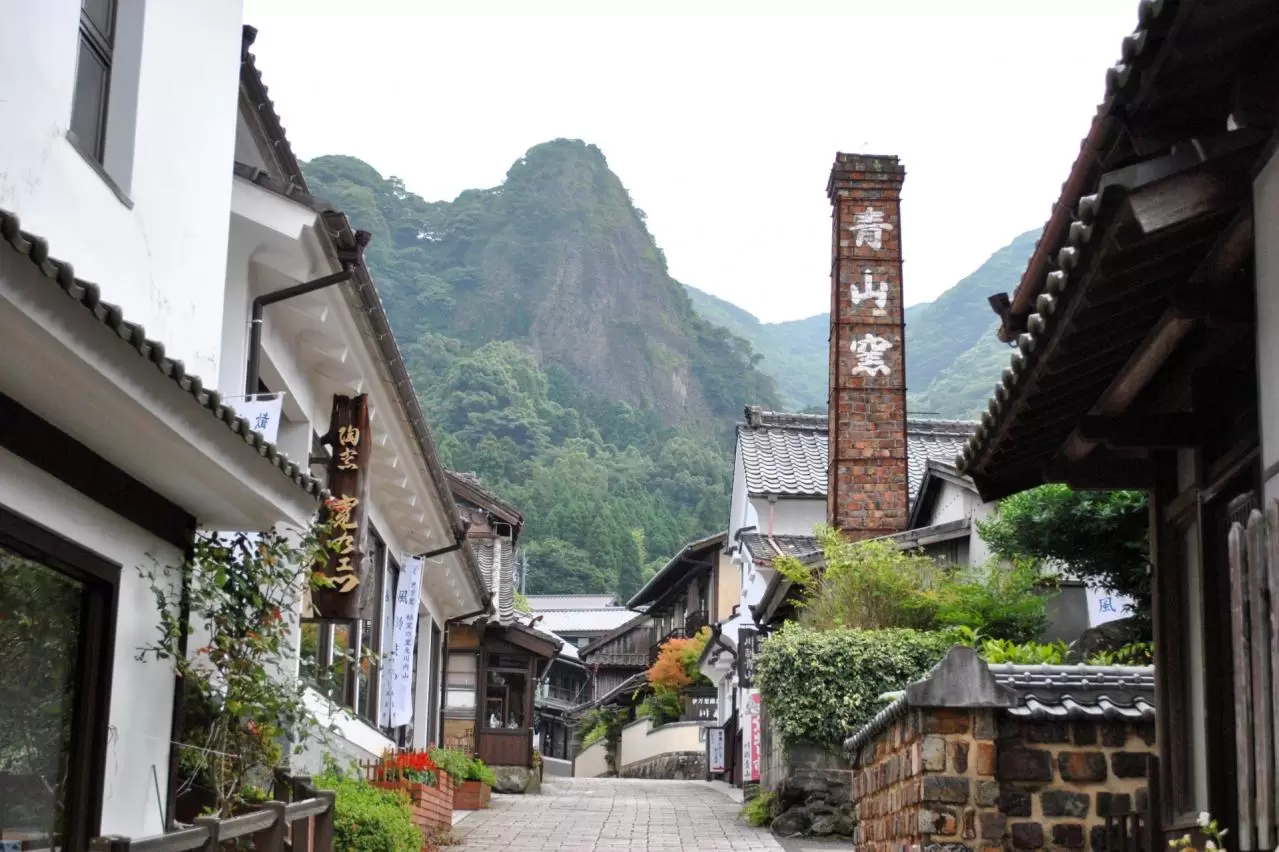
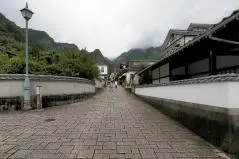
Okawachiyama, known as the Village of Secret Kilns, is a historic pottery village located in Okawachicho, Imari City, Saga Prefecture. Nestled in a valley surrounded on three sides by steep mountains, the area is dotted with kiln workshops, brick chimneys, sloping streets, and the remains of climbing kilns. The village landscape, set against rugged rocky mountains, is as beautiful as a traditional Chinese-style landscape painting. It is known as the “Village of Secret Kilns” because it offers visitors the chance to experience a pottery culture that has continued since the Edo period.
During the Edo period, Okawachiyama was home to the Nabeshima family’s official domain kilns in the Saga Domain. Domain kilns were facilities directly managed by a feudal domain, where items were produced as offerings to the shogun, gifts for court nobles and other feudal lords, and furnishings for the Nabeshima family. To ensure a stable supply of the highest-quality porcelain, the Nabeshima family gathered specially selected potters and produced porcelain using advanced techniques.
In the Hizen region, full-scale porcelain production began in the early seventeenth century after high-quality porcelain stone was discovered at Izumiyama in Arita. The Saga Domain’s official kilns were moved several times before being relocated to Okawachiyama in 1675, the third year of the Enpō era. From then until the abolition of the domain system in 1871, when the feudal domains were replaced by prefectures, the finest porcelain was produced in Okawachiyama for approximately 200 years.
One reason Okawachiyama was selected as the site of the domain kilns was its geographical setting. The village was surrounded by steep mountains on three sides, and there were only a limited number of routes in and out. The Saga Domain established a checkpoint at the entrance and strictly controlled the movement of people and goods. This was intended to prevent the pottery-making techniques, distinctive designs, and carefully selected potters developed at the domain kilns from reaching the outside world.
Although Okawachiyama itself was not completely unknown, it was not a kiln village that ordinary people could freely enter. Its status as a special place under the strict control of the domain is one of the reasons it came to be called the “Village of Secret Kilns.”
The finest porcelain produced here is known as Nabeshima, or Nabeshima ware. It was not made for widespread commercial sale, but as offerings to the shogun, furnishings for the Nabeshima family, and gifts for court nobles and other feudal lords. Quality and prestige were valued above profitability, and every stage of production—from selecting materials and shaping the vessels to decorating, glazing, firing, and inspecting the finished products—was carried out under strict supervision. As a result, Nabeshima ware is highly regarded as one of the finest examples of Japanese porcelain from the Edo period.
The principal styles of Nabeshima ware include Iro-Nabeshima, Ai-Nabeshima, and Nabeshima celadon. Iro-Nabeshima is characterized by designs painted on translucent white porcelain. Blue underglaze decoration is used to draw outlines and other details, while overglaze enamels—primarily red, yellow, and green—are used to depict the patterns. Common motifs include flowers, birds, plants, fruit, and geometric designs. By limiting the palette, the artists created an elegant and highly refined visual world. Compositions that make effective use of empty space, along with precise and tasteful decoration, are also distinctive features.
Ai-Nabeshima, generally known as Nabeshima sometsuke, uses only blue underglaze pigment to decorate white porcelain. Variations in the density of the blue and the strength of the lines create a sense of depth and dimension. Its appeal lies in the highly refined decorative techniques used to express rich scenes within a limited color palette.
Nabeshima celadon is porcelain covered with a blue-green glaze. It is characterized by its calm coloring, smooth texture, and deep, subtle glaze tones. High-quality celadon stone is said to have been found in Okawachiyama and used in Nabeshima celadon during the period of the domain kilns. In addition to pieces entirely covered in celadon glaze, artisans also produced works combining celadon with underglaze blue or polychrome decoration.
Nabeshima ware is known not only for its decoration but also for its perfectly proportioned forms. One representative example is a plate with a tall foot, known as a mokuhai-gata, or wooden-cup-shaped form. Elaborate patterns were painted not only on the surface of the plate but also on its underside and foot, demonstrating the meticulous attention paid even to areas that were difficult to see. The compositions were designed with consideration for how the plates would appear when filled with food, and seasonal motifs were another characteristic feature. Nabeshima ware was not merely intended for everyday use; it was created as an art form expressing the prestige and aesthetic sensibilities of the Nabeshima family.
One of the large-scale multi-chamber climbing kilns identified in Okawachiyama was built along a mountainside, with several firing chambers arranged in a row. It is estimated to have been approximately 137 meters long and to have contained between 27 and 30 chambers. However, the finest Nabeshima ware was not fired in every chamber. It is believed that approximately three chambers near the center, where the fire was most stable, were used to fire items intended for the domain’s official use, while other chambers produced ordinary wares for private kilns and other purposes.
The fact that only a limited number of chambers were used for the finest products illustrates the domain kilns’ unwavering emphasis on quality. At the domain kilns, highly skilled potters worked through a system of specialization. Different craftsmen were responsible for preparing the raw materials, shaping the vessels, applying underglaze decoration, glazing, adding overglaze decoration, and firing. Finished products were also subject to strict selection and quality control, and it is thought that the techniques and designs used in the kilns were carefully managed to prevent them from spreading outside the village.
When the Saga Domain was abolished in 1871, the Nabeshima domain kilns were also dismantled. However, the potters who had worked there continued making ceramics at private kilns, passing the techniques and aesthetic values developed at the domain kilns on to future generations.
Today, around 30 kilns are based in Okawachiyama, producing vessels and other crafts that make use of traditional techniques such as Iro-Nabeshima, sometsuke, and celadon. At the same time, artisans create works with forms and patterns suited to modern lifestyles. The village’s appeal lies not only in preserving tradition exactly as it was, but also in pursuing new expressions of Nabeshima ware suited to the times.
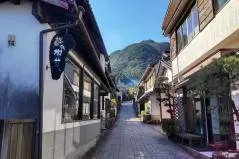
Kiln Street, which runs through the center of the village, is lined with kilns and shops, each with its own distinctive character. In addition to traditional raised-foot plates, teaware, flower vases, and sake vessels, visitors can find everyday plates and cups, accessories, ornaments, and many other items. Even when using the same sometsuke or celadon techniques, each kiln produces different colors, patterns, shapes, and textures. One of the great pleasures of exploring Okawachiyama is visiting several kilns, comparing their works, and searching for pieces that suit your personal taste.
The Nabeshima Domain Kiln Park is an essential place to visit when learning about Okawachiyama’s history. The park includes reconstructed versions of Edo-period potters’ homes, the GosaiKōjō workshop where ceramics were made, and a climbing kiln. The climbing kiln was reconstructed in 1990 for tourism. Today, it is also used to pass on climbing-kiln firing techniques to younger generations of local kiln owners.
The historical walking trails around the park include the remains of the checkpoint, the Okyoishigama kiln, the Kiyohara kiln, and other ancient kiln sites, allowing visitors to trace the history of the domain kilns. These ancient kiln sites are genuine historical remains that convey the reality of porcelain production, and differ in character from the climbing kiln reconstructed for tourism inside the park. Viewing both the actual ruins and the reconstructed facilities makes it easier to imagine the scale of production during the domain-kiln period and the work carried out by the potters.
Murals, railings, and art objects made with porcelain and ceramic shards can also be found in and around the park. Because pottery is incorporated not only into exhibition spaces but also into bridges, roads, and waterside scenery, the entire village feels like an open-air museum of ceramics. The Potter’s Bridge, with its striking stonework arch, and the Nabeshima Domain Kiln Bridge, decorated with Nabeshima mosaic tiles and jars, are popular photo spots.
At the Karasuu-goya mill hut, visitors can see a reconstruction of the system once used to grind porcelain stone into fine particles with a karasu, a traditional water-powered pounding mill. In an era before electricity, water power was used to crush hard porcelain stone into powder, supporting the production of porcelain. Okawachiyama demonstrates how porcelain production made effective use of the surrounding natural environment, including the water flowing through the valley and the slopes of the mountains.
The Meotoshi Tower, located near the remains of the checkpoint, is another of Okawachiyama’s representative attractions. Meotoshi refers to a traditional inspection method in which fired porcelain was tapped lightly and its sound was used to check for cracks and other defects. A clear sound indicated a high-quality piece, while a dull sound suggested that it might contain damage or cracks.
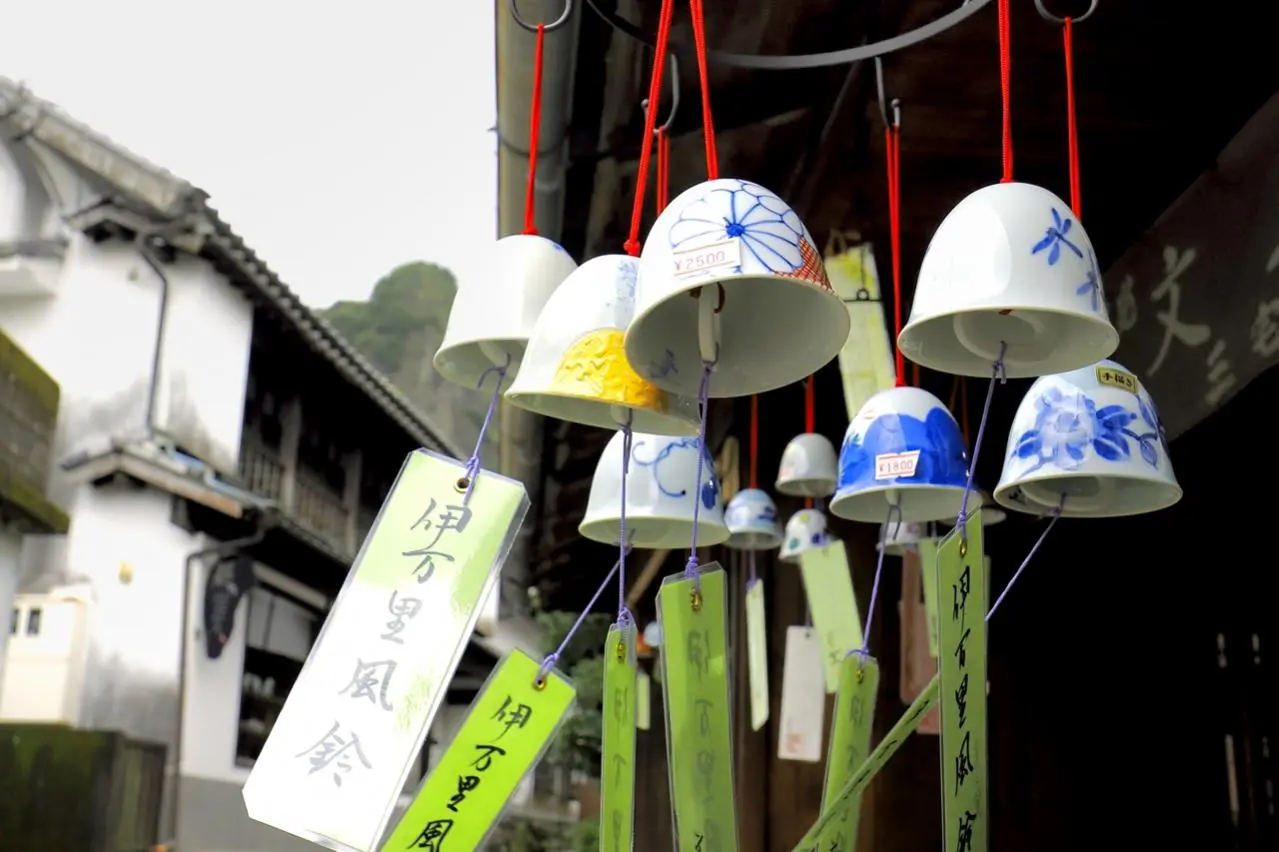
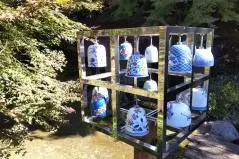
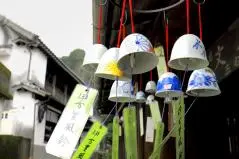
The Meotoshi Tower has 14 porcelain wind chimes made from Imari ware. Unlike ordinary wind chimes, which sound when moved by the wind, these chimes are activated when a sensor responds to visitors crossing the Potter’s Bridge. An integrated circuit then causes a large white-porcelain wind chime to ring. Its clear tone echoes through the mountain valley, making the quiet scenery of Okawachiyama even more memorable.
The sound of porcelain heard in Okawachiyama has been selected by Japan’s Ministry of the Environment as one of the “100 Soundscapes of Japan We Wish to Preserve,” under the title “The Sound of Imari Pottery.” The Meotoshi Tower offers a symbolic way to experience this distinctive sound. Porcelain produces a softer, more transparent resonance than metal or glass wind chimes, allowing visitors to experience the local pottery culture not only through sight but also through sound.
The Imari Nabeshima Ware Hall, which serves as a base for exploring the village, displays and sells representative works from the kilns of Okawachiyama. Since works from many kilns can be compared in one place, visitors may choose to stop there first to learn about the characteristics of each kiln, or visit after exploring the village to look for pieces that caught their attention. Some kilns offer hands-on activities such as pottery painting, but the content, fees, dates, and reservation requirements vary by kiln.
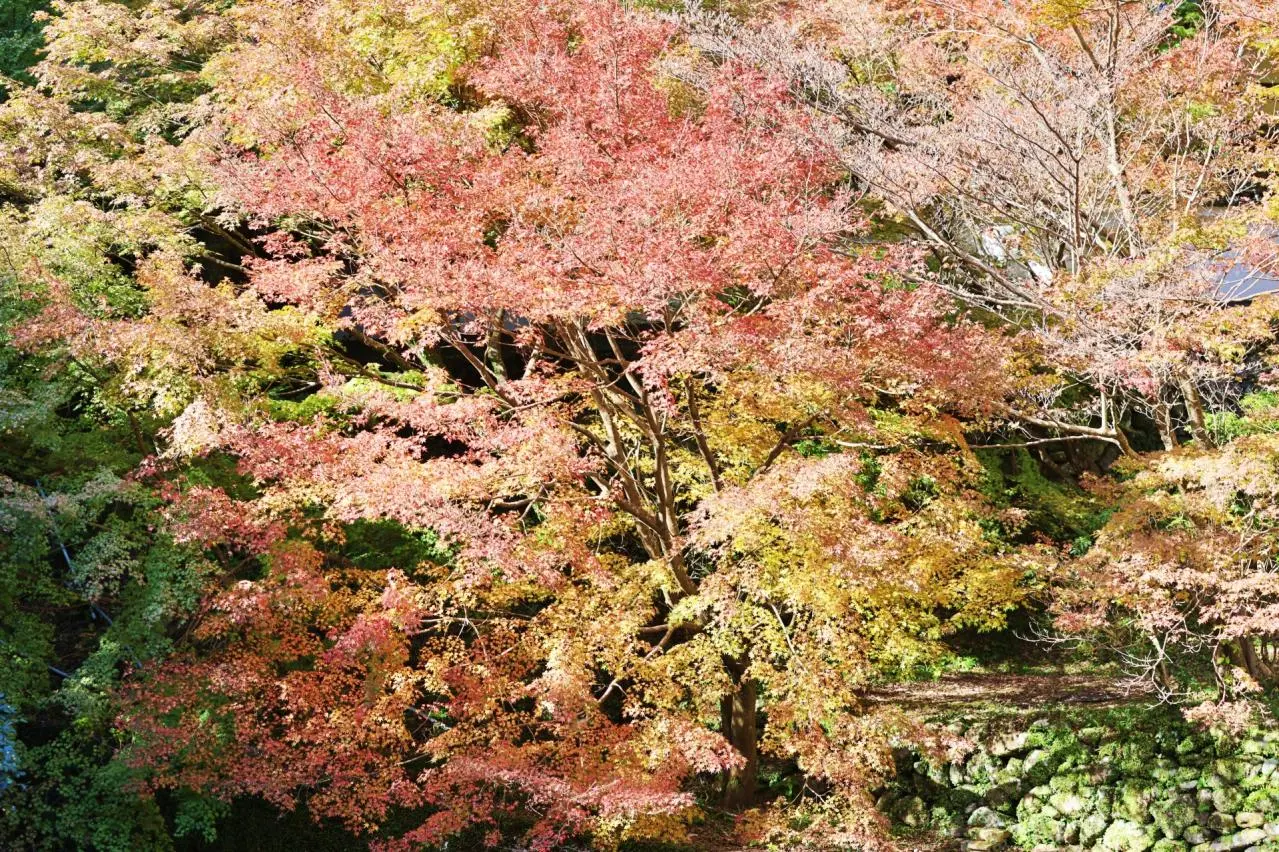
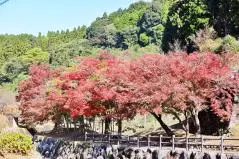
In spring, cherry blossoms and fresh green foliage color the mountain village, while autumn brings brilliant foliage. The scenery, in which brick chimneys, tiled roofs, kiln buildings, and nature blend together, takes on a different appearance with each season. Even visitors who are not primarily interested in purchasing pottery can enjoy walking through the village. Because there are slopes and uneven sections, comfortable, slip-resistant shoes are recommended.
Seasonal events are another attraction of Okawachiyama. During the spring Golden Week holiday, the Nabeshima Domain Kiln Pottery Fair is usually held, with each kiln displaying and selling a variety of works. At the Nabeshima Domain Kiln Wind Chime Fair in summer, approximately 2,000 porcelain wind chimes made by the kilns of Okawachiyama decorate the streets and shopfronts, filling the mountain valley with cool, soothing sounds. In autumn, the Nabeshima Domain Kiln Autumn Festival takes place, allowing visitors to enjoy exploring the kilns and selecting pottery amid the fall foliage. The dates and details of these events may vary from year to year, so it is advisable to check before visiting.
The Village of Secret Kilns, Okawachiyama, is more than simply a place to purchase beautiful tableware. The history of the domain kilns established by the Saga Domain to produce the finest porcelain, the strict controls designed to protect their techniques, the exceptional skills of the potters, and the production methods that made use of the natural environment have all been passed down through the townscape and its kilns.
By visiting the kilns amid scenery reminiscent of a traditional landscape painting, exploring the historic kiln ruins, and listening to the sound of porcelain wind chimes, visitors can experience through all five senses the atmosphere of the land where Nabeshima ware was created. With approximately 350 years of pottery culture existing alongside modern craftsmanship, Okawachiyama is a historic and artistic village that should not be missed when visiting Imari.
#Traditional culture experience #Cultural assets/historic sites
Saga Tourist Attractions
View List
Karatsu Castle
Karatsu Castle is a historic castle located in Karatsu City, Saga Prefecture, Japan. This castle was built by Terasawa Shimanokami Hirotaka, a retainer of Toyotomi H...

Nanatsugama
Nanatsugama is a scenic spot in the Kanmon Straits designated as a national natural monument. It features a magnificent natural formation created by the erosion of b...

Yutokuhinari Shrine
Yutoku Inari Shrine is located in Kashima City, Saga Prefecture, and is counted among the three great Inari shrines of Japan, along with Fushimi Inari and Kasama Ina...


Mifuneyama Rakuen
Mifuneyama Rakuen is a magnificent garden located in Takeo City, Saga Prefecture, created by Lord Nabeshima Shige Yoshin 1845. Spanning a vast area of 150,000 tsubo,...

Rainbow Pine Grove
Niji no Matsubara is one of Japan's three great pine forests, stretching approximately 4.5 km along the coastline of Karatsu City in Saga Prefecture, and it has been...

Takeo City Library and Historical Museum
Takeo City Library and Historical Museum is a new-style facility operated by Culture Convenience Club (CCC), integrating a library, bookstore, and cafe. Since its re...

Yoshinogari Historical Park
Yoshinogari Historical Park is a national park where visitors can experience Japan's Yayoi period, located on about 54 hectares of beautiful hills straddling Kanzaki...