Mone no Ike
Mone no Ike Movies


Basic Information
- Spot Name
- Mone no Ike
- Location
- 〒501-2901 448 Itadori, Seki City, Gifu Prefecture, Japan
- Access
- [For those coming by car] Mino IC → National Route 156 → Prefectural Route 81 → National Route 256 → Sekishi Itadori Shiratani
[For those coming by public transport] Take the Gifu Itadori Line from JR Gifu Station to "Horado Kiwi Plaza," then take the Itadori Fureai Bus and get off at "Monet's Pond." It is a 150m walk from there to the destination. - Parking
- Available
- Business Hours
- Open for visit.
- Regular Holiday
- None
- Contact Information
- Phone Number:0581-57-2111
- Official Website
Map
Detailed Information
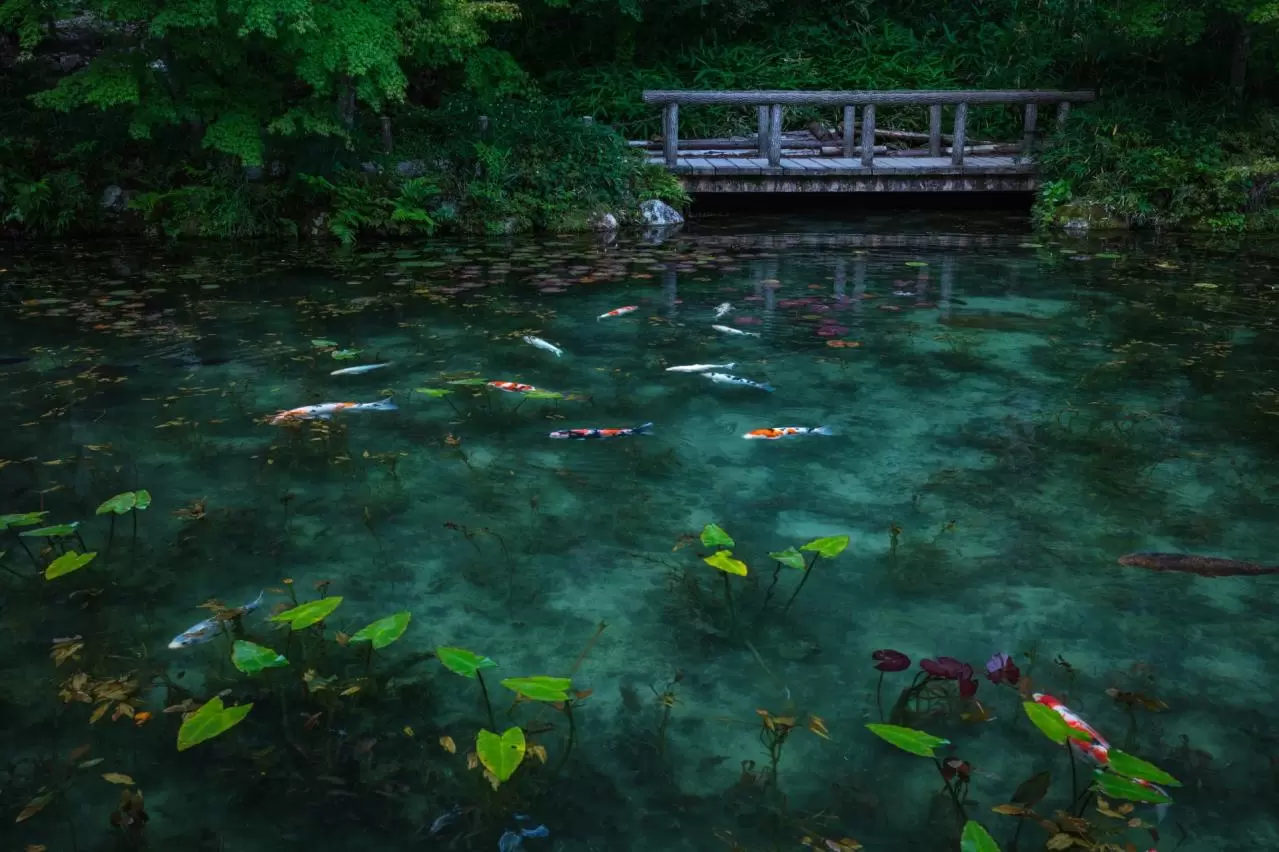
"Monet’s Pond," officially known as the Nameless Pond, located in Itadori, Seki City, Gifu Prefecture, is a popular spot where crystal-clear spring water, beautiful water lilies, and gracefully swimming Nishikigoi carp create a picture-perfect landscape that looks just like a painting. The pond lies along the approach to Nemichi Shrine in the Itadori area of Seki City, quietly resting beside the shrine grounds.
Because of its dreamlike scenery reminiscent of Claude Monet’s masterpiece Water Lilies, this pond came to be called "Monet’s Pond." Water lilies floating on the surface, vividly colored Nishikigoi swimming below, and the changing hues of the water depending on the light captivate everyone who visits.
A Stunning View Born by Chance
Monet’s Pond was originally not a tourist attraction, but an irrigation reservoir used for agriculture. Around 1999, people involved with Flower Park Itadori, which produced and sold flower seedlings nearby, planted water lilies there, and local residents released Nishikigoi into the pond, creating the beautiful scenery seen today.
Then, around 2015, a photo posted on social media became a sensation for looking “just like a Monet painting” and spread rapidly. It quickly transformed into a sightseeing destination attracting attention from both Japan and overseas. One of its greatest appeals is that it is not a deliberately constructed tourist site, but a “nameless spectacular view” born from the beauty of nature, the feelings of local people, and a series of coincidences.
The Secret Behind Its Remarkably Clear Water
The pond is fed by spring water from the Itadori River system. The Itadori River is the largest tributary of the Nagara River, one of Japan’s Three Great Clear Rivers, and the pure water brought down from the mountains supports the natural beauty of this entire region.
This spring water is said to contain minerals and have properties that make it easy for the water to remain clear. As a result, the pond boasts exceptional transparency, and the sight of Nishikigoi swimming through the pristine water looks almost as if they are floating in the air. Depending on the time of day, weather, and viewing angle, the surface of the water shifts in appearance, taking on transparent, blue, or green tones, allowing visitors to enjoy a different kind of beauty each time they come.
Seasonal Highlights
Monet’s Pond shows a different face throughout the year.
Spring to Autumn (May to October)
This is the season when the spring water increases and the pond becomes especially clear. Water lilies bloom from late May to late October, with their peak season from early June to late July. In early summer, hydrangeas also bloom around the pond, so it is recommended to visit together with the Itadori area’s famous “Hydrangea Road” and “Hydrangea Garden.”
Autumn Foliage Season (Around November)
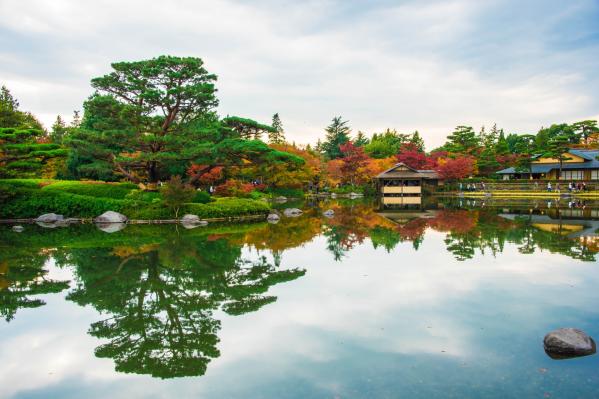
The maples surrounding the pond turn red and orange, creating a vivid contrast with the blue, crystal-clear water. The autumn leaves reflected on the surface and the fallen leaves floating on the water create a refined scene that feels like a fusion of Western painting and Japanese autumn.
Winter
Thanks to the spring water, the pond’s water temperature remains relatively stable throughout the year, making it less likely to freeze even in the coldest season. On snowy days, you can see a fantastical version of Monet’s Pond covered in white, revealing a serene beauty unique to winter.
Best Time to Visit and Viewing Tips
The best time to enjoy Monet’s Pond at its most beautiful is from the morning until around noon. In particular, from about 9:00 a.m. to 11:00 a.m., when soft morning light shines in, the water’s clarity and colors stand out, and the beauty of the water lilies and Nishikigoi is especially enhanced. Another attraction of this time is that it is relatively less crowded.
While many water lilies generally bloom in the morning, at Monet’s Pond they may also open from midday to evening due to the cooler water temperature. Since blooming times vary daily depending on weather and temperature, each day’s scenery can be enjoyed as a once-in-a-lifetime encounter.
Things to Enjoy Nearby
Nemichi Shrine is located right next to the pond, so it is also recommended to take a stroll while visiting the shrine. The area along the Itadori River is also known as a famous spot for ayu fishing, and during the season, there are restaurants serving ayu dishes. Taking a break with a local specialty such as Mochimatsuya’s Sasabune Maki is another enjoyable part of the trip.
Summary
The Nameless Pond, commonly known as Monet’s Pond, is not an artificially created tourist destination, but a miraculous place born from the beauty of nature, the feelings of local people, and a chance combination of events. The pond’s scenery changes with the seasons, time of day, and quality of light, offering new impressions no matter how many times you visit. Be sure to enjoy the landscapes of each season and spend a moment as if you have stepped into the world of a masterpiece.
Gifu Tourist Attractions
View List
Takayama Shrine
Takayama Jinya is a location where the governors and officials of the Edo period conducted their administration, and the term "Jinya" refers collectively to the offi...

Hida Takayama Old Town
The "Old Town" of Hida Takayama consists of three main streets that developed as a merchant town and served as the center of a castle town. Under the eaves lined wit...

Hida no Sato
Hida no Sato is an open-air museum featuring over 30 traditional gassho-zukuri houses that have withstood heavy snowfall, representing Hida's architectural heritage....

Gujo Hachiman Castle
Gujo Hachiman Castle is located in Gujo City, Gifu Prefecture, and it is Japan's oldest wooden reconstructed castle. Built by Endo Morikazu during the late Sengoku p...


Magome-juku
Magome-juku is a historic town that prospered as a post town on the Nakasendo route. It retains the charm of the Edo period, with its cobblestone paths and tradition...

Gero Onsen
Gero Onsen is a hot spring resort located in the basin of the Hida River, known as one of Japan's three famous hot springs, along with Arima Onsen in Hyogo Prefectur...

Shirakawa-go Historic Village
Shirakawa-go Gassho-zukuri village is located in Gifu Prefecture, Japan, where a unique architectural style known as Gassho-zukuri has been preserved for hundreds of...