Hida no Sato
Hida no Sato Movies


![[高山•白川郷•飛騨の里] Takayama Travel (Japan Travel Vlog)](https://i.ytimg.com/vi/93R-BnejvtE/mqdefault.jpg)


![[JRパスの旅5] 飛騨の里と古い街並み案内#takayama#japantravel #jrpass #日本旅行 #飛騨の里#古い街並](https://i.ytimg.com/vi/WB44dUv76Og/mqdefault.jpg)
Basic Information
- Spot Name
- Hida no Sato
- Location
- 〒506-0055 1-590 Kamikamotomachi, Takayama City, Gifu Prefecture, Japan
- Access
- Right next to Hida no Sato bus stop. About 10 minutes from Takayama IC on the Chubu Jukan Expressway.
- Parking
- 250 spaces
- Business Hours
- 8:30 AM to 5:00 PM
- Regular Holiday
- None
- Fees
- Adults: 700 yen, Children (elementary and junior high school students): 200 yen.
- Contact Information
- Phone Number:0577-34-4711
- Official Website
Map
Detailed Information
Hida no Sato — An Open-Air Village Museum Preserving the Lives and Culture of Hida
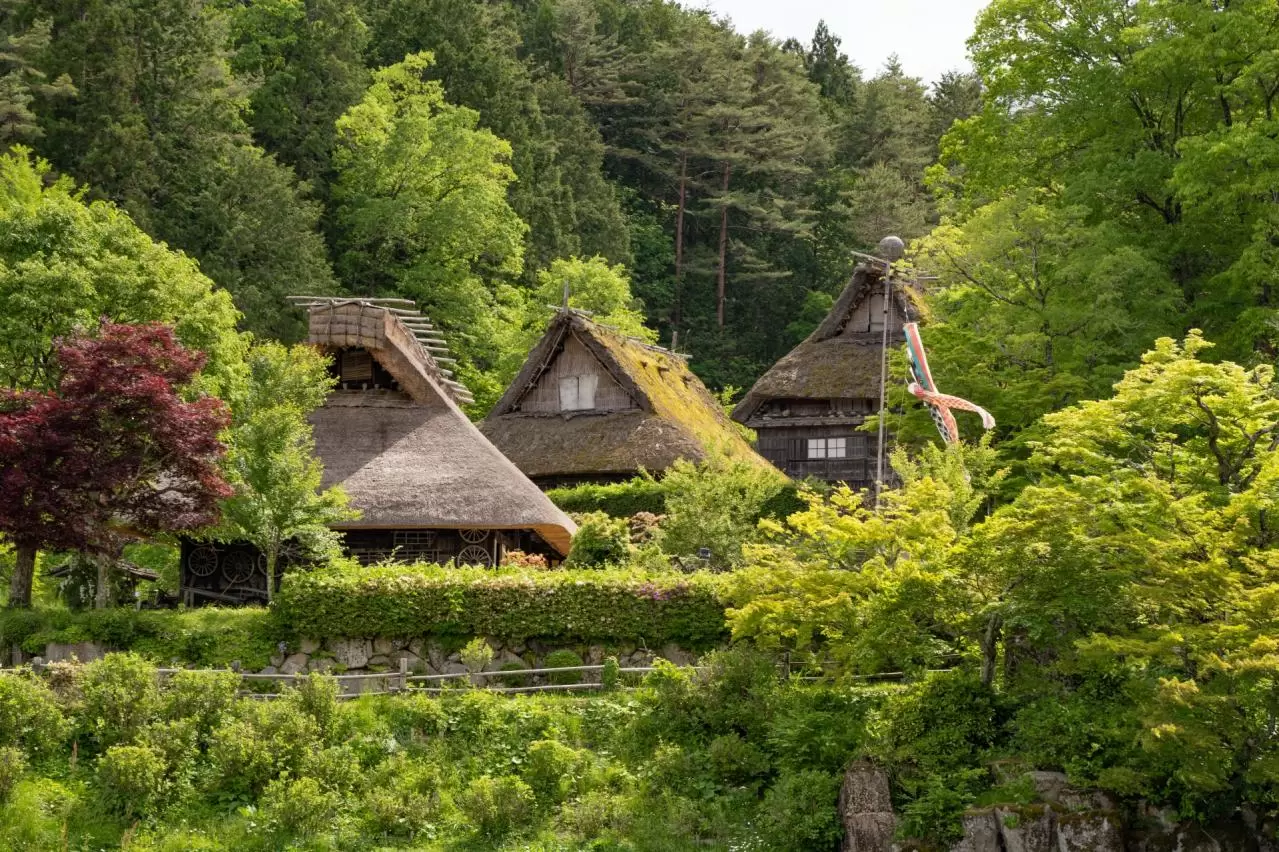
Hida Folk Village, Hida no Sato, in Takayama City, Gifu Prefecture, is an open-air village museum where old houses from the Hida region have been relocated and restored. More than 30 buildings representing Hida’s distinctive architectural styles stand here, including gassho-zukuri farmhouses that have withstood heavy snowfall, as well as thatched-roof and kurogaki-thatched houses, preserving the landscape of a bygone mountain village for the present day. The grounds also include four nationally designated Important Cultural Properties, making it a valuable place to learn about Hida’s history and way of life.
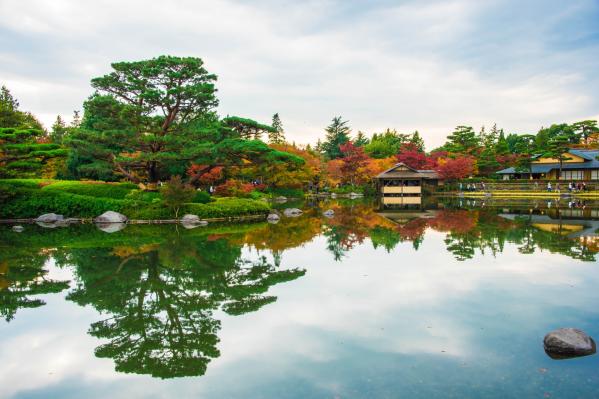
Spanning approximately 130,000 square meters, the vast site is surrounded by mountains, ponds, and fields in a rich natural setting. Together with the changing seasons, it offers a full sensory experience of the wisdom and culture cultivated by the people of Hida.
Highlights of Hida no Sato
■ Gassho-zukuri and thatched-roof farmhouses
The greatest highlight of Hida no Sato is the scattered group of gassho-zukuri and thatched-roof old houses. Gassho-zukuri features steeply pitched roofs and is a style unique to the Hida region, where heavy snowfall is common. Throughout the houses, you can see ingenious designs created to let snow slide off naturally and protect the buildings. Inside, irori hearths and attic rooms remain, allowing visitors to see up close how people once lived and raised silkworms.
■ Kurogaki-thatched houses
Also on display are kurogaki-thatched houses, whose roofs are made using split wooden planks. Simple yet sturdy, these houses convey the architectural culture rooted in the lives of people in this mountainous region.
■ Recreating old livelihoods and daily life
Many farm tools, household items, and production tools used at the time are displayed in each house. Work buildings such as bracken starch huts have also been restored, giving visitors a concrete sense of rural livelihoods and everyday life in the past. There are also storehouses, facilities once used in town corners, and traditional wooden play equipment, so both children and adults can enjoy learning while exploring.
■ Culture of daily life and hands-on experiences
At Hida no Sato, demonstrations of straw craft, Hida sashiko embroidery, and braided cords are held, allowing visitors to observe traditional handcrafts up close. Depending on the schedule, hands-on experiences are also available, offering the chance to engage directly with Hida’s culture through actual craftwork.
In the craft village, traditional handicrafts are produced while living in old houses, and this “living culture” continues to be carefully handed down to the present day.
■ Folk beliefs and traditional events
Belief was deeply rooted in the lives of the people of Hida. Within the grounds, there are shrines with stages used for dedicating folk performing arts, as well as Jizo statues scattered throughout, allowing visitors to feel the presence of folk beliefs.
In addition, seasonal traditional events such as New Year decorations, Setsubun, the Doll Festival, carp streamers, rice planting, Tanabata, and rice harvesting are recreated and preserved, continuing efforts to pass Hida’s culture on to the future. Every October, traditional performing arts such as lion dance and chikenraku are also performed by children.
■ Seasonal nature and illuminations
The natural beauty of Hida no Sato is another major attraction.
• Spring: Cherry blossoms and wildflowers bloom, creating beautiful harmony with the thatched-roof houses
• Summer: Surrounded by fresh greenery, visitors can enjoy scenes of rice planting and refreshing walks
• Autumn: Autumn leaves and rice harvest scenery spread across the village, evoking the original Japanese landscape
• Winter: Snow-covered gassho villages create a dreamlike world
The illuminations held especially in autumn and winter are particularly enchanting, with gassho-zukuri houses glowing against the deep black darkness, captivating many visitors.
■ Facilities for a comfortable visit
Rest areas and benches are provided throughout the grounds, making it easy to enjoy a leisurely stroll. Pets are allowed under certain conditions, making it convenient for the whole family to visit.
At the Hida Takayama Memory Experience Hall next to the bus stop, visitors can enjoy more than 10 hands-on activities, including making sarubobo dolls, without a reservation. For groups such as school trips, the facility also accommodates up to 200 participants by renting out a farmhouse.
Summary of the appeal of Hida no Sato
Hida no Sato is more than just a display of old houses; it is a living museum where visitors can experience the nature, lifestyle, and culture of Hida with all five senses.
A collection of precious buildings including gassho-zukuri houses, historical daily tools, traditional events and hands-on programs, and beautiful seasonal scenery all come together to give visitors a sense of nostalgia and learning.
When visiting Hida Takayama, be sure to stop by Hida no Sato and take your time exploring. Immerse yourself in the wisdom and culture nurtured by the people of Hida, as well as the quintessential Japanese landscape, to your heart’s content.
#Townscape/Bikan Historical Quarter #Museums/Museums #Cultural assets/historic sites
Gifu Tourist Attractions
View List

Magome-juku
Magome-juku is a historic town that prospered as a post town on the Nakasendo route. It retains the charm of the Edo period, with its cobblestone paths and tradition...

Hida Takayama Old Town
The "Old Town" of Hida Takayama consists of three main streets that developed as a merchant town and served as the center of a castle town. Under the eaves lined wit...

Takayama Shrine
Takayama Jinya is a location where the governors and officials of the Edo period conducted their administration, and the term "Jinya" refers collectively to the offi...

Shin-Hotaka Ropeway
The Shin-Hotaka Ropeway, the first two-story gondola in Japan, spans a total length of 3,200 meters and takes you to a world above the clouds at an elevation of 2,15...

Gujo Hachiman Castle
Gujo Hachiman Castle is located in Gujo City, Gifu Prefecture, and it is Japan's oldest wooden reconstructed castle. Built by Endo Morikazu during the late Sengoku p...

Gero Onsen
Gero Onsen is a hot spring resort located in the basin of the Hida River, known as one of Japan's three famous hot springs, along with Arima Onsen in Hyogo Prefectur...

Yoro Falls
Yoro Falls, known for centuries as the "Waterfall of Filial Piety," is a renowned waterfall selected as one of Japan's Top 100 Waterfalls. With a height of approxima...