Takayama Shrine
Takayama Shrine Movies


Basic Information
- Spot Name
- Takayama Shrine
- Location
- 〒506-0012 1-5 Hachiken-cho, Takayama-shi, Gifu-ken, Japan
- Access
- 10 minutes on foot from JR Takayama Station.
[Bus] Machinami Bus "Takayama Jinya-mae". - Parking
- There is no dedicated parking lot. Please use the municipal parking facilities.
- Business Hours
- April 1 - October 31: From 8:45 AM to 5:00 PM (Admission closes at 4:30 PM)
November 1 - March 31: From 8:45 AM to 4:30 PM (Admission closes at 4:00 PM) - Regular Holiday
- December 29, 31 and January 1.
- Fees
- 440 yen (free for high school students and below)
- Contact Information
- Phone Number:0577-32-0643
- Official Website
Map
Detailed Information
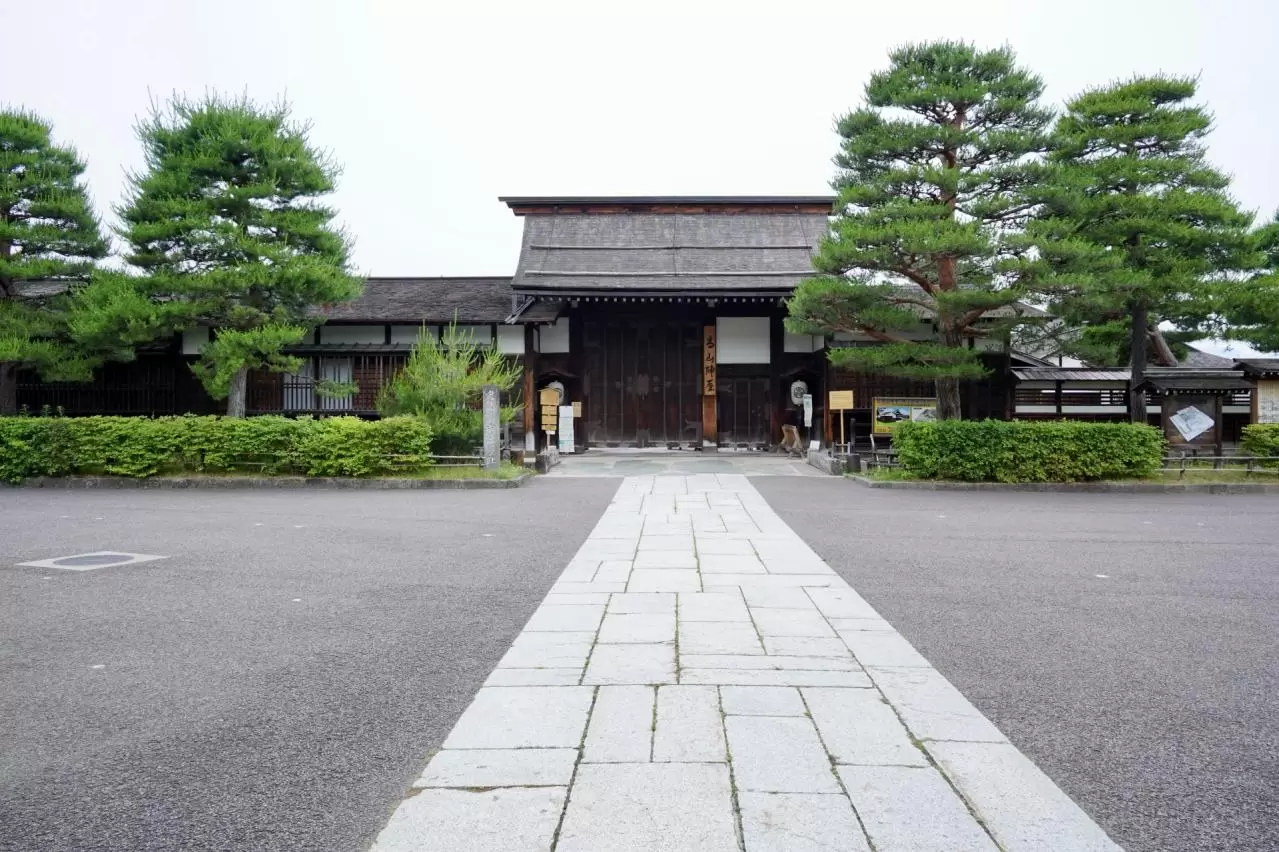
Takayama Jinya | The only surviving district magistrate’s office that still conveys the politics of the Edo shogunate
Takayama Jinya was the place where district magistrates and local officials carried out administrative duties to govern Hida Province during the Edo period.
“Jinya” is a general term for a government office complex that included the “Oyakusho” (official government office), the residence of the magistrate, and the “Okura” storehouses used to keep rice collected as taxes and other supplies.
It is said that there were more than 50 district magistrates’ offices nationwide at the end of the Edo period, with some sources saying there were over 60. However, Takayama Jinya is the only one where the main buildings from that time still remain, making it an exceptionally valuable historic site.
1. The Beginning of Its History | 1692, When Hida Province Became a Direct Territory of the Shogunate
In the early Edo period, Hida Province was governed under the Takayama Domain ruled by the Kanamori clan.
However, in 1692, by order of the Edo shogunate, the Kanamori clan was transferred to Dewa Province (now part of Yamagata and Akita Prefectures), and Hida Province became a direct territory of the shogunate.
A direct territory was land ruled directly by the shogunate and served as an important economic foundation. The exact reason why Hida was made a direct territory is still unclear, but it is believed that the abundance of mountain forest resources played a role.
At first, the shogunate’s base of control was the residence of the Kanamori family’s chief retainer, but in 1695 it was moved to its present location, and at the same time a rice storehouse was relocated from the Sannomaru of Takayama Castle. In this way, the foundation of today’s Takayama Jinya was established.
2. A Political Stage for 177 Years | 25 Generations of Magistrates Worked Here
From 1692 to 1868, for 177 years, 25 successive magistrates and district governors carried out administrative duties at Takayama Jinya to govern Hida under the shogunate.
The administrative system also changed over time. Up to the third Ina magistrate, the post was held concurrently with the Kanto district magistracy. From the fourth Moriyama magistrate onward, it became dedicated to Hida, though at first the magistrate is said to have lived in Edo.
It was from the time of the seventh Hasegawa magistrate that the official is thought to have resided in Takayama and carried out duties directly on site.
3. Promotion to District Governor in 1777 | Proof of Hida’s Growing Importance
In 1777, during the reign of the 12th magistrate, Ohara, Hida’s magistrate was promoted to district governor in recognition of achievements such as increased kokudaka through land surveys.
As a result, Hida Province came to be regarded as an important direct territory for the shogunate, on par with the Kanto, western Japan, and Mino regions, and became a politically and economically significant area.
4. The Reason It Still Exists Today | Used as an Administrative Center Even After the Meiji Period
Takayama Jinya did not lose its role after the end of the Edo period. It continued to serve as the administrative center of the Hida region even after the Meiji Restoration.
The building was used as the prefectural office until 1969. After the prefectural office was moved, work began to restore the complex to its Edo-period appearance and open it to the public. Restoration and repair work was carried out from 1970 to 1983. Further improvements were made later, and in 1996 the Edo-period appearance was reproduced more faithfully.
Takayama Jinya was designated a National Historic Site in 1929.
5. Highlights | The Three Areas of “Oyakusho,” “Yakutaku,” and “Okura”
Today, Takayama Jinya is broadly composed of three areas: the “Oyakusho” (government office), “Yakutaku” (residence), and “Okura” (storehouses).
Because the political center, living quarters, and system for handling tax rice are all gathered on the same grounds, one of its great attractions is that visitors can experience the administration of a local government in the Edo period in a vivid, three-dimensional way.
Oyakusho (the center of administration)
This was the central space where the district governor conducted official duties, serving as the government office. At the entrance, access points were separated according to social status, giving a sense of the strict order of the time.
Gimisho and Osujiro (the place of judgment)
A Gimisho was installed within the Jinya, where investigations and judgments were carried out. There were also two Osujiro areas, said to have been divided between a place for receiving petitions from residents and a place where actual trials were held.
Ohiroma (the stage for important ceremonies)
This was the largest space in the Jinya and was used for important events such as New Year observances. The layout, which offers a view of the garden across the veranda, also conveys a sense of formality and prestige.
Kitchen and living spaces (daily life of officials)
The kitchen displays kettles and utensils, allowing visitors to see what life was like at the time.
In rooms such as “Arashiyama no Ma” (the main living quarters), where the district governor and their family lived, visitors can sense the simple yet functional lifestyle of the samurai class.
Okura (storehouses for tax rice)
The Okura were storehouses used to keep tax rice and other goods, and are historically valuable structures. They are now used as exhibition rooms where visitors can view materials related to politics and daily life in the period. The traditional roofing techniques used here are also a highlight.
6. Beauty in the Details | Enjoy Tatami, Patterns, and Design
Takayama Jinya becomes even more fascinating when you pay attention not only to the whole building but also to its details. There are about 40 rooms inside, and the types of tatami mats and tatami edging are selected according to the purpose and rank of each room.
Patterns such as “Seigaiha” waves painted on the large floor of the entrance, and “Mamuki Usagi” rabbit motifs used as decorative nail covers, reflect the aesthetic sense and wishes of the Edo period. Exploring the building while looking for these design details is one of the special pleasures of visiting Takayama Jinya.
7. How to Enjoy Takayama Jinya | Combine It with the Morning Market, Seasons, and Guided Tours
A morning market is held every day in front of Takayama Jinya, with many stalls lining the area and creating a lively atmosphere. By visiting the morning market together with the Jinya, you can experience both history and everyday life as they exist today.
Takayama Jinya is also blessed with the beauty of all four seasons. Visitors can enjoy different expressions depending on the time of year: fresh greenery in spring, deep green in summer, autumn foliage in fall, and snowy scenery in winter. Since winter is especially cold, it is recommended to prepare for the cold when visiting.
If you join a guided explanation by a staff member, you can deepen your understanding of the building’s structure and historical background, making your visit even more rewarding.
Conclusion
Takayama Jinya was the government office established by the Edo shogunate to govern Hida Province, and it is the only district magistrate’s office whose main buildings still survive. Moreover, because it continued to be used as an administrative facility even after the Meiji period, the atmosphere of the Edo era has been carefully preserved and passed down to the present day.
As a space where the Oyakusho, Yakutaku, and Okura are integrated, Takayama Jinya allows visitors to experience administration, judgment, daily life, and the tax-rice system in a vivid, three-dimensional way. It is truly a “living history museum.”
When you visit Hida Takayama, be sure to enjoy the morning market in front of the Jinya and a stroll through the surrounding area as part of an experience that transcends time.
#Townscape/Bikan Historical Quarter #Cultural assets/historic sites
Gifu Tourist Attractions
View List
Hida Takayama Old Town
The "Old Town" of Hida Takayama consists of three main streets that developed as a merchant town and served as the center of a castle town. Under the eaves lined wit...

Shirakawa-go Historic Village
Shirakawa-go Gassho-zukuri village is located in Gifu Prefecture, Japan, where a unique architectural style known as Gassho-zukuri has been preserved for hundreds of...

Hida no Sato
Hida no Sato is an open-air museum featuring over 30 traditional gassho-zukuri houses that have withstood heavy snowfall, representing Hida's architectural heritage....


Magome-juku
Magome-juku is a historic town that prospered as a post town on the Nakasendo route. It retains the charm of the Edo period, with its cobblestone paths and tradition...

Mone no Ike
The Nameless Pond, commonly known as "Monet's Pond," located in Itadori, Seki City, Gifu Prefecture, features highly transparent spring water and beautiful water lil...

Shin-Hotaka Ropeway
The Shin-Hotaka Ropeway, the first two-story gondola in Japan, spans a total length of 3,200 meters and takes you to a world above the clouds at an elevation of 2,15...

Gero Onsen
Gero Onsen is a hot spring resort located in the basin of the Hida River, known as one of Japan's three famous hot springs, along with Arima Onsen in Hyogo Prefectur...