Fukiware Falls
Fukiware Falls Movies


Basic Information
- Spot Name
- Fukiware Falls
- Location
- 〒378-0303 Oikabe, Tone Town, Numata City
- Access
- From JR Numata Station, take the bus to Kamada for 45 minutes and get off at "Fukiware no Taki." It takes about a 3-minute walk (220m) from there.
From Kan-etsu Expressway Numata I.C., drive straight on National Route 120 towards Oze for about 25 minutes (approximately 16km). - Parking
- Available
- Business Hours
- Freedom
- Regular Holiday
- Closed for winter from mid-December to late March.
- Fees
- Free
- Contact Information
- Phone Number:0278-56-2111
- Official Website
Map
Detailed Information
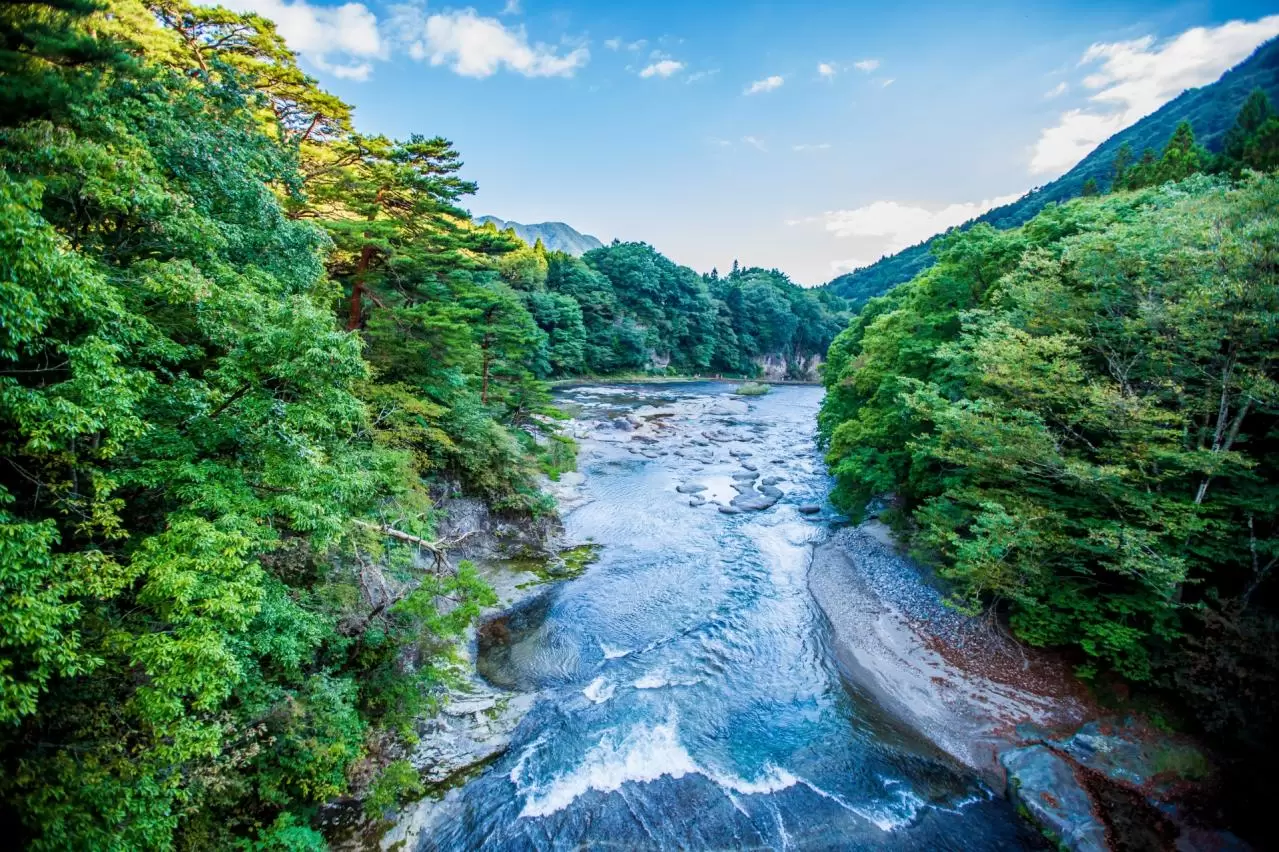
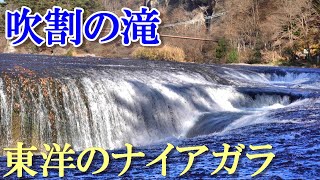
Fukiware Falls is a large waterfall located in Tone Town, Numata City, Gunma Prefecture, with a height of about 7 meters and a width of about 30 meters. Owing to its scale and dramatic presence, it is also known as the “Niagara of the East.” On December 16, 1936, it was designated by the Ministry of Education as both a National Natural Monument and a Place of Scenic Beauty under the name “Fukiware Valley and Fukiware Falls.”
The waterfall lies in the middle reaches of the Katashina River. Over many years, the softer portions of the bedrock were eroded by the flow of water, creating numerous cracks and giving the impression that a huge rock has been split apart by force—hence the name “Fukiware,” meaning “blown apart.” The roaring torrent and spraying mist convey the power of nature and fascinate visitors.
Origin of the Landform and the Name
The Katashina River basin where Fukiware Falls is located is composed of tuff and welded tuff formed by volcanic activity. Layers deposited by eruptions that occurred about 200,000 to 300,000 years ago were gradually eroded by the Katashina River over a long period, creating the present-day Fukiware Gorge.
Through this erosional process, the softer parts of the bedrock were worn away, forming many cracks and potholes. In particular, water concentrated in the more extensively split areas, creating the waterfall and making it appear as though the rock had been “blown apart,” which led to the name “Fukiware Falls.”
This geologically valuable landscape is a sculptural beauty created by nature itself and is highly regarded as a subject of study as well.
Fukiware Gorge and the Surrounding Nature
Fukiware Gorge, where Fukiware Falls is located, stretches for about 1.5 kilometers along the Katashina River, from the confluence with the Hiragawa upstream to the confluence with the Kuriharagawa downstream. The riverbed is dotted with many potholes, some of which reach a maximum diameter of about 6 meters. These potholes are natural formations created by the erosion of bedrock by swirling currents and rotating pebbles.
On the right bank of the gorge stands Byobu Iwa, a sheer rock face formed along a fault line, and other striking rock formations such as Shishi Iwa and Hannya Iwa can also be seen. These cliffs are remnants of hardened mineral veins deposited along the fault, left standing as the surrounding rock eroded away, resembling sculptures shaped by nature.
Seasonal Appeal
Fukiware Falls is a famous waterfall whose appearance changes beautifully throughout the year.
Spring (April–May): The waterfall swells with abundant snowmelt, and the powerful rush of water is breathtaking. Fresh greenery colors the surroundings, filling the area with a sense of vitality.
Summer (June–August): Natural mist from the falls brings refreshing coolness and helps visitors forget the heat. Because you can view the falls up close while feeling the spray, it is also popular as a summer retreat.
Autumn (around October): The entire Fukiware Gorge is enveloped in autumn foliage, and the contrast between the waterfall and the colored leaves is magnificent. The reds and yellows of nearby beech and maple trees reflected on the water create a truly spectacular scene.
Winter (December–March): Access around the falls is restricted due to snow and ice, but the quiet, snow-covered landscape is also enchanting.
Walking Trail and Nearby Attractions
In 1991, a walking trail was developed that allows visitors to make a one-hour circuit around the gorge. Along the way are three viewing platforms, each offering a different angle of the waterfall. The views from Fukiware Bridge, Ukishima Bridge, and the observation decks are especially popular.
There are also several other highlights in the area:
- Masutobi no Taki: A waterfall about 8 meters high, named after a legend that a trout once tried and failed to leap over it.
- Shishi Iwa and Hannya Iwa: A group of bizarre rock formations created by natural erosion, shaped like the faces of animals or Buddhist figures.
- Ukishima Kannon-do: A small hall standing on a midstream islet in the Katashina River, long revered as an object of worship.
- Oigami Onsen: A hot spring area located about 3 kilometers north of the falls, often visited together with a trip to the waterfall and known as a famous place for relaxing body and mind.
Legend and Culture
A legend of the Dragon Palace is associated with Fukiware Falls. In the past, people believed that the waterfall basin led to the Dragon Palace, and it is said that when festive events such as celebrations took place in the village, tableware and bowls were borrowed from the Dragon Palace and used for the occasion. This tradition shows how deeply Fukiware Falls has long been connected to local faith and daily life.
Academic Value and Conservation
As a landform created by water erosion, Fukiware Falls is extremely valuable from an academic perspective and is also a subject of geological study. Since its national designation in 1936, it has been protected as a Natural Monument and Place of Scenic Beauty, and conservation efforts have continued to preserve the natural environment.
The wooden walkways and bridges along the gorge are maintained for safety, but access may be restricted during periods of high water due to the risk of flooding.
Fukiware Falls is a magnificent work of natural art created by the passage of time. The beauty of its landscape, shaped by volcanic activity and the force of water, the gorge scenery that changes with the seasons, and the legends that live on in the region all combine to leave a deep impression on visitors.
Its majestic form and delicate harmony with nature make it one of Japan’s most celebrated waterfalls, truly worthy of the name “Niagara of the East.” Be sure to walk the trails of Fukiware Gorge and experience its power and beauty with all your senses.
#Superb view/Scenic spot #flowers/plants #Waterfalls, valleys, limestone caves
Gunma Tourist Attractions
View List
Ikaho Onsen
Ikaho Onsen is a historic hot spring area celebrated in classic Japanese poetry, including the Manyoshu and the Kokin Wakashu. With a history spanning over 600 years...

Konnyaku Park
Konjac Park is a theme park where you can experience the charms of "konjac," a traditional Japanese ingredient. Here, you can enjoy free factory tours to learn about...

Hotokuji Temple
Hōtokuji is a historic temple founded during the Muromachi period. It is particularly famous for the "momiji on the floor" seen in the main hall, which is open to th...

Oze National Park
Oze National Park is the largest high-altitude wetland in Honshu, spanning the four prefectures of Gunma, Tochigi, Fukushima, and Niigata. From the snowmelt in May t...

Haruna Shrine
Haruna Shrine, located on the slopes of Mount Haruna in Takasaki City, Gunma Prefecture, is an ancient shrine believed to have been established during the reign of E...

Tomioka Silk Mill
The Tomioka Silk Mill is a government-operated silk-reeling factory established by the Meiji government in 1872. Its goal was to improve the quality of raw silk and ...

Lockheart Castle
Lockhart Castle is a historic fortress that has been relocated and restored from Scotland. Its beautiful location surrounded by majestic nature has gained attention,...

Kusatsu Onsen
Kusatsu Onsen is one of Japan's representative hot spring resorts located in Gunma Prefecture. A particular highlight is the "Yubatake," where blue-green hot spring ...