Kokono'e "Yume" Ootsurihashi
Kokono'e "Yume" Ootsurihashi Movies


Basic Information
- Spot Name
- Kokono'e "Yume" Ootsurihashi
- Location
- 〒879-4911 1208 Tano, Koju Town, Kusuki District, Oita Prefecture, Japan
- Access
- From Bungo Nakamura Station on the JR Kyūdai Line, take the Kuju Town community bus bound for Kuju trailhead for 25 minutes, and get off at Nakakura Bridge, then walk for 3 minutes.
From "Kuju IC," it takes about 25 minutes via Prefectural Road 40.
From "Yufuin IC," it takes about 40 minutes via Prefectural Road 11 (Yamanami Highway). - Parking
- Approximately 230 regular cars and about 30 large buses.
- Business Hours
- 8:30 AM to 4:30 PM (close at 5:00 PM), from July to October until 5:30 PM (close at 6:00 PM)
- Regular Holiday
- None (may be closed due to bad weather)
- Fees
- 500 yen for junior high school students and above, 200 yen for elementary school students. Free for children under elementary school age.
- Contact Information
- Phone Number:0973-73-3800
Map
Detailed Information
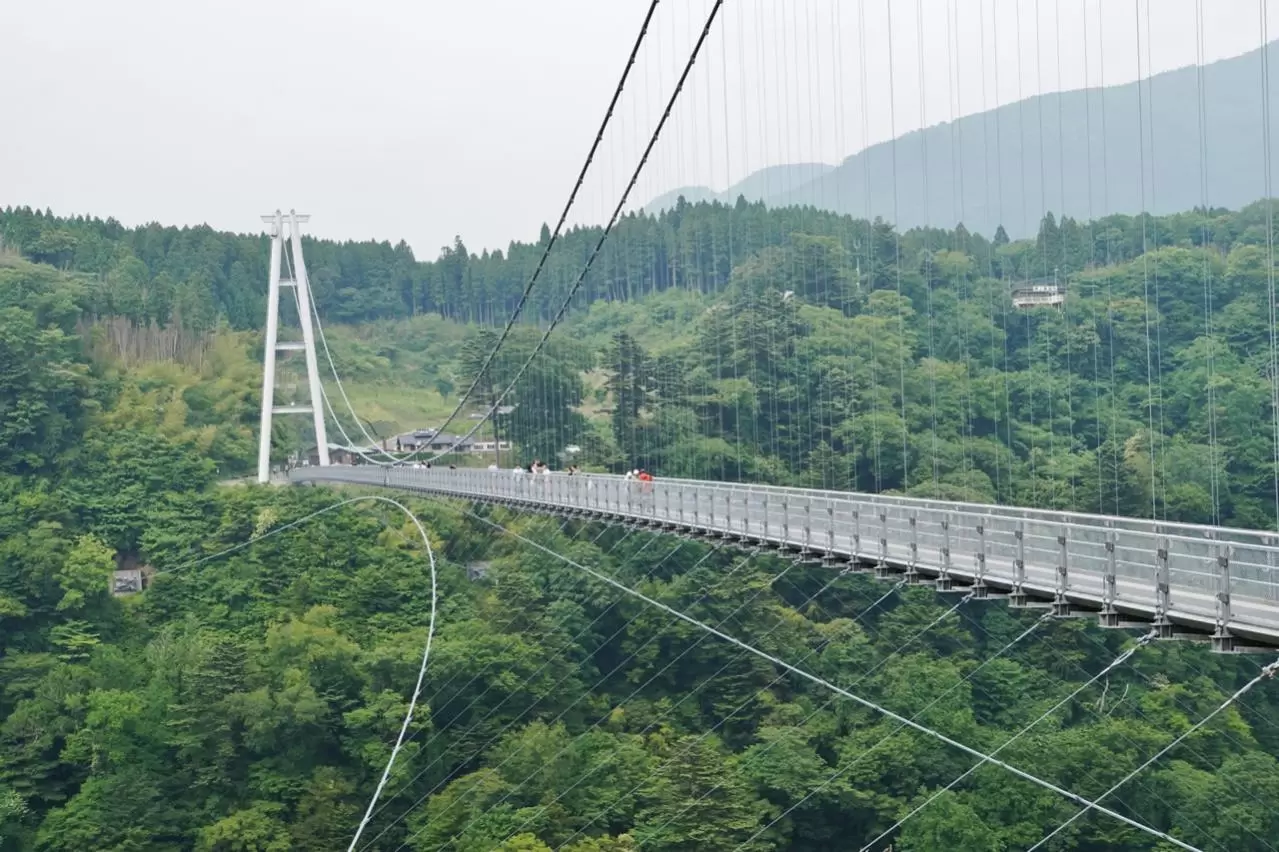
The Kokonoe “Yume” Grand Suspension Bridge is a pedestrian-only suspension bridge spanning the Narukogawa Gorge in Kokonoe Town, Kusu District, Oita Prefecture. Located at an elevation of approximately 777 meters, it boasts an impressive scale: 390 meters long, 173 meters high, and 1.5 meters wide. It is the highest pedestrian suspension bridge in Japan and one of Oita Prefecture’s most famous scenic attractions, offering spectacular views of the majestic gorge, waterfalls, and the Kuju Mountains.
Construction of the Kokonoe “Yume” Grand Suspension Bridge began in May 2004. After approximately two and a half years of work, it was completed on October 30, 2006. General public access began at noon on the same day. The name “Kokonoe ‘Yume’ Grand Suspension Bridge” was selected from among 5,890 entries submitted in a public naming contest.
At the time of its opening, it was Japan’s highest and longest pedestrian suspension bridge. It is no longer the longest, following the opening of the 400-meter-long Mishima Skywalk, but it still holds the record as Japan’s highest, at 173 meters.
The height of 173 meters refers to the distance from the bridge deck to the Narukogawa Gorge below. Standing on the bridge, visitors can see the deep valley and mountain stream far below, creating the sensation of walking through the air. Because of its majestic scenery and the experience of strolling high above the ground, it is often described as a “walkway in the sky.”
The bridge was designed with sufficient strength to allow large numbers of people to cross safely. It is supported by two main cables, each made by bundling seven wires measuring 53 millimeters in diameter. According to its design specifications, the bridge can withstand the load of approximately 1,800 adults weighing 65 kilograms each, as well as winds of approximately 65 meters per second and earthquakes measuring intensity 7 on the Japanese seismic intensity scale.
However, the design load capacity differs from the actual visitor limit. For safety management purposes, entry is restricted when more than 800 people are on the bridge. Access may also be limited depending on crowd levels, weather conditions, facility inspections, and other circumstances.
The main highlight visible from the bridge is Shindo Falls, which has been selected as one of Japan’s Top 100 Waterfalls. Shindo Falls consists of Male Falls and Female Falls, creating a magnificent landscape integrated with the surrounding deep forest and rocky cliffs. Male Falls has a drop of approximately 83 meters, while Female Falls has a drop of approximately 93 meters, and each can be viewed from the bridge in a different form.
Male Falls is especially impressive. The contrast between the white water rushing down the sheer rock face and the fresh greenery or autumn foliage spreading around it creates one of the signature views of the Kokonoe “Yume” Grand Suspension Bridge. The name “Shindo Falls” is said to originate from the force and sound of the falling water, which were powerful enough to make the surrounding area seem to tremble.
The Narukogawa Gorge seen from the bridge is located in the headwaters of the Chikugo River. A clear stream flows along the bottom of the valley, surrounded by abundant woodland. Because the steep terrain is difficult for people to access, highly pristine forests remain, offering different forms of scenic beauty in each season.
On days with favorable weather, visitors can also see mountains of the Kuju range, including Mount Mimata and Mount Waita. With few obstructions to the view, the bridge offers a sweeping panorama of the surrounding mountains, forests, waterfalls, and gorge. Officially introduced as a “360-degree grand panorama,” it is a place where visitors can fully experience the vastness of Kokonoe’s natural surroundings.
The bridge walkway is made with grating, a lattice-like metal flooring. Through the openings, visitors can partially look down into the gorge below, making it an exhilarating spot where the height can be felt firsthand. When the wind blows, the bridge may sway slightly in the way characteristic of suspension bridges, allowing visitors to enjoy the unique sense of tension that comes with walking through the air alongside the spectacular scenery.
Because grating has openings, however, thin-heeled footwear such as high heels may become caught in the lattice. For a safe and comfortable visit, sneakers or other walking shoes are recommended. Those using a walking cane should also use one with a sufficiently large tip so that it cannot slip into the grating.
The scenery at the Kokonoe “Yume” Grand Suspension Bridge changes dramatically with the seasons. From spring through early summer, the fresh greenery is especially beautiful, covering the entire gorge in bright, vibrant foliage. The combination of the white waters of Shindo Falls and the new greenery is refreshing, offering the cool atmosphere characteristic of a mountainous region.
Because the bridge is located at a high elevation, visitors can often enjoy cooler breezes in summer than in the lowlands. The landscape formed by the blue sky, intensely green mountains, and deep gorge is full of openness. However, temperatures can still rise during the day even at high elevations, so visitors should take precautions against the heat, such as wearing a hat and carrying drinking water.
Autumn is one of the seasons when the largest numbers of tourists visit. From around late October to mid-November each year, the trees around the Narukogawa Gorge and Kyusuikei Gorge turn red, yellow, and orange. The foliage is often at its best around early November, when visitors can enjoy a colorful landscape in which the autumn leaves, white waterfalls, and suspension bridge come together.
Kyusuikei Gorge is one of Kokonoe Town’s leading destinations for viewing fresh greenery and autumn foliage. It is also known as “Thirteen Curves” because of its series of hairpin bends, while trees such as firs, hemlocks, and katsuras create changing scenery throughout the seasons. The Narukogawa Gorge, spanned by the Kokonoe “Yume” Grand Suspension Bridge, and the surrounding Kyusuikei Gorge each offer their own magnificent gorge scenery.
The colors and timing of the autumn foliage vary depending on temperatures and weather conditions each year. Those wishing to check the best viewing period should consult the latest foliage information issued by Kokonoe Town or the facility. On weekends and holidays during the autumn foliage season, the surrounding roads, parking lots, and bridge may become crowded. Visitors who wish to enjoy the scenery at a more leisurely pace are advised to arrive relatively early.
In winter, snow and frost may turn the gorges and mountains white, creating a quiet, fantastical landscape unlike those of the other seasons. On clear days, distant mountain ranges may also be visible with remarkable clarity. However, snow scenery is not guaranteed, and visitors must exercise great caution if snow accumulates or roads become icy.
Those visiting by car in winter should check road conditions and prepare winter tires or tire chains as necessary. Crossing the bridge in leather shoes is prohibited when there is snow or ice, so visitors must wear slip-resistant footwear.
To ensure safe passage, the facility imposes restrictions on entry or temporarily closes in response to weather conditions. The main criteria include sustained winds of 15 meters per second or more, dense fog so thick that people on the bridge cannot be seen, heavy rain or a flood advisory or higher, a heavy snow advisory, and frequent lightning. If an earthquake measuring intensity 4 or higher occurs, entry is also prohibited until an inspection of the bridge has been completed.
Visitors are encouraged to keep to the left on the bridge for safe and smooth passage. When traveling from the Nakamura Area toward the Hokkata Area, Shindo Falls can be seen on the right side in the direction of travel; when traveling from the Hokkata Area toward the Nakamura Area, it can be seen on the left. Visitors should avoid suddenly changing direction to look at the waterfall or stopping in a way that blocks the walkway, and should be considerate of other pedestrians.
Walking with an open umbrella on the bridge is prohibited, so visitors should prepare a raincoat or poncho in rainy weather. Running, walking in a way that causes people to crowd on one side of the bridge, placing one’s feet on or sitting on the handrails, smoking, and littering empty containers or other items are also prohibited.
Pets cannot enter beyond the bridge gates. However, temporary pet boarding in dedicated cages is available at the tourist information center in the Nakamura Area and at the ticket office on the Hokkata side. Because cage availability may vary, visitors traveling with pets are advised to confirm the arrangements in advance.
There are entrances and exits at both ends of the bridge, allowing visitors to travel back and forth between the Nakamura Area, where the main facilities are located, and the Hokkata Area. Crossing the bridge and returning at a leisurely walking pace takes approximately 15 minutes. However, the trip may take longer depending on time spent taking photographs, viewing the scenery, and navigating crowds.
Wheelchairs and strollers can be used to cross the bridge, and the facility also offers them free of charge for loan. Visitors are advised to check availability and the number of units in advance. Crossing may be difficult during strong winds or heavy crowds, so those with concerns should consult the management center. Both the Nakamura and Hokkata areas have accessible restrooms, and a nursing room is also available in the Nakamura Area.
The Nakamura Area is home to Tenku-kan, a direct sales store for local products. Tenku-kan’s first shop mainly sells souvenirs and local specialties, while the second shop offers locally grown vegetables, fruit, processed foods, hamburgers, and other items. It is a convenient place to take a break after crossing the bridge or choose Kokonoe Town specialties and mementos of a trip.
According to the facility’s official FAQ, the food-service facilities at Tenku-kan currently operate only on Saturdays, Sundays, and public holidays. However, operating days, hours, and menus may change, so visitors planning their trip around a particular dish are advised to check the latest information on the official website or other sources in advance.
The area surrounding the facility includes many other attractions, such as Kyusuikei Gorge, Iida Kogen Highland, Chojabaru, and the Kokonoe “Yume” Hot Spring Resort. By combining a visit to the Grand Suspension Bridge with hot springs, scenic driving, mountain climbing, or walks through the highlands, visitors can enjoy Kokonoe’s natural beauty over the course of an entire day.
The Kokonoe “Yume” Grand Suspension Bridge is not simply a suspension bridge where visitors can experience its great height. It is a tourist facility where visitors can view from above some of Kokonoe Town’s most representative natural sights, including Shindo Falls, the Narukogawa Gorge, Kyusuikei Gorge, and the Kuju Mountains. Its appearance changes with the seasons, from fresh greenery and autumn foliage to snowy landscapes, offering new discoveries each time it is visited. Combining the thrill created by Japan’s highest suspension bridge with the grandeur of nature, it is truly a tourist attraction worthy of being called a “walkway in the sky.”
#Superb view/Scenic spot #mountain/plateau #Waterfalls, valleys, limestone caves
Oita Tourist Attractions
View List
Beppu Jigoku Meguri (Hell Tour)
Beppu Jigoku Meguri is an attractive spot where visitors can closely observe the natural hot springs in Beppu Onsen, Oita Prefecture. Here, hot water and steaming mu...

Oita Marine Palace Aquarium "Umitemago"
Oita Marine Palace Aquarium "Umitamago," located midway between Oita City and Beppu City, is a modern aquarium set against the stunning backdrop of Beppu Bay. The tw...
Kijima Kogen Park
Joujima Kogen Park is a resort spot located near the boundary of Beppu City and Yufu City in Oita Prefecture. It features Japan's first wooden roller coaster, "Jupit...
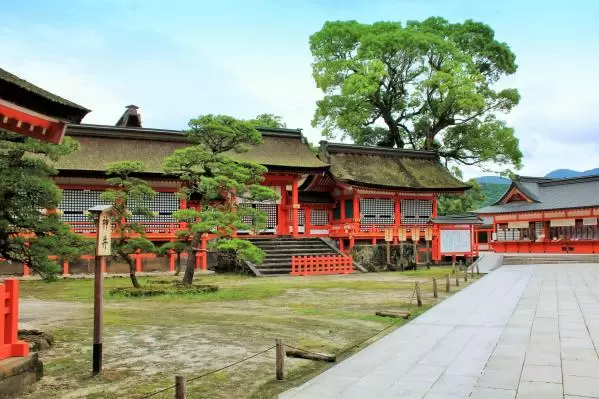
Usajingu Shrine
Usa Jingu is a famous shrine recognized as the head shrine of the approximately 40,000 Hachiman shrines across Japan. It was founded in 725 when the main hall dedica...
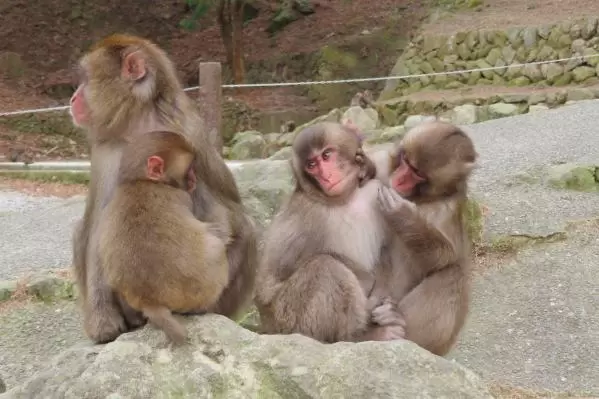
Takasaki Mountain Natural Zoo
Located at the foot of Mount Takasaki, which stands at an elevation of 628 meters between Oita City and Beppu City, Takasaki Monkey Park is one of Japan's premier na...
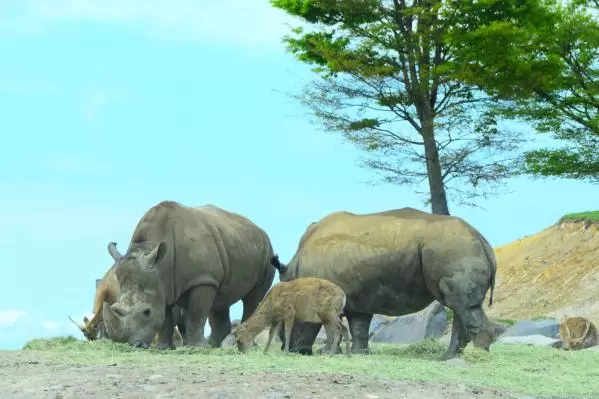
Kyushu Natural Animal Park African Safari
Kyushu Natural Animal Park African Safari is the only safari park in Kyushu, spread across a vast grassland of 1.15 million square meters. Here, wildlife lives freel...