Rurikouji
Rurikouji Movies


Basic Information
- Spot Name
- Rurikouji
- Location
- 〒753-0081 7-1 Koyamacho, Yamaguchi City, Yamaguchi Prefecture, Japan
- Access
- From JR Yamaguchi Station, take the Yamaguchi City Community Bus Onai Route bound for Kayama Park Five-Story Pagoda and it takes 13 minutes. Get off at the last stop, which is just a short walk away.
- Parking
- Parking available.
- Business Hours
- The temple grounds are open freely (the museum operates from 9:00 AM to 5:00 PM <last entry>, and the illumination is from sunset to 10:00 PM).
- Contact Information
- Phone Number:083-922-2409
- Official Website
Map
Detailed Information
Rurikoji Temple is a Sōtō Zen temple located in Kōzancho, Yamaguchi City, Yamaguchi Prefecture. Its mountain name is Hōneizan, and its principal object of worship is Yakushi Nyorai, the Buddha of healing and medicine. The temple is widely known for the Rurikoji Five-Story Pagoda, designated a National Treasure, and attracts many visitors as one of Yamaguchi Prefecture’s leading historical and cultural destinations. The entire temple grounds have been developed as Kōzan Park, where visitors can enjoy beautiful scenery in which historic structures blend harmoniously with nature throughout the seasons. Known as a symbol of “Yamaguchi, the Kyoto of the West,” Rurikoji is also a precious temple that preserves the legacy of Ōuchi culture.
The origins of Rurikoji date back to 1471. After the death of the Muromachi-period warrior Sue Hirofusa, his wife established a temple to pray for the repose of his soul. The temple was initially called Anyoji. It was renamed Rurikoji in 1492. At that time, the temple stood near present-day Niho Takano in Yamaguchi City and was known as Niho Rurikoji.
Meanwhile, the area around present-day Kōzan Park was home to Kōshakuji, a temple established by the Ōuchi clan during the Muromachi period. The Ōuchi were shugo daimyō, or provincial military governors, who ruled the provinces of Suō and Nagato and were known for actively adopting the culture of Kyoto. Particularly from the time of the 25th head of the clan, Ōuchi Yoshihiro, through the eras of Ōuchi Yoshioki and Ōuchi Yoshitaka, Yamaguchi flourished to such an extent that it became known as “the Kyoto of the West,” and Ōuchi culture blossomed.
Kōshakuji was a Zen temple established by Ōuchi Yoshihiro on the site of present-day Kōzan Park. However, in 1399, Yoshihiro was defeated and killed in the Ōei Rebellion, which he had launched against Ashikaga Yoshimitsu. His younger brother, Ōuchi Moriharu, planned to build a five-story pagoda at Kōshakuji to pray for his brother’s peaceful repose. Moriharu himself was later killed in battle against the Shōni clan in Kyushu, but construction continued afterward, and the five-story pagoda is believed to have been completed around 1442.
The tower now known as the Rurikoji Five-Story Pagoda originally belonged to Kōshakuji. After the Battle of Sekigahara, when Mōri Terumoto was transferred to Hagi, Kōshakuji was also relocated there. Rurikoji, which had stood in Niho, was then moved to the former temple site, creating the present-day Rurikoji. The five-story pagoda alone was not relocated and remained in its original position, which is why it came to be known as the Rurikoji Five-Story Pagoda.
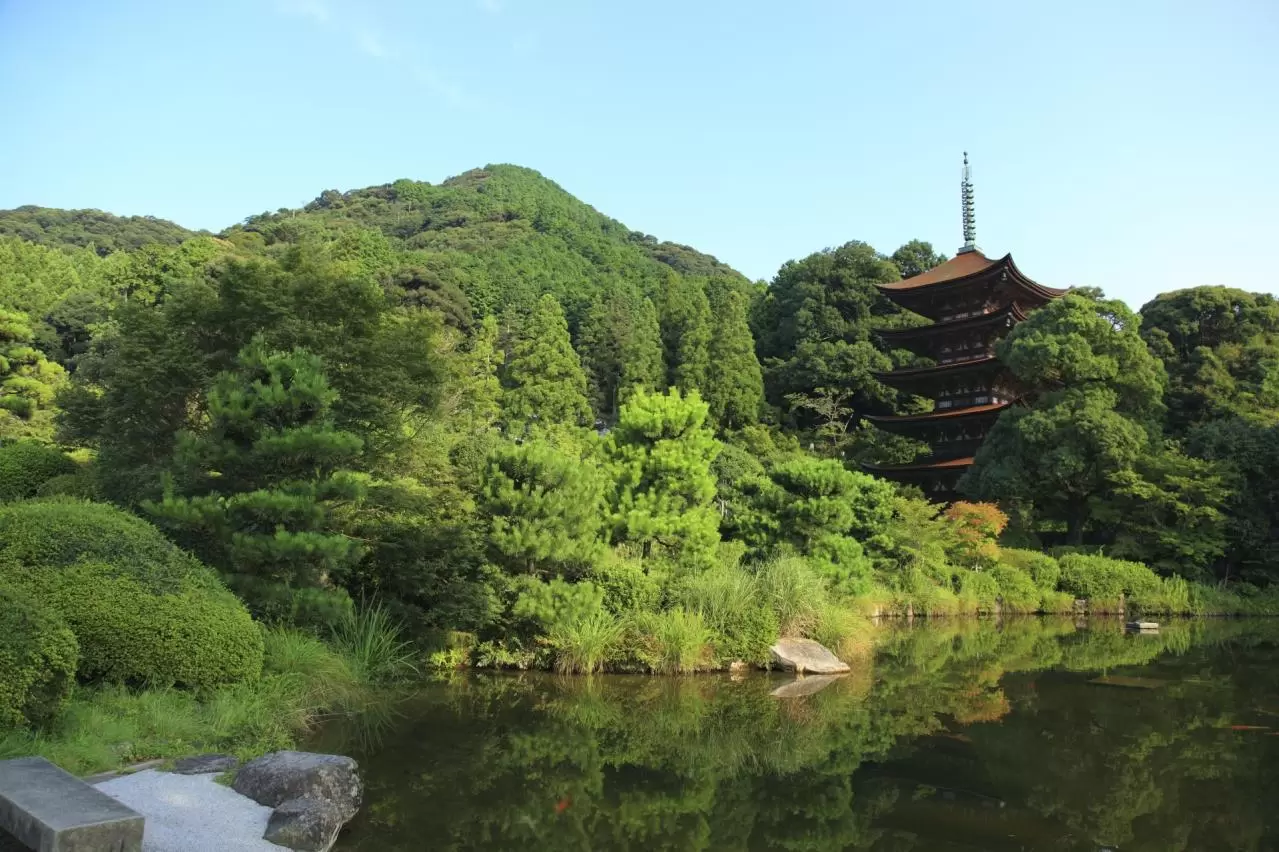
The National Treasure Rurikoji Five-Story Pagoda is one of the oldest surviving five-story pagodas in Japan. It stands approximately 31.2 meters tall and has cypress-bark-shingled roofs. While primarily based on the Japanese architectural style known as wayō, it also incorporates elements of the Chinese-influenced karayō style. Its elegant tower body gradually tapers toward the upper stories. Combining a sense of stability with graceful beauty, it is highly regarded as a representative example of mid-Muromachi-period architecture.
Because of its beauty, the pagoda is counted as one of the “Three Great Pagodas of Japan,” along with the five-story pagoda at Horyuji Temple in Nara Prefecture and the five-story pagoda at Daigoji Temple in Kyoto Prefecture. It is also regarded as the supreme masterpiece of the Ōuchi culture that flourished during the Muromachi period and is an exceptionally important cultural property in the history of Japanese architecture.
The five-story pagoda is also famous for its harmony with the scenery of each season. In spring, approximately 170 Somei Yoshino cherry trees burst into bloom, creating a dreamlike view of the pagoda framed by blossoms. Plum blossoms can be enjoyed from early February through early March, followed by fresh greenery and hydrangeas in early summer, autumn foliage in fall, and snowy landscapes in winter. The reflection of the scenery in the pond in front of the pagoda is also beautiful, making the site a popular destination for photography enthusiasts.
At night, the pagoda is illuminated from sunset until around 10 p.m., allowing visitors to see a magical appearance quite different from its daytime view. Rising majestically from the darkness, the illuminated pagoda is known as one of the most iconic night views in Yamaguchi.
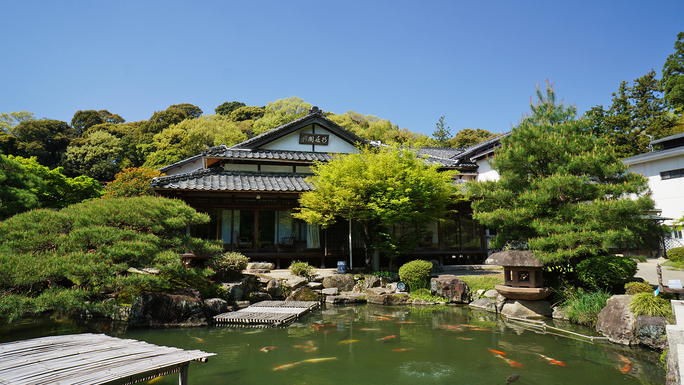
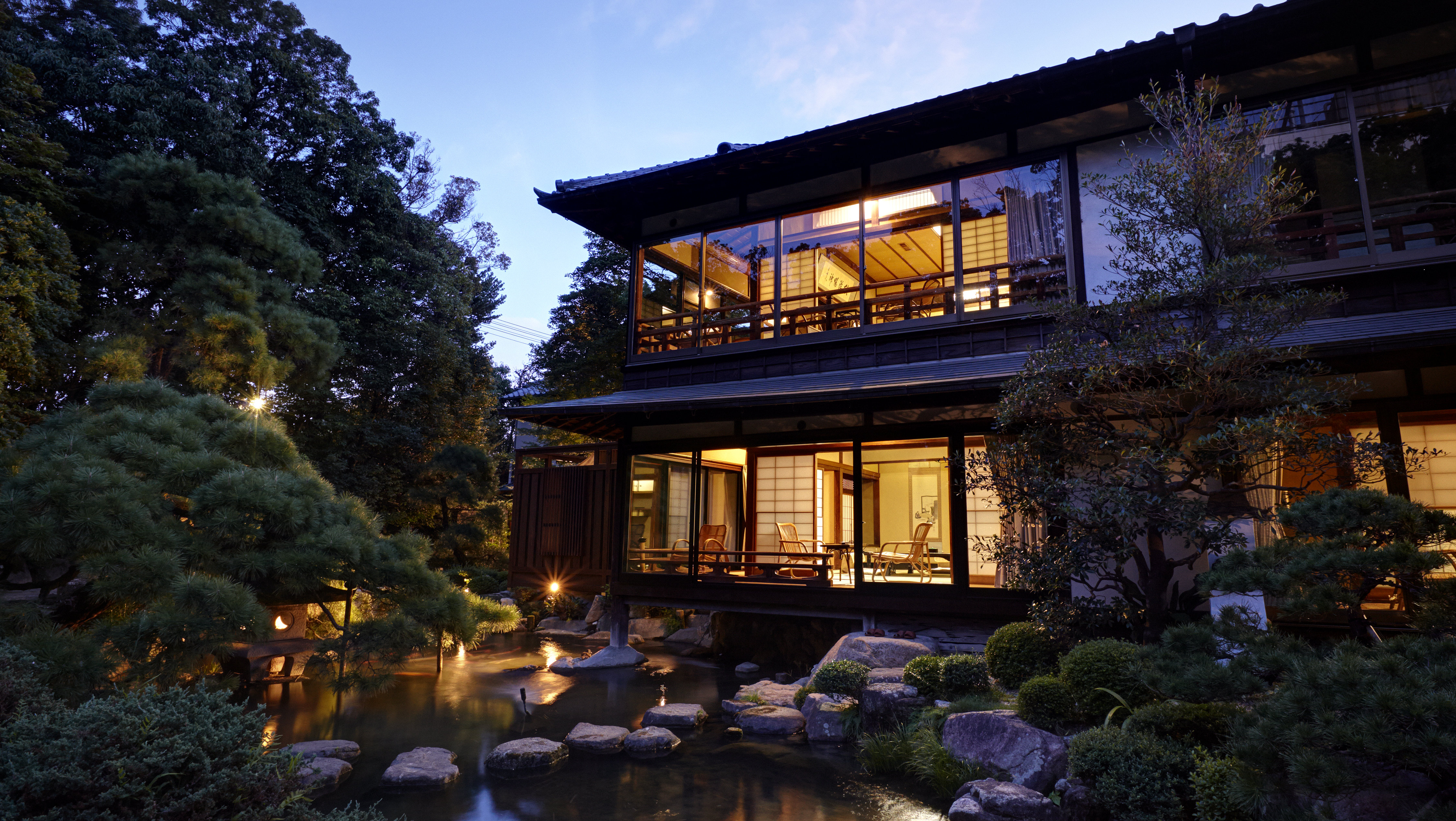
Kōzan Park, which encompasses the temple grounds, contains many historic structures in addition to the five-story pagoda. In particular, Chinryūtei is famous as the place where activists from the Satsuma and Chōshū domains held secret discussions concerning the Satchō Alliance at the end of the Edo period. Originally a wealthy merchant’s villa used by the Mōri family, the lords of the Chōshū domain, during their alternate attendance journeys to Edo, it is an important historic site that can be considered one of the settings of the Meiji Restoration.
There is also a tea house called Rozandō. Built in 1863 by Mōri Takachika, lord of the Chōshū domain, it is said to have been used for discussions about countermeasures against the shogunate under the guise of tea gatherings. The tea house has since been relocated to the grounds of Rurikoji, where it creates a quiet and atmospheric space alongside a Japanese garden.
Another intriguing feature is a mysterious area known as the “nightingale stone pavement.” This stone-paved path leads to the Mōri family cemetery. When visitors clap their hands or stamp their feet, the pavement produces a sound resembling the song of a Japanese bush warbler. It is also said that the sound arose naturally, surprising many visitors.
The temple grounds are also home to the Rurikoji Museum, which displays a structural model of the five-story pagoda, models of five-story pagodas from throughout Japan, and materials related to Ōuchi culture. Visitors can also view a valuable old manuscript of Shōbōgenzō, a work by Dōgen, the founder of the Sōtō Zen school, as well as a portrait painted by the ink-wash artist Sesshū.
The entire Kōzan Park area can be leisurely explored in approximately an hour and a half, offering visitors a peaceful time immersed in history. It is also famous for its plum blossoms, cherry blossoms, and autumn foliage, creating a space where nature and history blend beautifully.
Rurikoji is more than simply a tourist destination. It is a precious place where visitors can experience important currents in Japanese history, from the Ōuchi culture of the Muromachi period and the Mōri clan of the Edo period to the Meiji Restoration at the end of the shogunate era. Centered around its National Treasure five-story pagoda, Rurikoji continues to fascinate visitors as one of Yamaguchi’s foremost attractions, where history, culture, and nature exist in perfect harmony.
Yamaguchi Tourist Attractions
View List
Akiyoshi Cave
Akiyoshidai, one of Japan's largest karst plateaus, is a special natural monument located in Mine City, Yamaguchi Prefecture, designated as a national park in 1955. ...

Hagi Castle Town
Hagi Castle Town is a historic area that developed around Hagi Castle, which was built by Mori Terumoto in 1604. This town retains a strong atmosphere of the Edo per...

Tsunoshima Bridge
The Tsunoshima Bridge, located in Shimonoseki City, Yamaguchi Prefecture, is one of Japan's most beautiful bridges, having opened in 2000. Spanning a total length of...

Hofu Tenman-gu
Bōfu Tenmangū is the first Tenmangū shrine in Japan, founded in 904, dedicated to Sugawara no Michizane. It is one of the three major Tenjin shrines in Japan, alongs...

Akiyoshi Cave
Akiyoshido Cave, located in Mine City, Yamaguchi Prefecture, is one of Japan's largest limestone caves, extending 100 meters underground within Akiyoshidai Quasi-Nat...

Shoka Sojuku
The private school "Matsushita Village School," established by the thinker Yoshida Shoin during the Bakumatsu period, is registered as a UNESCO World Heritage Site. ...

Kintaikyo Bridge
One of Japan's three famous bridges, the Kintai Bridge, is a wooden five-arch bridge measuring approximately 193.3 meters in length, located in Iwakuni City, Yamaguc...

Motonosumi Shrine
The breathtaking spot "Motonosumi Shrine" in Yamaguchi Prefecture was established in 1955 by a local fisherman, Osamu Okamura, who received a message from a white fo...